You’re out of free articles.
Log in
To continue reading, log in to your account.
Create a Free Account
To unlock more free articles, please create a free account.
Sign In or Create an Account.
By continuing, you agree to the Terms of Service and acknowledge our Privacy Policy
Welcome to Heatmap
Thank you for registering with Heatmap. Climate change is one of the greatest challenges of our lives, a force reshaping our economy, our politics, and our culture. We hope to be your trusted, friendly, and insightful guide to that transformation. Please enjoy your free articles. You can check your profile here .
subscribe to get Unlimited access
Offer for a Heatmap News Unlimited Access subscription; please note that your subscription will renew automatically unless you cancel prior to renewal. Cancellation takes effect at the end of your current billing period. We will let you know in advance of any price changes. Taxes may apply. Offer terms are subject to change.
Subscribe to get unlimited Access
Hey, you are out of free articles but you are only a few clicks away from full access. Subscribe below and take advantage of our introductory offer.
subscribe to get Unlimited access
Offer for a Heatmap News Unlimited Access subscription; please note that your subscription will renew automatically unless you cancel prior to renewal. Cancellation takes effect at the end of your current billing period. We will let you know in advance of any price changes. Taxes may apply. Offer terms are subject to change.
Create Your Account
Please Enter Your Password
Forgot your password?
Please enter the email address you use for your account so we can send you a link to reset your password:

Last summer was the hottest in two millennia. We won’t get any relief this year.
An overwhelming majority of Americans will experience above-average heat this summer, and temperatures in more than half of the contiguous United States are expected to top the historical average by at least 2 degrees Fahrenheit, according to AccuWeather. New York is expected to endure twice as many 90-plus-degree days as last year; Boston could experience up to four times as many.
Americans got a taste of what’s to come this week, with a blistering heat wave that began in the Southwest and has scorched the East Coast for the past three days. That heat may have come early based on the historical averages, but considering more recent trends, it’s right on track.
“The biggest changes that we have seen in recent decades is that the heat wave season has been expanding, starting earlier in the late spring and ending later into early fall, on average,” AccuWeather Senior Meteorologist Brett Anderson told Heatmap.
The northern Rockies, Great Lakes, and the Northeast are areas of particular concern, Paul Pastelok, AccuWeather’s Lead Long-Range Forecaster, told Heatmap. Those regions will likely experience less precipitation and more intense heat this summer compared to their historical average. “The Northern Plains and Upper Midwest are tricky,” Pastelok said. “Right now, this area is getting rain, but this could cut off by the very end of June into July, and turn around to dryness with the heat following.”
While temperatures will most likely peak in the interior Southwest — Nevada, Arizona, and New Mexico — by early July, the region can expect temperatures between 112 and 118 degrees until then. Monsoon season, which brings warm winds and rainfall inland, will likely arrive in late July instead of the usual late June, Pastelok said. Peak heat could come much later — anytime between July and September — for those in the Great Lakes, the Ohio Valley, and the Northeast.
The biggest “warm anomalies” are expected in the Southwest and central Rockies, the Great Lakes, the Ohio Valley and the Northeast, according Tom Kines, a senior meteorologist at AccuWeather. “We are looking at anomalies for the entire summer of +4 degrees (F) which is pretty significant over a 3 month period,” Kines wrote in an email to Heatmap.
Heat won’t be the only extreme weather this season. Drought could be severe, particularly in the Southwest — including parts of Texas, Oklahoma, and Kansas, where rainfall could come in below 50% of the historical average. That dry spell could intensify over the northern Plains, Great Lakes, and the Northeast later in the summer. The Gulf Coast, meanwhile, can anticipate a staggering 22 to 36 inches of rain this season — compared to its usual 15 to 24 inches — which will likely make flooding an issue.
After a wetter winter, meteorologists anticipated a slow start to the wildfire season in California and the Southwest. In fact, the number of wildfires this year is expected to come in below average: AccuWeather meteorologists predict 35,000 to 50,000 wildfires this year, compared to a historical average of about 69,000. Yet the fires in California also seem to have picked up speed a little earlier than normal. Last week saw more than two dozen fires in the state, perhaps heralding increased fire activity to come.
So how will we deal with all this? Northern cities, especially, tend to be less equipped to deal with extreme summer heat. In Boston, temperatures reached a record-breaking 98 degrees on Wednesday, a day after Mayor Michelle Wu declared a heat emergency. The city opened cooling centers this week in an attempt to minimize the number of heat-related medical emergencies.
Boston Green New Deal Director Oliver Sellers-Garcia told Heatmap that the city is bringing more government agencies into the heat management effort. The Fire and Parks departments plan to set up misting stations, and the city will continue to provide extra pop-up cooling centers in coordination with Boston’s Centers for Youth and Families. Those strategies, Sellers-Garcia said, “can have an instant benefit for someone, whether it’s just a super hot day and they have to get to work or it’s a declared heat wave.”
In Florida, people are used to chronic heat, Miami-Dade County’s Chief Heat Officer Jane Gilbert told Heatmap. Last year the county had 42 heat advisories (which happens when the thermometer reaches 105) and 70 warnings (110), Gilbert said, and this season is already proving more intense: May was the warmest ever on record in the state. To protect residents, the county has established a comprehensive public awareness campaign that targets those most affected by the heat, including outdoor workers, children, pregnant women, the elderly, and people with chronic illnesses. It also runs more than 30 cooling centers.
According to Gilbert, the goal is to educate people about the extent of heat impacts so they can make better choices — drink more water, find shade, limit physical activity — and protect their health. “We haven’t fully appreciated, historically as a community, how it impacts our lives,” she said.
Here’s what’s happened so far ...
June 24: On Juneteenth, over 82 million Americans were under active National Weather Service extreme heat alerts — but, due to the national holiday, many publicly operated cooling centers were closed. While Boston had opened 14 new facilities in partnership with the Centers for Youth and Families, for instance, none of them stayed open Wednesday.
The same thing happened in New York, where more than 200 cooling centers were closed for the holiday, most of them libraries. While other heat preparedness measures were still in place — Gov. Kathy Hochul announced free admission for state parks — residents counting on a facility near home had to change plans last minute. On Sunday, New York turned 45 public schools into cooling centers, this time because the public libraries were closed due to budget cuts.
In Chicago, only one cooling center was open during the holiday. The lack of cooling spaces available sparked action from homelessness advocates, who are urging the city to offer more cooling centers that are open 24/7 and also to make those facilities available when the heat index is above 80 degrees Fahrenheit.
Because cooling centers are often multi-purpose spaces, data on their usage is limited. In Boston, 245 people visited cooling centers from June 18 to 20, the mayor’s office told me. New York City’s Department of Emergency Management could only say that six people visited four of the schools open Sunday.
June 21: Communities from Kansas to Maine experienced record-breaking temperatures, with heat indices above 100 degrees Fahrenheit in some places. Cities including Philadelphia, Cleveland, and Burlington, Vermont opened cooling centers, and Boston and New York activated heat emergency plans. Schools in Buffalo, New York moved to half-day schedules for the week in response to temperature advisories.
The heat wave was expected to hold into the weekend, increasing the risk of emergencies. But ensuring that at-risk residents are aware of public services and heat mitigation strategies is often more difficult than simply providing amenities like cooling centers and air conditioners, Benjamin Zaitchik, a professor of climate dynamics at Johns Hopkins University, told Heatmap. “Preventing heat deaths — in principle, at least — is easy,” Zaitchik said. “It just requires good planning, good communication, good networks.”
The same heatwave afflicted much of the Southwestern United States the week before. Temperatures in Phoenix and Las Vegas exceeded 110 degrees, breaking records and prompting cities to issue heat advisories covering tens of millions of people. At a Trump rally in Las Vegas, 24 people received treatment for heat-related complications and six were hospitalized, The Guardian reported.
June 14-19: More than 1,000 people died during the sacred Muslim pilgrimage known as the hajj as extreme heat gripped Saudi Arabia in mid-June. In Mecca, where temperatures exceed 120 degrees Fahrenheit, worshippers gripped umbrellas and water bottles to combat the heat. A study from 2019 predicted that hajj conditions would exceed an “extreme danger heat threshold” more frequently in the coming decades, especially when the pilgrimage — which is scheduled according to the lunar calendar — coincides with the warmer months of the year.
The death toll was about five times higher than last year, according to CNN.
June 10: Passengers on a Qatar Airways flight passed out from heat as their plane sat on the tarmac at Athens International Airport. Flight 204, which was delayed for three hours with passengers stuck inside, experienced a malfunction in its air conditioning. Two days later, authorities shut down the Acropolis for five hours due to the 102 degree weather, which marked Greece’s earliest heat wave on record. Many schools were also closed for the day, and several air-conditioned spaces were opened to the public. Greece’s Health Ministry advised older people and those with chronic illnesses to stay indoors.
The intense weather continued throughout the weekend, and at least five tourists were reported to have died due to extreme heat.
Other parts of Southern Europe, such as Cyprus and Turk, have also suffered through heat waves this year. During the second week of June, temperatures in Cyprus exceeded 104 degrees every day and classes ended early. On June 14, some areas experienced their hottest June day ever, reaching 113 degrees. That same week, Turkey also battled record temperatures — they were 8 to 12 degrees higher than the average for the season.
May and June: Both Mexico and India faced extreme temperatures during national elections.
Record-breaking heat waves have scorched Mexico since late March, causing blackouts, wildfires, heat strokes, and animal deaths. On May 25, Mexico City set a new heat record, with the temperature there surpassing 94.4 degrees, while other cities in the country registered even higher temperatures — well above 115 degrees. As of June 12, at least 125 deaths had been attributed to the heat, which has been made worse by an intense drought linked to El Niño. With reservoirs at less than 27% capacity, millions could run out of water by the end of this month.
World Weather Attribution, a research group that analyzes the degree to which climate change is causing extreme weather events, estimated that global warming has made extreme temperatures in the region 35 times more likely. “These trends will continue with future warming and events like the one observed in 2024 will be very common” in a world where average temperatures are 2 degrees Celsius higher than pre-industrial levels, the group stated in a release.
Despite sweltering conditions, about 100 million voters elected Claudia Sheinbaum, Mexico’s first female president, on June 2. In her victory speech, Sheinbaum, a climate scientist with a focus on energy engineering, said she will work to maintain the country’s energy sovereignty. While Sheinbaum has vouched to expand the country’s renewable energy, she has also been criticized for her support of Pemex, the state-owned oil company.
Two days later, on June 4, India re-elected Prime Minister Narendra Modi for a third term during the country’s longest-ever heatwave. By the time the weeks-long voting process wrapped, extreme heat had killed more than 100 people. In Uttar Pradesh, at least 33 poll workers died in a single day, CNN reported. In response, local governments have imposed measures to prevent water waste and protect construction workers. Yet, according to analysis by the Centre for Policy Research found in 2023, most of India’s heatwave policies are underfunded and fail to target the country’s most vulnerable groups.
More extreme weather hammered Mexico beginning June 20 as tropical storm Alberto brought torrential rain and flooding to the country’s east. AccuWeather meteorologists said the storm is just the start of a predicted intense hurricane season in the area. Most of India is still under heatwave alerts, but the weather is set to improve in the next few days as the monsoon finally advances after a week-long delay.
May: Scarce rainfall and soaring heat have led to drought conditions that are threatening China’s food production and water supply. The provinces of Shandong and Henan — crucial to the country’s wheat production — are some of the most affected, and the State Flood Control and Drought Relief Headquarters has dispatched two disaster relief guidance teams. New technology, such as multi-functional seeders, and multiple reservoirs have been deployed to ameliorate conditions.
Also on Wednesday, the China Meteorological Administration reported that several regional weather stations recorded the highest temperatures ever in mid-June. Conditions are expected to worsen, as some Chinese provinces are expected to reach 111 degrees this week.

Log in
To continue reading, log in to your account.
Create a Free Account
To unlock more free articles, please create a free account.
The former FERC chair explains why Chris Wright is likely to succeed where Rick Perry failed.
Neil Chatterjee thinks it’s going to go better this time.
Eight years ago, Chatterjee was the chairman of the Federal Energy Regulatory Commission, and Trump was the president. When Trump’s then-Secretary of Energy, Rick Perry, asked the commission to ensure that generators able to store fuel on site — which in the U.S. largely means coal and nuclear — get extra payments for doing so, thus keeping struggling power plants in business, it rejected the proposal by a unanimous vote.
“There’s no doubt my 2017 experience — that was politically driven,” Chatterjee told me, though he did concede that Perry was “right to be concerned about retiring generation at the time.” The Perry plan had been heavily influenced by the coal industry, he told me, and the regulatory structure of “compensating plants for having the attribute of on-site fuel … it was just a bit of a stretch.”
Now there’s a new Trump administration, with a new Secretary of Energy and a new FERC — and on Thursday, Energy Secretary Chris Wright asked the commission to do something else. He put forward what’s known as an advance notice of proposed rulemaking, directing FERC to come up with ways to help to make sure the grid can deal with another large-scale transition.
“They’re just apples and oranges,” Chatterjee said of the two requests. “This is a much more elegant, much more thoughtful exercise.”
Wright’s letter lays out the challenge of integrating large loads — i.e. data centers — onto the grid, arguing that they “must be able to connect to the transmission system in a timely, orderly, and non-discriminatory manner.” Doing so, he said, will “require unprecedented and extraordinary quantities of electricity and substantial investment in the Nation’s interstate transmission system.”
The overall thrust of the proposal is to make things easier and faster, including suggesting that interconnection studies for large loads that have their own generation or are flexible could be finished in just 60 days — which, if successful, could take a process that can last for years and get it done in less than a season.
The notice suggests a number of reforms for FERC to consider, including faster interconnection for “large loads that agree to be curtailable and hybrid facilities that agree to be curtailable and dispatchable” — touching on what has been the hottest subject in energy policy this year.
Tyler Norris, a Duke University researcher who has been one of the leading promoters of load flexibility, called Wright’s notice a “BFD” — that is, big effing deal — in a brief email to Heatmap.
Norris elaborated further on X. The proposal “appears to have done the near-impossible — generate overwhelming bipartisan enthusiasm — in what may be the most positive cross-sector response we’ve seen yet to DOE action under Secretary Wright,” he wrote.
Wright’s proposal suggests that both new data centers and new sources of power should be studied together for interconnection. While this sounds like it would be adding complexity, it may actually be simplifying the process. “Such an approach will allow for efficient siting of loads and generating facilities and thereby minimize the need for costly network upgrades,” the proposal says, reflecting the twinned desire to get more data centers on line faster while shielding electricity consumers from higher costs.
Another of Wright’s suggestions, however, might face more opposition. He argues that “load and hybrid facilities should be responsible for 100% of the network upgrades that they are assigned through the interconnection studies.”
This is designed to address the possibility — already being realized in parts of the country — that the network infrastructure required to bring data centers online could lead to higher costs for all electricity customers served by a given utility as it spreads out those costs to its rate base. The risk, however, is that utilities won’t like it. That’s because in most of the country, utilities earn a regulated rate of return on their investment in grid upgrades (by way of customer bill payments, of course), creating an incentive for them to continue to spend.
Those dynamics may be changing. Utilities once enjoyed primacy in Washington on electricity policy, especially among Republicans, but have seen their status slip of late in favor of a new force: big tech companies with big data centers.
“The hyperscalers have the influence to counteract the utilities here,” Chatterjee told me. “And that’s a new dynamic, historically — when it came to FERC, when it came to DOE, when it came to, quite frankly, Congress. People are sensitive to their utilities.”
Wright’s proposal, Chatterjee said, is trying to balance several different considerations the White House faces.
“This is the most vexing issue before the commission right now. And the reality is, it’s not clean politically within FERC, within DOE, even within the White House. There are differences of opinion on how best to thread this needle,” he told me, pointing to divides between those who want to drive AI development as fast as possible and those who are concerned about electricity prices.
By contrast, the Perry proposal to FERC was widely recognized as being primarily about supporting the coal (and to some extent nuclear) industry.
“I really think what DOE has put forward here is kind of an elegant solution that touches on everything,” Chatterjee said. “It’s not preferring particular sources of generation. It’s for flexibility — flexibility is having its moment.”
The proposal has already won some plaudits from the technology industry. In a letter to the White House, OpenAI Chief Global Affairs Officer Christopher Lehane wrote that the company “welcomed the news last week that DOE recommended to FERC that it assert jurisdiction and create standardized rules for large load interconnections.” He also noted that OpenAI’s data centers “are designed to be curtailable — reducing their draw or even returning power during peak demand, helping to protect reliability and avoid higher costs for consumers.”
The DOE gave FERC an April 2026 deadline for final action on the proposed rulemaking, and FERC said Monday night that comments would be due by November 14.
Chatterjee said he expects FERC to eventually issue rules based on the proposal on a unanimous and bipartisan basis.
“I think the initial thought was, Oh, here goes the Trump administration again, leaning on FERC. This is actually a thoughtful exercise that I think most people in the energy space recognize is necessary to be done.”
On global emissions, Bill Gates on Chinese nuclear, and a geothermal breakthrough
Current conditions: Hurricane Melissa made landfall over Jamaica as one of the strongest Category 5 storms on record before barreling north toward Cuba • A cold front will send temperatures plunging as far as 15 degrees below average across the mid-Atlantic and the Northeast • The Colombian Andes are bracing for flooding amid up to 8 inches of rain forecast for Wednesday.

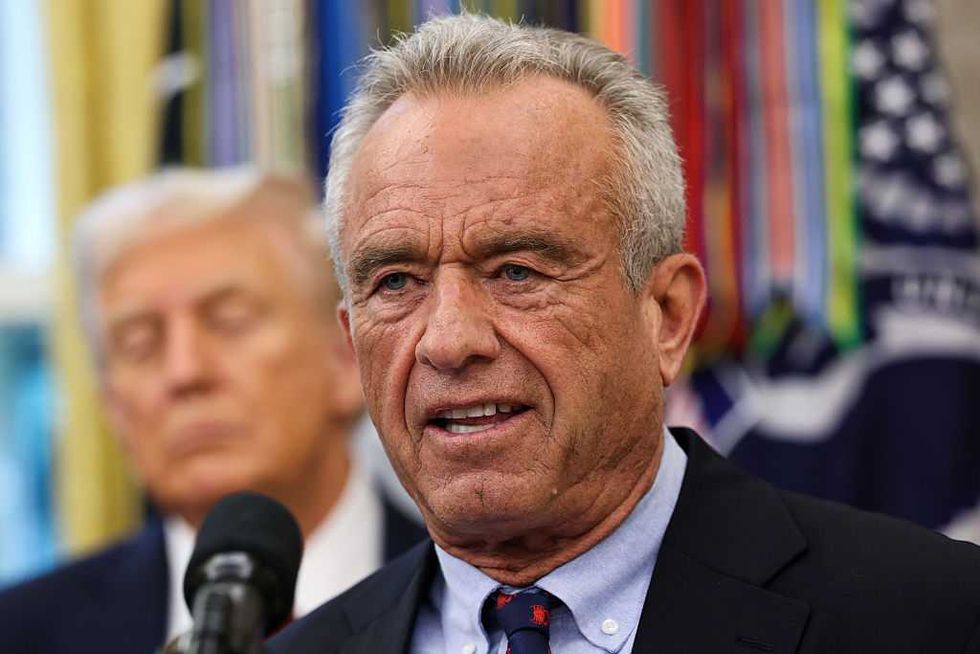
The Trump administration’s all-of-government approach to thwarting construction of offshore wind turbines has included the Department of the Interior de-designating federal waters to turbine development and the Department of Transportation yanking funding, in addition to various steps taken by other agencies. Now the Department of Health and Human Services is taking its swing at the industry. On Tuesday, Bloomberg reported that Secretary of Health and Human Services Robert F. Kennedy, Jr. directed the Centers for Disease Control and Prevention to open an investigation into the potential harms offshore wind farms pose. In late summer, the agency instructed the CDC’s National Institute for Occupational Safety and Health to prepare research about wind farms’ impact on fishing businesses. The effort included Kennedy personally meeting with NIOSH director Josh Howard, in the course of which he gave Howard — a career physician and lawyer who previously oversaw federal efforts on September 11 victims’ health — specific experts to contact, according to the newswire report. The U.S. Surgeon General’s office has also been involved in the initiative.
It’s part of what Heatmap’s Jael Holzman called “Trump’s total war on wind,” an assault that started on President Donald Trump’s first day back in office. Earlier this month, oil major Shell’s top executive in the United States warned that the precedents the administration was setting risked being weaponized against fossil fuel companies once Trump exited power.
In the first real decline ever forecast by the United Nations, global emissions are now expected to fall by 10% below 1990 levels by 2035, according to a report issued Tuesday. But the world remains far off from the 60% reduction goal scientists say is necessary to keep warming below 1.5 degrees Celsius, the target leaders committed to when they signed the Paris Agreement a decade ago. “Humanity is now clearly bending the emissions curve downwards for the first time, although still not nearly fast enough,” Simon Stiell, executive secretary at the UN Framework Convention on Climate Change, told Bloomberg on Tuesday. “We have a serious need for more speed.”
The latest assessment comes as the U.S. is withdrawing from the Paris climate negotiations and other countries are paring back spending on decarbonization ahead of the UN climate talks in Belem, Brazil, next month.
On Tuesday, Bill Gates released a provocative new treatise on climate change in which he laid out what he sees as necessary ahead of November’s climate summit. Before that, on Friday afternoon, the billionaire philanthropist gathered with half a dozen journalists in a conference room in Manhattan to discuss his latest ideas over lunch. Heatmap’s Robinson Meyer, who was in attendance, has a good breakdown of some of what Gates discussed. I also attended the lunch and wanted to highlight another point Gates made: The West is losing the race for new nuclear power. When it comes to fission, China is building more reactors than anyone else, and helped perfect the Westinghouse AP1000 before its successful construction in the U.S. Gates’ own reactor developer, TerraPower, had plans to build its debut plant in China prior to the souring in relations between Washington and Beijing nearly a decade ago. When it comes to fusion, he said, there’s no topping how much funding China has directed toward the technology.
“The amount of money they’re putting into fusion is more than the rest of the world put together, times two,” Gates told us. “There is a substantial amount of Chinese capital going into that, and in fission, they built the most reactors.”
Chemical giant Honeywell has announced a new technology that converts agricultural and forestry waste into ready-to-use renewable fuels that can directly replace the carbon-intensive fuel used by large ships and airplanes. The so-called “Biocrude Upgrading” processing hardware can be provided in modular form and equipped to ships at a moment when global regulators are seeking to slash the roughly 3% of planet-heating emissions that come from cargo vessels. “The maritime industry has a real need for renewable fuels that are immediately available and cost effective,” Ken West, Honeywell’s energy and sustainability solutions president, said in a statement. The news comes nearly two weeks after Trump “torpedoed” — as Heatmap’s Katie Brigham put it — efforts at the International Maritime Organization to slash emissions from regulated ships.
The geothermal startup Eavor said Tuesday that its breakthroughs in drilling had slashed the time it takes to drill its wells underground. The Canadian company said that the results of two years of drilling at its flagship project in Geretsried, Germany, showed its efforts to dig to hotter and deeper locations are working. “Much like wind and solar have come down the cost curve, much like unconventional shale [oil and gas] have come down the cost curve, we now have a technical proof-point that we’ve done that in Europe,” Jeanine Vany, a cofounder and executive vice president of corporate affairs at Eavor, told Canary Media’s Maria Gallucci.
The breakup of the ancient supercontinent 1.5 billion years ago transformed the Earth’s surface environments and laid the groundwork for the emergence of complex life. That’s according to new research by Australian scientists at the University of Sydney and the University of Adelaide. The findings challenge what has long been called the “boring billion,” a time when biological and geological changes effectively stalled. The plate tectonics that reshaped the planet triggered conditions that supported oxygen-rich oceans and fostered the appearance of the first eukaryotes, the ancestors of all complex life. “Our work reveals that deep Earth processes, specifically the breakup of the ancient supercontinent Nuna, set off a chain of events that reduced volcanic carbon dioxide emissions and expanded the shallow marine habitats where early eukaryotes evolved,” Dietmar Müller, a University of Sydney professor and the study’s lead author, said in a press release.
Rob talks New Jersey past, present, and future with Employ America’s Skanda Amarnath.
Electricity prices are the biggest economic issue in the New Jersey governor’s race, which is perhaps next month’s most closely watched election. Mikie Sherrill, the Democratic candidate and frontrunner, has pledged to freeze power prices for state residents after getting elected. Can she do that?
On this week’s episode of Shift Key, Rob talks to Skanda Amarnath, the executive director of Employ America, a center-left think tank that aims to encourage a “full-employment, robust-growth economy.” He’s also a nearly lifelong NJ resident. They chat about how New Jersey got such expensive electricity, whether the nuclear construction boom is real, and what lessons nuclear companies should take from economic history.
Shift Key is hosted by Robinson Meyer, the founding executive editor of Heatmap, and Jesse Jenkins, a professor of energy systems engineering at Princeton University. Jesse is off this week.
Subscribe to “Shift Key” and find this episode on Apple Podcasts, Spotify, Amazon, YouTube, or wherever you get your podcasts.
You can also add the show’s RSS feed to your podcast app to follow us directly.
Here is an excerpt from our conversation:
Robinson Meyer: Is there a nuclear bubble? … As people who are interested in long-term decarbonization, number one, this is quite reminiscent of the environment that hit clean energy companies right as Biden was taking office. And number two, is there a nuclear bubble, and what does this mean for how we should think about nuclear going forward? Because at the end of this, I think the only way that any of this helps the climate is if we build a lot more plants.
Skanda Amarnath: We are definitely in a moment when there’s a lot of froth. I don’t want to say everything — it’s always like, it’ll feel unfair and not accurate to go after every single proposition that’s in markets. Like for example, Rick Perry’s Fermi America, they did an IPO and raised a lot of capital pretty successfully. And they have a plan for how they want to build a lot of stuff out — gas, solar, batteries. They want to build four AP1000s, the large, light-water reactors that are seen as the most recent that we’ve built in the United States, and they think they could do them at the same speed that China builds those same reactors.
On the surface of it, there are parts of it that seem interesting and promising. On the other hand, there’s also parts of it that feel very much wrapped up in the speculative frenzy. It gets more exaggerated when you get to like examples like Oklo. They seem to be very politically connected, specifically to Chris Wright. That plus some very small milestone successes in the fuel supply chain are now being sort of magnified into, They’re going be very successful in building out there first of a kind technology. And even in the space of small modular reactors, what they’re offering seems at least substantially more risky than what may be — outside of the space, so even compared to GE’s proposition for a small boiling water reactor, the technology that’s involved with like Oklo is kind of out there.
And one of the things, the lessons of nuclear, if you look through the history, is the more new stuff you’re doing, the harder it is, the more likely it is that you will get heartburn in terms of cost, in terms of schedule, and you never want to do this again. And it’ll involve a lot of bankruptcy, as it did with the case of the Georgia reactors that were built in the last decade. And so this is a sign that there’s clearly a lot of hype and a lot of willingness to take risk, and it’s not really backed up by fundamentals. That can be sometimes overrated in a boom. But that is something that people will look to in a bust and say, what were we doing here? Why was the price of the stock so high?
Mentioned:
How Electricity Got So Expensive
New Jersey’s Next Governor Probably Can’t Do Much About Electricity Prices, by Matt Zeitlin for Heatmap
Previously on Shift Key: The Last Computing-Driven Electricity Demand Boom That Wasn’t
Meta lays off 600 workers
Amazon lays off 14,000 workers
This episode of Shift Key is sponsored by …
Hydrostor is building the future of energy with Advanced Compressed Air Energy Storage. Delivering clean, reliable power with 500-megawatt facilities sited on 100 acres, Hydrostor’s energy storage projects are transforming the grid and creating thousands of American jobs. Learn more at hydrostor.ca.
A warmer world is here. Now what? Listen to Shocked, from the University of Chicago’s Institute for Climate and Sustainable Growth, and hear journalist Amy Harder and economist Michael Greenstone share new ways of thinking about climate change and cutting-edge solutions. Find it here.
Music for Shift Key is by Adam Kromelow.