The nation of Venezuela perches atop a fifth of the planet’s recoverable crude oil. Due to mismanagement, corruption, failing infrastructure, and a dearth of technical expertise, its output, however, is low — less than a million barrels a day. If production in the country were to continue apace, exhausting the reserve would take over 1,500 years, extending the extraction of fossil fuels as far into the future as the early water wheel lies in society’s past. The reserves-to-production ratio for the United States’ existing oil is, by comparison, a mere 11 years.
The opportunity of all that untapped oil is part of why the Trump administration has seized control of the extra-heavy crude in the Orinoco Basin, which is among the dirtiest and most carbon-intensive oil in the world. Many observers have remarked on the planet-warming potential of the oil takeover, and the revival of Venezuela’s fossil fuel industry would indeed be yet another nail in the coffin of the Paris Agreement’s 1.5 Celsius temperature-rise goal.
But far less has been said about what a more extreme climate would mean for Venezuelans. That’s at least partially because we don’t fully know.
“Venezuela often appears in global climate assessments as a blank spot or an unknown, despite being ecologically significant and highly vulnerable,” Liliana Rivas, a freelance environmental and investigative reporter working in the country, told me.
Neglect isn’t a problem unique to Caracas. The international climate science community has long struggled to accurately represent the developing world in its research, though it has made improvements in recent years. Over a third of the contributors to the latest Intergovernmental Panel on Climate Change report were from institutions based in the Global South — in parts of Africa, Asia, Latin America, and the Caribbean — up from 10% in the report’s first year.
Still, “the IPCC is doing a systematic literature review, and they rely on what scientific literature is available,” Paulina Jaramillo, a professor of engineering and public policy at Carnegie Mellon University, told me. Jaramillo — who is from Medellín, Colombia, and whose father comes from a border town with Venezuela — added that “the common language you see in the reports from Africa and South America is that the peer-reviewed literature is much more limited in those countries.”
Part of that is due to modest funding opportunities for researchers. (Jaramillo said “everyone thought I was crazy” when she decided almost 30 years ago to study environmental engineering in Colombia.) But the absence of long-term datasets makes quality climate research difficult, too. It takes “at least 30 years of continuous observations … to define a climatic period and allow for robust conclusions,” Nature noted in a recent editorial. Climate researchers who want to study Venezuela are, for the most part, restricted to data gathered since the satellite era, post-1980s, which was never designed to offer a detailed local picture.
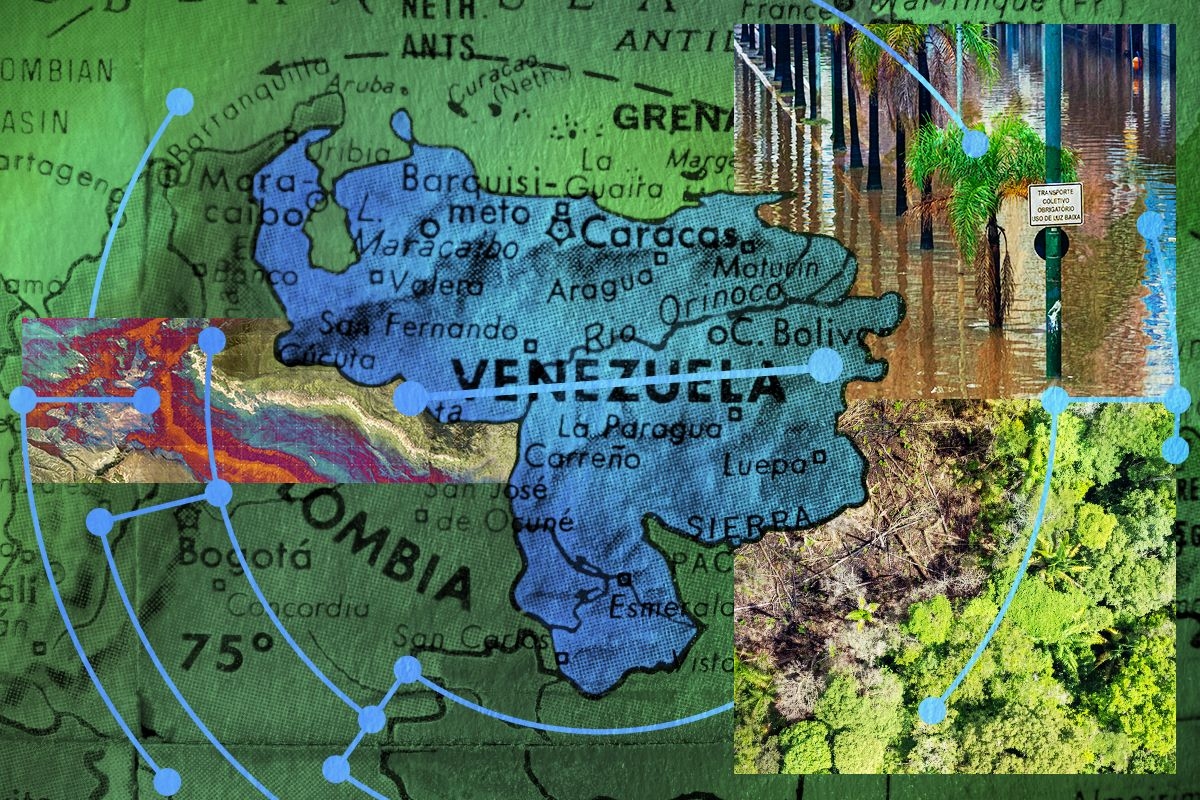
Understanding the climate picture in Venezuela is critical, though. Out of 188 nations in the world, Venezuela ranks 181st in climate vulnerability. The nation faces a laundry list of worsening environmental crises, including extreme flooding, droughts, landslides, heat waves, rising sea levels, deforestation, oil spills, contamination and pollution, and illegal mining. An extreme rainfall event over the Andes and Venezuela Llanos last summer displaced thousands of people, observers estimated, cutting off nearly 10,000 families in the mountainous western state of Mérida from food, water, health care, and adequate sanitation services. By some measurements, Venezuela was also the first nation in the world to lose all of its glaciers.
“What happens [in Venezuela] affects the rest of the world,” Jaramillo told me. Between 2014 and late 2025, almost 8 million people were estimated to have left the country, straining public services in neighboring nations. “Climate change is a threat multiplier,” Jaramillo went on. “We can’t just think, ‘Oh, those are problems in those countries.’ They have global geopolitical implications, in addition to the humanitarian aspect.”
An incomplete picture not only heightens Venezuela’s vulnerability to extreme weather impacts, it also renders the country all but incapable of adapting to them. After all, how can you develop effective strategies without data to inform the designs and operations? Partially because of this, Venezuela has been ranked 142nd out of 192 countries by Notre Dame in terms of its adaptation capabilities. “It’s the worst prepared country in South America” when it comes to climate change, Jaramillo said.
The country’s weather-monitoring infrastructure — which is accessible to researchers — is poorly maintained. A “significant” number of weather stations across Venezuela are inoperable, “limiting the ability to track rainfall, temperature, and extremes with confidence at local scale,” Robert Muggah, the co-founder of the Igarapé Institute, a Brazil-based security and development think tank, told me by email from Davos. “More recently, reporting from the Venezuelan Amazon has described weather stations being looted or relocated for security, leaving major river basins with long gaps in routine measurements.”
Mariam Zachariah, a research associate at London’s Imperial College, told me her team at World Weather Attribution ran into this problem when it tried to investigate whether anthropogenic climate change fueled the catastrophic flooding in the country last year. “You might have 10 weather stations in the region, but when you try to look at them, five will not have data,” she said. “So you can’t really use that. You don’t actually get a good representation of the trend in that region.” The complex natural topography of Venezuela also renders large-scale climate models unreliable, making conclusions drawn from them even less certain.
Following the collapse of Venezuela’s oil production in the mid-2010s, recently removed President Nicolás Maduro’s government also began censoring the country’s environmental statistics. “There is very little transparency and public access to environmental data,” Rivas, the investigative journalist, said.
Reporters working within Venezuela face dangers, too. Joshua De Freitas Hernández, an independent journalist, told me he estimates there are fewer than 20 reporters in his country focused on environmental issues, and none of them are on the climate change beat, specifically. Emiliano Teran Mantovani, a Venezuelan sociologist and political activist, also told me there has been a “decrease in the reports of oil spills and the reports of ecological degradation in the national parks because people do not want to talk.” The government repression is “really, really scary,” he added.
Local reporters who forge ahead find themselves contending with many of the same problems as international researchers: “limited access to official data, restricted access to certain territories, and security risk scenarios affected by mining or extractive activity,” Rivas told me.
The environmental situation is so bad, in fact, that some hope the U.S. takeover of the nation’s oil industry will actually improve it. “Much of the [fossil fuel industry] pollution happening today is the result of abandonment, lack of maintenance, and total absence of environmental oversight,” Rivas said. “I think that in that context, some people, including also environmental observers, cautiously argue that the return of international companies could, under the right conditions, introduce environmental controls, monitoring standards, and technologies that currently do not exist.”
Mantovani, the activist, pushed back on that line of thinking. “The environmental issue is not a priority either for the government or the opposition, or for Donald Trump or Chinese capitalists,” he said. “No one is talking about the environmental issues or climate issues.”
The Trump administration has argued that the U.S. takeover of the oil industry will benefit the Venezuelan people. But while “extreme weather in Venezuela will not suddenly shift because of a single military operation,” as Muggah of the Igarapé Institute put it to me, fossil fuel-related pollution could have immediate public health impacts on local and Indigenous communities. (Illegal mining, while not as directly linked to climate change as oil production, is another extractive industry compounding the twinned environmental and humanitarian crises in the country.)
In the short term, “When security operations and political upheaval intensify, the institutions that keep people safe during heat waves, floods, and disease outbreaks often get weaker,” Muggah added. Worse yet, due to the many ongoing uncertainties about Venezuela’s future climate and Caracas’ limited ability to identify those risks or adapt, there will almost certainly be extreme-weather refugees in the country in the future.
International research institutions say, “Well, we don’t know what is happening in Venezuela or if this extreme weather is related to climate change, because there is no data,” De Freitas Hernández, the independent Venezuelan journalist, told me. “That’s the first thing all institutions have to say: ‘We don’t have the data.’ We need the data.”