Attempts to quantify the costs of climate change often end up as philosophical exercises in forecasting and quantifying the future. Such projects involve (at least) two difficult tasks: establishing what is the current climate “pathway” we’re on, which means projecting hard-to-predict phenomena such as future policy actions and potential climate system feedbacks; and then deciding how to value the wellbeing of those people who will be born in the decades — or centuries — to come versus those who are alive today.
But what about the climate impacts we’re paying for right now? That’s the question explored in a working paper by former Treasury Department officials Kimberley Clausing, an economist at the University of California, Los Angeles, and Catherine Wolfram, an economist at the Massachusetts Institute of Technology, along with Wolfram’s MIT colleague Christopher Knittel.
“We wanted to do the accounting exercise and put it all together,” Wolfram told me. Their method: Simply add up the existing harms of climate change, and boom, there’s your answer.
This approach stands in contrast to the more well-worn modeling and forecasting projects that make up much of the climate harms literature. “Projections about the future are important to make future-oriented policy,” Clausing told me. “But one of the things that’s kind of surprising and interesting to us that I don’t think has been fairly accounted for is how much climate change is already affecting household budgets.”
The paper is meant to intervene in current debates in climate and progressive policy circles over affordability — namely whether policy to address climate change should be put on the back (induction?) burner in light of concerns about how restrictions on fossil fuels or mandates for renewable energy can increase consumer costs, especially utility bills.
“What really motivated the paper, to be honest, is that we noticed that a lot of observers have made statements about climate policy action where they’re like, We’d love to do this, that, or the other thing, but it’s hard to do because the action would fall more heavily on the poor.”
The paper began its life in the fall as part of the semi-annual Brookings Papers on Economic Activity conference before being released this week as a working paper by the National Bureau of Economic Research this week.
Their research has not yet been peer reviewed, but the authors found that even using what they describe as a “narrow accounting” method — looking only at climate impacts from heat and extreme weather on household budgets and mortality — there were “sizable costs to U.S. households from recent climate change patterns.” Those started at $400 per year and went as high as $900 depending on how extreme weather were attributed to climate change, adding up to an aggregate cost of about $50 billion to $110 billion nationwide.
The direct effects of high temperatures may be easier to forecast, but the most extensive damage of climate change, in the United States, at least, runs downstream from high temperatures: storms, floods, and especially wildfires. Clausing and the authors attribute this to the fact that the United States has already made huge investments in adapting to heat in the form of air conditioning. Adaptations for natural disasters — flood walls, moving homes and businesses out of flood plains, universal indoor air purification, building codes for fire prevention — are farther behind.
Looking specifically at cost increases due to health effects from climate change, wildfires are the primary cost center.
“Wildfires have two impacts,” Wolfram told me. “One is the destruction that they cause — we see that in property insurance. The other thing, and that is probably the most surprising to us, is how bad the wildfire smoke has become.”
Those same wildfires, of course, feed into spiraling insurance costs, especially in the West.
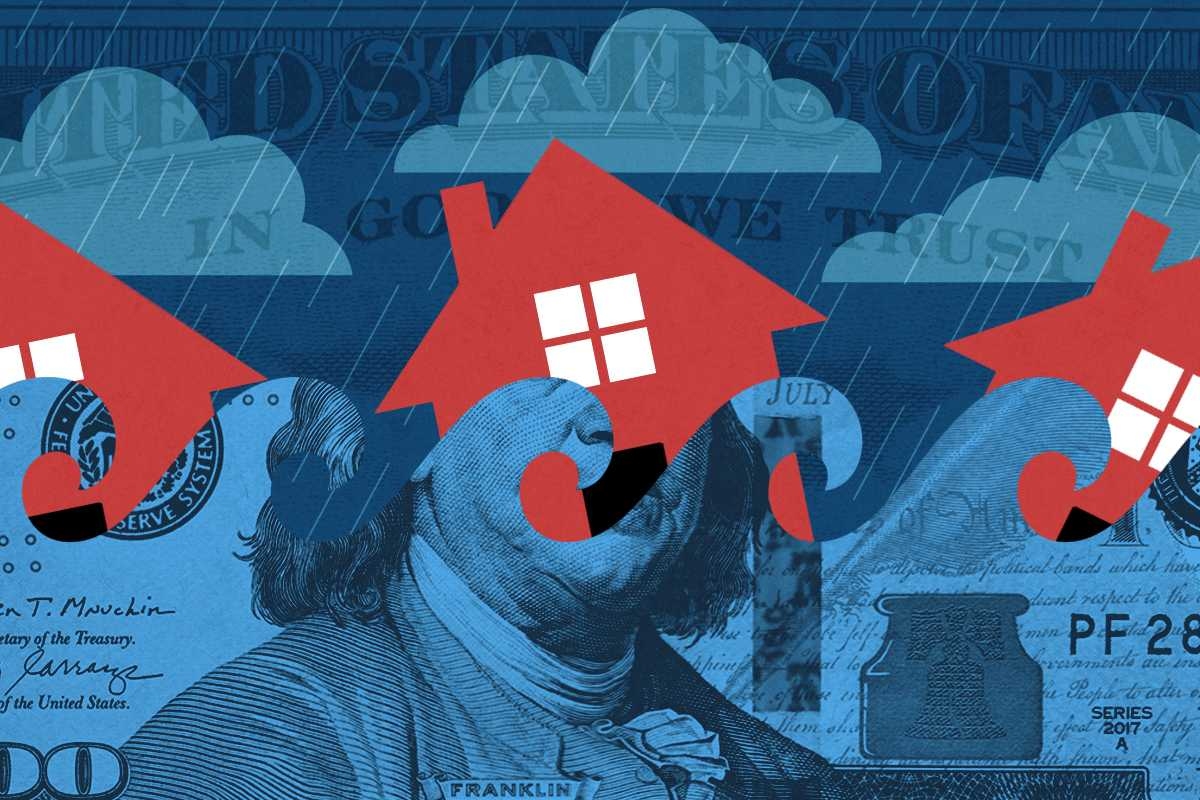
Insurance costs top the list of household costs the authors attribute to climate change more broadly, making up more than half of the total. Citing research on homeowners insurance by University of Pennsylvania and University of Wisconsin researchers Benjamin Keys and Philip Mulder, the authors found that “average nominal premiums rose by 33% between 2020 and 2023, with disaster-prone areas experiencing particularly steep increases.”
One frequent argument against climate mitigation policies is that they cost the poor disproportionately; for example, a tax on gasoline has a bigger proportional effect on low-income drivers because a greater portion of their income is spent on fueling their car. But “if you don’t do anything, that has a disproportionate burden on the poor,” Clausing told me. That’s because the costs of dealing with climate change — higher insurance premiums, higher health insurance premiums, higher electric bills for more air conditioning — weigh more heavily on people with lower incomes, she and her co-authors found.
“Poor people may have a harder time and be more likely to be displaced by disasters,” Clausing told me.
The paper’s authors emphasized that their results show the need for climate adaptation as well as emissions-reducing policy, but also that forward-looking adaptation can’t happen if there’s insufficient information. Insufficient information appears to be exactly what some people want. Disputes over climate information have a well known political valence, with federal agencies under the current administration reducing their efforts to collect and publish climate data.
But the private sector has its own reasons not to be completely fulsome with climate-related risk data.
The New York Times reported this weekend, for instance, that the online real estate marketplace Zillow has removed climate risk scores from “more than one million home sale listings,” following complaints from real estate agents.“They’re doing people a disservice,” Clausing told me when I asked her about Zillow’s action.
“Of course, if my home’s on a floodplain, I’m not happy that this information is available to everyone on Zillow,” Clausing said. But the alternative is, “if my home’s in a floodplain, just pretending that that’s the same as if it were in a very safe place.” Which is fine, but it won’t stop your insurance bill from rising.







 Seems significant. CGEP