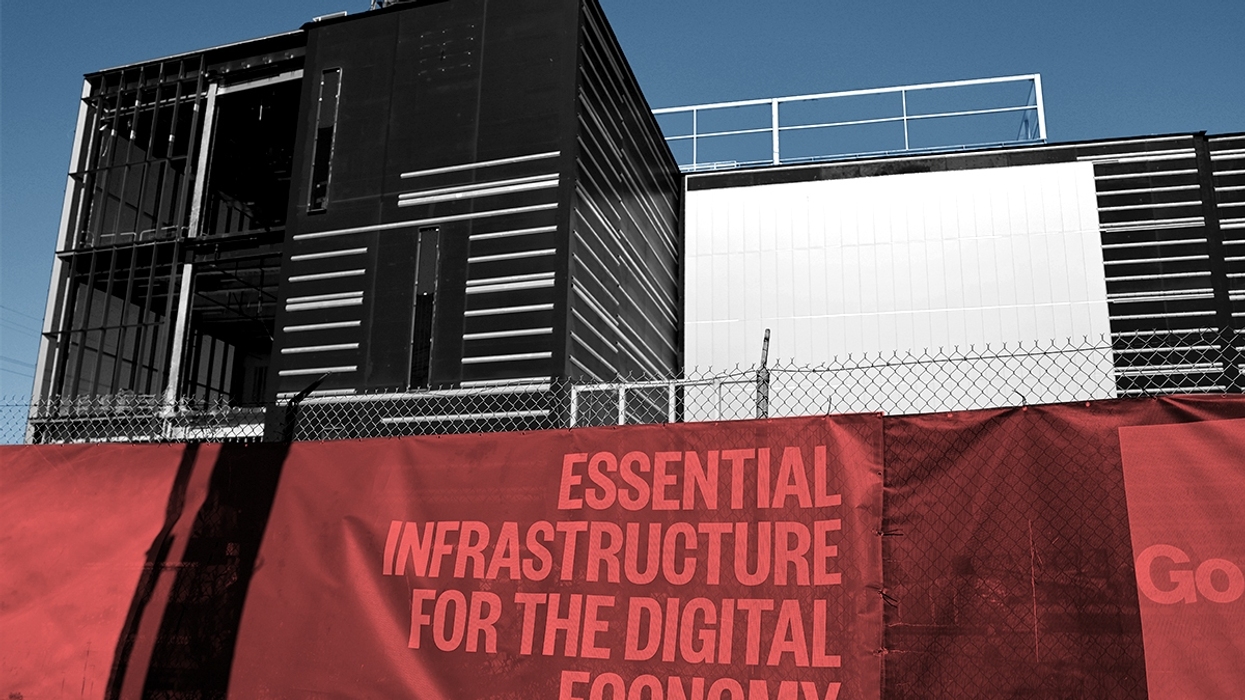
“We believe the clean piece is important,” Net Power CEO Danny Rice said during an August earnings call when he announced the company’s pivot to building unabated natural gas plants. “But just as it’s always been, it will only come at scale once society’s basic energy pillars of reliable, affordable power are fully in place. Power demand is outstripping supply today.”
Net Power’s pivot is a sign not only that the AI boom has eroded market appetite for clean power, but that U.S. policies supporting carbon capture — primarily the 45Q tax credit that President Trump’s One Big Beautiful Bill Act recently expanded — are still not enough to support the technology’s deployment in the power sector.
“The long history of doing CCS in the United States is there isn’t enough public funding to get companies to deploy it at scale,” Jack Andreasen Cavanaugh, a senior research associate at Columbia University’s Center on Global Energy Policy, told me.
This is actually the second major pivot the company has made in less than a year. Last November, Net Power was still testing its proprietary oxy-combustion technology at its demonstration site in La Porte, Texas. The tech was designed to burn natural gas in a chamber with pure oxygen, producing a purer stream of CO2 than when natural gas is burned in regular air. Net Power’s system could recycle some of that CO2 for power generation and capture the rest more efficiently than a conventional gas plant could. The company had not yet demonstrated that the system could generate more energy than it used, however.
By that point, Net Power had determined that its oxy-combustion plants, if they ever even did generate net power, would not be economically competitive anytime soon. In its 2025 Q3 financial report, the company said it had “decided to broaden the scope of its business” and develop more conventional natural gas plants with carbon capture equipment tacked on. It signed a letter of intent with Entropy, a Canadian company building “post-combustion” carbon capture equipment, to bring the tech to the United States, and ordered two 30-megawatt Siemens natural gas turbines for 2028 delivery.
“For us and everyone else in the power and data center space these days, speed is everything,” Rice said at the time. “We believe gas turbines with [post-combustion capture] can and should be the fastest-to-market and most cost-competitive clean, firm solution for our prospective customers.”
He told investors that rising costs were one of the setbacks Net Power faced in building its first-of-a-kind oxy-combustion plant. It was highly unlikely the company could finance and build a $1.7 billion, 200-megawatt plant before completing all its testing, he said. The best-case scenario for the plant to come online was 2030 or 2031, and costs might keep rising with inflation. The company could either bet on that prospect and keep bleeding cash, or “slow down that spending in order to free up some of our resources for near-term accretive opportunities.” As a public company with shareholders to answer to, there was really only one choice.
By the end of 2025, Net Power decided to suspend its oxy-combustion development and testing activities altogether, according to its year-end SEC filing.
Six months later, the company’s thesis changed again. Gas turbines with post-combustion capture, it turned out, were not the “fastest-to-market and most cost-competitive” solutions that the company had hoped they’d be. Whereas once upon a time, electricity buyers considered a range of factors when shopping around for power, including carbon emissions, the reality was that they were now only looking for three qualities: speed, reliability, and scale. “Natural gas power generation, co-located with customer load, and deployable on a fast timeline, is how we expect to meet that demand today,” Rice told investors, adding that the company hoped to add carbon capture to its projects in the future.
To date, only one proposed U.S. natural gas plant with carbon capture has announced a deal to sell its prospective power. In October 2025, Google signed a power purchase agreement with the Broadwing Energy Center, an Illinois plant under development by a company called Low Carbon Infrastructure.
“There is a massive demand for unabated gas right now, and there is much less of a demand for carbon capture,” Cavanaugh said. He told me there are still lots of conversations happening between hyperscalers and carbon capture companies, but the physical realities and costs of capturing, transporting, and storing carbon from natural gas plants remain obstacles.
The Global CCS Institute published its annual Global Status of CCS report this week, which found more than 266 carbon capture, transport, or storage projects are under development in the U.S., but permitting delays and policy uncertainty are stalling their progress. “Inflation and rising capital costs have weakened project economics, reducing the effectiveness of existing policies, such as tax and investment credits,” the report said.
That doesn’t mean there aren’t still companies trying. Net Power may have given up on oxy-combustion power plants for now, but Arbor Energy, a startup founded by former SpaceX engineers, is just ramping up. Arbor announced a milestone in the development of its own oxy-combustion power generator last week, running a key piece of its system — a supercritical CO2 turbocompressor — for more than two hours at high speeds.
Arbor differentiates itself by using 3D-printed turbines and developing smaller, more modular plants. It’s scaling more incrementally than Net Power tried to, starting with a 1-megawatt demonstration plant in California that is “weeks away” from operating, the company’s Chief Operating Officer Alicia Harmon told me — although the project won’t include carbon storage. It plans to build a 25-megawatt demonstration plant by 2028, also sans storage, before manufacturing commercial-scale systems.
Arbor actually went through a pivot of its own due to the data center boom. The founders originally planned to focus on bioenergy with carbon removal, using the oxy-combustion technology to generate power from biomass and storing the resulting CO2 underground. Over time, though, it became clear that demand for power outpaced demand for carbon removal, and natural gas was more abundant than biomass.
I asked Harmon whether the company thought there was market demand for carbon-capture gas plants. Is anyone willing to pay that green premium right now? “Honestly, my answer is no,” she said, but the company sees a path to erasing the green premium by the early 2030s. She added that Arbor’s technology is already “very close” to parity with combined-cycle natural gas plants when the 45Q tax credit is taken into account.
Last month, Net Power announced it had acquired 123 megawatts’ worth of Wärtsilä reciprocating engines, in addition to the Siemens turbines it had already ordered. Reciprocating engines are among the dirtiest natural gas power-generation technologies. A recent report from Earthjustice estimated that a 1-gigawatt plant powered by reciprocating engines would emit 1.5 times as much CO2 per year as one powered by the “combined cycle” technology most modern plants use, and twice as much nitrogen oxides and fine particulate matter. It has not yet disclosed any data center partners to sell the power to.
Net Power declined to comment on this story.