A group of local activists recently rallied against a major new industrial site in their area.
They worried the new facility was going to suck up water and electricity. They fretted about the chemicals and risky materials it might store on site. And they argued that the land’s “light industrial” zoning designation is not appropriate for the incoming tenant.
All in all, it sounded like a typical neighborhood protest against an incoming data center. As we’ve covered here at Heatmap News, local opposition to data centers has surged over the past year, ultimately playing a role in the demise of about 25 proposed projects nationwide in 2025.
But the new facility wasn’t a data center at all. It was a factory set to produce solar panel components. The proposed Silfab Solar factory in Fort Mill, South Carolina, has fought legal efforts to change local zoning rules since May 2024 as residents have fought it in a spiraling series of cases. As of January, the battle was still ongoing.
The case serves as a reminder: While the ongoing exurban land-use backlash is notionally about data centers, it will not necessarily stop there. Many of the issues that concern residents about data centers — their power use, water use, and lack of jobs — are not unique to these vast computing facilities. Data centers more closely resemble modern factories and other industrial facilities than they do the vast, job-intensive projects of last century.
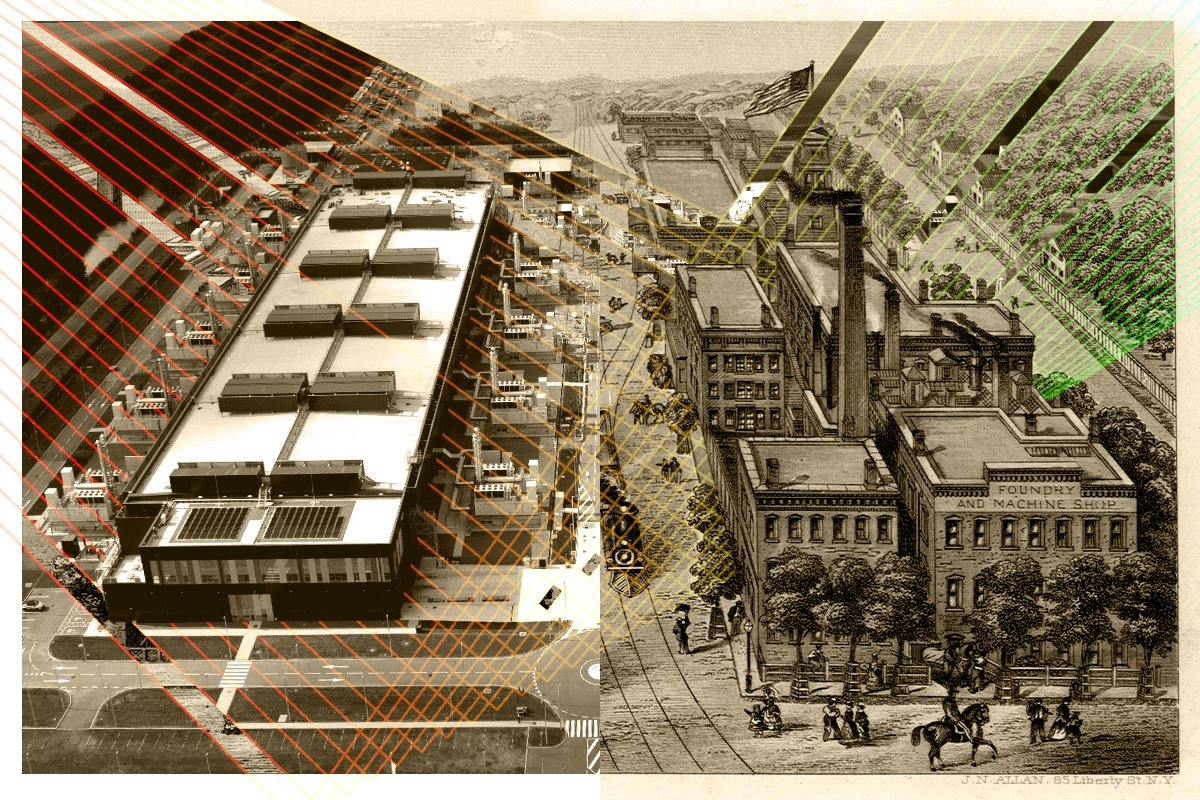
One thread unites many opponents’ stated concerns: AI data centers, which consume prodigious amounts of electricity, aren’t the kind of industrial development Americans are used to. The Bethlehem Steel site or the Ford River Rouge factory used huge amounts of energy at their peak — but also employed more than 100,000 people. Although a single data center can boast dozens of megawatts of backup diesel generation — potentially turning it into an industrial-scale polluter — it is also unlikely to create few if any permanent jobs.
This isn’t to say that AI data centers create no benefits for their communities: If their community benefits or tax packages are structured well, AI data centers can lower energy costs, help local nonprofits, or generate staggering amounts of public revenue. AI data center projects also, of course, employ construction and electrical workers (and enrich local landowners). They can also generate several dozen permanent jobs, according to Matt Dunne, the founder and executive director of the Center for Rural Innovation.
“In the places where data centers are showing up, the jobs are really quite good. These are 50 really good, high-paying jobs — and in a community of 10,000 people, that’s not nothing,” Dunne told me.
With limited land at their disposal to allocate for new developments, local officials typically prefer to see hundreds or even thousands of new jobs created by a new project. They imagine creating facilities like the BMW plant in Greer, South Carolina, or the Volkswagen facility in Chattanooga, Tennessee, both of which transformed their respective regions after they opened.
But AI data centers are more like wind and solar farms — or even oil or gas pipelines — than the factories or refineries of yore. They are a particularly “jobless” form of industrial development, and they seem to compare poorly with the more labor-intensive forms of economic activity that many exurban or rural communities say they crave.
The researcher Advait Arun at the Center for Public Enterprise also points out that some AI data centers take advantage of longstanding local tax incentive packages designed to help more traditional “cloud” data centers, which use less power and are less risky investments than the “neoclouds” and other more speculative proposals popping up across the U.S. No jobs and no tax revenue don’t add up to a particularly appealing package for local governments.
The challenge is that in the next few years, more forms of economic development will come to resemble AI data centers than factories or refineries. The country’s steel plants and shipyards used to employ tens of thousands of people. But SpaceX’s rocket factory near Brownsville, Texas, now employs closer to 4,000 people. Taiwanese chipmaker TSMC’s plant in Arizona — probably the country’s most advanced manufacturing facility — employs only 3,000. That number might eventually double, but it still pales in comparison to the heavy industrial sites of old.
The post-war factories of old were detrimental to their communities in any number of other ways — sending deadly particulate matter into the air, releasing chemicals into the water, and leaching contaminants into the soil — and drew their fair share of protesters as a result. These next-generation facilities share few if any of their forebears’ foibles, but that might not help them with the public, Jonas Nahm, a Johns Hopkins University professor who studies industrial policy, told me.
“The factories now being built are not the smokestack industries of the past. They are cleaner, and often among the least locally polluting facilities in the economy,” Nahm said.
“But political opposition no longer tracks pollution alone,” he added. “It increasingly tracks who bears the costs of scarce resources—electricity, water, land—and who captures the benefits. On that dimension, advanced factories can start to resemble data centers: clean in emissions, heavy in infrastructure, and relatively light on jobs.”
Silfab is not alone among manufacturers in facing local opposition — factories across the country have pushback on par with the budding data center rebellion. Rivian’s proposed 1,800-acre manufacturing facility in Stanton Springs, Georgia, has dealt with a “No2Rivian” campaign focused on “land and water preservation.” The Chinese company Gotion faced years of local opposition when it tried to build a plant in Big Rapids, Michigan, before it eventually killed the project.
Economic and national security imperatives will not ease these challenges in the near term. If America wants to compete with China’s dominant electronics or batteries industries, then its manufacturing industry must become even more capital-light. Some Chinese firms, such as the EV maker Zeeker, have begun experimenting with “lights-out factories,” where robots alone can build a product without much human involvement. Despite China’s much larger population, the country now uses more industrial robots per 10,000 workers than the United States does. (South Korea and Japan still lead in robot density.)
This isn’t the first time automation and technological change have transformed the labor market in exurban and rural communities, Dunne said.
“The great automation of agriculture is what drove a lot of people to cities in the Twenties, Thirties, and Forties — about half of Americans were employed in agriculture at that moment in time, and then these things called tractors came along,” he said. “Manufacturing today is going through the same thing.”
Manufacturing has become progressively less job-intensive over the past few decades, he added. Many companies invested in manufacturing “competitiveness” programs, he said, which “sounded great until folks realized the ‘competitiveness’ of a certain plant meant shedding 60% to 70% of its jobs.”
Nahm, the Johns Hopkins professor, agreed. “The tension is that competitiveness now requires more automation, not less,” he said. “We can’t rely indefinitely on tariffs or subsidies to make domestic production viable, and China is showing what large-scale industrial automation and AI deployment can achieve. The factories that actually make reshoring work, however, are unlikely to recreate the mass employment that once tied industrial facilities tightly to local communities.
“That gap — between national economic goals and local political buy-in — is where the next set of conflicts is likely to emerge,” he added.
Of course, AI data centers differ from factories in key ways. New data centers suck up huge amounts of electricity despite taking up a small plot of land, a concentration of power use rivaled only by a few industries, such as aluminum smelters. Factories also tend to support a network of local high-end employment — engineers, machinists, robotics specialists — even if robots themselves do much of the assembling work.
But if a future policymaker wants to revive U.S. manufacturing — as every president in recent decades has vowed to do — then they will discover a new raft of obstacles. And the employment juice of a manufacturing-focused economy might no longer deliver the benefit that it once did.
In one big way, factories and data centers present similar risks for local communities. Often a town or county will only have a few high-quality sites for economic development, Dunne, the Center for Rural Innovation director, said. Once a facility uses that land, then the community’s economic fate is tied up with that industry.
“I think we’ve all seen the story where over-dependence on a single industry — not to mention a single company — does not go well,” Dunne said. “If a data center is coming in and going to take over a huge amount of your potential developable property, you still need to be thinking about how to diversify your economy effectively.”
“The only way to do that,” he continued, “is to continue to create wealth in the community and invest in local entrepreneurship, to invest in quality-of-life amenities, in quality K-12 schools — all the things that make a place exciting for folks to want to live in.”