You’re out of free articles.
Log in
To continue reading, log in to your account.
Create a Free Account
To unlock more free articles, please create a free account.
Sign In or Create an Account.
By continuing, you agree to the Terms of Service and acknowledge our Privacy Policy
Welcome to Heatmap
Thank you for registering with Heatmap. Climate change is one of the greatest challenges of our lives, a force reshaping our economy, our politics, and our culture. We hope to be your trusted, friendly, and insightful guide to that transformation. Please enjoy your free articles. You can check your profile here .
subscribe to get Unlimited access
Offer for a Heatmap News Unlimited Access subscription; please note that your subscription will renew automatically unless you cancel prior to renewal. Cancellation takes effect at the end of your current billing period. We will let you know in advance of any price changes. Taxes may apply. Offer terms are subject to change.
Subscribe to get unlimited Access
Hey, you are out of free articles but you are only a few clicks away from full access. Subscribe below and take advantage of our introductory offer.
subscribe to get Unlimited access
Offer for a Heatmap News Unlimited Access subscription; please note that your subscription will renew automatically unless you cancel prior to renewal. Cancellation takes effect at the end of your current billing period. We will let you know in advance of any price changes. Taxes may apply. Offer terms are subject to change.
Create Your Account
Please Enter Your Password
Forgot your password?
Please enter the email address you use for your account so we can send you a link to reset your password:
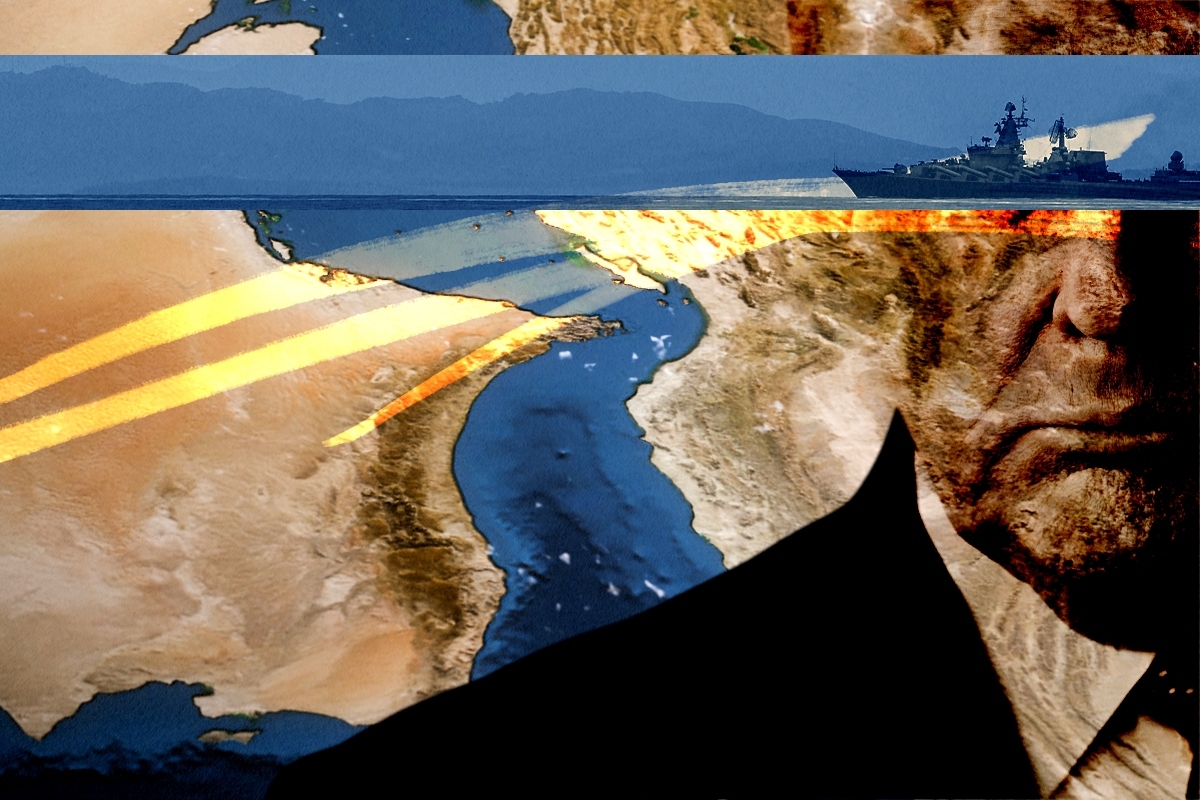
Big questions about naval strategy and the oil economy with Cornell University’s Nicolas Mulder.

After negotiations between the United States and Iran broke down Sunday without a deal, the United States Central Command said it would “begin implementing a blockade of all maritime traffic entering and exiting Iranian ports” Monday morning.
It’s hardly like traffic through the Strait of Hormuz had been unencumbered before that. The strait has been largely closed to through traffic since the beginning of March thanks to the threat of Iranian strikes on ships going in and out of the Persian Gulf. That has remained the case even after the ceasefire deal was supposed to have opened up the waterway last week. Only a few countries have been able to get their tankers out, mostly those with close trade relationships with Iran, including China.
President Trump has been seeking to reverse that state of play and open the strait to non-Iranian traffic (e.g. oil, liquified natural gas, and fertilizer coming in and out of the Gulf states), whether by badgering European allies to help clear the strait and by having U.S. Navy ships traverse the channel to clear mines and demonstrate it’s safe to navigate. He appears to have ultimately settled on blockading the blockaders.
The president said Monday on Truth Social that 34 ships had sailed through the strait on Sunday, a number that has not been confirmed by third party sources. In the run-up to the U.S. blockade, about 10 to 12 ships were sailing through the strait per day, according to marine data service Kpler and The New York Times.
So, is the blockade an escalation of U.S. pressure on Iran? A violation of the ceasefire? A “pacific blockade” designed to pressure Iran without resorting to direct strikes? And how would it work, anyway?
I spoke with Nicolas Mulder, an assistant professor of history at Cornell University and the author of The Economic Weapon: The Rise of Sanctions as a Tool of Modern War, to try and get some of my questions answered. This interview has been condensed and edited for clarity.
Let’s start from the beginning. What is a naval blockade? And how does it different from typical naval warfare?
A naval blockade is actually interesting because it is a form of warfare that has been quite regulated for quite a long time already under international law. A lot of our modern understanding of the laws of belligerence and neutrality actually comes from blockades because they impose an important stricture on international maritime traffic. As a result, they raise all sorts of questions about who wars are fought between, and what wars mean for the civilian economies of the countries involved, and what they mean for the relationship of the belligerent states and third countries.
For most of U.S. history, the U.S. was not the blockader, but the neutral wanting to bypass blockades. The reason that the United States concretely intervened in the First World War and began to really involve itself with the power politics of Eurasia in 1917 is because it insisted on its neutral rights to trade with Britain when Germany had declared an unrestricted submarine warfare campaign that was effectively a blockade of the British Isles.
Even before that, the Union used it against the Confederacy.
In the 18th century, all the big great power wars — the Seven Years War, the various succession wars, the Napoleonic Wars — all of those involved blockades.
What I find interesting is that we have this ceasefire. We have these negotiations, which are apparently still going on. But then we also have the blockade. You seem to be arguing that blockades are a part of warfare. So, is this implying that the U.S. Navy is still potentially going to be shooting at stuff, even if there’s a so-called ceasefire?
That’s the big uncertain aspect of the current situation. We are not back into the same war that we were in last week before the ceasefire took effect. The way I would interpret this is that it’s a kind of fudge. From the perception of the Trump administration, it needs to do something to not look weak, but at the same time wants to avoid the risks of a full resumption of kinetic warfare and a massive air campaign, which they had pursued for six weeks to very mixed and disappointing effects.
The one historical parallel that I think can help us make sense of what they may be attempting to do now is the practice in the 19th century of “pacific blockade.” There were several conflicts, beginning in the 1820s with the Greek War of Independence and then through a whole bunch of Latin American wars and Asian conflicts, where European great powers would blockade small countries — not to declare war on them, but to prevent any of their ships from entering or leaving to put serious pressure on them.
What they were doing in that situation was to use wartime levels of pressure without initiating the full war because they knew that the target states were basically too weak to retaliate and did not have the naval power to contest that blockade.
How can we see this operation in Iran as part of a continuum of using these strangulation-type strategies against much weaker opponents?
One way to interpret what they’re trying to do now is to apply that Venezuela-Cuba template to Iran, and to wager that if they play this carefully, they might be able to bring real economic pressure to bear without provoking Iran into as full-scale a retaliation as it was undertaking before.
But that Venezuela-Cuba template is difficult to implement in the case of Iran for two simple reasons. One is just that Iran has, of course, shown that it has quite a lot of military capacity to retaliate with drones and missiles, and also mines and small ships and submarines. It also has the ability to widen its own maritime disruption in the region, for example by working with the Houthis to really stem the flow of traffic through the Bab-el-Mandeb Strait.
What works in the Western Hemisphere, where the United States has a really unrivaled military dominance, may not be reproducible in this strategic theater.
What does the geography tell you about the ability to impose or contest a blockade like this?
They may be doing it with multiple rings, or multiple screens — a light initial screen, and then bigger barriers of ships a bit further away, so as to not risk most of their force too close to the Iranian coastline. We saw in the early phase of the war that some carrier strike groups began to operate over time further and further away from the Iranian coast, presumably to avoid the risk of being hit with missiles and drones.
In this case, one of the questions is, what kind of resources are needed to keep that going? The U.S. did run a blockade against Iraq for most of the 1990s that was in the Persian Gulf itself, which is very narrow. Iraq’s ports are a tiny sliver of land that ends in the Persian Gulf. So that was a very small stretch of coastline.
Iran should still be manageable, but it will require a wider screen, and potentially one that really crosses the entire Arabian Sea somewhere from the southern coast of Oman, diagonally, northeastwards to Pakistan, or at least the Pakistan-Iranian border, and potentially a bit further out. And if there is also interference in the Red Sea, then the U.S. Navy is going to have to route most of disabled forces all the way around Cape of Good Hope to move that whole force into the Indian Ocean.
I think that the Red Sea contingency is quite important to how this shapes up.
CENTCOM said yesterday that this blockade is on ships going in and out of Iranian ports. I wonder if this is unique historically — both a blockade of Iran and trying to impose freedom of navigation elsewhere?
It’s interesting, right? Because indeed, there is the commitment to freedom of navigation. But then it also has been suggested that the U.S. Navy will stop all ships that have paid any toll or transit fee to the [Islamic Revolutionary Guard Corps], and that paying that toll ipso facto would make their passage illegal. For that I don’t know any good historical precedent.
The other historical precedent is probably actually the Ottoman Empire and Russia and World War I. The Ottoman Empire was bottling up Russia’s Black Sea Fleet in the Black Sea by its control over the Turkish straits, which actually imposed a really serious, long run cost on the Russian economy. It’s one of the things that really fed us in the Russian Revolution. But at the same time, the Ottoman Empire was itself being blockaded by British and French forces in the Mediterranean.
Iran is blockading [Gulf Cooperation Council] states selectively — though of course, it is allowing through some shipments. But those shipments are then going to be intercepted, presumably by the Americans. So the de facto result of it is that no one is really going to be able to leave the Gulf. And that’s kind of where I see this game theoretically ending up.
So it seems like the result of this won’t be hugely different than what things were a few weeks ago, just with fewer Iranian ships getting out.
Also ships of those countries that negotiated transit with Iran.
If you looked at the news coming out of Asia and the diplomatic communiques of a large number of Asian states that brokered bilateral arrangements with Iran — so Pakistan, India; Bangladesh had done so; China, of course — but also countries that have otherwise fairly good links with the United States — the Philippines, Malaysia, Vietnam — all of them had essentially accepted that some payment to the IRGC was now the new cost of doing business. They were so desperately in need of energy supplies for the population that they decided to enter negotiations, even if, in principle, they would prefer freedom of navigation.
The likely diplomatic contestation or diplomatic issues coming out of this blockade are also going to be related to Asia, and that’s where I would focus our attention.

Log in
To continue reading, log in to your account.
Create a Free Account
To unlock more free articles, please create a free account.
Emails raise questions about who knew what and when leading up to the administration’s agreement with TotalEnergies.
The Trump administration justified its nearly $1 billion settlement agreement with TotalEnergies to effectively buy back the French company’s U.S. offshore wind leases by citing national security concerns raised by the Department of Defense. Emails obtained by House Democrats and viewed by Heatmap, however, seem to conflict with that story.
California Representative Jared Huffman introduced the documents into the congressional record on Wednesday during a hearing held by the House Natural Resources Committee’s Subcommittee on Oversight and Investigations.
“The national security justification appears to be totally fabricated, and fabricated after the fact,” Huffman said during the hearing. “DOI committed to paying Total nearly a billion dollars before it had concocted its justification of a national security issue.”
The email exchange Huffman cited took place in mid-November among officials at the Department of the Interior. On November 13, 2025, Christopher Danley, the deputy solicitor for energy and mineral resources, emailed colleagues in the Bureau of Ocean Energy Management and the secretary’s office an attachment with the name “DRAFT_Memorandum_of_Understanding.docx.”
According to Huffman’s office, the file was a document entitled “Draft Memorandum of Understanding Between the Department of the Interior and TotalEnergies Renewables USA, LLC on Offshore Wind Lease OCS-A 0545,” which refers to the company’s Carolina Long Bay lease. (The office said it could not share the document itself due to confidentiality issues.)
While the emails do not discuss the document further, the November date is notable. It suggests that the Interior Department had been negotiating a deal with Total before BOEM officials were briefed on the DOD’s classified national security concerns about offshore wind development.
Two Interior officials, Matthew Giacona, the acting director of BOEM, and Jacob Tyner, the deputy assistant secretary for land and minerals management, have testified in federal court that they reviewed a classified offshore wind assessment produced by the Department of Defense on November 26, 2025, and then were briefed on it again by department officials in early December. They submitted this testimony as part of a separate court case over a stop work order the agency issued to the Coastal Virginia Offshore wind project in December.
“After my review of DOW’s classified material with a secret designation,” Giacona wrote, “I determined that CVOW Project’s activities did not adequately provide for the protection of national security interests,” leading to his decision to suspend ongoing activities on the lease.
Giacona and Tyner are copied on the emails Huffman presented on Wednesday, indicating that the memorandum of understanding between Total and the Interior Department had been drafted and distributed prior to their reviewing the classified assessment.
The final agreement both parties signed on March 23, however, justifies the decision by citing a series of events that it portrays as taking place after officials learned of the DOD’s national security concerns.
The Interior Department paid Total out of the Judgment Fund, a permanently appropriated fund overseen by the Treasury Department with no congressional oversight that’s set aside to settle litigation or impending litigation. The final agreement describes the background for the settlement, beginning by stating that the Interior Department was going to suspend Total’s leases indefinitely based on the DOD’s classified findings, which “would have” led Total to file a legal claim for breach of contract. Rather than fight it out in court, Interior decided to settle this supposedly impending litigation, paying Total nearly $1 billion, in exchange for the company investing an equivalent amount into U.S. oil and gas projects.
But if the agency had been negotiating a deal with Total prior to being briefed on the national security assessment, it suggests that the deal was not predicated on a threat of litigation. During the hearing, Eddie Ahn, an attorney and the executive director of an environmental group called Brightline Defense, told Huffman that this opens the possibility for a legal challenge to the deal.
I should note one hiccup in this line of reasoning. Even though Interior officials testified that they were briefed on the Department of Defense’s assessment on November 26, this is not the first time the agency raised national security concerns about offshore wind. When BOEM issued a stop work order on Revolution Wind in August of last year, it said it was seeking to “address concerns related to the protection of national security interests of the United States.”
During the hearing, Huffman called out additional concerns his office had about the settlement. He said the amount the Interior Department paid Total — a full reimbursement of the company’s original lease payment — has no basis in the law. “Federal law sets a specific formula for the compensation a company can get when the government cancels an offshore lease,” he said, adding that the settlement was for “far more.” He also challenged a clause in the agreement that purports to protect both parties from legal liability.
Huffman and several of his fellow Democrats also highlighted the Trump administration’s latest use of the Judgment Fund — to create a new $1.8 billion legal fund to issue “monetary relief” to citizens who claim they were unfairly targeted by the Biden administration, such as those charged in connection with the January 6 riot.
“Now we know that that was just the beginning,” Maxine Dexter of Oregon said. “This president’s fraudulent use of the judgment fund is the most consequential and damning abuse of taxpayer funds happening right now.”
The effort brings together leaders of four Mountain West states with nonprofit policy expertise to help speed financing and permitting for development.
Geothermal is so hot right now. And bipartisan.
Long regarded as the one form of electricity generation everyone in Washington can agree on (it’s both carbon-free and borrows techniques, equipment, and personnel from the oil and gas industry), the technology got yet another shot in the arm last week when leading next-generation geothermal company Fervo raised almost $2 billion by selling shares in an initial public offering.
Now, a coalition of western states and nonprofits is coming together to work on the policy and economics of fostering more successful geothermal projects.
Governor Jared Polis of Colorado and Governor Spencer Cox of Utah will announce the formation of the Mountain West Geothermal Consortium this afternoon at a press conference in Salt Lake City.
The consortium brings together governors, regulators, and energy policy staffers from those two states and their Mountain West neighbors Arizona and New Mexico, along with staffing and organizational help from two nonprofits, the Center for Public Enterprise and Constructive, both of which employ former Department of Energy staffers.
The consortium will help coordinate permitting, financing, and offtake agreements for geothermal projects. This could include assistance with permitting on state-level issues like water usage, attracting public dollars to geothermal projects, and upgrading geophysical data to guide geothermal development.
Michael O’Connor, a former DOE staffer who worked on the department’s geothermal programs, is the director of the consortium. He told me that the organization has done financial and geotechnical modeling to entice funding for earlier stage geothermal development that traditional project finance investors have seen as too high-risk.
“We think that the public sector should be a part of the capital stack, and so what we’re trying to do is build investment programs that leverage the state’s ability to provide the early concessionary capital and match that with private sector capital,” O’Connor said. “The consortium has done a whole bunch of financial modeling around this, and we’re now working with energy offices to build that into actual programs where they can start funding.”
The consortium is also trying to make it easier for utilities to agree to purchase power from new geothermal developments, O’Connor said. This includes helping utilities model the performance of geothermal resources over time so that they can be included more easily in utilities’ integrated resource plans.
“Most Western utilities either have no data to incorporate geothermal into their IRPs, or the data they’re using is generalized and 15 years old,” O’Connor told me. This type of data is easy to find for, say, natural gas or solar, but has not existed until recently for geothermal.
“Offtakers want the same kind of assurance that infrastructure investors want,” O’Connor said. “Everyone wants a guaranteed asset, and it takes a little bit more time and effort.”
The third area the consortium is working on is permitting. Many geothermal projects are located on land managed by the Bureau of Land Management, and therefore have to go through a federal permitting process. There are also state-specific permitting issues, most notably around water, a perennially contentious and complicated issue in the West.
How water is regulated for drilling projects varies state by state, creating an obstacle course that can be difficult for individual firms to navigate as they expand across the thermally rich intermountain west. “You’re always working with this sort of cross-jurisdictional permitting landscape,” Fervo policy chief Ben Serrurier told me. “Anytime you’re going to introduce a new technology to that picture, it raises questions about how well it fits and what needs to be updated and changed.”
Fervo — which sited its flagship commercial geothermal plant in Cape Station, Utah — has plenty of experience with these issues, and has signed on as an advisor to the consortium. “How do we work with states across the West who are all very eager to have geothermal development but, aren’t really sure about how to go about supporting and embracing, encouraging this new resource?” Serrurier asked. “This is policymakers and regulators in the West, at the state level, working together towards a much broader industry transformation.”
The Center for Public Enterprise, a consortium member think tank that works on public sector capacity-building, released a paper in April sketching out the idea for the group and arguing that coordinated state policy could bring forward projects that have already demonstrated technological feasibility. The paper called for states to “create new tools to support catalytic public investment in and financing for next-generation geothermal.”
Like many geothermal policy efforts, the geothermal consortium is a bipartisan affair that builds on a record of western politicians collaborating across party lines to advance geothermal development.
“There is sort of this idea that the West is an area that we collectively are still building, and there is still this idea of collaboration against challenging elements and solving unique problems,” Serrurier said.
Cox, a Republican, told Heatmap in a statement: “Utah is working to double power production over the next decade and build the energy capacity our state will need for generations. Geothermal energy is a crucial part of that future, and Utah is proud to be a founding member of the Mountain West Geothermal Consortium.”
Polis, a Democrat, said, “Colorado is a national leader in renewable energy, and geothermal can provide always-on, clean, domestic energy to power our future. Colorado is proud to partner on a bipartisan basis with states across the region to found the Mountain West Geothermal Consortium.”
O’Connor concurred with Fervo’s Serrurier. “Western states are better at working together on ’purple issues’ than most states,” he told me.
In this moment, O’Connor said, the issue at hand is largely one of coordinating and harmonizing across states, utilities, and developers. “Several pieces of good timing have fallen upon the industry at this moment, which has led to a positive news cycle,” he told me. “Making sure that gets to scale now means we have to solve thorny or bigger dollar problems — and that’s why we’re here.
“We’re not an R&D organization,” he added, referring to the consortium. “We’re here to get over the hurdles of financing and of offtake and of regulatory reform.”
The founder of one-time sustainable apparel company Zady argues that policy is the only that can push the industry toward more responsible practices.
Everlane’s reported sale to Shein has left many shocked and saddened. How could the millennial “radical transparency” fashion brand be absorbed by the company that has become shorthand for ultra-fast fashion? While I feel for the team within the company that cares about impact reduction, I am not surprised by the news.
Everlane was built around a theory of change that was always too small for the problem it claimed to address — that better brands and more conscientious consumers could redirect a coal-powered, chemically intensive, globally fragmented industry.
The theory had real appeal, but it was wrong. Yes, it created some better products, but it was never going to remake the fashion industry on its own.
This is the tension at the center of sustainable fashion: Consumer demand can create a niche, even a meaningful one, but it cannot reconfigure the economics of global supply chains. What is needed are common sense laws that require all significant players to play by the same basic rules: reduce emissions, ban toxic chemicals, and maintain basic labor standards.
A company I used to run, Zady, was an early competitor to Everlane, and we were part of the same cultural and commercial moment. When we raised money, we told investors that while our Boomer parents may have thought that changing the world meant marching on the streets, we knew better. Change was going to happen through business.
The problem was that, while our market was growing, fast fashion was growing faster. There was a small but passionate group of consumers trying to buy better, but the overall system drove companies to produce more — more units, more emissions, more chemicals, and more waste.
The truth is that brands do not have direct control over the environmental impacts of their products. Most of the emissions and applications of chemicals are not happening at the brand level, but are instead in fiber production, textile mills, dyehouses, finishing facilities, and laundries, all of which the brands do not own. These factories operate on the thinnest of margins, and the open secret is that brands share these suppliers. No one brand wants to pay the cost for their shared factories to make the necessary upgrades to address their impacts. It’s a classic collective action problem.
Everlane’s capital story matters here, too. Unless a founder arrives with substantial personal wealth, outside investment is often the only path to scale. A company can remain small, independent, and slow-growing, but then it will likely be more expensive, more limited in reach, and less able to influence factories.
Everlane chose the other path. It took institutional growth capital from storied venture firms more closely associated with the digital revolution (including some that also fund clean energy technologies) and became a recognizable national brand. This obligated the company to operate inside a financial structure that leads inexorably toward some kind of exit, whether through a sale, an initial public offering, or some other liquidity event. Once that is the operating system, sustainability can remain a real and important goal, but it is not the final governing logic — investor return is.
“Radical transparency” was never enough to solve the fashion industry’s or venture capital model’s structural problems. Naming a factory is not the same as knowing what happens inside it. Publishing a supplier list does not tell us whether the facility runs on coal, whether wastewater is treated before being released back into the ecosystem, or whether restricted substances are present in dyes, finishes, trims, or coatings.
We already have many forms of transparency in American capitalism. Public companies, for example, are required to disclose executive compensation and the average pay of their workers; this transparency has done exactly nothing to close the pay gap. A disclosure is not the same thing as a legal standard.
So what does this mean for all of us? We don’t know exactly how Shein will absorb Everlane. I could guess that this is a Quince play for Shein, a way to access higher-end consumers that would otherwise never go on the Shein site.
What this tragicomedy reveals is that the idea born from Obama-era optimism, that the arc of history naturally bends toward justice and sustainability, was ephemeral.
The work to make this coal-powered industry sustainable will come from regulation. The technology to decarbonize is there, and unlike with aviation, for instance, it would cost the apparel industry a mere 2 cents per cotton t-shirt to get it done. But unlike with aviation, there are no requirements or incentives that these investments be made, so they are not.
The electric vehicle industry got a head start through direct subsidies and fuel efficiency standards. Apparel needs the same.
If you’re disappointed or angry about this turn of events, I ask you to channel those feelings into citizenship. Help pass the New York or California Fashion Acts that would require all large fashion companies that sell into the states to reduce their emissions and ban toxic chemicals. It’s currently legal to have lead on adult clothing, and Shein is consistently found to have it on their products. The industry is pushing back through their trade associations, so people power is needed so that legislators know it needs to be their priority.
But if you want to shop sustainably, you don’t need a brand. What is most helpful is understanding your own style and lifestyle — that’s how we know what we actually need and what we don’t. There are apps to help on that front. (I love Indyx, for instance, but there are others.)
The only way forward is together, and that means political solutions — emissions requirements, chemical requirements, labor requirements — not just consumer ones.