This transcript has been automatically generated.
Subscribe to “Shift Key” and find this episode on Apple Podcasts, Spotify, Amazon, or wherever you get your podcasts.
You can also add the show’s RSS feed to your podcast app to follow us directly.
Robinson Meyer:
Hello, it is Tuesday, June 30, and the funding environment for climate tech might be getting better. Gigascale Capital announced earlier this month that it had raised $250 million to invest in climate tech startups. That would be interesting by itself, but even more interesting is the face, the name, and the leader behind Gigascale Capital is Mike Schroepfer, the former Chief Technology Officer of Meta. Mike Shroepfer, or Schrep as he is called, spent 13 years at Meta and nine years as its CTO. He remains a senior fellow there, working on artificial intelligence. He left in 2022 and since then he’s been investing in climate tech startups. What’s fascinating, I think, is that this is the first time he’s taken serious outside money. He spent the past four years investing in form and all these other interesting climate tech startups, but this is the first time he’s taken outside investors’ capital to actually build a real fund. I wanted to have him on the show to discuss that fundraise and how he sees the climate tech landscape at the moment. He helped build data centers back at Meta in the cloud era, when they were much smaller, less power-hungry affairs. Now he’s involved in Meta’s AI work, still knows a bit about data centers, so we chat about that too. Where he thinks it’s going and what it all means for energy and electricity. Gigascale is investing in a number of manufacturing companies here in the United States, and so we talk about what America’s advantages are, if any, in a world where China dominates basically all high-tech manufacturing processes, and we also talk about greenwashing. So we get to a lot in this conversation. Stick around, it’s coming right up. I’m Robinson Meyer, the founding executive editor of Heatmap News, and it’s all coming up on Shift Key. Mike Schroepfer, welcome to Shift Key.
Mike Schroepfer:
So excited to be here.
Robinson Meyer:
So, you lead Gigacale Capital, it invests in hard tech with, I would say, a climate tech focus, but you’re feel free to kind of edit that description. You left Meta a few years ago. Can you just start by kind of catching us up on Gigascale Capital’s thesis, what you’ve been up to, and what this new two $50 million rate is all about?
Mike Schroepfer:
Yeah, when I started many years ago, the thesis was simple. The trends were clear in two directions: one is power use, electrical use was going to grow quite a bit from onshoring, from EVs, from data centers, and at the same time, a bunch of new technologies were hitting cost curves, in particular that time, solar and batteries, but electrolyzers, and a bunch of other things, you know, on the horizon, that meant that they could now compete at cost or speed with traditional sort of, I would say more polluting technologies, and so the basic thesis was, huh, there’s a couple of, you know, areas of technology that are T minus two years, zero to two years from commercial competitiveness, meaning they win on features and economics, not on vibes and hope, and I wanted to go help build the next, you know, 10, 20, 30 companies that were going to be multi-$100 billion companies by building out the technology set. That was the basic thesis of Gigascale.
Robinson Meyer:
You have a new raise. Is this new raise kind of advancing that thesis? Is it a now more than ever situation? Yeah, for the Gigascale,
Mike Schroepfer:
You know, in such a short number of years, the sort of public opinion or investing vibes have changed dramatically. So, three or four years ago, when I started this, most people told me this is a terrible idea, you couldn’t make money in hardware, you know, energy was really tough, etc. etc. Now we’ve got, you know, Vervoe Next Energy to in $10 billion IPOs, we’ve got Cerebros, a $60 billion dollar IPO got SpaceX, of course, multi trillion dollar hard tech company, of course. All along, I’m saying, well, Nvidia is one of the best examples here of, again, a hard tech company over multiple decades. So it flipped, like in the beginning, people were like, this doesn’t make any sense, and I, you know, I’m a pretty humble guy, so I was like, maybe they’re right. So let me start by investing my own money and saying, like, let’s run the thesis and learn by doing, and start investing in companies on our own, and if I’m wrong, it’s on me before I take on any external capital. And basically, what happened over the last 12 months is not the vibe shift, actually, but it was prior to that, it was like, huh, our companies are working, we have a bunch of companies that are scaling, growing, selling products people want, I think they have like very large. Markets ahead of them, and so I just, my own sort of confidence in our own vision and ability to go and, you know, say with confidence to others, like I’m going to go take your money, and I think we’re going to return your money, and then some, to be a great investment. And the only caveat is, like, we’re just screening for companies that also part of the reason they’re so successful is their products are simpler, and because they’re simpler, they also happen to be cleaner too, and I can give you lots of specific examples of that, but those two things tended to cohabitate more places than were obvious. A simpler, cleaner machine ends up being cheaper too.
Robinson Meyer:
I want to dive into a few things, but can you actually give me an example of what you have in mind?
Mike Schroepfer:
Sure, I’ll give you two or three examples, just to sort of spread the spectrum of these different things. The most obvious one is solar, you know. If you had two choices, a solar plant or a gas power plant in your backyard, there’s an obvious choice as a human, which is like the gas power plant is going to, however clean it is, it’s like nitrous oxide emissions and others, is bad for me, bad for my health. Whatever you think about global warming, a solar power plant, I don’t care, no emissions, you know, not a lot of maintenance, and all the rest of it. So, I think that’s the easiest one, is solar. I think anytime you replace a combustion engine with batteries, you know, you’re better off. There’s been multiple studies now in the U.S. and in China that, as EV adoptions increase, like health impacts from air pollution are measurable, and so, like, we’re measurably saving human lives by replacing polluting things with non-polluting things, but the reason why people are doing is because they’re faster, they’re convenient. With today’s gas prices, they’re cheaper to operate, and so that’s example number two within our portfolio. For example, if we talk about one company, Solcoa, which is in Alameda, California, they make neodymium, it’s a rare earth, this is a material that’s used to make magnets, what do we need magnets for? Anything with a spinning motor, you know, anything electric, wind turbine, etc. So it’s used, you know, iPhone has them, like we need it all over the place. Most of that, like 99 plus percent, is made in China in a terribly polluting process using fluorinated gasses. You know, we’re talking like facilities don’t have a roof because they would just want to air everything out. It’s bad. If you want to do that process in the United States, you’d have to do it cleanly, which requires a whole ton of safety gear. You’re like double sealed things, you have to have venting, all of the rest of it. So it’s extraordinarily expensive, which is why we have outsourced it. So, if you say, "Wait a second, the U.S. ought to be able to make this stuff. How do we do it? Well, we do it the traditional way. It’s non-competitive. Salco is doing it a very different way. They’re recycling and using mine tailings. They’ve got a permit in Alameda, California. You can walk around the facility. It’s an incredibly simple two-reactor process because it’s such a simple process. It’s both clean and they are cost-competitive with China. So, the TL;DR for customers, I have the thing you want at the price you want, and, oh, by the way, I can do it in the U.S., because it’s clean, so that to me is the like the co-location of simplicity and cleanliness, and simplicity breeds typically cost advantages, you know, there’s an old saying for SpaceX, the best part is no part, is that when you simplify a machine, it’s the best way to make it cheaper, and so I’m just obsessed with simplifying processes with modern technology, and thus making them both cleaner and cheaper.
Robinson Meyer:
It seems to me, when you look at hard tech, and when you look at manufacturing, or any kind of like physical process, that that a that a VC-backed startup is going to do, it’s really hard to compete with China. Right? This is the story we had John Arnold on recently. He was like, I wouldn’t invest in any U.S. manufacturing, and when we talk about China. Like, what sets China apart is a very deep talent pool, lots of implicit knowledge, access to cheap energy, this huge domestic market that I think plays a big role in their local production, even though they export a lot. And famously, like this hardware manufacturing ecosystem based around Shenzhen, that’s able to get prototypes to commercial scale really quickly. Any kind of plan to invest in hard tech, right, has to have a thesis of, like, well, what is America’s advantages here, or what are we, what should we piggyback off China to learn or do, or kind of outsource there, and then enjoy here. How does your thinking about giga scale fit into what has been over the past 20 years this vast and world-beating Chinese manufacturing apparatus, and given that those are all the advantages of the Chinese system, like what sets America apart in hard tech.
Mike Schroepfer:
Yeah, so first of all, you have to go in with a deep humility and respect for the capabilities of China and the manufacturing sector, and you have to get into the details to like think about this product by product and area by area. I built millions of headsets via Oculus in China. We built millions or tens of millions of servers with quantum and others for Meta in China. So I have sort of firsthand knowledge of their ability to scale, and I think if you’re trying to go head on with China and a thing they have already scaled. It’s tough, and, like, probably a mission you don’t want to undertake. So, if you’re talking about existing solar panels, I think it’s really tough. They are there, so I think you have to look at things in a couple dimensions, which is where are they not there? So, where do they not have the leading? That’s something entirely different, and that they can’t sort of bridge easily for. Their manufacturing, so let’s take solar, for example. So, I think manufacturing traditional solar cells is tough to compete, but if you look at utility-grade solar in the United States, most of the cost is not the panel anymore, it’s the racking, it’s the EPC, it’s site preparation, it’s all the rest of it. So, you say, "Wait a second, are there ways I could go attack those problems? Because they’re local problems, and if I can do that and be the cheapest way to deliver utility-grade solar, and just buy the panels from either China or the U.S., depending on customers and incentives. It doesn’t matter, that’s their commodity parts, they look the same, they’re a rectangle. I buy them, then I install them. Then, that now we’re talking, that’s an interesting business. So, so I think there on batteries, for example, like innovating on battery chemistry, I think is really, really, really, really challenging, because so much of the value of the little cylindrical cell is sort of the scale up, and so we, you know, it’s tough to do. We haven’t invested in that. However, if you say we’re going to take an entirely different approach, something that lithium ion can’t touch on grid storage, four hours is about what you get with lithium ion, you’re now starting to see eight hours cost scaled linearly with duration, so an eight hour battery is twice as expensive as a four hour lithium ion battery. So you say, well, wait a second, I want to get through like a three or four day lull in the winds or cloudy day, I want 100-hour battery that is 25 times as expensive as that four hour lithium ion battery. Instead, let’s build it entirely different out of iron air and build a battery that’s from the ground up designed for cheap long duration storage. This is Form Energy, for example. Who you know has multiple deals out. That’s an interesting thing, because it’s an entirely different process. Building that is not the same as building a lithium ion battery, and so I think you have a shot to compete because you’re selling a very different product using a very different process, and getting there. The key is, what is America great at? Is innovation, and like, can you get the innovation, and it’s just a trick. Can we start scaling up that innovation fast enough, you know, before it gets copied and replicated? And that, that is a key question.
Robinson Meyer:
Where do you see that innovation happening in the hardware cycle? I mean, we’ve named SpaceX, obviously, but aerospace is, I think, kind of famously one of the last remaining sectors where China is still trying to catch up to Western firms in terms of cost competitiveness, in terms of sophistication, and then when we talk about, like, solar, it sounds like there’s a lot of cost to lose its solar, but it’s still kind of piggybacking on the back of a fundamentally Chinese-dominated process, and obviously the form energy story is awesome. They have a great product, but also it’s - I’m not going to say it’s a one-off, but like it does seem that they have this battery chemistry that is not related to the lithium-ion chemistry that nobody else has, and they’ve been able to get there first. America is great at innovation, but we’ve struggled to convert that innovation over the past 10 years in the world of hardware into actually great products. And so, do you have a thesis about how that is going to change going forward, or where in the in the cycle we need to intervene, or where Gigascale can intervene to make sure that that innovation actually gets carried through into real products that that change the marketplace at climate level scales.
Mike Schroepfer:
I mean, I guess I just fundamentally disagree with that statement. Let’s talk about some of the most valuable companies in the world, Nvidia and SpaceX. You know, Nvidia is still one of the world’s best, and I mean, you could say it’s manufactured at TSMC, but it’s fundamentally they’re designing a chip, you know. SpaceX is the only company that’s landing rockets every other week, and they’ve been doing it for a decade. Tesla really pioneered the electric vehicle, and I can go on and on and on. In terms of, you know, I built 10s of millions of square feet of data center space. AI, the U.S. is still ahead, and AI probably one of the most consequential technologies. Yes, the AI itself is software, but it’s like on the back of massive infrastructure build. Where are all these data centers? They’re in the United States, like that’s where all the training is happening, and that involves a bunch of infrastructure build. Part of why I got into this was, I, you know, it’s reading all this stuff about how the U.S. and the West doesn’t know how to build anything anymore, and everything’s late and expensive, and like, we were out there building data centers, and I was like, these things are like plus or minus 3% on time, on budget, every single time, like, what the heck. And, and when I like looked at it, the thing everyone is missing is like, yes, when you make every project a special snowflake project, it’s a disaster. Every custom home, even like electrical projects, right now, you know, if you go spec a transformer. It’s like you hire an engineer and they like write the specs, and they do a design doc, and they send it over, and like, why does this take forever? It’s because it’s like a custom bespoke wedding cake, basically every single time. It’s like, no, no, no, no. What’s the Costco sheet cake equivalent for transformers? I just roll in, and I’m buying them, you know, by the palette, and that’s what parent power is doing, is saying, like, no, no, we have a five megawatt transformer, it’s software controlled, so your voltages can be determined like at runtime. Cool, cool, you don’t need to custom design this thing, and that’s an entirely different process. And that’s the way we build data centers, is like every single building looked the same from the sky. It was an L-shaped building, then we made an H-shaped building, it’s four data halls, and we would just like roll through and build the same. Thing over and over again, but Nvidia, part of the reason so valuable is like the, you know, same chip, basically with a couple small variants in my gaming PC is the thing that’s in my data center, but the core R and D was the same, and when we do that and we concentrate R and D and technical innovation, and then replicate the thing out, the U.S. is like sort of unmatched in that, and so I think there’s example after example of this, and I think we got to be more bullish about it. Not to mention every day I’m going off and meeting entrepreneurs who are ex-SpaceX, ex-Tesla, who like had been doing this for the last 10 years, like, oh, hey, we looked at this bold, boring, dumb industry that’s been doing the same thing for 100 years, they haven’t seen robotics and printing and computer design and AI, for that matter. Like, we can do this five times better. I don’t have enough time in the day to meet all these entrepreneurs, so like I think we have a ability to approach problems if it is doing the same thing the same way we’re doing it. You’re tips, but if there’s a new twist on it, and the only thing you say is like form is a one off. Well, like I’m not trying to reform the industry, I’m trying to find the one-offs, and then make them scale. That’s what actually changes the world, is singular companies with singular founders who like push the whole world forward, and everyone runs after them.
Mike Schroepfer:
That is part of why, when you ask, why did I do this, is like that’s the way to change the world. And so I don’t need everyone to succeed, I just need one form to succeed, and I need one Sock Poet to succeed, and one Heron Power to succeed, and then we have completely transformed storage minerals and the electrical grid for each of those companies, so it’s like I need like 20 companies, not like 4000
Robinson Meyer:
It does sound like, though, that you do have a little bit of a thesis, which is like if you can figure out a way to funnel the man that’s coming from the American economy, whether it’s needs data centers, whether it needs rockets and access to low earth orbit, whether it needs transformers in a modular and replicable way, you can actually make a lot of progress. I mean, that’s what I’m hearing as commonalities. Yeah, companies are talking about
Mike Schroepfer:
it’s what I learned in tech, which is, and I’ll give you some specific examples, but like everything in your life that has gotten cheaper, think TVs, think cars, or capacity of what you get for in a car, they’re mass manufactured. Everything that has gotten more expensive, things like healthcare, any sort of government projects, public works projects, housing, like these, are all much more custom built things. And so when you can take that R and D and then concentrate it in something that I can make a lot of and sell a lot of, that’s when you get this economic flywheel going that allows America, like we’re going to compete at higher margins. That’s the fundamentals of it. It’s like if we’re trying to scrape together a 3% margin, it’s going to be tough. If I can do billions of dollars with R&D, and then sell the chip at 40% margins, I can hire all the world’s best talent to build the next chip and build an advantage that gets me continuing to go, and that that is our fundamental thesis. It’s just sort of like we’re talking about 30%, 40%, 50% margin companies, not 3% margin or 5% margin companies, and that means a lot of R&D into a product that I can sell a lot of, and then it brings costs down for consumers too. So that is probably the core thesis of how we look at things. And I’ll just tell one story, which is, you know, I worked for a long time on heads up displays and other sorts of custom virtual reality headsets, and the first sets of ones we did, we used like off-the-shelf mobile LCD panels, so displays to the same panel that was shipping at 10s of millions of volumes and phones, and then we’re like, oh, we want to start customizing this thing, we need a slightly different size or different refresh rate, and man, the cost just like 10x on us there, and then when we’re like, oh, we need an entirely novel display architecture, it’s not even OLED or LCD anymore. We’re like, well, now it’s like 10, it’s like 100x off of buying the consumer thing. So you can do that, but it’s just rough. So whenever you can be in a like, I can ship this thing, I can leverage a supply chain. So like in Herron Powers, for example, they’re building solid state power transformers. The chips that are in those transformers are also in your electric vehicle, because it turns out these high, high power solid state chips are already shipping at 10s of millions of scale. They’re packaging it into a different format for the grid, but they’re not inventing the chips in the first place, and they’re putting it all together, and they’re making sure it works and warrantied, and so they’re leveraging the supply chain. So that lesson of, like, wait a second, we’re going to borrow a part from someone else that’s already shipping at scale, like repackage it in a different form, and then build a brand new product that’s a great sort of American innovation,
Robinson Meyer:
That’s kind of the Tesla story too. So, let’s talk about AI, though, because we’ve already brought it up. So, one of the big changes over the past few years has been tech companies, I think, becoming light industrial companies. We talked about how energy is now a constraint to some of the biggest companies in the economy, I think that’s changed maybe a little bit in the time since you left Meta, but also you still are watching it happen, and you also, as you were saying, watch data centers get printed out in a very regular, modular way while you were at Meta. Can you just describe, like, what has the shift from, let’s say, a cloud orientation world for tech companies or hyperscalers been as they move to a AI orientation or AI data center centric world.
Mike Schroepfer:
So, there’s two big parts of this. We can talk about how the architecture of the data center. So, I built traditional cloud data centers, and then AI cloud engineers, no consultant. So familiar with what they’re doing there, and there’s a pretty big set of technical shifts that have happened in terms of the power density of the data center, cooling, networking, how those things work, that’s like one thing we can go on, but I think the more interesting question is the transformation that’s happened in the industry writ large, as you alluded to, which is people have realized that if you just like step back for a second, where is AI working the most? Where has it received most product market fit? It’s programming, right. For most of my 25 year career in Silicon Valley, like most of my time was like getting and keeping the best engineers in the world, right, software engineers generally speaking. And you’re like, wait a second, I’m like dramatically reducing the cost of producing software, I’m dramatically reducing the barriers of entry to a new company to produce the same software. It’s not zero, but it’s closer to zero than it ever was before. And so you say, well, if my competitive isn’t now my computer science pedigree, what is it? And people are realizing it’s a much deeper vertical integration. So if I think about the AI world, and I say, like, if I’m just sort of a candy-coated wrapper on top of someone else’s AI, running on top of someone else’s infrastructure. What is my right to exist five or 10 years from now? It’s, it’s tenuous, right? And if you say, well, let me do it the other way, and say, like, actually, I have a product that directly touches the end user, powered by model that I wrote, or trained, or customized, running on infrastructure that I specified that I built and own and operate. Now I have the deep vertical integration. This is the thing that SpaceX and Tesla both got right. If you remember during Covid, there was a period of time where Tesla was the only company who could make cars, because, like, the supply chains got all blown up because they controlled the supply chain. They’re like, "Oh no, we can do this, we got this. You know, SpaceX, out of necessity, built most of the stuff in their supply chain, and so when you do that, you have the ability to optimize the entire stack, and you say, like, well, wait, is it the power system, is it the data center design, is the chips, is it the model? Can I co-design everything, so the model and the chips and the network architecture, the power infrastructure, and everything is designed such that I can get a system-wide optimization, and that you know, 10s of percent optimization. If I can do that, I’m going to beat you. If you’re buying this giant seven layer cake, where everyone’s making money on that, versus me, I just, I bake the whole cake myself, like I’m going to win. And so people kind of just figured this out. It’s like, oh crap, we got to own everything. And so that means that they start to care about the infrastructure and care about not only like the building and the land, but like where am I going to get my power transformers from, where am I getting my chips from, all of this stuff. Because if you can do that, that gives you the control and competitiveness in a way that wasn’t important five or 10 years ago.
Robinson Meyer:
Can you give an example of how companies like Meta or another similar company has approached the process of infrastructure building five or 10 years ago versus how it would approach it today. You just gave a little bit of a hint, but what has that meant in terms of approaching the projects?
Mike Schroepfer:
Yeah, I think the simplest thing is, is, you know, let’s just talk about electrons and power. Five or 10 years ago, it was like power was like this thing you had to get, it wasn’t a huge part of the cost. We built solar, we built wind, and we built other things, but it was like not a driving factor in the data center. Now, access to power is often the limiting constraint, power or power infrastructure, things like power transformers, generators, you know, turbines is often the like getting constraint from getting compute capacity up, and so if I’m just like on the market buying these things with everyone else, I’m in line with everyone else. If I have my own land and I’m putting up my own solar arrays and I have bought my own generation and I’ve got my own interconnects happening, like I can operate at a speed and a cost that other people can’t. So I think that that is like a big thing that, like, by owning it you can sort of really control your destiny in a way that wasn’t important five or 10 years ago. I just like, sign up, get an interconnect, buy power from someone else, they build it, who cares? And you’re seeing companies like Mez is public now, and companies like Meta and others like invest and do pre-purchases of new technology, next generation fission reactors, you know, long duration storage, because they’re saying, wait a second, for any of these companies that build these things, they eventually run out of capacity, and they’re like booking slots in like 2030, 2031 so if I don’t do a partnership with them and I just wait and show up in 2030 like, can I have some of these things, or like, sorry, we’re booking in 2035 at this point, you gotta wait, and so getting early access to this stuff ends up being a competitive advantage, and my experience again, building hardware is like, you can’t solve it on a spreadsheet, you have to be in the supply chain yourself, because if you’re solving it on a spreadsheet, I’m on the internet, just like everyone else, I have no proprietary information, when I control my entire supply chain, I’m like flying to the factory, visiting people, and be like, wait a second, why are we delayed? Huh, it’s like wiring harnesses, that’s the problem. Okay. Well, let’s like go start buying some machines and figure that out. Oh, it’s copper now. Oh, it’s this other thing, and like I’m figuring this out three or six months before everyone else. So, when the Wall Street Journal article gets written about how like copper shortages is things slowing everyone down, I’ve already secured my supply, I’m ahead, and that is the. Thing people miss about the vertical integration is that, like, it gives you competitive intelligence in the supply chain that you cannot get by being a couple levels removed from it, and this is why the vertical integration is so important.
Robinson Meyer:
Well, it’s funny just to talk about SpaceX in this context, because SpaceX, I think, has one of the only factories in the country, maybe the new Arizona TSMC tech chip fab is going to be like this, but right now SpaceX and Brownsville is the only factory I think where engineers are living so close to the factory that they can actually check in on the production process fairly regularly, which is actually a fairly Chinese style of production. They’re just one of the few American firms that does it here too, knowing what you know about the AI build out and the shift to infrastructure that’s happening at tech companies. When you look at demand forecasts and what people are saying about electricity prices going forward and electricity demand going forward, what do you think folks are missing? Are the demand forecasts too high or too low?
Mike Schroepfer:
It is very hard to predict what’s going to happen here, and I’ve had lots of conversations with lots of smart people, and lots of smart people disagree about all of these things, but I think a couple things are definitely true. One is the difference between what people want to build and what people will actually build is quite stark, you know. So, I think what we’ll see is over the next couple of years, people will figure out that it’s like really hard to build stuff, and it’s a million annoying things that some permitting snafu, it’s a supplier screwed up, and like you’re just going to see this over and over and over again, that people are going to be late and over budget with what they’re building, and so less is going to get built than people want, and so I think demand will continue to increase for a while in this. I also think that people will be surprised at how fast certain things start to ramp, and so, like, I think the next few years will be sort of messy, and then I think we’re going to have a lot of options, because we’ve had a power sector that has been operating in kind of like stasis for two, three decades, like relatively flat power demand, very regulated entities, not a lot of places to make money, so you get what you get, which is like everyone’s trying to make sure the lights stay on and everything’s pretty hunky dory, and that’s fine. We’re now in a world where people are showing up with wearables full of cash. I mean, like, can I, can I get in front? You’re like, don’t you think it’s going to change behavior a little bit? It takes time for that to trickle through the system, and we’ve been operating in that way for, I don’t know, a year or two years, and like, most of these things take three to five years to really get going. So, I think you’ll simultaneously see a really messy year over the next couple of years, where you see a lot of articles about this shortage or that shortage, or this funny thing happening, or that funny thing happening, and overbuild, or project failed, like just it’s going to be like chaos, but I think under the covers what you’re going to see is a lot of capacity starting to get built, and these exponential curves that feel like nothing at the bottom, and then they start to bend, and you’re like, "Holy crap, we just like deployed I don’t know how many hundreds of gigawatts of solar, and I mean the number of battery factors coming online in the U.S., I don’t think people totally understand the good news, bad news about the whole EV thing is that Ford GM, all the rest was like, All right, stationary storage, instead we just had, you know, I don’t know how many gigawatt hours of battery capacity showing up in the United States for stationary storage, and so I think we’re going to see just like this exponential ramp of batteries. I think the other thing about the power system is, you know, for the power nerds listening to this, this may not resonate, but for the IT nerds it will, which is just like the thing that is so confusing to me, and I say this, and everyone looks at me a little, little puzzled, is like I built networks for years and years and years, and whenever you build a computer network, I spent all this money trenching a fiber line between two things. You like calculate what do I think the average utilization of this is going to be, not the peak utilization. And then what I do is like, hey, if I ever need more bandwidth than this cable has, I like store and forward. I have a little memory buffer in the switch, and I store packets and I send them out at line rate and then eventually I catch up, so they don’t have to build towards the peak capacity. We built from a power plant to the data center. Generally speaking, until recently we built the peak capacity because you said, well, what if everything goes on at once? I gotta like get the electrons straight from the power source over to here, because we didn’t have memory buffers equivalent, but we have them now.
Mike Schroepfer:
They’re called batteries, and so you can drop a battery at the front, the back, on both sides, and say, like, wait a second, I’m doing this training run for the next two hours, I’m going to spike 35% drain those batteries, you know, go pull 150 megawatts equivalent power off 100-megawatt line, okay, training runs done, go down to 50 megawatts recharge batteries, so we’ve been building our power infrastructure to its peak, and we started building towards averages, and start using batteries in a lot of places, which is what’s happening - a whole crap ton of capacity gets unlocked, like two weeks, so I think that is going to happen when you look at battery capacity and the economics of that, it’s happening at the home, it’s happening at the data center, it’s going to happen at utility scale, and then you layer in intermittent renewables and deregulated markets, you’re just like a ton of disruption that’s happening, and I think we got a shot at the other end of all of this chaos to basically say, like, wait a second, solar is the cheapest electrons in batteries is the cheapest way to shave off peak, those two things together are going to end up being the dominant sort of way where. Adding capacity to the grid for the foreseeable future,
Robinson Meyer:
Does that whole transition basically depend on sustained high power prices in Climate Tech 1.0 The huge driver was that electricity prices were really high, and there were a lot of technological bets made, including on nuclear, back in the aughts, because people were worried about natural gas supply. Basically, they were looking forward, they were saying natural gas prices are going to go up, of course. Then fracking happened, power prices went down in a long-term secular way, and also demand flattened out in the power sector for about two decades. As you were saying, is the next transition, and to some degree, is like the current set of bets being made in the world of climate tech, do they rely on high power prices, and therefore AI, like, is that the kind of primary secular driver of the transition going forward as you see it, or would this happen anyway? Because you can do a lot of stuff for cheap.
Mike Schroepfer:
I think what AI and high power price has done is pulled demand several years forward, so I think it’s like a massive accelerant, but not a requirement, is the short version, and the difference between now and the aughts. I mean, Victoria, from our team, lived the solar aughts herself, is, you know, 98% cheaper now. The solar cells are just like, so cheap, again, like I said, they’re the cheapest part of the solar plan, is the panels themselves. Batteries, like, literally didn’t exist back then. I mean, you had them in your phone, but utility grade storage as batteries was not a thing, so like these two things, prices are continuing to decline, and I think we can get installed utility grade solar prices down even further, and if you plot fossil fuel generation costs over like a 50 year time horizon, it’s relatively flat, so like it’s going up and down, it’s volatile, but it is not on a declining cost curve, and solar is absolutely on a declining cost curve. You know, I didn’t go to business school, but my, like, simple math is my product keeps getting cheaper and yours doesn’t. At some point when I cross, I think I win, and like, I think we’ve crossed, or about to, or can, so, depending on how you model capacity, but again, with batteries as a capacity thing on top of solar, I think it is like it’s inevitable, it’s a question of when, not if, and I think the difference is it might have taken a lot longer, but I think we’re pulling so much demand in because of price and sensitivity that it’s going to pull a lot of technologies in that will then allow us to build out over the next decade.
Robinson Meyer:
One distinction I want to pull out of your thinking here is that I think there’s a lot of people in tech, or in kind of tech-adjacent circles, who are very excited about new forms of generation, whether it’s advanced fission or fusion. We can talk about those, but it sounds like your view here is that the base load, so to speak, or the primary generating source of a future power system is solar, just because the economics are are so powerful.
Mike Schroepfer:
I think it’ll be one of the largest, but I’m like, we have one fission investment, two fusion investments. We have a next generation, you know, carbon sequestering gas turbine and Arbor Energy. So I’m like an all of the above person. I don’t want to pretend like solar solves everything, because, like, you know, if you’re at high latitudes, it sort of sucks. It sucks in the winter. There’s a bunch of reasons why it doesn’t work, and so I think we need a little bit of everything. I do think fusion is the ultimate unlock. I think it shows up in the mid, mid 2030s and allows you to site power very large power sources, very large heat sources anywhere you want with no no fueling, no inputs, or you know, pickup truck and fuel a gigawatt power plant for the year, pretty awesome, no safety concerns. So, I think that’s like I’m long fusion, you know. Radiant nuclear is a micro reactor, you know, it’s a 1.2-megawatt, five-year running micro reactor. This is a perfect replacement for a diesel generator, so anytime I’m shipping diesel fuel somewhere, which is really expensive and sometimes very dangerous, like I’d rather have a little container that’s just making me power for five years, and I ship that once, and I’m good again for the humans all living around that container. You much rather have the Radiant system than a diesel generator, whatever you care about climate change, like better for your health. So I’m like super bullish on that company, and then I’m super bullish on more radical things, like we invest in a company called Panthalassa that said, Wait a second, we’ve got 10 terawatts of unused wave power in the Southern Ocean, like the southern band of the planet. If we bring the compute to the power by little floating buoys that bob up and down and harvest wave power, use the ocean for cooling, we can run AI inference compute and beam it over Starlink again. Couldn’t do that a decade ago, because you didn’t have Starlink. Now you do, and I think that may be the cheapest form of AI inference in the coming years, because you just co-locate cooling cheap power, and that if I just said, hey, I’m going to take most of the AI inference demand and move it off the grid, because it’s going to use wave power, that is a huge sort of relief in demand from there. So, I, I don’t want to, like, overstate solar is one example, and I think I’m really bullish on it, but I think the challenge, and this is why it’s like, why did I start a fund, is like, well, it’s not one thing, it’s like 20 things, you know? I think we need neodymium, and I think we need fusion, and I think we need fission, I think we need to go faster with solar, I think we need grid storage, like, I, we’ve got an AI inference chip company that’s got a next generation. Memory architecture that’ll be much more power efficient. Chips are the easiest place to optimize your power load in a data center. I’m not a one trick sort of solves it all. I think we need all of these things to make it work.
Robinson Meyer:
It’s funny being a Panthalassa. I think sometimes when there are these, let’s say, like very charismatic engineering projects, or these companies that seem to solve a lot of problems at once. They use wave power. They’re going to use the ocean for cooling at a hyperscaler. A big tech company has a demonstration project with them. I sometimes see people say, sure, this looks cool, but actually most AI is still running off natural gas. This very charismatic demonstration project is just a form of greenwashing, you know, it’s just a form of kind of papering over the actual emissions from this activity. How should people tell the difference between a real engineering development that could actually cut emissions or use the technological pressure and price pressure from AI to drive actual innovation versus just greenwashing that a company is investing in, because it’s a cool project, but it’s never going to scale in the way that it would need to scale to cut down on emissions.
Mike Schroepfer:
Well, the ultimate test is in a few years when we could talk about it at scale. So, I think the ultimate test is like, is this thing being deployed at scale, or is it a little demonstration prototype project in some corner somewhere, you know, it’s literally embedded in our name, gig of scale. It’s like fundamentally I’m only interested in things that have almost no upper limit in their scalability. So we talked about solar, we talked about batteries, talked about fusion, we talked about, you know, fusion has no scale limit, basically. And way power, I think it’s like a 10 terawatt scale limit. So I think we’re pretty good there. So I think the proof will be on the pudding when we build it, you know. In Panthelas’ example, again, this is why I got in this business. It’s not like the hyperscalers had started doing this. It’s a company privately funded with venture capitalists and a bunch of great ex SpaceX engineers showing up, and they’re going to demonstrate the capability to hyperscalers who are then going to do offtakes. So there’s no greenwashing here. It takes a lot of belief, and trust me, I’ve had these conversations with people, and I mean it’s the funniest company to talk about, because it’s like, what do you want to talk? It’s like, what about pirates, you know? How about algae growth?
Robinson Meyer:
Yeah,
Mike Schroepfer:
There’s answers to all these questions. The difference for me is like, we go into the details, we look at each of the things, and try to understand from first principles, what does this look like? Now, I can’t guarantee, because it hasn’t been done before, but you can, like, for hard tech on paper, you can be like, okay, there’s an answer to that. There’s no violation of physics. We can do the eight data index and weigh the thing. Okay, that’s how much this deal cost. So we should be able to get to, you know, plus or minus x on top of that. So it takes a lot of work, but I think you got to do the work. You can’t just say, like, that sounds cool. You got to meet all the people, meet the experts, review it, and then you got to have some belief. Well, it’s not working. Everything I built, you know, when I joined Facebook in 2008 the word on the street was like, social networks don’t know how to make money. There’s like, you got email and you got AOL Instant Messenger products, everyone uses, no one knows how to make money on them, right? And so that was the first thing went to prove. And then we did it on the web, and then we switched to mobile, and we, this IPO, and everyone’s like, "Oh, wait a second, you can’t do ads on mobile, nobody wants to type in their credit card on a mobile phone, nobody makes money on mobile ad, no one’s going to prove them wrong then too. And so, even the most successful companies that I’ve been directly, like, there have been moments along the way where it’s like, "You guys are dead, and, like, I don’t have many counter examples where there is, I mean, SpaceX had this, Tesla had this, you know, if you talk to, you know, Tim over at Fervo, is like a whole bunch of people for a long time, so this geothermal thing’s not going to work, and so it takes someone to be like, all right, we’re in it with you for the next 10 years, and we’re going to be rationalists, but even when the prototype blows up or doesn’t work, we’re going to like go again until we get there, and that’s kind of the way we’ve built our firm, is like we’re going to do all the work up front, and I tell founders when I meet them, I’m going to ask a lot of annoying questions up front, you got to get me to like deep belief, because then once I get to deep belief, I’m like ride or die with dude, let’s go, and I think that’s what’s needed to get some of these hard things through the hardest parts, and then we’ll see at the end, we won’t be right every time, but we’ll be right enough times to make a dent in the planet and the way people live on this planet, and that’s that’s what I’m here to do.
Robinson Meyer:
A few years ago, not Gigascale, but Additional Ventures Foundation, your philanthropy was doing a lot in ocean carbon removal. Can you update us where that stands?
Mike Schroepfer:
So, we’ve moved that into a separate organization called Outlier Projects, now that’s looking at what I’d say is like frontier climate science, and out of that we spun a different organization called Cargan to see, which is looking at a particular form of carbon removal called ocean alkalinity enhancement. Again, fits this category of like in the two by two chart is like highly scalable, likely really cheap in terms of like gigaton carbon removal, you know, they have moved the field from something people were talking about to something people have done field trials. So we’ve done field trials in U.S. federal waters under an EPA permit in cooperation with Woods Hole. We’ve done a field trial in Halifax and Canada. There are field trials underway in the EU, or under planning in the EU, so we’re trying to, like, again move this from. Um, here’s a lab thing, to like, here’s what happens when you do this in the real world, in terms of cost, in terms of, you know, safety and efficacy. So, it’s, it’s, it’s, I would say a couple clicks from the commercialization, you know, bent, but it’s like a very promising thing. And this is on the philanthropic side, what I’m doing is trying to advance the science side to get a couple more tools in the toolbox for us to be able to deal with some of these challenging problems. Carbon removal, sea level rise is another really challenging one. You know, the earth decreased reflectivity, absorbing more solar radiation is sort of a problem. So, like, there’s a bunch of other things there that are not commercial endeavors but are scientific ones, but I think our promise for other possible solutions.
Robinson Meyer:
Can you give us a vibe check for climate tech at the moment, because I think in 2025 was a rough year between IRA repeal, between I think a realization about maybe some of the exuberance that existed in the earlier 2020s coming out of the pandemic, but you just raised $250 million fund, Oba is on the books, what do you see as the future of climate tech, are we entering a new, you know, is the wave beginning to build for climate tech. Three,
Mike Schroepfer:
So I think it’s a really funny world, because, like, don’t say the word climate, because, like, in certain audiences it’s a huge negative. Well, I was surprised, because
Robinson Meyer:
I went to Gigascale Capital’s website expecting to not see the word climate, and in fact, the word climate is quite clearly on a number of places in the, in the, on the site.
Mike Schroepfer:
Yep, and this is like, I got a ton of feedback in the fundraise process, like this is great. Can you just talk about, like, data centers and not say the word climate? And I was like, no, because, like, that’s not what we’re doing. I’m gonna make a ton of money from our investors, because I think hardware, to our prior conversation, like hardware, is where all the competition is going, and I think cheaper is going to win, but, like, I also am going to screen for companies that are trying to, like, the cheaper thing also happens to be cleaner, and that, that is my thing, and I’m not going to run away from it, because that’s what we’re doing now. I think the challenge is, like, short words have a lot of meaning to a lot of people, and climate has gotten attached to a lot of people to higher cost foisted on consumers, and that’s bad. And my whole thing is, average people do not have time, energy to deal with these problems. So I’m going to go make these things easy buttons for them, so it’s cheaper, better, cleaner, faster, and like that’s why you’re going to love it. And you don’t have to make any choice, in fact, just make your life better. So, like, that, that is the difference, I think, is just like economics, economics, economics is just I want to build products that are cheaper, better, faster, happen also to be cleaner, and I think when you talk in that language, and by the way, U.S. American jobs form, we talk about foreign energy, like go to work in West Virginia, drive past a bunch of shuttered steel mills, beautiful new factory, union workers proud of what they’re doing. What is not to love about this? We’re going to build great U.S. jobs to make great products that make humans’ lives better, and it’s going to be cheaper because of technology. Again, what’s cheaper in your life? Technological innovation, phones, TVs, these things are cheaper, and that’s what we’re going to apply here. I have yet to encounter someone on any political spectrum who, like, has an argument with any of this? Right, the argument is only like, wait a second, are you going to like tax me? Are you going to charge me more? Are you going to tell me I can’t do a thing? They’re going to outlaw my gas car. These.. it’s like, nope, I won’t do any of that. I’m gonna let the markets win. And I think we’ve conflated these two things together, and when we conflate them, you frustrate a large part of the populace and the political apparatus, and when you say, like, nobody’s forward pollution, nobody’s for air pollution in their neighborhood, for solution,
Robinson Meyer:
I should say, some, there are definitely some pro-pollution forces out there,
Mike Schroepfer:
Not in their neighborhood,
Robinson Meyer:
Yes, not in their neighborhood, that’s right,
Mike Schroepfer:
So it’s complicated, because, like, the word climate triggers some people, and I get why, but I also can’t. I don’t want to, like, like whisper it. It’s like, yeah, look, I care about pollution, I care about human health, I do care about the long-term impact it has on humans living on this planet. And to me, that is what climate is. It’s like, what we got is pretty great. It’s like, not screw it up, like it’s not that complicated. Maybe it’s a problem, maybe it’s not. Let’s not figure it out. That’s people we got. When I have those kind of conversations, I have trouble upsetting people, but I think that’s the key.
Robinson Meyer:
You mentioned that climate kind of makes people think of higher consumer costs or taxes or some kind of higher costs. The main way that climate policy is proceeded in the U.S. for the past at the federal level, for the past five to 35 years, has been subsidies and tax credits. Right? Is there a policy intervention that you think that you’d like to see on climate? Is there a policy change that you think would be important, either for climate or for your portfolio companies?
Mike Schroepfer:
I don’t spend a lot of time on the policy side, because I’m a technologist, so I don’t have a ready answer for here’s what government should do. I do think investing in U.S. economic competitiveness is critical, so regulatory sort of smoothing, so like in terms of the fission industry, the best thing that’s happened is like as. Between the NRC and others getting faster with approvals and getting more certainty, I think government loans and support 45 export of Q, again things that build jobs and factories in the United States. There is a bootstrapping period where we got to invest a lot of capital, so anything the U.S. government can do to speed innovation, invest capital in U.S. jobs, U.S. competitiveness, I think it’s great, pre-buying, sort of. I want to buy supplies of things to guarantee the U.S. has domestic production. I think these are smart, smart industrial policy. I’m much more like create demand than I am like tax people, sort of, in what I would do. But I think there’s lots of things the U.S. government could do to spur innovation. I do think our universities, I know they have under our attack too, but that is the source of a lot of, like, how many things I’m right next door to Stanford, you know, MIT, like these are like amazing places where we collect the greatest minds of the world, and then they stay here, and so I do think that just thinking about it in that regard, and like us is unmatched when it comes to innovation, and how do we keep that engine going is something that the U.S. government can play a dramatic role in, and has, you know, Silicon Valley has a long history in defense and in other things. There has been an interplay of the government and the private sector in a way that, you know, people don’t often want to acknowledge, but I think it’s really critical.
Robinson Meyer:
I remember back in the 20 teens, late 20 teens, you worked at Meta, you were CTO at Meta at the time, working on a number of things, including AI, and one thing I heard in the late 20 teens from friends who were much closer to general computing than I was was that AI was beginning to toss off these huge technological advances. Now we know it was the time of the transformer, it’s the time of the attention is all you need paper, but they were like, oh, there’s huge advances happening in AI, of course. Now we’re, I don’t know, eight years later, and we live in a world of LLMs and deep learning, and obviously AI is the primary driver of the American economic dynamism at the moment. Was that your experience at the time, or did you see it as more of a long-term linear change? Number one, number two. If it was like, what’s doing that today? What is tossing off those same basic kind of rote technological improvements today? Where you think in 2034 or 2035 this is going to be a huge force within the economy, and specialists know it, but we as generalists don’t know it yet.
Mike Schroepfer:
So we started the Facebook AI Research Lab in 2013 Yan Lecun, who now runs his own company, but it’s like Turing Award-winning inventor of some of the early concepts in neural networks, and you know, at the time, in 2013 it was really bad, didn’t do a lot of work, but the trends.. this is back to our entire conversation, is like to me, the question is, what are the underlying trends driving progress or not? And in that case, it was like, oh, these neural nets are really small on relatively small data sets using relatively meager compute. We can scale all three of those - the neural net side, the data side, and the compute side - quite a bit from where we were in 2013. That on its own will be a lot of improvement. This predates this is convolutional neural net, so it predates the transformer architecture, and then there’s always this fourth, like, well, wait a second, if we can innovate on the network architecture, that’s like a fourth dimension of possible goose, and so that was like awesome, and so my experience of most of these technologies is they are like compounding interest over time, and it just doesn’t feel that way, because they haven’t hit, there’s like this magic threshold where it crosses, where it becomes perceptible to humans as a zero to one jump, and really this was the ChatGPT moment in 2022 which was like almost a decade later. We’ve been training chat bots all the time, and they were terrible. You talk with them, they’d lose their context in a little bit, and like this thing happened where it’s just like it went from this thing can’t talk to me at all to like wait a second, this is actually really useful, and it wasn’t a single giant leap. It was compounding over a long time. We switched architectures, we scaled up the data, we scaled up the compute, we did all of this stuff, and then we sort of got this again with post training and reinforcement learning and reasoning, or just sort of loops over the outputs over a long period of time. And so there’s often one underlying thing, but that thing doesn’t show up right away. It’s more of this compounding interest over time, and AI, right now, again, is mostly applied to coding. This is the place where it’s gotten most product market fit. Starting to see it in legal and doctors and medical and other things, but it’s just getting there. I think application to the physical world is the place where I think we’re going to see tremendous change, which is just like having run hardware projects, it takes a really long time to design a new piece of silicon or new hardware part, and then you’ve got to prototype it and get the CNC machines and all the rest of it. Then I get a little factory line, and I think in five or 10 years you’re going to be like basically vibe coding hardware that kind of get spit out of an automated factory in production capability mid like that afternoon, and I think it’s going to be mind-bending in terms of what the impact that has on the world, because the latency from four years or two years from design to scaled manufacturing going to like days, weeks, months is just going to mean there’s a bunch of problems we didn’t think we. Solve that we now can, so that’s a huge, I think, huge area of like AI in the physical world. I’ve been very bearish on robotics, because building stuff in the physical world is so hard, and there’s a never-ending long tail of weird things to deal with, but I have seen multiple things, and it caused me to flip my opinion and invest in a company called Rota AI, because they’re doing a bunch of interesting sim to real understanding internet scale videos and applying it in real time to robotics to like allow them to adapt to different environments, that was really compelling. And so I think we’re going to start not in the home but in an industry and factories, start to see more general purpose robotics that solves problems without having to have a lot of exquisite training.
Mike Schroepfer:
So I think we’re going to see that I think the compute architectures we’re talking about, you know, we’ve been sort of scaling up GPUs, we’ve got this whole network stack, there’s a whole switch to photonic computing, which will be much faster and much more energy efficient, that I think there’s a whole bunch of computing architecture changes, photonics is one of them that I’m really excited about, and then again, we talked about the power system, we talked about solar batteries, fusion, fission. I think fusion will be one of these things that works. Now, once it works, and you could show up at Commonwealth Fusion and look at the tokamak, and like, here it’s running, it’s going to blow people’s minds. It’s the most energy-dense reaction, maybe minus anti-matter matter interaction that you can make, and so it’s like a super unlock in the tech tree, you know. This is why I’m excited, is because I think we got a shot over the next five or 10 years to have at our disposal the ability to craft the life for everyone in terms of comfort and safety and productivity in a way that is durable for centuries to come, so that my children and their children can have a great existence on this awesome planet, and I think we’re going to see a lot of it. It’s going to happen faster than people realized.
Robinson Meyer:
And do you see fusion as at that key? Where are we in the pre zero to one? Are we in the where we are, we in the interest compounding stage of fusion?
Mike Schroepfer:
Fusion is my favorite, because the joke is, you know, it’s next 10 years, next 10 years, but if you actually, if you look at it on that, there’s a triple product chart on sort of the key components to fusion, it’s been making progress at about faster than Moore’s Law, and so it’s one of these things that’s like, oh, that doesn’t work, that doesn’t work, but the actual progress under the covers has been really dramatic, and there’s a crossover point where it crosses that binary. Like, wait a second, it’s not only doable, it’s economic. And again, you look at input, so Commonwealth Fusion is building a tokamak. It’s this magnetic confinement, it squishes the plasma to keep it in there. Their observation is very simple: is that, like, the strength of the magnetic field is a nonlinear benefit to the sort of stability of the reaction. So let’s just build the world’s most powerful magnet, and so they have the world record. The Commonwealth fusion magnet could levitate an aircraft carrier. It’s the most powerful magnet we’ve ever made. We’re just like, we’re just doing the same thing, just like super powerful magnets. And by the way, we have really great simulations now of the plasma interaction, so we know how to keep the thing stable, and we’re going to fire the sucker up, and that it’s like the inputs into that just look really good, and so I think we’re gonna see it’s like incremental, incremental, incremental, and then like, whoa, the thing’s running, so I think that’s gonna surprise people.
Robinson Meyer:
Well, as that comes along, we should have another conversation. Until then, Mike Schroepfer, thanks so much for joining us on Shift Key.
Mike Schroepfer:
It’s great to be here, you
Robinson Meyer:
and that will do it for us today. Thanks so much for listening. I’m gonna put in the briefest of plugs here. If you do not subscribe to Heatmap Daily, which is our afternoon newsletter, it goes out every weekday, and I write it. It is a great day to do so. Go to Heatmap dot news, go to that newsletter tab up top, sign up for Heatmap Daily. I’m just saying, if you like this podcast, you like the newsletter. Shifty is a production of Heatmap News. Our editors are Jillian Goodman and Nico Lauricella. Multimedia editing and audio engineering is by Jacob Lambert and by Nick Woodbury. Our music is by Adam Kromelow. Thanks so much for listening. Happy almost July, and see you next week.







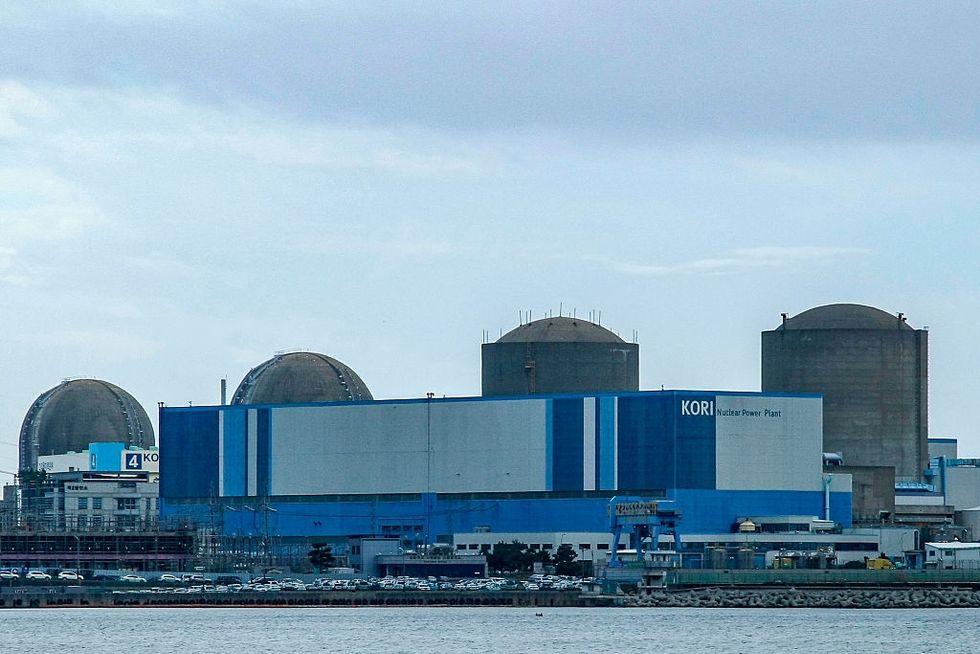 A South Korean nuclear plant in Busan. Seung-il Ryu/NurPhoto via Getty Images