You’re out of free articles.
Log in
To continue reading, log in to your account.
Create a Free Account
To unlock more free articles, please create a free account.
Sign In or Create an Account.
By continuing, you agree to the Terms of Service and acknowledge our Privacy Policy
Welcome to Heatmap
Thank you for registering with Heatmap. Climate change is one of the greatest challenges of our lives, a force reshaping our economy, our politics, and our culture. We hope to be your trusted, friendly, and insightful guide to that transformation. Please enjoy your free articles. You can check your profile here .
subscribe to get Unlimited access
Offer for a Heatmap News Unlimited Access subscription; please note that your subscription will renew automatically unless you cancel prior to renewal. Cancellation takes effect at the end of your current billing period. We will let you know in advance of any price changes. Taxes may apply. Offer terms are subject to change.
Subscribe to get unlimited Access
Hey, you are out of free articles but you are only a few clicks away from full access. Subscribe below and take advantage of our introductory offer.
subscribe to get Unlimited access
Offer for a Heatmap News Unlimited Access subscription; please note that your subscription will renew automatically unless you cancel prior to renewal. Cancellation takes effect at the end of your current billing period. We will let you know in advance of any price changes. Taxes may apply. Offer terms are subject to change.
Create Your Account
Please Enter Your Password
Forgot your password?
Please enter the email address you use for your account so we can send you a link to reset your password:
On solar PPAs, German EVs, and copper prices
Current conditions: Tropical Depression Two strengthened into Tropical Storm Bertha yesterday, recycling the name of the 1996 Atlantic hurricane season’s first major storm • Floods from the monsoon season killed at least four people in Vietnam and left as many missing • Lightning in Utah sparked the state’s latest wildfire, the Meeks Fire, near the Strawberry Reservoir.
President Donald Trump’s on-again, off-again feud with America’s northern neighbor is, as of Monday, back on again. The White House imposed 50% tariffs on most Canadian goods, accusing the nation’s geographically nearest ally and closest cultural bedfellow of unfairly discriminating against American automotives, alcohol, and dairy products. The move threatens to unleash what the Associated Press called “a new wave of economic chaos, with risks of higher inflation and further fraying of relations between two nations that had been closely woven together before Trump’s return” to office.
In its announcement, the Trump administration said the new tariffs would “apply to all covered goods regardless of whether a good originates under the U.S.-Mexico-Canada Agreement,” referring to the Trump-negotiated North American free trade agreement, which the U.S. opted this month not to renew. This struck my colleague Robinson Meyer as ominous. “If the White House now thinks it can levy taxes despite that pact,” he wrote in yesterday’s Heatmap Daily newsletter, “then the risks for Ford, General Motors, and their suppliers have increased.”
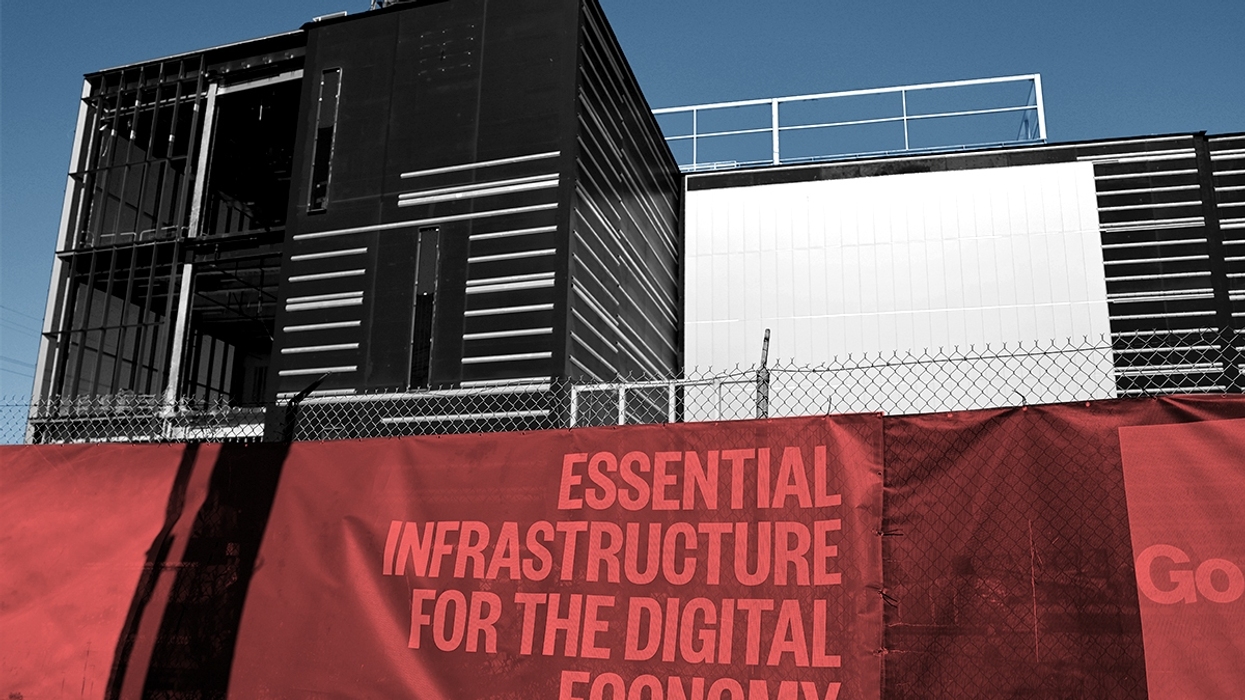
Perhaps the only thing growing faster than voters’ antipathy toward data centers is the market’s desire for more of them. Demand for data centers is ballooning at such a rapid clip that BloombergNEF just raised its total forecast for 2035 by a jaw-dropping 83%. The latest data outlining the best-case scenario from the energy consultancy, released Tuesday morning, shows the total installed capacity of U.S. data centers reaching 194 gigawatts in the next nine years. The surge reflects how quickly new server farms are flowing into the project pipeline. In a bid to hedge against the continued expansion, BNEF created a new scenario based on the implied power demand of forecast shipments of microchips for AI computers up to 2033. This scenario implies an even greater need for power: 229 gigawatts of demand from data centers in just the next seven years. And that doesn’t count the continued growth of demand from data centers carrying out non-AI functions, such as traditional cloud computing workloads. This comes as the latest Heatmap Pro polling shows that seven in 10 Americans now oppose data centers in their backyard, a marked shift from last September, when the same survey showed voters evenly split in support and opposition.
That ballooning demand is already showing up in power markets. Of the $16.4 billion in charges from PJM Interconnection’s most recent capacity auction, $6.3 billion — some 38% — stems from data centers. That’s what Joseph Bowring, president of PJM’s independent market monitor Monitoring Analytics, told Utility Dive last week. In the last four base capacity auctions the nation’s largest grid operator held, 46% of capacity charges were driven by data centers. “PJM is continuing to act like it’s business as usual,” Bowring told the trade publication Friday. “You have to open your eyes and recognize that it is really a paradigm shift, and failing to do that imposes costs on other customers.”

On a logical level, it’s a simple supply and demand problem. The supply of electricity is not growing as quickly as demand, all while the Trump administration eliminates subsidies that once buoyed investments in new supply. As a result, corporate electricity deals look poised to increase in price. But not for every generating source. New estimates from LevelTen, a marketplace for power purchase agreements, found that solar PPAs were 5% cheaper in the second quarter of this year compared to the first quarter. In a piece by my colleague Matthew Zeitlin, LevelTen attributed the decline to an especially steep drop in prices in California’s electricity market. Excluding CAISO, solar PPA prices nationwide dropped slightly less than 2%. While hyperscalers are still buying solar, LevelTen found that commercial and industrial buyers are pulling back, creating a “continued softening in the market’s buy-side.” “We saw a lot less corporate energy buyers in the space in 2025 — 40% less — and that is just due to the increase of hyperscalers and data centers getting projects and snapping them up quickly,” Sarah Wolf, LevelTen’s director of North American transactions, told Matthew.
Sign up to receive Heatmap AM in your inbox every morning:
Ah, Germany. The land of the Autobahn. Diesel-powered industry. The purring engines of BMWs, Porsches, and Mercedes-Benzes. The nation’s automotive might makes its latest milestone particularly important: Electric vehicles just outsold gas and diesel cars for the first time. New data from the Federal Motor Transport Authority shows that Germans registered 84,057 new electric vehicles in June, a more than 78% year-over-year increase. Traditional hybrids, meanwhile, saw 83,315 registrations, followed by gasoline-powered cars with 60,796, diesel with 33,862, and plug-in hybrids with 32,212. “The automotive history books will need a new page sooner rather than later, after electric cars outsold every other fuel type in Germany for the first time,” InsideEVs reporter Iulian Dnistran wrote. “It’s a huge shift in Europe’s biggest car market, which has traditionally been associated with diesel-powered cars that could travel hundreds of miles at highway speeds without breaking a sweat.” The Tesla Model Y was by far the best-selling EV in Germany, with nearly twice as many registrations as the No. 2 vehicle, the Volkswagen ID.3.
Putting on my Mesopotamian metal merchant hat again: Copper prices are back up. The price of the metal needed for virtually all electrical infrastructure rose 1.3% to just under $14,000 per metric ton, according to Mining.com. The price ultimately hovered at the red metal’s record set in early June. The spike stems from data showing rising tightness in the Chinese market, namely a hike in the premium buyers will pay in Shanghai for shipments of the metal. The price hiked further after a series of storms halted production in Chile for a few days.
While the West dithers on hydrogen, China is making huge strides. It already may be too late to catch up to Beijing on manufacturing the key machinery needed to produce the zero-carbon fuel. The latest data point, via Hydrogen Insight: China just shipped its largest electrolyzer order yet to Europe, via Romania.

Log in
To continue reading, log in to your account.
Create a Free Account
To unlock more free articles, please create a free account.
A new report from LevelTen Energy shows that advance purchase prices are down for solar but up for wind.
The renewables market is in a state of flux. On the one hand, the tax credits that were a key pillar of wind and solar project financing have started to expire, while the race to be up and running in time to claim those that remain is on.
At the same time the renewables industry is getting whacked by federal tax policy, it’s also getting a shot in the arm from hyperscalers and data center developers, many of whom are hungry for power that can be deployed quickly to the grid and complies with their clean energy pledges.
“There’s a massive onslaught of demand, not enough supply to meet that demand and then Trump’s administration effort to slow down certain types of supply,” Jon Powers, the president of solar and storage developer CleanCapital, told me, describing how data center buyers are snapping up whatever power they can.
So what does this mean for pricing in the market? LevelTen, a marketplace for power purchase agreements, looked at the data and, in a report released Tuesday, found that solar PPAs were almost 5% cheaper in the second quarter of this year compared to the first quarter.
LevelTen attributed this decline in part to an especially steep drop in prices in CAISO, the California electricity market; excluding CAISO, solar PPA prices dropped slightly less than 2%. And while those hyperscalers are still buying, LevelTen found, other commercial and industrial customers are pulling back — what the analysts described as a “continued softening in the market’s buy-side.”
“We saw a lot less corporate energy buyers in the space in 2025 — 40% less — and that is just due to the increase of hyperscalers and data centers getting projects and snapping them up quickly,” Sarah Wolf, LevelTen’s director of North American transactions, told me.
To explain California specifically, Wolf said that the market there tends to be more volatile than in the rest of the country due to the expense and regulatory hurdles to development. With fewer new projects coming online, especially as compared to a larger, more light-touch market like Texas, individual project pricing can swing average prices more.
The tax credit cliff is “creating this very competitive atmosphere, where buyers are feeling like — in order to safe harbor their equipment, to keep on the development timelines that they have — they need to get a PPA in place,” Wolf said. “They’re looking competitively for a buyer. That’s driving some pricing down.” The same holds for renewables developers, who have wanted to get a PPA in place as quickly as possible, giving leverage to buyers who can demand lower prices.
The other factor driving down prices LevelTen identified was potential revisions to standards issued by the Greenhouse Gas Protocol, which are currently the subject of a long and fraught overhaul process.
“We have many buyers who are fully leaning in and want to contract now,” Wolf said. “And we have buyers who are in a kind of a ’wait and see’ — they want to better understand what that’s going to be, so there’s not a risk that they might have to unwind something.”
As for wind, PPA prices have actually risen, according to LevelTen’s data — up 5.5% on the quarter and 17.5% on the year. “We’re also seeing wind just being less competitive than solar,” Wolf added.
The report attributed this to tariffs, gas prices pushing up delivery costs, and the “ongoing federal permitting bottleneck that has largely ground new-build wind development to a standstill.” That means specifically the Department of Defense’s efforts to hold up wind projects on potentially spurious national security grounds.
This has meant a “fast-dwindling pipeline of viable wind assets,” LevelTen’s report says, “and price premiums for fully permitted projects available for offtake.”
In short, the best news for individual wind developers may be bad news for the industry — and the climate — as a whole.
Cement, plywood, and some electronic equipment will face 50% levies. But the real cost is much higher.
Here we go again. The United States will impose new 50% tariffs on a slew of imports from Canada, the White House announced on Monday afternoon. The trade levies — which will hit more than 500 categories of goods, from anoraks, beer, and curtains, to yarn, wool, and whey protein — will take effect in 30 days.
The new tariffs don’t seem to be wildfire-related. President Trump threatened to impose new tariffs last week after smoke from Canadian wildfires drifted south over the northern U.S. border, but administration officials have claimed to CNN that these new levies were already in motion by then.
Even so, a few aspects of the announcement stand out. Most important, at least from a generalist perspective, is the legal mechanism that President Trump is using to apply them: Section 338 of the Smoot-Hawley Tariff Act. This passage, which has never been used by a previous president to levy tariffs, allows the United States to tax trade from countries that the president says have “discriminated against” U.S. commerce.
Significant, too, is the fact the White House asserts this new kind of tariff could apply to any kind of product — even those that would normally be covered by the North American free trade pact, the U.S.-Mexico-Canada Agreement. So far, the “Big Three” automakers — whose supply chains cross the Mexican or Canadian borders half a dozen times before a car is finally assembled — have avoided major tariff danger because auto parts and other inputs fall under the USMCA’s auspices. If the White House now thinks it can levy taxes despite that pact, then the risks for Ford, General Motors, and their suppliers have increased.
Energy and critical minerals are exempt from the new tariffs, so Canadian crude oil, gasoline, diesel, natural gas, and electricity will presumably keep flowing into the United States. (That explicit carve-out might be ominous in its own right, because energy had been protected by USMCA so far, too.) By omitting energy, Trump and his officials may be calculating they can avoid major inflationary hazards from this round of tariffs.
Who knows. In any case, to my eye, these tariffs do seem like they could aggravate construction costs and possibly contribute to wider U.S. inflation. There’s already some evidence that data centers are driving a new wave of inflation, for instance, by hiking construction input and labor costs. Yet data centers use a lot of cement — and cement will now face a 50% tariff under the new regime. So too will plywood, plaster, and paperboard, as well as industrial cooling equipment, chemicals, and some circuit boards.
I could keep listing the potential economic costs here — I could point out that overall inflation risk is rising or that average U.S. gas prices rose to $4 a gallon today on the Iran war news — but I think it’s important to look at least one step beyond the hits to commerce alone.
I mentioned earlier that these tariffs are meant to punish “discrimination.” In this case, some of the “discrimination” appears to be what some Canadian provinces did to retaliate against the president’s earlier tariffs. The state-owned liquor stores in Quebec and Ontario, for instance, stopped buying U.S.-made booze after Trump slapped 25% tariffs on Canada in March 2025; those boycotts are mentioned by name in today’s proclamation. Canada, you see, is not supposed to respond to Trump’s tariffs. It is just supposed to take it — just like it’s supposed to take the constant stream of falsehoods, abuse, belittling, and invasion threat.
Over the past few years, politicians and pundits have learned to respond to Trump’s policies by appealing to U.S. self-interest — by explaining how the president’s policies are making Americans poorer. It is a sensible strategy for a morally denuded era. A recent statement from Senate Minority Leader Chuck Schumer about Canada, for example, criticized the president for hurting “our closest ally and partner … right when summer tourism season is arriving.” I get the move here — and I think, in some sense, Schumer is trying to avoid polarizing Trump’s treatment of Canada along partisan lines — but Canadians are more than their tourism dollars.
For the past several years, Trump has threatened to strip Canada of its sovereignty and its dignity. He has treated what was once a deep and secure relationship as something to be bartered and mined and dissipated. It is a mucilaginous approach to statecraft, and as recent reporting has made clear, its long-term costs will exceed any simple accounting. We Americans have been robbed of an honorable friendship. Some losses cannot be counted in dollars.
In seven years of owning an electric car, I’ve done practically no maintenance. My 2019 Tesla Model 3 has gotten a new set of tires and windshield wipers, but because an EV doesn’t require oil changes or many of the other occasional chores that come with gas cars, that’s about it.
The one thing I have had to fix is the battery, and no, I don’t mean the big one that makes the car go.
Twice in those seven years, I’ve replaced the car’s 12-volt battery. This is the toolbox-sized unit that’s familiar to millions — it’s what the phrase “car battery” used to mean back before electric vehicles. Lots of new or aspiring EV drivers may not even realize their car has a second, smaller battery borrowed from combustion days. But this crucial holdover — the most recycled object on the planet, by the way, at a rate of more than 100 million annually — has already been a source of annoyance for EV engineers and drivers.
The reason behind the weird setup is straightforward. Despite the fact that EVs are effectively giant batteries on wheels, they need a backup source to operate the power windows and doors. If you’re in a car accident that disables the main battery, for instance, you need power to the doors to escape, and also a way to disconnect the high-voltage battery. Thus, the old-fashioned 12-volt battery squirreled away deep inside the car to protect it during collisions.
It’s not just a matter of backup power, either. A large, high-voltage battery would have to step down its electrical output for applications other than pushing a car down the road; it’s simpler to power them with a 12-volt battery and use the big unit to recharge the smaller one. After all, legacy carmakers have decades of experience building this kind of electrical system for gasoline-powered cars. Some EVs also use the 12-volt setup to disconnect the high-voltage power supply when the car is simply parked for a long time.
All this makes solid engineering sense. It also means that a sleek, modern EV is reliant upon the clunky car battery of yesteryear. Some drivers, including those in new Kia EVs, have said they can’t drive their cars even though there’s plenty of juice in the big unit because something went wrong with the 12-volt. As one Reddit commenter wrote: “It seems absurd to design a car that can run out of electrons and not be able to start while it is carrying 70 kWh of energy in a giant battery.” Yet that’s exactly the reality.
There are a few reasons why. As InsideEVs has noted, the rugged old 12-volt keeps getting more and more responsibility. Nowadays, the constant cellular connectivity of modem EVs — as well as features that can be used while the car is parked, such as security systems that tap into the vehicle’s exterior cameras to monitor the surrounding area — can cause a continuous drain on the 12-volt battery. That requires the car’s big battery to “wake up” and recharge the smaller one, which not only bleeds the vehicle’s driving range while it’s sitting still but also causes lots of recharging cycles for the 12-volt, prematurely aging the small battery.
Rivian had notorious problems from this issue for the older R1T and R1S and had to engineer a fix. Hyundais and Kias, meanwhile, have had longstanding issues with their Integrated Charging Control Unit, the system that recharges the 12-volt battery, that have caused a variety of recalls and headaches widely documented in online posts and videos. Chevy and Toyota have endured their own growing pains trying to make a low-voltage electrical system work well inside an EV.
But the car companies are getting smarter. Rather than duplicating what works in gas cars, more of them are building EV-specific systems with this application in mind. For example, the 12-volt in an EV doesn’t need to provide the big single burst needed to start up a gas engine, but it does need to be able to survive being subjected to more recharging cycles. In other words, it’s not that using these batteries in modern EVs is a bad idea — we just need to be smarter about how.
Perhaps EV builders one day will engineer away the old battery. Rivian, for one, has filed a patent for an electrical architecture that would work without a low-voltage battery at all. But those workarounds are a long way out. For now, even the most futuristic-feeling electric cars are stuck with the same kind of battery your dad had to jump-start in the church parking lot that time you left the AC on and the engine wasn’t running. My big, high-voltage battery might keep running forever, even as its capacity continues to diminish. But inevitably, I’ll need another small, dumb battery when this one goes kaput.