Current conditions: France just recorded its hottest day ever, with Wednesday’s temperatures soaring to just under 111 degrees Fahrenheit; nearly 50 people died drowning while seeking respite from the heat • A pair of 7.1-magnitude earthquakes struck Venezuela, collapsing buildings in Caracas • Wind has whipped the Cottonwood Fire, one of six wildfires raging in Utah, into a larger blaze now covering 60,000 acres — and it’s still at 0% containment.
THE TOP FIVE
1. One of the highest-ranking Democrats yet calls for a data center moratorium
New Jersey Representative Frank Pallone, the ranking Democrat on the House Energy and Commerce committee, joined calls for a national moratorium on data center construction ahead of Wednesday afternoon’s markup of a series of bills related to the buildout of infrastructure to support artificial intelligence software. In a statement, Pallone described the bills as a “useful first step,” but one that, “compared to the challenges the American power grid is facing,” amounts to “not nearly enough.” Rather, he backed a “national AI data center moratorium until we can find a way to ensure they don’t harm our nation’s air, water, and power bills.” Pallone’s new public position makes him one of the highest-ranking Democrats yet to back the idea, championed by the likes of Representative Alexandria Ocasio-Cortez, of halting permitting on new data centers in response to the growing blowback from voters.
Pallone’s shift comes in response to the Ratepayer Protection Act, which would enshrine into law the voluntary pledge tech companies signed with the White House to pay for grid costs from their server farms. Heatmap’s Matthew Zeitlin wrote earlier this week that the bill was “not so much an anti-artificial intelligence or anti-data center bill, but rather a move to insulate further data center development from political pressure stemming from rising electricity costs.” When Pallone made his statement a day later, Matthew wrote: “Well, at least one influential lawmaker seems to agree with me.”
2. Exclusive: Gas prices are up in every state, and hitting some red states the hardest
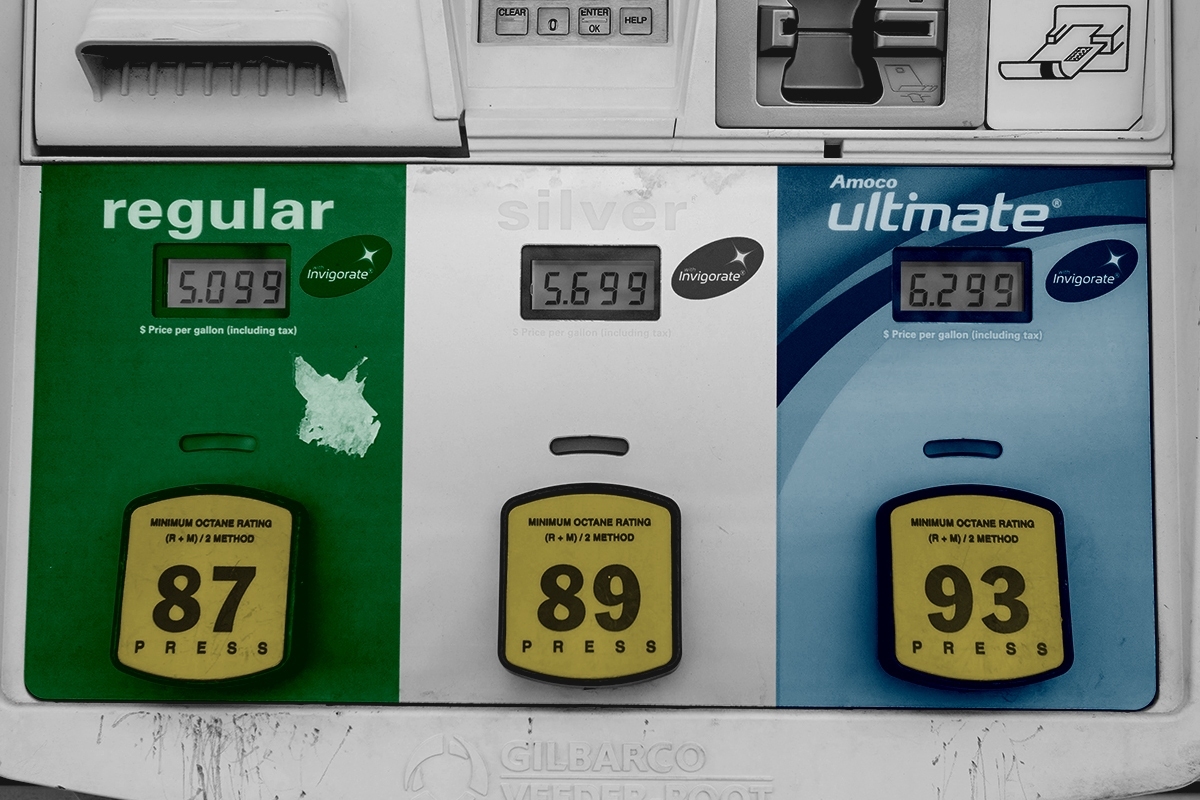
The Iran War has cost the average American car owner an extra $156 and the average SUV driver another $232 in gasoline costs, according to new data from the policy shop Third Way. But the newly mapped analysis, shared exclusively with me, shows that Republican-leaning states in the Mountain West and beyond paid some of the highest prices for a conflict. Alaska saw one of the biggest spikes, with gas prices rising by $1.40 per gallon, a 39% increase. Wyoming followed close behind, with prices soaring by $1.37 per gallon, a 50% surge. Prices in Utah, meanwhile, climbed by $1.30, or 47%. That stands in contrast to many big Democratic-leaning states. New York’s gas prices rose by $1.23, or 41%, while California’s prices went up $0.94, or 20%. That, of course, doesn’t reflect where the prices were already high. I just returned this week from a trip to Los Angeles, where gas was nearly twice as expensive as in New York City.
3. First new aluminum plant in 50 years taps startup for alumina
Century Aluminum, America’s largest primary aluminum producer and the developer behind the first new U.S. smelter in 50 years, has inked a deal with a green cement startup to supply a key raw material. Brimstone, known as a major player in the race to commercialize green cement, also generates alumina. On Wednesday, the startup unveiled a memorandum of understanding with Century Aluminum to establish a domestic “mine to metal supply chain” for aluminum made from scratch rather than scrap. “Foreign sources, including China, currently dominate global alumina production. Brimstone is bringing alumina production home and doing it at a globally competitive price,” Brimstone CEO Cody Finke said in a press release. “Brimstone is upending the massive global imbalance by producing alumina from rock quarried here in the United States.”
Sign up to receive Heatmap AM in your inbox every morning:
4. Arizona eyes more nuclear power
Until the nation’s flagship reactor project came online and transformed Southern Company’s Alvin W. Vogtle Generating Station in eastern Georgia into America’s most powerful atomic electrical plant, Arizona’s Palo Verde Generating Station was the No.1 nuclear facility by size in the country. The desert state is now looking to reclaim its mantle. The trio of utilities Arizona Public Service, Salt River Project, and Tucson Electric Power said Wednesday they are continuing “to work together to explore adding nuclear generation in Arizona.” The next step, the companies said, is a siting study that’s expected to be completed within the next six months. The Arizona Corporation Commission, the regulator in charge of utilities in the state, is holding an informational workshop today.
Meanwhile, the developer behind Canada’s flagship reactor design — which, because it’s cooled with pressurized heavy water, can run on raw uranium — just submitted initial paperwork to the Nuclear Regulatory Commission to start the licensing process to approve what’s known as the CANDU. Pronounced CAN-do and produced by manufacturer AtkinsRéalis, the reactor is the workhorse of the Canadian and Indian fleets and can be built reliably, but requires more maintenance than the light water reactors that run on enriched uranium and make up the entire U.S. fleet. “As the United States enters a new chapter in its civilian nuclear program, AtkinsRéalis is uniquely positioned, as the steward of CANDU technology, to help advance the country’s ambitious energy policy through proven, low-cost reactor technology with a world-class reputation,” Ian L. Edwards, the company’s president and chief executive, said in a statement. As I told you last month, the CANDU is at the heart of Canada’s new nuclear strategy.
5. Two of the world’s biggest miners are ramping up copper production at existing mines
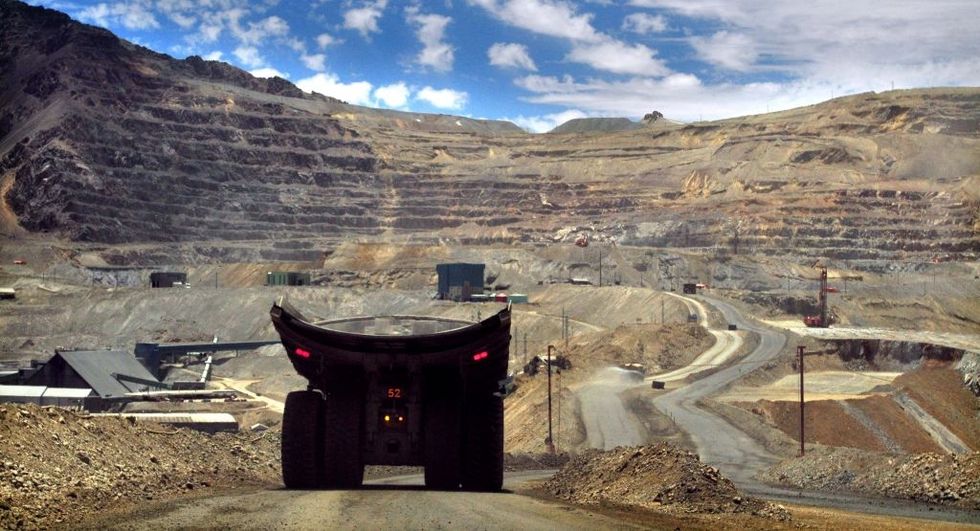
 Los Bronces mine in Chile. ARIEL MARINKOVIC/AFP via Getty Images
The world needs a lot more copper. And while siting and building new mines takes time, two of the planet’s biggest producers are preparing to increase production at existing mines. On Wednesday, London-based Anglo American and the Chilean state-owned Codelco inked a deal to increase production through a joint venture at Los Bronces and Andina copper mines in the South American nation. The joint mining plan is expected to unlock 2.7 million metric tons of additional copper over a 21-year period, delivering an average of 12,000 tons per year. The increase comes with “minimal capital investment” and should bring the new supply online by 2030. “This agreement represents a more efficient and responsible way to develop one of the world’s leading copper districts,” Bernardo Fontaine, Codelco’s chairman, said in a statement. “It allows us to make better use of existing infrastructure, capture greater benefits for Chile, and move forward with a long-term vision based on operational excellence, sustainability, and the responsible use of resources.”
THE KICKER
If green hydrogen is the stuff made with clean electricity and water and blue hydrogen is made with natural gas equipped with carbon capture, then the orange stuff is found in underground rock formations where naturally occurring gas forms and then is encouraged to continue forming through artificial means. Heatmap’s Katie Brigham did a good job of explaining the concept here. Well, now a French renewables developer FDE is promising to start producing orange hydrogen “by late 2028 or early 2029” after finding a naturally-occurring underground reservoir in northern France that can be tapped and stimulated to produce additional fuel, Hydrogen Insight reported.


 Los Bronces mine in Chile. ARIEL MARINKOVIC/AFP via Getty Images