Microsoft, meanwhile, pulled out a major data center deal in the United Kingdom to anchor Nscale Global Holdings’ debut facility in the country, located in Loughton on the outskirts of London. But The Wall Street Journal reported that power supply issues ultimately caused Microsoft to back out of the 50-megawatt project, highlighting how hyperscalers can throw a major data center complex into disarray even at a later stage in the development. Nscale’s upcoming $35 billion stock market debut rests, as The Information noted, on its ability to build data centers.
2. Amazon and Google ink major new utility deals
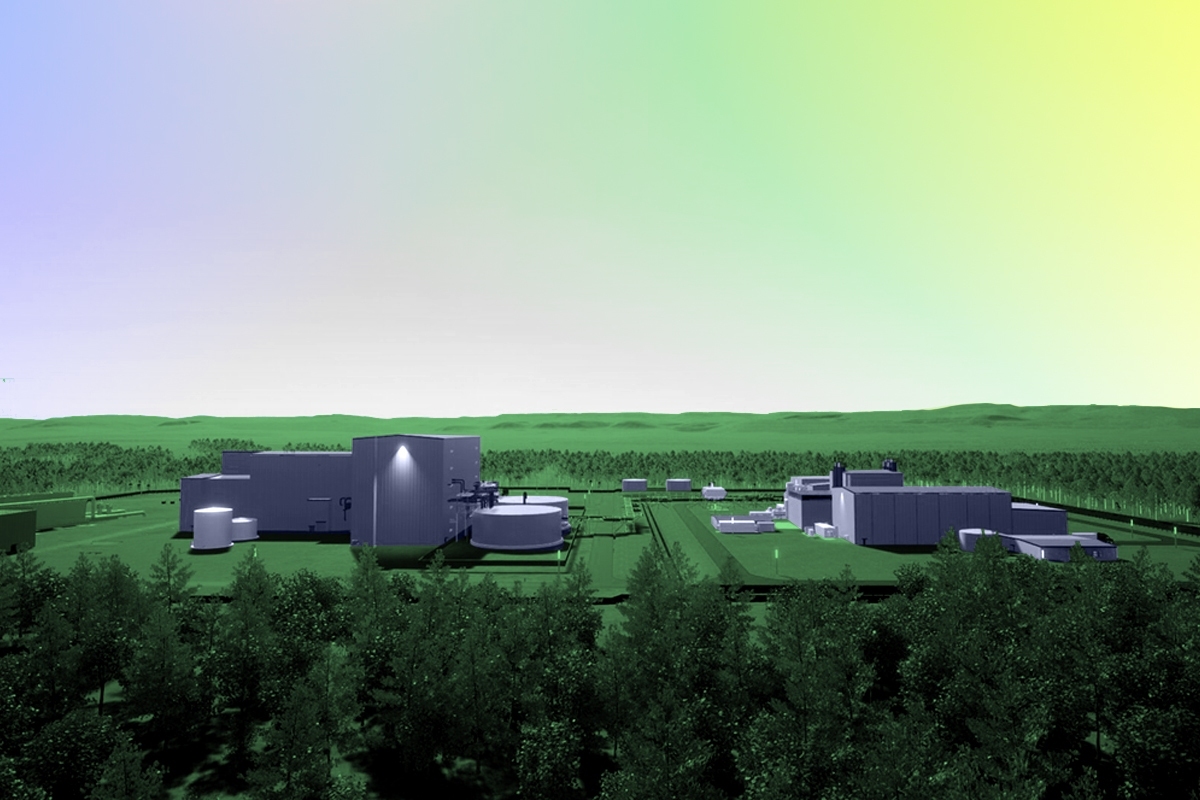
Amazon is backing a deal for another power plant built with X-energy’s next-generation reactors. On Monday, the high temperature gas-cooled reactor startup, in which Amazon took an equity stake two years ago, signed a joint development agreement with American Electric Power to evaluate a potential 960-megawatt project at a former coal site in Sullivan County, Indiana. In a press release, AEP CEO Bill Fehrman said Amazon’s support provided “all necessary capital protections and financial safeguards that we have said are essential for any potential nuclear project to move forward.” That’s a notable departure from the line many utilities executives share in private, which is that — absent some kind of federal cost overrun insurance — building new reactors will prove too difficult a sell to shareholders. It’s part of a string of nuclear deals for Indiana, which currently has no operating atomic power reactors in its borders. On Monday evening, AtkinsRealis, the developer behind Canada’s signature CANDU reactor technology that can run on raw uranium, announced a memorandum of understanding to build up to 6 gigawatts of the pressurized heavy water reactors in Indiana. The state and the utility Hoosier Energy are the counterparties to the agreement.
In Arkansas, meanwhile, Google unveiled a new “enhanced partnership” with utility giant Entergy to power the tech giant’s West Memphis campus. As part of the agreement, Google pledged to support solar, battery, and transmission investments in Arkansas that the companies said would deliver “at least $500 million in new savings for all customers.”
3. Trump spends $42 million in wartime funds to complete Northeast gas pipeline
Secretary of Energy Chris Wright called out New York Governor Kathy Hochul for holding up a natural gas pipeline he said would lower heating prices for residents in the Northeast as early as winter of 2028. During an appearance Monday on the Fox Business Network, Wright touted his agency’s decision last week to award Williams Companies $42 million through the wartime Defense Production Act to speed up construction of the Constitution Pipeline. “We wanted to get this in by winter of 2027 but delays and still opposition from energy-subtraction Democrats has unfortunately slowed the effort,” Wright said. “The delay right now is the governor here in New York State. We’ve been talking with her. We hope she’ll go along with this. Maybe after the election, I think she will.” The governors of all six New England states, he said, “are all on board with it.”
In a statement to me, Hochul spokesperson Ken Lovett called the announcement “nothing more than a political ploy to divert attention from Trump’s tariffs and his reckless war in Iran that have not only failed to bring down prices as the president promised, but have dramatically driven up home energy costs and gas prices at the pump.” He added that, “while the president continues to obsess over blocking renewable energy projects in order to focus on gas, oil, and even coal, Governor Hochul is focused on driving an all-of-the-above energy strategy designed to keep the lights on and costs down for New Yorkers.”
Sign up to receive Heatmap AM in your inbox every morning:
4. Alberta rejects independence vote as reality sets in over oil industry jobs
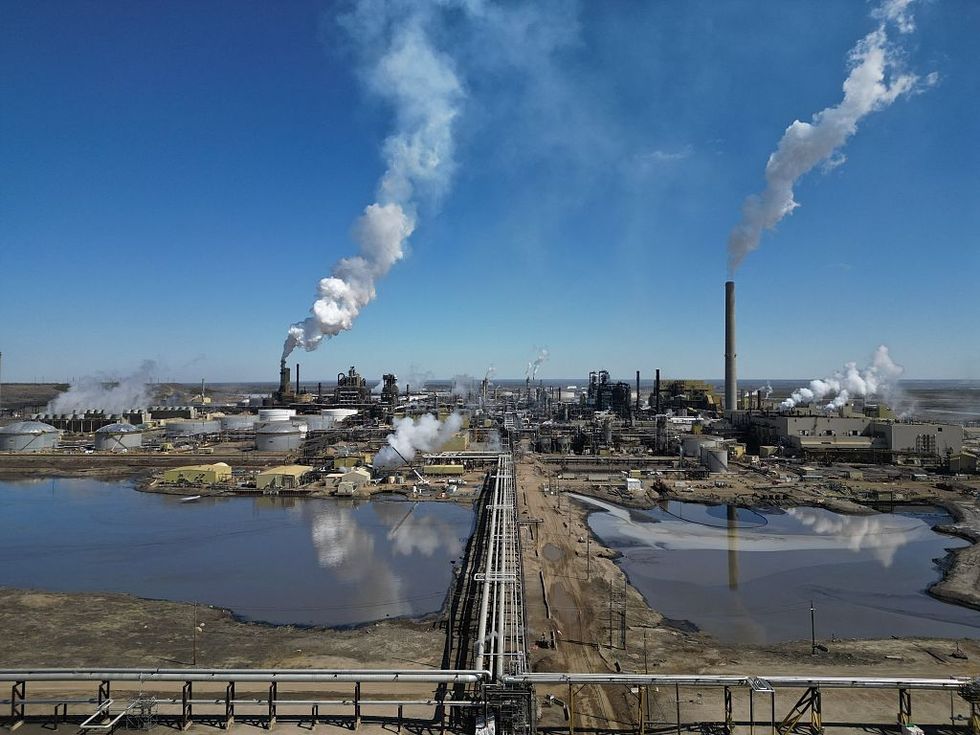
 The Syncrude refinery at Mildred Lake in Alberta. Daphné LEMELIN / AFP via Getty Images
Albertans are the richest Canadians on average, thanks to the province’s oil and gas industry. They’re also — after the Quebecois, of course — among the Canadians with the strongest claim to a distinct identity from the national Anglo norm, often drawing comparisons to Texans within the U.S. Monday offered the biggest test yet of just how differently Alberta sees itself. Turns out whatever regional resentments Albertans may have against Ottawa after a decade of Liberal Party rule that frequently sought to restrict the oil and gas sector hasn’t been enough to merit secession. Voters overwhelmingly rejected a nonbinding referendum calling for a real vote on whether to split away from Canada and establish an independent Alberta. At least part of the reason may be that Prime Minister Mark Carney has put a new focus on beefing up Canada’s domestic energy industries in a bid to increase exports and make the country less reliant on an increasingly aggressive U.S. That includes building new pipelines. But a new analysis by Reuters warns that a successful infrastructure buildout won’t lead to another jobs boom in oil. Much of the growth in oil sands output, instead, “is likely to come from automation and efficiency gains rather than large-scale hiring,” the newswire reported, citing industry forecasts and nearly a dozen interviews with company officials, workers, politicians, and academics. Carney admitted as much when asked by the reporter during a visit to Alberta’s Fort McMurray this month: “I wouldn't use the term ‘boom.’ I would use ‘sustained growth.’”
Europe, meanwhile, is trying to keep its own populist blowback to rising prices contained. Right as violent protests over cost of living spread from France to Italy, the Italian government has struck a deal with the European Commission that Prime Minister Giorgia Meloni expects to slash household energy bills ahead of next year’s elections. Under the agreement, according to the Financial Times, Italy will be allowed to compensate gas-fired generators to keep wholesale electricity prices from rising above €59 per megawatt-hour, roughly $66. The European Union’s market rules require that the last and most expensive source of electricity tapped to meet demand serves as the wholesale price. But the EU’s executive chamber allowed for Italy to ease its rules after prices surged 45% higher than in nuclear-powered France and renewables-rich Spain last month.
5. China’s solar panel exports drop right as restrictions on manufacturing equipment take effect
China’s exports of solar panels fell 6.4% last month compared to the same period last year, according to Reuters. That marks the fifth straight year-on-year decline in 2026. It’s a sign that China is cracking down on its glut in solar manufacturing. But Beijing isn’t looking to lose its edge over the fastest growing electricity source in the world. Last week, Bloomberg reported that China had added 12 pieces of solar-related manufacturing equipment to its list of items restricted from export. That could make it much more difficult for U.S. manufacturers comply to stand up factories given the Trump administration’s 232 import restrictions on Chinese solar equipment, which take effect later this year. The results of the Department of Commerce’s Section 232 investigation into polysilicon, which my colleague Emily Pontecorvo and I covered here, are meant to be the Trump administration’s lifeline to solar manufacturers who lost a key incentive when federal tax credits expired, ending a bonus program for developers that use domestically-made panels.
One area where China has appeared to be gaining an edge — green hydrogen production — may still remain a competitive industry for Western manufacturers. Chinese electrolyzers, the machines needed to separate the H from H2O with electricity, cost less than half of those made outside the country, according to data from the International Energy Agency. But trade levies erase much of that advantage, ultimately reducing capital expenditures by only 8% for European projects using Chinese equipment, Hydrogen Insight reported.
THE KICKER
Call it mine-to-battery manufacturing. As demand for batteries booked, Ivanhoe Electric had planned to differentiate itself by taking a fully integrated, farm-to-table approach, owning and operating its own copper mine, refining the metal, and ultimately turning that copper into cathodes for batteries all at its same site in Arizona. Now, however, there’s an even bigger sector demanding copper: Data centers. New data center projects are driving so much demand for copper that the company is considering selling its copper to buyers other than itself, Bloomberg reported.


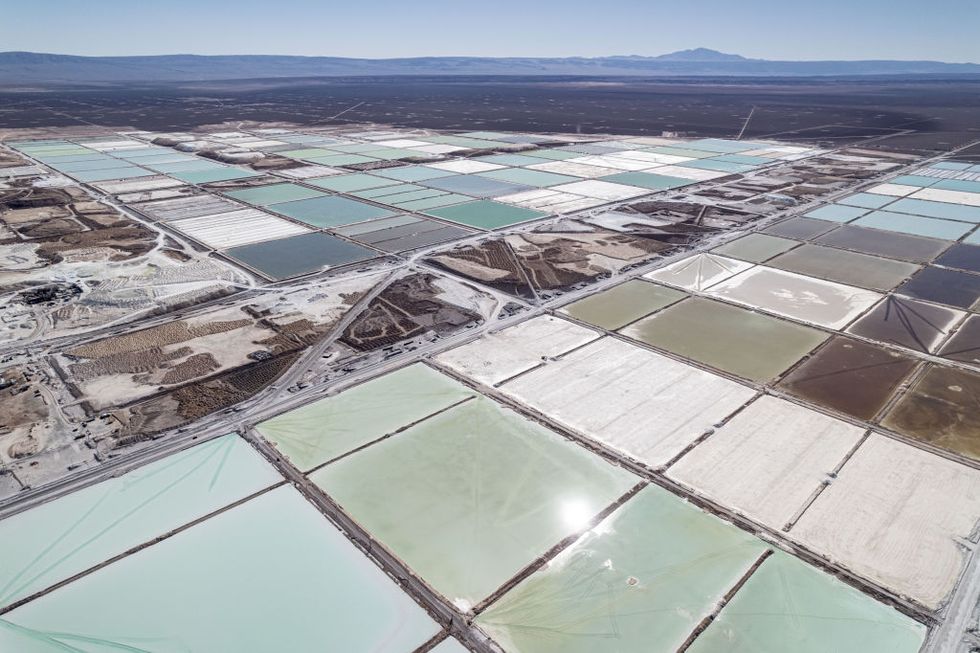 Lithium extraction plants in Chile. Lucas Aguayo Araos/Anadolu via Getty Images

 The Syncrude refinery at Mildred Lake in Alberta. Daphné LEMELIN / AFP via Getty Images