You can also add the show’s RSS feed to your podcast app to follow us directly.
Robinson Meyer:
Hello, it’s Friday, October 2, and this is a special New York Climate Week edition of Shift Key. Last week, Heatmap welcomed climate and energy leaders, experts, and influencers to Heatmap House, our all-day summit in New York City. Among those leaders was New Jersey Governor Mikie Sherrill. Governor Sherrill is a former Navy pilot, federal prosecutor, and member of the House of Representatives. She was elected New Jersey’s governor in November 2025. That campaign, and her election year last year, was dominated by the state’s surging electricity prices, and specifically by how the interaction between the AI data center boom and features of the local multi-state electricity market, PJM, had caused power bills to surge in the state by about $260 per household.
Robinson Meyer:
Governor Sherrill ran on and implemented a one-year rate freeze. She’s since passed other legislation meant to make it easier to build solar and batteries in the state. My colleague, Heatmap correspondent Matthew Zeitlin, has been covering those policies, and last week he sat down at Heatmap House to discuss them with Governor Sherrill, as well as to discuss the future of her climate and electricity agenda. Let’s go to that conversation now.
Robinson Meyer:
Matt and Governor Sherrill were recorded in front of a live audience at Heatmap House at 22 Vanderbilt in New York City on September 23rd. I’m Robinson Meyer, the founding executive editor of Heatmap News, and you are listening to Shift Key.
Matthew Zeitlin:
Mikie Sherrill, thanks. Thanks so much for coming across the Hudson this morning to join us. Let’s just start with, I think, the kind of electricity or energy policy issue most associated with you. Is there a rate freeze in New Jersey right now? And are your constituents, the rate payers, are they still angry about their electricity bills?
Mikie Sherrill:
That’s a great question. So, yes, there is a rate freeze. In fact, that was a commitment I made. And so I didn’t, I would say less than an hour into my administration, the middle of my inaugural address, I declared a state of emergency on utility costs, froze rates, and then at the same time signed executive orders to increase power generation across our state. We’ve been at it ever since. And the movements we’ve made will save New Jersey rate payers over a billion dollars a year as we are implementing all of these changes. And, but no, rate payers are not happy in New Jersey, nor should they be, because rates did go up double digits. So they saw a large increase. And, you know, in large part, there had been a lot of people asleep at the wheel on how we were going to move forward in advanced technologies and generate more power and drive down costs.
Matthew Zeitlin:
So as I understand it, a component of those executive orders was taking some of the funding that comes from the regional greenhouse gas market and putting that into rate relief. You know, there is stuff on any New Jersey ratepayers bill that funds things that are government programs, energy programs. Have you rethought kind of both the RGGI and the societal benefits charges to think about why are we adding stuff onto the bill instead of, you know, making it cheaper?
Mikie Sherrill:
So we actually have taken stuff off the bill. There was an incentive on our bill that had been in place for years to incentivize our utility companies to join PJM. Well, they joined PJM years ago and they weren’t going to leave. So we took that off the bill and we just did that to drive down costs. We did use a little bit of our Reggie friends because there had been some rate cases that had already been made in the previous administration that we had to address so that we could keep rates flat to meet our commitment. What we’ve really done, though, that I’m very excited about with some RGGI funds is to put $100 million incentives into solar and battery storage projects so that we can see more generation in these clean power technologies. And I think that’s something that we’re going to see. EDA has just been putting that at our economic development authorities. So we’re very excited about what’s coming.
Matthew Zeitlin:
Yeah. And then just kind of building off of that. Obviously, New Jersey has aggressive climate commitments. How do you talk to your how you’re going to meet those climate commitments when they’re, I think everyone would say they’re most concerned right now about kind of that number on the bottom of their bill.
Mikie Sherrill:
Certainly. Look, we have, you know, when I say we have an affordability crisis, it’s not just one thing. It’s a crisis because it’s everything. Housing prices are up in some cases by 60% in some towns in the last five years. We have utility costs up by double digits last year. They were set to go up double digits this year until I froze them. We have, you know, the federal government’s cutting health care. So we have 70,000 people that can’t afford to be in the affordable care market anymore. We have about 300,000 people who are being kicked off the Medicaid rolls that we have to deal with. So there is a crisis going on. So you cannot simply say to people, you know, sorry, your bills are just going to keep skyrocketing. That is not the answer, which is why we’ve acted so aggressively.
Mikie Sherrill:
I approved 18 solar and battery storage projects in the first six months because we knew the federal credits were going to run out if we did not get that done. So that’s why we had to take on permitting reform right away to make sure we were growing that. I lifted a 50-year nuclear moratorium.
Mikie Sherrill:
We have continued to look at new and innovative things. A lot of people are talking about virtual power plants to get more capacity and drive-down costs. We are implementing that. I would suggest, and we were talking a little bit about this before we went on, it was so interesting. I’m one of one of the very few people that actually ran in 2025. So we knew the landscape. We knew what Trump was ending. We knew what the future looked like. We knew what we could and couldn’t do and spaces that we’d have opportunity and where opportunity was shut off from us. So we we could hit the ground running. And we also took advantage of best in class people.
Mikie Sherrill:
We have, she’s sitting right there, Maddie, who’s worked in New Jersey Power and understands it very deeply. We have Elizabeth Knoll, who came out of the federal government, who worked for Granholm and now is working for New Jersey. We have amazing people who are developing these new and innovative things. And I think the reason that New Jersey has now become a market leader in how you advance clean energy in a really innovative way is because we’ve just set up this government. So everything’s starting from, okay, where are we and how do we get to a better place and taking on all those new innovations.
Matthew Zeitlin:
Yeah, I mean, we were talking backstage, you know, when I took this job three years ago, I had no idea I’d be writing so much about energy policy in the state of New Jersey, but from the campaign and then, you know, in your first year here, there’s been so much going on. Obviously, we need to talk about data centers, you know, not too long ago. New Jersey had a program, a tax, you know, abatement, a tax incentive to attract data centers to the state. Obviously, there’s been a lot of local backlash to them. There was an enforcement action, I think, this morning in Vineland, New Jersey. That tax incentive has, I believe, been reversed. From your perspective now, if a data center developer wants to set up in New Jersey, what do they need to do?
Mikie Sherrill:
Well, we’ve laid out exactly what they need to do. They need to bring their own energy. They need to invest in our grid. They need to report their water and power usage. They need to hire good talent so that they create jobs in the community. And they need to bring community benefits. We’ve also put them in their own rate class, so they are not harming other rate payers. And we mean business. And I think you can see that with the action we brought against the Vineland data center. So this is not a free ride for anyone. If they want to engage in building this out, it has to be a benefit to our communities in New Jersey.
Mikie Sherrill:
What was so interesting to me, I was telling you about different financing agencies and different power generators and what this was going to look like going forward. And it was so fascinating to me to see the difference between the old and new. Some people at the table are saying, oh, you know, people are saying don’t invest in New Jersey because labor cost of labor is high. And I said, that is so fascinating. You’re telling me that because I have heard from so many people about how they’re dying to invest in New Jersey and they want to know how. And I said, yeah, we’re a labor state. You’re going to have to pay for talent. But at the same time, we are laying out exactly how you invest in New Jersey to take a lot of the risk out of it. But you have to come to the table early. You can’t just come in and say, work out some deal in back rooms and come say, now I’m going to plop a data center here.
Mikie Sherrill:
I mean, there are places in New Jersey where you should not be building data centers. There are places in New Jersey where it might make sense, but the towns and communities are going to decide that. So you have to start engaging early with them to explain what you want to do and why you want to do it. And finally, I’ve said, and you’ve, I told a data center, I said, and you guys have been horrible at it. I’m just telling you, nobody knows what a data center is and you need to explain why it’s even important. Are you curing cancer? You know, what are you doing? Why is this a societal benefit. And then I’ll end by saying, look, it’s up to businesses. They make money, right? Scientists innovate. Government needs to protect people. And that’s where government has been asleep at the wheel. And that’s why I think you see so many people not trusting innovation right now or where it’s going, because government needs to protect people from these downside risks. And right now, I would say the federal government’s not going to do it, which is why as a state, we are engaging so aggressively.
Matthew Zeitlin:
So obviously we were talking about this backstage, New Jersey has this great history of innovation technological development, and right now you have a lot of advanced industries in New Jersey — a pharmaceutical industry, financial services you have a lot of research around the Princeton National Lab. When you’re trying to attract these kind of next generation industries how do you then kind of, on the other way, how do you kind of assure them that they can set up large energy consuming facilities that, you know, are that anchor those industries?
Mikie Sherrill:
It’s kind of interesting twofold. I would say to a large extent, we don’t need to attract some of these innovators. We need to keep them. Innovation starts in New Jersey. We have a million different spinoffs. We were talking about they’ll do fusion and they’ve already got the magnets that are found few places in the world. I mean, they come and spun off from the National Lab at Princeton. We have companies like that all over the state. And we have states like New Mexico that are constantly saying, you know, here, come here. And people in New Jersey, and if you’re not from New Jersey, this may surprise you, but people in New Jersey love New Jersey and we want to stay there. And we want our kids to go to the great schools there and we want to continue to grow businesses. So companies don’t want to leave New Jersey. We just have to make sure they have enough, you know, that there’s not some other incentive driving them away.
Mikie Sherrill:
At the same time, when you say, how can I assure that people are going to have all the power they want, we are creating a structure so that people can make sure that they have clean power generation. That’s why something like a virtual power plant is so interesting. But it is not on the state to kind of assure you can do whatever the heck you want in power generation. It is up to the companies to work with us to say, okay, I want to invest in this. This is going to be a net good for the people of New Jersey. So for example, I’m going to build a virtual power plant. I’m going to have battery packs in everyone’s basement. I’m going to pay them to do that. And we’re going to generate new clean power for this entity. That is how they need to come to work.
Mikie Sherrill:
And I would again say that that was what was so interesting at the table, because there are people who get that. In some of the most innovative power generating companies, in some of the most innovative technological companies, they get that. They know where this is all going. Some of the old school companies are still sort of coming to the table saying, what can you do for me? That’s not where we are right now. We need to understand what benefit can you bring to the people of New Jersey.
Matthew Zeitlin:
And you mentioned earlier that, you know, your gubernatorial race was in 2025. We obviously have the midterms coming up in November, and then we have, you know, another election in 2028. What, when Democratic candidates come to you and ask about how they should talk about energy and electricity policy, or if they’re not coming to you and you would like to say something to them, what are you telling them? How they, you know, obviously every state, every district’s different, but what are some … What are some things you learned in 2025 that could be applied elsewhere in the country?
Mikie Sherrill:
Sure. I just want to go back one second. I know we’re on such limited time. That’s why I’m speaking fast. I would say the reason I was saying what can you bring to New Jersey is because the business case has been made for innovation technologies, and they are raking in billions of dollars. And we just need to make sure that as we build out these systems, that it goes to a benefit to everyone, that we are not simply funneling billions, trillions of dollars into a few people in Silicon Valley. We want to make sure this is a net good. That’s what I said government does, is we protect communities from those downside risks and we invest and create opportunity there. That’s what we’re looking to do, is making sure everybody gains here.
Mikie Sherrill:
The thing I would tell people who are running is you have to be nimble, You have to be innovative and you have to be aggressive and you can’t, you have to take risks. The status quo is not working for anyone. The can has been kicked down the road on too many different issues. And if you were going to try to duck your head and say some mealy mouth thing like, you know, we’re going to do all of the above and, you know, and it’s, you know, everyone’s welcome and we like business. That’s not going to cut it. you have to be able, I mean, we charged through the campaign by understanding deeply what was going on in our state. And so we were joking. I would say, you know, a lot of people in the whole market couldn’t tell you what PJM is, right? Still, a lot of governors probably couldn’t really delineate it. We knew everything about everybody because when your utility bill goes up by double digits, the person you’re going to hire to be the no boss of your state better understand why. And exactly what they can do to fix that.
Mikie Sherrill:
And then I have to convince people, because the final thing I’d say is, I’d say since Reagan, this idea of like government’s always the problem, get them out of the way and everything goes well, has come to its logical conclusion, right? There are areas where we need government to function, and we need government to function well, not just to sort of regulate stuff to actually drive innovation, to drive success for people, to drive opportunity, and make sure the rising tide lifts all boats. That’s what has been missing in so many cases. And so I think if you want to run for us, if you want to hold the public trust, if you want to be a public servant, then you need to engage deeply and you need to be really good at your job. And that means telling people exactly what you can do to make their lives better.
Matthew Zeitlin:
I think that’s probably as good a note as any to end on. Mikie Sherrill, thank you so much.
Mikie Sherrill:
Well, thank you. I really appreciate it.



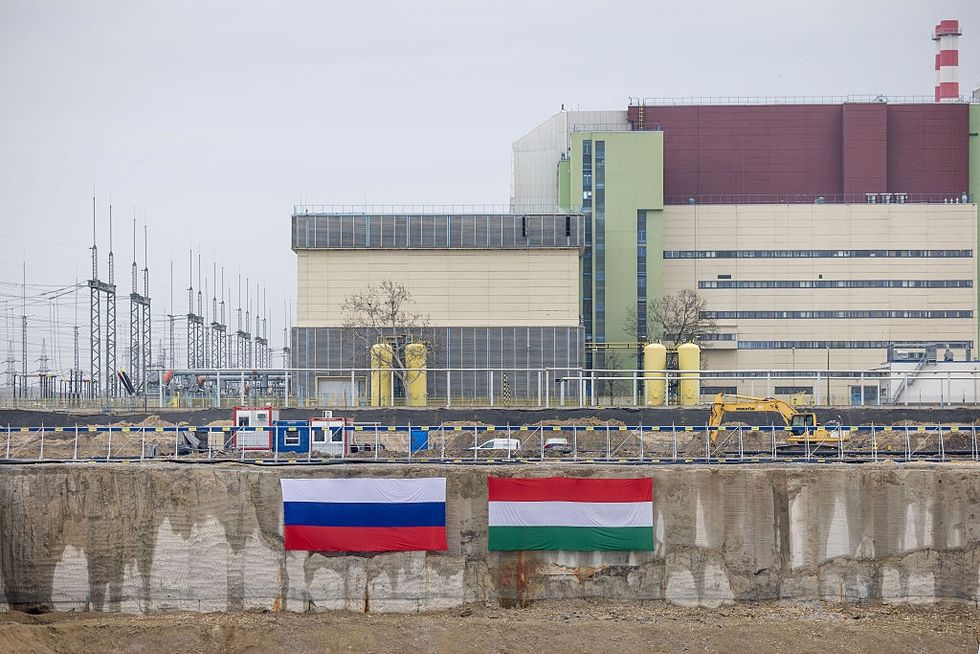 The Russian and Hungarian flags fly side by side at the Paks II building site. Janos Kummer/Getty Images

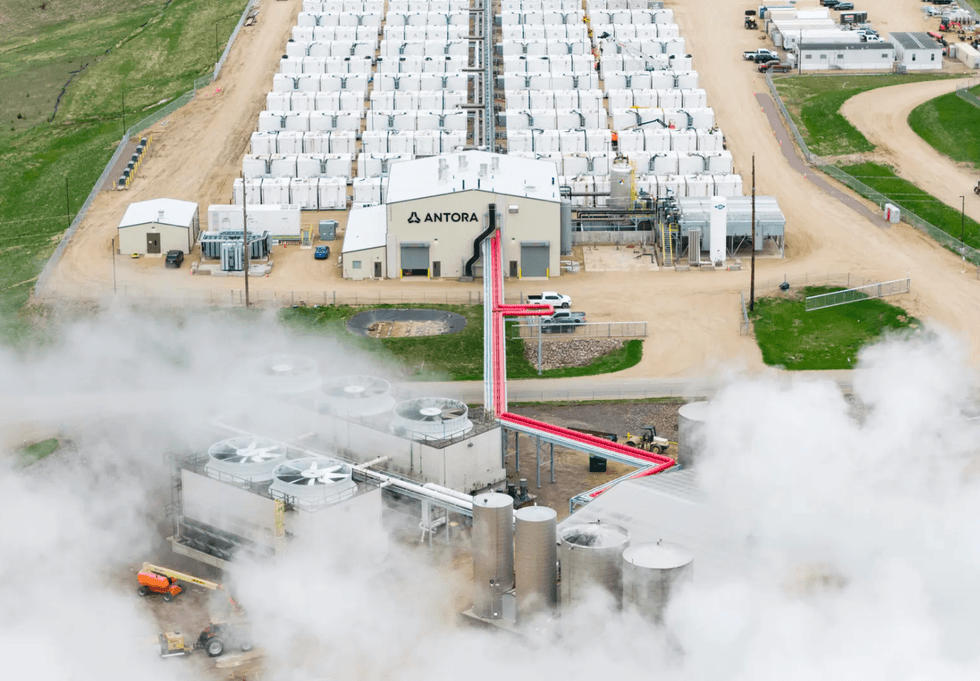 Getting steamy in South Dakota. Antora