Current conditions: Debris left behind by Halley’s Comet is set to create a meteor shower across the sky tonight into tomorrow morning • Super Typhoon Champi is roaring just east of the Philippines’ most populous island, Luzon, with winds of up to 133 miles per hour • The heat wave roasting East Africa is driving temperatures in the Sudanese capital of Khartoum past 106 degrees Fahrenheit.
THE TOP FIVE
1. We’re already feeling 1.5 degrees Celsius. Now we’re locking it in.
El Niño is giving us a taste of what the warming we have locked in as a species will feel like. Just look at the extreme weather that raged this summer in the form of storms and heat waves as the cyclical weather pattern drove up temperature averages past 1.5 degrees Celsius above pre-industrial levels. That’s the maximum warming benchmark set in the 2015 Paris Agreement, later reinforced in a landmark 2018 United Nations report. Now the latest data from the UN Environment Programme shows that we’re well on our way to making this year’s El Niño the new norm. A report released Wednesday suggests the current trajectory of emissions means the “lowest possible” warming scenario would lead to global temperatures peaking at about 1.7 degrees to 1.8 degrees by midcentury before potentially returning to 1.5 degrees by 2100. To put the world on that pathway, global emissions would need to fall by 18% in the next three years relative to 2025 levels. Then 45% by 2035. Then another 69% by 2040.
The world is a long way from making that possible. If every country fully implements its promised emissions cuts, greenhouse gas output would fall by just 5% to 8% by 2030, and from 11% to 15% by 2035. “Overshoot is not surrender,” UN Secretary-General António Guterres said in a statement. “We can still keep it as small and as short as possible — and bring temperatures back below 1.5 degrees by the end of the century.”
2. The Nuclear Company unveils America’s first Chinese-style nuclear megaproject
In an era when the atomic power industry is rife with startups promising to build novel kinds of reactors, The Nuclear Company stands out as the lone firm simply trying to restore America’s capacity to build the machines the country already has. The startup formed around the simple concept of building more large-scale reactors with settled designs — essentially leaving only one option, the Westinghouse AP1000. CEO Jonathan Webb, who appeared last month on our Shift Key podcast, assembled a team that included many managers from the successful construction of the nation’s first two AP1000s at Southern Company’s Plant Vogtle. The company forged a partnership with Westinghouse’s majority owner, Brookfield, in a bid to complete the AP1000 project South Carolina abandoned nearly a decade ago at the V.C. Summer plant. Now The Nuclear Company has finally unveiled its first new major project: Building six reactors on a greenfield site in Kentucky. It’s the exact sort of project that vaulted China to the front of the modern nuclear race and made Beijing’s reverse-engineered AP1000 one of the cheapest reactors in the world to build. By constructing six at one time, the cost of each reactor is expected to get cheaper and more efficient, while still maintaining the cost advantage that nuclear builders traditionally seize from larger units that generate more power. Dubbed “Prosperity One,” the project will ultimately produce 6.6 gigawatts of electricity, making it the largest and most powerful nuclear station in the country and the nation’s second-highest capacity electrical plant after the Grand Coulee Dam. The Nuclear Company expects to begin construction in 2028. “For generations, communities along the Ohio River have formed America’s industrial backbone,” Joe Klecha, The Nuclear Company’s chief nuclear officer who helped oversee construction of the Vogtle reactors, said in a statement. “We are proud to partner with the community to apply our team’s collective experience to deliver lasting jobs, a stronger tax base, and reliable power for Kentucky.”
3. Alumni from the past six administrations back permitting reform
Top officials from the administrations of presidents George H.W. Bush, Bill Clinton, Barack Obama, Donald Trump, and Joe Biden have called on Congress to pass the bipartisan permitting reform bill. In an open letter to the leaders of the House of Representatives and the Senate, 19 former officials said “alleviating our permitting bottlenecks can help ensure that America retains its competitive edge” and called the Bipartisan American Affordability and Jobs Act, or BAAJA, “the most significant bipartisan legislative effort that Congress has undertaken in decades to tackle these challenges.” The signatories include former Treasury chiefs Janet Yellen, Steven Mnuchin, Timothy Geithner, and Hank Paulson; economic advisors Jason Furman, Glenn Hubbard, and Laura D’Andrea Tyson; and former Secretary of Defense Leon Panetta.
Sign up to receive Heatmap AM in your inbox every morning:
4. A federal judge rejects Trump’s bid to dismiss NAACP lawsuit over Elon Musk’s xAI data center
A federal judge in Mississippi struck down an attempt by the Trump administration to dismiss a lawsuit by a top civil rights group accusing Elon Musk’s xAI of violating environmental laws to power one of its biggest data centers. On Tuesday, Reuters reported that U.S. District Judge Debra Brown told the Environmental Protection Agency that it lacked the authority to unilaterally toss out the lawsuit from the National Association for the Advancement of Colored People, which alleges that xAI and its subsidiary were violating federal law and state regulations by building and operating a gas-fired power plant in Southaven, Mississippi, without the required air permits.
Meanwhile, in Wyoming, the data center developer Tallgrass is looking to win over skeptical locals as it seeks to build a data center complex in the state. The Colorado-based company said it would launch a $105 million conservation and stewardship fund for Yellowstone National Park, in what WyoFile called the “largest single private gift in the agency’s history.” With the cost of good community relations growing so high, it’s no wonder data centers are looking to the final frontier to continue the AI buildout. On Tuesday, the National Oceanic and Atmospheric Administration partnered with Cowboy Space Corporation, which is aiming to put data centers into orbit. As my colleague Katie Brigham wrote, “in space, no one can oppose your data center.”
5. Energy Department shells out another $1 billion for the grid
The Department of Energy has been spending a lot of money on electricity infrastructure. Barely a week after the agency pumped $581 million into the grid spanning eight states in the Tennessee Valley Authority’s territory, the Energy Department has announced $967 million for a state and tribal grid resilience program. In a statement, Katie Jereza, the assistant secretary of energy for the Office of Electricity, said “a strong and dependable grid is the backbone of American economic prosperity.”
THE KICKER
 The Campo Maripe drilling site in the Vaca Muerta formation. Emiliano Lasalvia / AFP via Getty Images
Putting aside the fact that a bird as majestic as the vulture deserves a better connotation, it’s impossible not to use the scavenger as a metaphor for the U.S. fracking companies circling Vaca Muerta. Literally Spanish for “dead cow,” the shale formation in northern Patagonia is Argentina’s best hope of reviving its oil and gas industry. The first major U.S. company to show up in the patch was the Houston-based driller Patterson-UTI, which leased two rigs to Argentina’s YPF. In April, Halliburton arrived following a multibillion-dollar deal to provide oilfield services. Now West Virginia-based Nacelle Solutions is inking its own deal. The gas services company announced that its first Nacelle Goalie, a gas distribution system, had arrived in Argentina. A second one is en route. “Argentina is one of the most exciting shale markets in the world, and its operators are committed to figuring out the best way to utilize gas solutions for their operations,” Gov Graney, Nacelle’s co-founder and co-owner, said in a statement. “They are looking to U.S. shale for technology that is already proven at scale. We have spent more than a decade learning how to maximize diesel displacement safely and reliably and we're proud to bring that experience to the Vaca Muerta.”



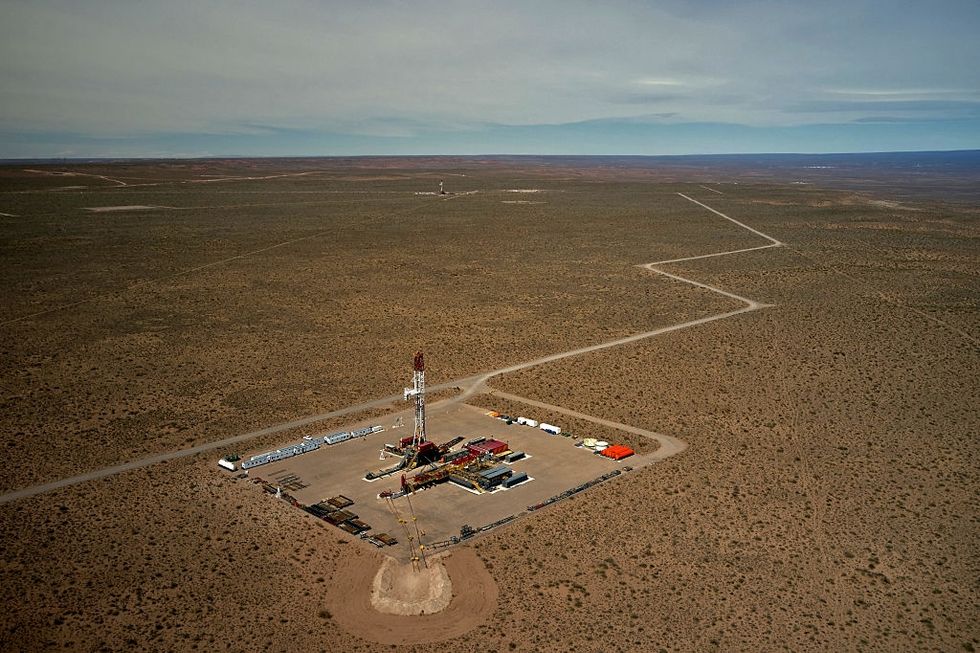 The Campo Maripe drilling site in the Vaca Muerta formation. Emiliano Lasalvia / AFP via Getty Images


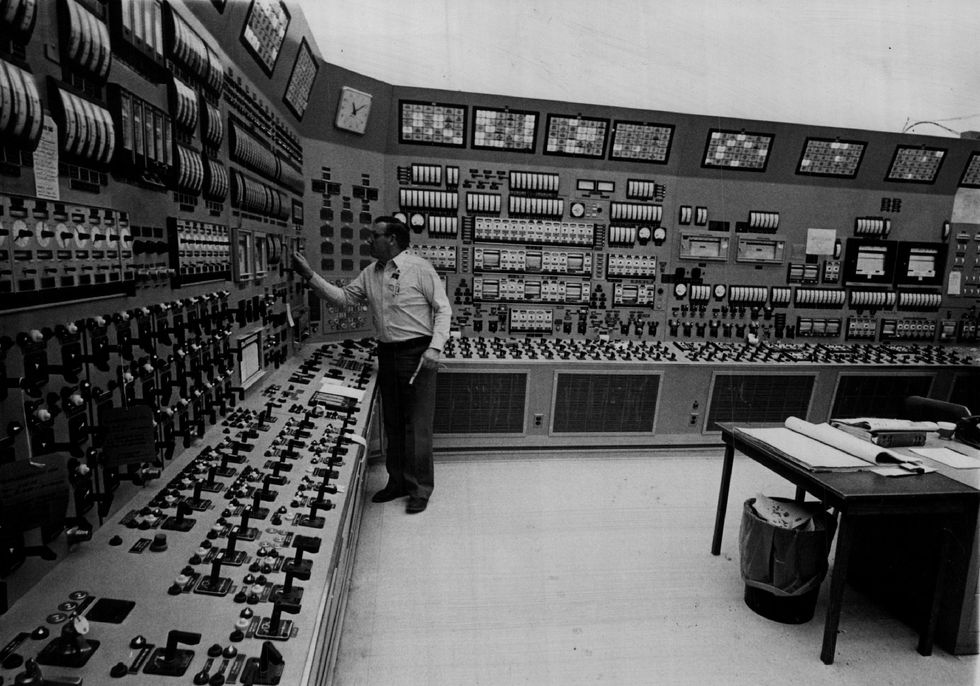 The main control panel at Fort St. Vrain in 1977. Photo: Denver Post, Inc. via Getty Images
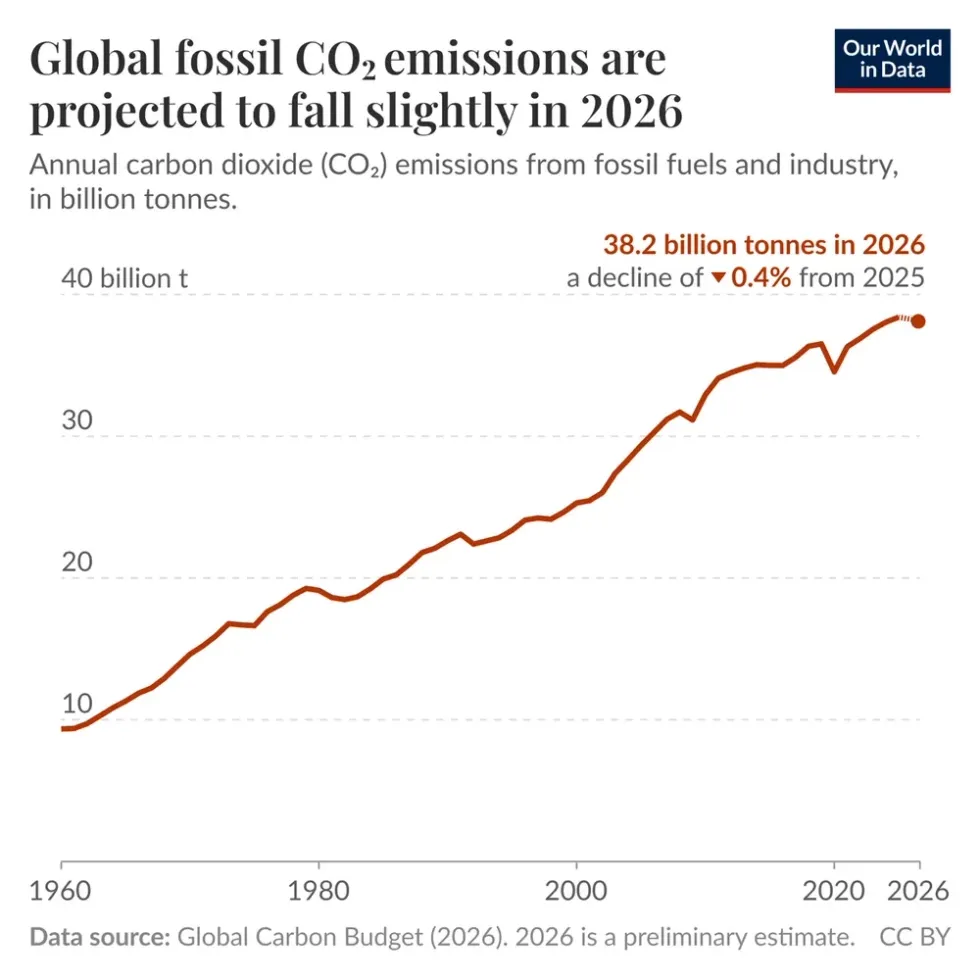 Chart: Our World in Data / Global Carbon Project