With SpaceX’s historic IPO dominating headlines this week, Heatmap turned its attention to the impact Elon Musk’s protégés have had on the climate tech landscape. Right after we published the story, an underwater geothermal startup founded and staffed by SpaceX alumni announced a sizable Series A, with its founder telling TechCrunch that his “experience at a very hardcore company like SpaceX” helped shape his approach to this new endeavor.
In other news, one of the biggest players in the sustainable aviation space, Twelve, opened its first commercial fuels plant and is preparing to begin supplying low-carbon jet fuel to Alaska Airlines later this month. Meanwhile, the battery sector saw two SPAC announcements: In a bid for survival, Factorial Energy officially went public this week through a SPAC merger, while ZincFive announced plans to do the same later this year. And finally there was some positive news for Germany’s heat pump market, as the startup Galvany raised fresh funding to simplify the end-to-end process of buying, installing, and operating a heat pump.
Endurance Energy Raises $54 Million for Subsea Geothermal Plants
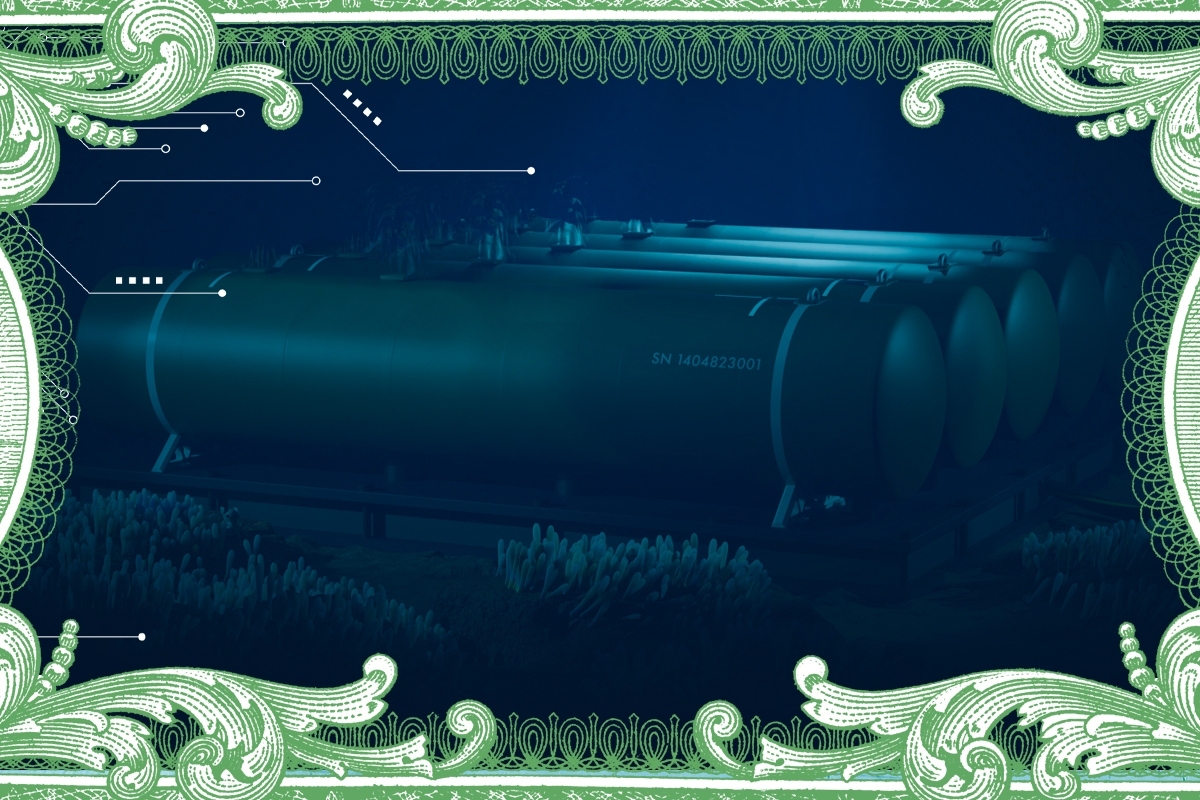
Drawing from an increasingly familiar playbook for Musk alumni, Endurance Energy founder and former SpaceX engineer Andrew Redd applied the lessons he learned from the rocket company’s notoriously “hardcore” culture and rapid pace of development to something completely different. Now that he’s pivoted away from rocket tech, Redd wants to harness geothermal energy from underwater volcanic activity, and his startup just raised a $54 million Series A to make it happen While a growing crop of geothermal startups including Fervo and Zanskar are focused on tapping into the heat beneath our feet, no other company in the sector has sought to develop the resource beneath the ocean floor.
There are good reasons for that, of course. Offshore infrastructure is notoriously difficult and expensive to build, maintain, and repair, and saltwater is corrosive. But if Endurance can crack the code, Redd told TechCrunch he thinks the company could unlock about 6 terawatts of geothermal energy in the coming decade.
Investors seem to be convinced: Peter Thiel’s Founders Fund led the startup’s latest funding round, its second capital raise since launching less than two years ago. Other backers include First Round Capital, Felicis Ventures, and Voyager Ventures. Endurance is initially targeting remote islands, where electricity costs are often far higher than on the mainland. It’s already launched an initial pilot off the coast of Tonga, which still gets about 80% of its electricity from imported diesel.
Sustainable Aviation Fuel Company Twelve Opens First Commercial Plant
Twelve, one of the best capitalized sustainable aviation fuel startups, opened its first e-fuel facility in Washington State this week. The demo plant has officially started production, and the company’s strategic partner and investor, Alaska Airlines, expects to begin using it on commercial flights as soon as this month. The plant’s launch comes roughly two years later than originally planned, a delay that’s hardly unusual for first-of-a-kind industrial projects like this. Last September, Twelve raised $645 million to complete buildout of the facility, as well as to jumpstart development of future plants, which it says will be orders of magnitude larger.
The company’s process begins with renewable-powered electrolysis. Using a proprietary catalyst, Twelve’s electrolyzer splits apart CO2 captured from a nearby ethanol plant at a lower temperature than conventional approaches, making it better suited to running on renewable energy. The company combines the resulting carbon monoxide with hydrogen to create a syngas, which gets refined into sustainable jet fuel. Airlines can blend the resulting product with conventional jet fuel (the Federal Aviation Administration allows a maximum 50% blend) to create a drop-in replacement that requires no engine modifications.
To cover the cost premium of SAF, Twelve and Alaska partnered with Microsoft. The tech giant is buying SAF certificates — essentially carbon credits — from the project to help offset Scope 3 emissions associated with employee travel. “We are seeing strong demand from the corporate offtake side, not only for employee travel, but also for freight and logistics,” Twelve’s CEO, Nicholas Flanders, told me. “Everything from pharmaceuticals to data centers use a lot of air travel.” There are also some policy tailwinds — the European Union now has a sustainable fuels mandate that requires the use of synthetic e-fuels like Twelve’s beginning in 2030.
The plant also comes online at a moment of heightened volatility in the jet fuel market. As my colleague Alexander C. Kaufman noted in Wednesday’s morning newsletter, the closure of the Strait of Hormuz has led to soaring fuel prices, prompting domestic refiners to ramp production to record highs. By contrast, Flanders argues that SAF offers customers greater price certainty via long-term offtake agreements. “You can fix the cost of our key inputs like electricity and CO2 and so that actually makes it a more attractive project from a project financing perspective,” he explained.
Factorial Energy Joins the SPAC Revival at $1.3 Billion Valuation
SPACs are back. But this week, it’s not just another pre-revenue nuclear company that’s looking to get to market as quickly as possible. Solid-state battery startup Factorial Energy, which has yet to develop a commercial product, has merged with the blank check company Cartesian Growth Corporation III, netting it $100 million at a $1.3 billion valuation.
The company was upfront about needing the SPAC to stay afloat after racking up losses since its founding in 2019. Factorial’s SEC filing states that prior to this new capital, “its liquidity wasn’t sufficient to fund twelve months of operations.” Yet it does have real traction in the industry — Mercedes-Benz, Stellantis, Hyundai, and Kia have all made strategic investments, looking to use Factorial’s tech in their electric vehicles to achieve higher energy density, longer range, and faster charging.
Solid state batteries typically use a solid electrolyte in place of the flammable liquid electrolytes found in conventional lithium-ion cells, but Factorial is starting with more of a hybrid approach. Its initial design relies on a “quasi-solid” gel-like electrolyte, which allows it to use an energy dense lithium metal anode while preventing the needle-like dendrite growth that predisposes solid-state batteries to short circuit. Factorial is manufacturing these cells at a pilot plant in Massachusetts, while working on a prototype with a fully solid electrolyte that could offer even greater performance gains.
Factorial isn’t the only battery company with SPAC news this week. ZincFive, a nickel-zinc battery producer, also announced plans to go public via SPAC in a deal expected to close in the second half of this year. Unlike Factorial, however, ZincFive is already making money, selling its batteries to hyperscalers and other data center operators as a backup power solution to bridge the gap in between when the power goes out and when the backup generator turns on. As the company’s CEO Tod Higinbotham told Bloomberg, “We have the backlog. We have the capacity. We have the demand. We really need capital.”
Galvany Lands $11.5 Million to Scale Germany’s Heat Pump Market
Navigating the maze of consumer clean energy incentives and coordinating home energy upgrades is hardly a U.S.-specific challenge. Just a few years ago, heat pump sales in Germany were falling precipitously despite generous subsidies and proven tech. One startup, Galvany, theorized the problem wasn’t the heat pumps themselves, but rather the unnecessary complexity of the surrounding ecosystem. Now it’s raised roughly $11.5 million to help streamline the process of getting heat pumps into consumers’ homes and apartments.
“In Germany, heat pumps do not fail because of the technology, but because of the gap between subsidy bureaucracy, installation capacity, and economic viability for the end customer,” the company’s CEO, Raik Belka, said in a press release. This is exactly the gap we are closing.” The approach is already paying off — Galvany has installed more than 2,500 heat pumps to date and became profitable last year after increasing its revenue sevenfold.
The startup produces its heat pump in partnership with Panasonic, but its real innovation lies in the way it streamlines sales, procurement, installation, and ongoing heat pump operations into a single platform. Potential customers enter their building data online and, after a feasibility check, get a quick quote that factors in subsidies. They can then purchase a standardized kit that’s simple for installers to assemble. Once operational, the heat pump’s energy management system, which launches this summer, will automatically adjust heating loads based on the cost of electricity, saving customers money without them having to actively manage the system.





 Solar capacity keeps growing. GoodPower