You’re out of free articles.
Log in
To continue reading, log in to your account.
Create a Free Account
To unlock more free articles, please create a free account.
Sign In or Create an Account.
By continuing, you agree to the Terms of Service and acknowledge our Privacy Policy
Welcome to Heatmap
Thank you for registering with Heatmap. Climate change is one of the greatest challenges of our lives, a force reshaping our economy, our politics, and our culture. We hope to be your trusted, friendly, and insightful guide to that transformation. Please enjoy your free articles. You can check your profile here .
subscribe to get Unlimited access
Offer for a Heatmap News Unlimited Access subscription; please note that your subscription will renew automatically unless you cancel prior to renewal. Cancellation takes effect at the end of your current billing period. We will let you know in advance of any price changes. Taxes may apply. Offer terms are subject to change.
Subscribe to get unlimited Access
Hey, you are out of free articles but you are only a few clicks away from full access. Subscribe below and take advantage of our introductory offer.
subscribe to get Unlimited access
Offer for a Heatmap News Unlimited Access subscription; please note that your subscription will renew automatically unless you cancel prior to renewal. Cancellation takes effect at the end of your current billing period. We will let you know in advance of any price changes. Taxes may apply. Offer terms are subject to change.
Create Your Account
Please Enter Your Password
Forgot your password?
Please enter the email address you use for your account so we can send you a link to reset your password:
“It’s got nothing to do with technology. It’s nothing to do with execution capability. It’s purely due to access to capital.”

Ever since Trump reentered the White House, Europe has been a safe haven for U.S. climate tech companies fleeing an increasingly hostile policy environment. Through strong carbon pricing and stable regulations, the bloc has created demand for still-experimental technologies such as green hydrogen, thermal energy storage, low-carbon building materials, and sustainable fuels.
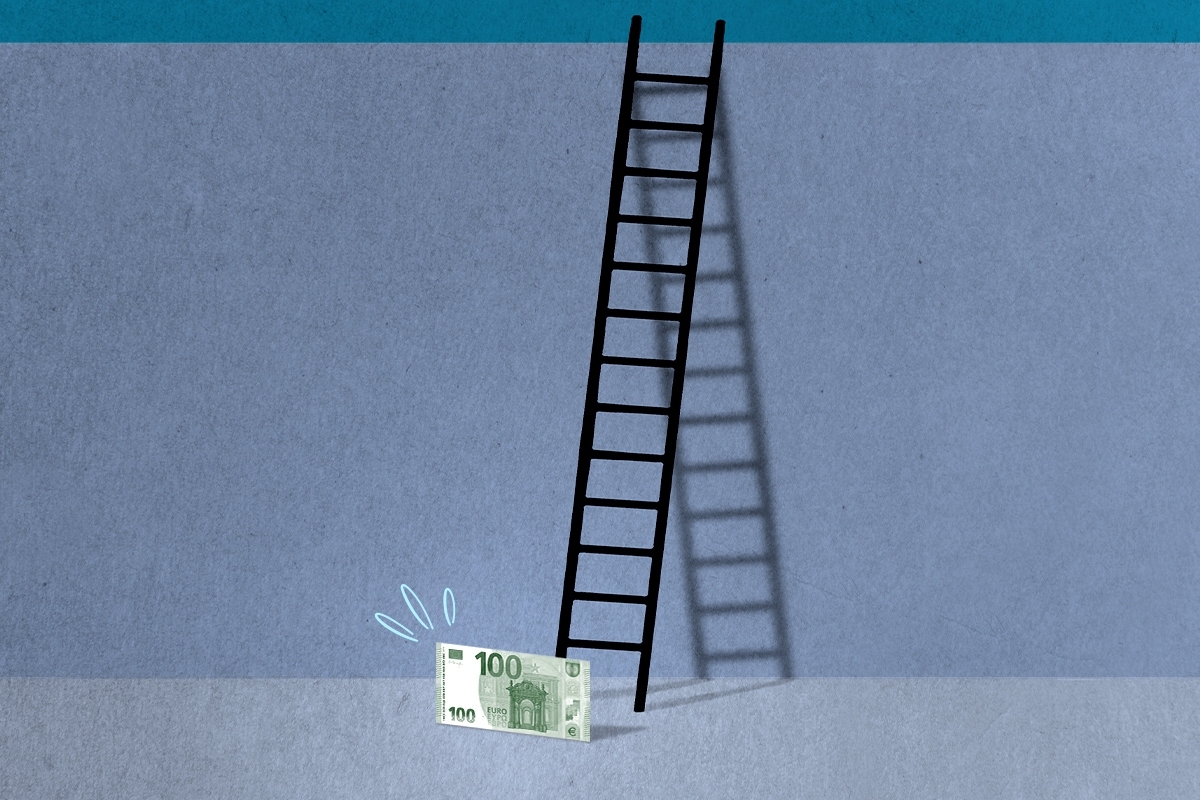
And yet at the same time, Europe has struggled to finance many of its own climate tech startups as they enter the capital-intensive scale-up phase. What gives?
The problem is not a lack of startups or capital. European firms raised $61 billion for climate-focused funds last year, far outpacing those in the U.S., which brought in $37 billion, according to Sightline Climate. The problem is that almost all of that European money flows to infrastructure and private equity investors backing more mature technologies. Early-stage startups also enjoy relatively strong backing, but the market starves the growth-stage middle.
The issue is both cultural and structural: Most of the bloc’s investors are unaccustomed to making the high-risk, high-reward bets required to scale climate tech. They also often can’t access tools like loan and equity guarantees, which remain limited in Europe, nor are there the institutional limited partners and growth-stage co-investors that could help de-risk those investments.
“It’s got nothing to do with technology. It’s nothing to do with execution capability. It’s purely due to access to capital,” Craig Douglas, a founding partner at the Berlin-based multi-stage venture firm World Fund, told me. That means companies that have outgrown early-stage financing but are still considered too small or too risky for larger institutional investors often either shutter or seek capital abroad. Logically, if given the chance, most startups choose the latter.
“You’re allowing U.S. investors to cherry pick European assets,” Douglas told me. The result? “European technologies and European companies that are successful end up enriching American pension funds rather than European pension funds.”
Ioannis Ioannou, an associate professor of strategy and entrepreneurship at the London Business School, told me that the consequences extend beyond the purely financial, emphasizing that Europe runs a strategic risk by relying on foreign capital for its climate tech scale-up. “It means you lose the supply chains. You lose the skills. You lose the fine manufacturing capabilities. You lose the so-called green jobs.”
Douglas and the other specialists in European climate finance I spoke with emphasized that the ever-ominous “missing middle” funding gap is particularly pronounced in Europe. A report Douglas co-authored earlier this year, aptly titled “The Series B Funding Gap In European Climate Tech,” quantifies the problem. While 25% of U.S. climate tech companies that raised a seed round from 2010 to 2020 had moved on to secure a Series B by the first half of last year — regardless of what country the capital came from — only 15% of European companies were able to do the same. That has created a growing backlog of startups stuck in a financing limbo: The lineup of European companies looking to raise a Series B grew from 220 in 2020 to 533 in the first half of last year.
While smaller climate tech funds in Europe and the U.S. have raised similar amounts of funding for early-stage startups — $18.5 billion in Europe versus $20.2 billion in the U.S. from 2020 through the first half of 2025 — the gap at the larger end of the market is stark. The U.S closed 29 funds of at least $500 million or more, compared with just 11 in Europe. These larger funds are the ones capable of writing the $25 million to $100 million checks companies desperately need to commercialize and scale. As Douglas’ report notes, fewer than 20% of European climate funds are pursuing a growth strategy, with over 70% making early-stage investments only.
“When we raised World Fund One, we were the largest [debut] climate fund in Europe, and we’re a €300 million fund. That’s nuts,” Douglas told me. World Fund aims to help companies “reach growth-investor readiness” by supporting startups from their seed through Series B, a model Douglas would like to see replicated throughout the region. “We need another 20 World Funds out there in the market to start filling this capital shortfall,” he told me. The firm announced last February that it’s raising a second, €500 million fund, but that’s yet to close.
One of the primary reasons European growth-stage investors have less capital to deploy comes down to the structure of European financial markets, which remain heavily reliant on bank lending rather than higher-risk equity investments. As a result, institutional investors like pension funds, insurers, and endowments never built the habit of investing in venture capital, which shows up when comparing the LP bases across the two regions: In the U.S., about 72% of VC funding comes from private institutional investors, compared with just 30% in Europe. Public money, much of it from the European Investment Fund, helps bridge the gap, but it simply cannot match the scale of private institutions.
Pension funds are a telling case. They’re among the largest sources of venture capital in the U.S., allocating nearly 2% of their assets to VC. But in the EU, they allot just 0.018% — roughly 100 times less. And because the U.S. also has far more money sitting in pension funds than Europe does, this makes the gap in actual dollars reaching startups wider still. Without that deep pool of institutional funding, Europe struggles to support the $500 million- to $1 billion-plus funds that would have the wherewithal to lead growth-stage rounds.
The result is a self-reinforcing cycle. Large growth funds require large institutional backers, but precisely because European pension funds and other institutional investors haven’t stepped up, the venture market remains too small to absorb the kinds of $100 million-plus commitments pension investors managing billions of dollars typically want to make. “They don’t see [venture] as an asset class that they can invest in,” Douglas told me. “But the reason that it doesn’t exist is because they’re not investing themselves in that asset class.”
If there’s one thing I learned from my reporting, it’s that white these problems run deep, Europe is hardly standing still. Policymakers and investors are well aware of the disconnect and are now experimenting with strategies to close the scale-up gap and affirm the region’s position as a leader in climate innovation.
To attract more institutional investment, for example, a growing number of initiatives aim to create “funds of funds” and other government-backed structures that pool money from pension funds, insurers, banks, foundations, and other large investors. The fund-of-funds structure lets an institution make a single, large commitment; then, intermediary asset managers break that capital into smaller chunks and invest it across multiple venture funds. This gives large-ticket investors the scale and diversification they want without requiring them to conduct due diligence on dozens of small venture funds; venture managers, in turn, gain access to much larger pools of capital.
Germany’s Wachstumsfonds Deutschland, for example, is a €1 billion fund-of-funds backed by more than 20 investors — including insurers, pension funds, and large family offices — that invests across the German and broader European VC ecosystem, with a focus on growth-stage capital. The EU’s European Tech Champions Initiative follows a similar model. The European Investment Bank and six member-states launched the initiative in 2023 with €3.9 billion to back regional growth-stage VC funds. Now it’s raising a second tranche of money — targeting €15 billion — and is bringing in private institutional capital for the first time.
Europe’s member states have also pushed institutional investors toward coordinated capital commitments in recent years, with France’s Tibi initiative serving as the model. Launched in 2019, it tasks the French government with vetting venture and growth funds, with those that qualify becoming eligible for backing from initiative’s signatories, primarily insurers and some pension funds. The program has attracted about €31 billion in commitments to date. Germany adopted a similar approach with its WIN initiative, which has now secured €12 billion in pledges from more than 30 major corporations — including Deutsche Bank, BlackRock, and Henkel — to invest in the country’s venture ecosystem by 2030.
The Irish Venture Capital Association has proposed a similar model, while Tibi’s founder — the economist Philippe Tibi himself — has been on a tour essentially pitching the idea across the bloc. But Ioannou isn’t convinced that creating country-specific Tibi-style commitments is the most efficient way for the region to scale climate tech.
“I’m not sure that fragmentation will actually solve the problem,” he told me. “Maybe it will be better if all that capital came into one larger fund, whereby the scale-ups wouldn’t have to deal with country level fragmentation, regulations, jurisdictions, legal, and all that kind of stuff.”
That’s the idea behind the new €5 billion pan-EU Scaleup Europe Fund, which is designed to invest directly in European deep-tech startups — climate tech very much included — rather than through venture funds. Announced last year, the fund has already secured roughly €2.5 billion in capital commitments from both the European Commission and private institutional investors, with a second fundraising round planned for the second half of this year. EQT, Europe’s largest private-markets investor, will manage the funds, ultimately deciding which growth-stage companies to back.
“Everything happened so quickly, from agreeing to it to executing on it to allocating it,” Douglas told me. “In effect, it happened in less than a year, which in the European context is crazy.”
The idea is to replicate what the combination of U.S. federal support and deep private capital markets has accomplished, Dimitri Colin, a policy officer at the cleantech policy and advocacy group Cleantech for Europe, told me. “The whole idea is to bring what worked in the U.S. into European public financing policies,” he said. Colin extolled the virtues of the Biden-era Loan Programs Office, as well as the efficacy of other Inflation Reduction Act-fueled efforts such as generous production tax credits when it comes to derisking investment in first-of-a-kind tech.
In our interview as well as in a recent report, Colin argued that EU funding should move from prioritizing grants to loan and equity guarantees in its forthcoming budget for the years 2028 through 2034. That’s because guarantees have proven far more effective than government grants at bringing private investors into climate tech, Colin told me. According to his report, every euro of grants or equity capital channeled through the VC arm of the European Innovation Council yields about €3 in additional investment. That’s nothing to scoff at, but it pales in comparison with InvestEU, the bloc’s €26.2 billion investment guarantee program. Every euro of guarantees from the latter attracts nearly €14.80 in private follow-on capital.
“The main idea behind the whole budget should be to focus on the leverage effect,” Colin told me, referring to how much additional private funding government backing generates. “How can the little public money that we have in Europe — because the fiscal environment is, of course, very constrained — more easily mobilize private money? That’s what the LPO did well.”
Colin also wants to change the EU’s public funding rules to make it easier to subsidize ongoing operational expenses for early-stage cleantech facilities, similar in effect to U.S. production tax credits. Currently, European policymakers often structure public support for these projects as capex grants paid out after construction is complete. This type of support is more difficult for private investors to underwrite since it doesn’t directly improve the plant’s ongoing operating economics, one of the risks investors care about most.
Getting these financing structures right is a matter of life or death for many of Europe’s most promising climate tech industries. Douglas points to batteries, critical minerals, semiconductors, and green molecules as sectors with the technological readiness to scale domestically — but not yet the capital. “One of the major risks in every sector we know is who’s going to be there, who’s going to be able to go with us on that journey to make sure the company has the capital to be successful,” he told me. Still, he sees reason for optimism. Because if there’s one thing that can be said about the E.U. at this moment, it’s that “they’re definitely taking it seriously.”
“The perfect solution doesn’t exist,” Colin told me. “We need to align the funding models, we need public de-risking tools, but we need also a true industrial strategy, China has done that, the US has done that with the IRA,” he explained. Now it’s Europe’s turn.

Log in
To continue reading, log in to your account.
Create a Free Account
To unlock more free articles, please create a free account.
Not going to lie, I didn’t see this coming.
Tesla just finished its strongest showing in years. In the second quarter of 2026, the company sold about 480,000 vehicles around the world — well over stock market projections of about 400,000 EVs. Tesla’s sales mark a full 25% year-over-year increase from the second quarter of last year.
If you’re surprised by this news, you’re not alone. Sales of Elon Musk’s EVs had been trending downward over the past few years following a series of self-inflicted wounds. The Cybertruck was a bomb. Tesla appeared to be interested only in building the self-driving cars and autonomous robots of the future, not the electric vehicles of today. Musk’s associations with President Trump and off-putting online politics alienated potential customers everywhere.
Yet here we are. So what happened?
European gas prices, for one thing. Tesla sales actually continued to fall in the U.S., where the electric car market as a whole still hasn’t recovered from tariffs confusion, the loss of federal subsidies, and other chaotic conditions over the past year. Tesla’s rally came instead from China and, interestingly, Europe: Registrations rose 39% in Denmark, 56% in Sweden, and 43% in Portugal and Italy.
It wasn’t so long ago that Musk’s politics had reportedly cratered interest in his cars in those countries. But European gas prices, which are typically much higher than those in the U.S., have also soared because of oil shocks related to the Iran War. EV interest, then, is up — so high that lots of buyers are willing to look past the personality of Tesla’s chief. (It doesn’t hurt that Tesla introduced less-expensive versions of both Model 3 and Model Y, with remarkably cheap leases and loans, to Europe this year to help overcome its struggles there.)
In China, meanwhile, Tesla has had something else up its sleeve to buoy sales. We’ve repeatedly noted the contraction of the company’s EV lineup: With the failure of the Cybertruck as well as the outright cancellation of the older and slow-selling Model S and Model X — the electric cars that pushed Tesla into the mainstream in the 2010s — the brand gets nearly all of its sales (more than 97% in Q2) from just two cars, the Model 3 sedan and Model Y crossover. And there are no signs it has an all-new mass-market car coming soon.
Instead, Tesla cobbled one together by making a new version of an existing car. In China, Musk has been selling the Model Y L, a version of his crossover with its platform stretched out by 6 inches to cram in an extra row of seats. (Tesla has offered a seven-seat version of its ordinary Model Y, but the two little seats in the back had just 25 inches of legroom compared to the 31 inches in this new version.) As a three-row SUV, the longer Model Y lets Tesla compete in a space that it vacated when it killed off the giant, expensive, gullwing-doored Model X. And as of last week, Model Y L is available in the U.S. Tesla hopes the vehicle can lead to a reversal of its sinking fortunes here, where its EV sales shrank by 20% in the second quarter.
Truthfully, the car is a bit of a kluge. Rear seats often require a compromise on comfort and space. In the case of the Model Y L, Jalopnik notes that even with the 6 inches added to the wheelbase, Tesla’s signature sloping roof doesn’t leave much headroom for the occupants of the way-back. Boxier EVs that were built to be three rows to begin with, like the Hyundai Ioniq 9, Kia EV9, and Rivian R1S, are more pleasant for the fifth and sixth passengers. Nevertheless, those who wanted a bigger Tesla at a starting price of around $60,000 can now get one, and that counts.
Model Y L is also a testament to the power of the platform. Yes, building a new vehicle from the ground up would have provided Tesla with a better all-around vehicle than what it got by hacking the Model Y. But the modified Model Y was much faster and cheaper to deliver, providing an entry into a popular segment of the car market just at the moment Tesla needed to right the ship.
Doing more with less, like creating a three-row EV on the platform of your two-row car, looks primed to become a big part of the future of electric vehicles. That’s particularly true when it comes to growing adoption in America, where legacy automakers and startups alike are trying to simplify manufacturing to bring down costs. The solution to get to market for a company like Honda was simply to borrow General Motors’ EV platform and build its first EV on top of it. Rivian has said it has no plans to sell a pickup truck on its new R2 platform the way it has with its original vehicle, but it absolutely could — and arguably should — if market conditions suddenly made such an EV pickup a hot item.
On half-full glasses, Omani polysilicon, and U.S. vs. Chinese nuclear
Current conditions: Guam and the Northern Mariana Islands are carrying out damage assessments after Super Typhoon Bavi made landfall Monday as the equivalent of a Category 5 hurricane • A wildfire has scorched more than 11,000 acres in the French Pyrenees, forcing thousands to evacuate • Heavy rain from Typhoon Maysak has killed at least 15 people in China this week.
The governors of 11 states across the American West signed onto a pact to speed up permitting and increase coordination on the regional electrical grid. The agreement, brokered at the Western Governors’ Association’s annual meeting last week, unites Arizona, Colorado, Idaho, Montana, Nevada, New Mexico, North Dakota, Oregon, Utah, Washington, and Wyoming behind the Western Transmission Expansion Coalition, or WestTEC. The interstate effort to build out the grid across America’s western half published a study in February that found the region needed 12,600 miles of new transmission lines over the next decade, at a cost of roughly $60 billion. Even the energy adviser to Utah Governor Spencer Cox — a Republican who has positioned himself as a vocal champion of “fiscal responsibility” — called the investment “just common sense” for the West. “Getting energy to where it’s needed, when it’s needed, is just as important as generating it in the first place,” Emy Lesofski, who also serves as the director of the Utah Office of Energy Development, said in a statement. “Think of the grid like the roads and highways connecting our communities — it doesn’t matter how much is produced if you can’t move it to where people actually live and work.”
It’s a sign, perhaps, of the counterintuitive but optimistic conclusion of a new study by the Massachusetts Institute of Technology Center for Energy and Environmental Policy Research. Entitled “Glass Half Full,” the report — which my colleague Robinson Meyer published as an exclusive — compared the tax and spending laws passed under the Biden and Trump administrations and also analyzed each administration’s environmental rules. The analysis concludes that 74% of new clean energy capacity that would have gotten built under the Biden administration’s policy by 2035 will still get built under Trump’s policies by that same year. Those new renewables and nuclear plants will generate about 71% of the electricity that would have been expected had Biden’s policies remained law. Roughly 67% of the climate pollution that would have fallen under Biden’s policies will still drop under the trajectory Trump set. “The glass is substantially full,” Lily Bermel, the report’s author and a visiting fellow at the Columbia Center on Global Energy Policy, told Rob. “It’s not barely half full. It’s like three-quarters full.”
The U.S. grid needs to increase its supply of reliable electricity as quickly as possible. But regulators are stretched so thin racing to approve new projects that they can’t risk diverting attention to fast track last-minute design changes to a $2 billion gas-fired plant in the nation’s largest and arguably most stressed grid system. On Monday, Utility Dive reported that the Federal Energy Regulatory Commission decided last week to reject a request for a waiver to allow Advanced Power Services’ Chestnut Run project in eastern Ohio to hook up to the PJM Interconnection system while bypassing certain rules. PJM included the plant — the parent company of which is ArcLight Capital Partners, which in turn sold itself in May to the data center developer DigitalBridge for $1.1 billion — in the initial 51 projects designated under the Reliability Resource Initiative, a program to fast-track roughly 12 gigawatts of additional generation from new and existing power stations.
In a dynamic that echoes what went wrong with Westinghouse’s buildout of two AP1000s at Southern Company’s Plant Vogtle, the process for the program barred any changes to a project’s size and capacity in its interconnection rights. With gas turbines in short order, Advanced Power couldn’t get critical equipment. The Boston-based independent power producer told FERC it had found alternative turbines, but that the new units would change the plant’s configuration, shaving off a modest 55 megawatts from its maximum output of more than 1.2 gigawatts of electricity. It’s barely a 4% difference. But FERC said that “studies resulting from the equipment changes would introduce substantial delays” and “have a ripple effect” on other projects in the queue.

Back in February, Oman’s United Solar opened the Middle East’s largest polysilicon plant. At full capacity, the facility will churn out 100,000 metric tons of polysilicon per year, enough to produce 40 gigawatts of solar panels. That makes the plant the largest of its kind outside China. Initially backed by Oman’s sovereign wealth fund, United Solar has already received $30 million in backing from Waaree Solar Americas, the U.S. subsidiary of an Indian solar giant that Semafor reported was championed by Prime Minister Narendra Modi in recent trade talks in Muscat. On Monday, the Oman Observer reported that United Solar had closed a $1.6 billion deal with the International Finance Corporation, the private sector arm of the World Bank Group. In a statement, the company described the investment as an endorsement of United Solar as a supplier of material that can comply with mounting American and European trade restrictions on Chinese solar panels.
Sign up to receive Heatmap AM in your inbox every morning:
Cuba’s entire power grid went offline Monday as the Caribbean nation’s energy crisis devolves into catastrophe amid Washington’s blockade on fuel shipments. Energy Minister Vicente de la O Levy told CNN that officials were working to restore energy and that they’ve already activated emergency “microsystems” that supply electricity to critical services. In a plea to the United Nations in May, Francisco Pichón, the highest ranking officer in the Havana office of the U.N.’s Development System, said “time is running out, we need fuel now to save lives.” As in neighboring Puerto Rico, the ongoing grid disaster has spurred a boom in rooftop solar. But NBC News reported that Cubans are also turning to dirtier energy sources such as charcoal to cook indoors, subjecting themselves to dangerous smoke.
I find the comparison to Puerto Rico particularly poignant. Both islands were colonized around the same time, forming the beachhead of Spain’s early empire in the Americas, and rebelled against Madrid’s rule around the same time. Both fell under Washington’s suzerainty after the Spanish-American War of 1898, although the Americans granted Cubans self rule while seizing Puerto Rico as a colony. After the Cuban Revolution, the U.S. invested in Puerto Rico as a manufacturing hub and a symbol of the American system’s superiority. But as the memory of the Cold War faded into the 1990s, the U.S. cut key support for Puerto Rico, flipping over the first domino in a process that ultimately led to the island’s bankruptcy and the total collapse of its electrical system. The islands had opposite experiences of the so-called American Century. Neither one can keep the lights on.
In the early hours of July 4, the microreactor developer Aalo Atomics split atoms at its test reactor for the first time, becoming the fourth company in the Trump administration’s reactor pilot program to go critical. Criticality, on its own, is not a huge deal. But the program supported 10 companies to build test reactors that could generate data that the developers can use in their applications to the Nuclear Regulatory Commission. The Department of Energy, which administered the program, set a July 4 deadline for at least three companies to split atoms for the first time. First came Antares Nuclear, whose microreactor — designed for the military and space — went live at the Idaho National Laboratory early last month. Two weeks later, the gas-cooled microreactor maker Valar Atomics fired up its test reactor at the San Rafael Energy Lab in Utah. A week ago, as I told you, Deployable Energy went critical with its “nuclear battery,” also at the Idaho National Lab. In a statement, Aalo Atomics CEO Matt Loszak called reaching criticality “our most significant milestone to date, as it paves the way for the deployment of” the full-scale power units by smoothing the pathway to NRC approval.
I hope you were soothed by that chaser, because here’s the acrid shot: While we split atoms at test reactors, China just hooked up a whole new gigawatt-scale reactor to its grid. Last week, I told you that the second of six new Hualong One reactors — essentially China’s standardized version of the American AP1000 with an all-domestic supply chain — had hit a critical juncture. Well, now it’s hit the most critical juncture of all: It’s officially supplying power to the grid. Onto the next one.
The offshore wind industry may be in retreat in the U.S., but it’s just picking up in Europe. On Monday offshoreWIND.biz reported that the Netherlands’ 760-megawatt Hollandse Kust West VI offshore wind farm has officially connected to the grid. The 52-turbine plant is expected to reach full capacity by the end of this year.
Any version of the future — even one under Trump — includes bits of the Inflation Reduction Act.
We passed a major milestone over the weekend: the one-year anniversary of President Trump’s One Big Beautiful Bill Act. That piece of legislation — which curtailed the wind and solar tax credits, ended incentives for electric vehicle buyers, and terminated a lot of green industrial policy — was signed into law on July 4, 2025. It also formally ended the era of decarbonization and climate policy experimentation that began when the United States passed the Inflation Reduction Act roughly three years earlier.
Now we’re far enough out to begin assessing the Trump law’s impact. And a fascinating new report, published today by the MIT Center for Energy and Environmental Policy Research, argues that the damage … is not as bad as one might fear — at least in the electricity sector.
The power sector has retained most of the quantifiable benefits associated with Biden’s climate law and Environmental Protection Agency rules, the new report asserts, and about two-thirds of the reductions in heat-trapping pollution expected under Biden’s policies will still happen under Trump’s. The report is called “Glass Half Full,” but its author, Lily Bermel, told me that her own conclusions went even further: “It’s not barely half full,” she said. “It’s like three-quarters full.”
We had the exclusive on the new report at Heatmap — check out our full story for more coverage, including interviews with critics of the analysis. Bermel also joined me on our Shift Key podcast to discuss her findings and what they suggest for the future of climate policy.
But in this more discursive space, I want to address head-on a question I think Bermel’s report raises: Was the Inflation Reduction Act worth it? If two-thirds of the emissions cuts expected under President Biden's policies are going to happen anyway (at least from the power sector), what was the point of those policies?
I posed this question directly to Bermel. She pointed me to a different source of MIT data: the Clean Investment Monitor, which tracks clean energy and industry investment in the United States across a range of sectors. That data shows that wind, solar, and storage investment did increase in the United States after the IRA passed, she said. “What the IRA did for wind and solar was good and impactful, but ultimately no longer necessary and worth the bang for buck,” she told me. (She added that the law’s other policies — such as its incentives for “clean firm” power plants such as geothermal that can run all day — did not go far enough.)
Ben King, a director at the Rhodium Group (which collaborates with MIT on the Clean Investment Monitor data), made another point when we chatted about the MIT report over the weekend. The new report compares visions of what the energy system will look like after Trump’s policies and Biden’s policies. But both of those scenarios contain a lot of the IRA’s policies, he said, because the solar and wind tax credits remain available in some form until the end of this decade. There simply is no version of the future that doesn’t have a lot of the IRA in it.
And that should, perhaps, reframe how we compare the emissions trajectories under Trump’s and Biden’s policies. It might sound like good news that 67% of the emissions cuts expected under Biden’s policies could still materialize under Trump’s. But it might also invite a certain nihilism — if most of the cuts were going to happen anyway, why did we have a big political fight over climate policy in the first place?
So it’s worth stating clearly that any fight over emissions or climate policy is partly about the emissions cuts that have not happened yet. Had the Inflation Reduction Act’s tax credits — or the EPA’s climate rules — been preserved, then emissions cuts might have gone even deeper than we once anticipated. In this way, there is always something proleptic about discussing emissions policy — really, you are trying to secure additional emissions reductions.
To put this another way, Bermel’s model suggests that the United States will build the same amount of offshore wind under Trump’s policies as it would under Biden’s (about 6 gigawatts). That happens, she said, because offshore wind is driven by state policy as much if not more than federal policy — and the state policy environment was souring even before Trump took office. But had Kamala Harris won in 2024, then Trump’s war on wind would never have happened, and states may have worked harder to salvage their offshore wind investments — or gone on to build even more.
There is no world, in other words, where Biden’s policies would have stood alone. Their success was always provisional, and their potential victory was always an invitation to further gains.