It’s been a busy few days for climate and energy news. So instead of focusing on a single story in this edition, let’s try something different and check in with a few big ones I’ve been thinking about:
Europe’s heatwave
Wednesday was the hottest day ever recorded in France, according to the country’s weather agency, Météo-France. The commune of Palluau, not so far from the country’s Atlantic coast, recorded a high of 43.8 degrees Celsius, or 110 degrees Fahrenheit.
The United Kingdom also set a new June temperature record. Spanish officials have suggested that the heat wave may have killed as many as 212 in their country alone. Germany, Austria, Italy, and the rest of central Europe also face searing weather.
I was particularly struck that many cities in France and Germany recorded their warmest night ever. A town in Rhineland-Palatinate, for instance, saw overnight temperatures remain above 79 degrees Fahrenheit earlier this week.
Although that might not sound so bad to American ears, it is alarming in a country where most homes do not have air conditioning. Heat waves are the deadliest type of weather event on an annual basis, but they are slow and silent killers: They prove fatal when temperatures stay high for hours, or days, at a time, and the body’s natural cooling mechanisms give out. The human body can withstand a hot day or two; it can’t hold out a hot day, a hot night, another hot day, another hot night, ad nauseam.
And let’s clearly say, too: This is climate change. As my colleague Jeva Lange wrote in 2024, record-breaking heat is the clearest symptom of anthropogenic global warming caused by carbon emissions — and therefore fossil fuels. Preventing disasters like this one is why Europe, the fastest-warming continent, has invested so much in decarbonization and net zero.
(But I suspect that in the coming years, it will invest more in air conditioning, too.)
Data centers are a primary threat … for the GOP
Once a quarter, the Federal Reserve Bank of Dallas surveys oil and gas executives on how they're feeling about the sector. Their anonymous comments, collected at the report’s end, periodically make news — last year, you might recall, respondents were less than thrilled with the president’s policies — but I was struck by a comment in the most recent survey, which came out yesterday.
“The collision of AI development with local community activists rhymes with the early response to fracking,” one unnamed drilling executive said. “It's unclear how competitive we can be in the AI arms race unless we temper the rights given to NIMBYists (not in my backyard) and the legal maneuvers they use to stop progress.”
Now, look: Oil and gas executives care about the boom in part because data centers are major energy consumers. But this comment stood out because it uses the same historical analogy I’ve been meditating on. If you think back to the early 2010s, I’ve said, fracking was new and worrying to many people. But over the course of the decade it became politically polarized, with red states and some purple states embracing it and many blue states backing off of or banning it.
That’s been my framework. So I was shocked to see that J. Stuart Adams, the president of Utah’s state senate, lost his primary to a fellow Republican challenger this week. The campaign was driven by Adams’ approval of a massive data center partly owned by the “Shark Tank” celebrity investor Kevin O’Leary, known as Mr. Wonderful. The 40,000-acre data center — which could consume up to 9 gigawatts, a New-York-City-on-a-warm-spring-day’s amount of power — has proven to be enormously unpopular in Utah, and Adams ultimately demanded O’Leary shrink the project. But that didn’t pacify Republican primary voters, who have now booted Adams from a 20-year career in state politics.
Why does this matter? Because that’s not very fracking-like at all. In the 2010s, state and local Republican leaders may have faced tough battles over pipelines or eminent domain, but their voters did not broadly reject oil and gas development the way they seem to be doing for data centers now. (As our polling at Heatmap shows, the facilities are now deeply unpopular even among GOP voters.) This suggests data centers may be closer to what, say, urban housing projects or nuclear power plants once were to the American electorate — a type of highly controversial economic development that local politicians must either “own” or “fight,” and which, regardless, they see as existential for their careers.
And that in turn suggests a very different future for data centers — and a very different electricity load growth forecast — may be coming.
Slate truck
One last thing, and it's short. Like all middle-aged millennials, I pine for the return of cheap, useful pickup trucks like the old Ford Ranger or Toyota Tacoma. And like all millennial climate journalists, I wish electric vehicles were cheaper.
So I was delighted to see the news that the U.S. startup Slate has somehow managed to build a $25,000 two-seater pickup EV. It says it will start delivering them by the end of this year. Read Heatmap’s new piece by Andrew Moseman to learn how they did it.






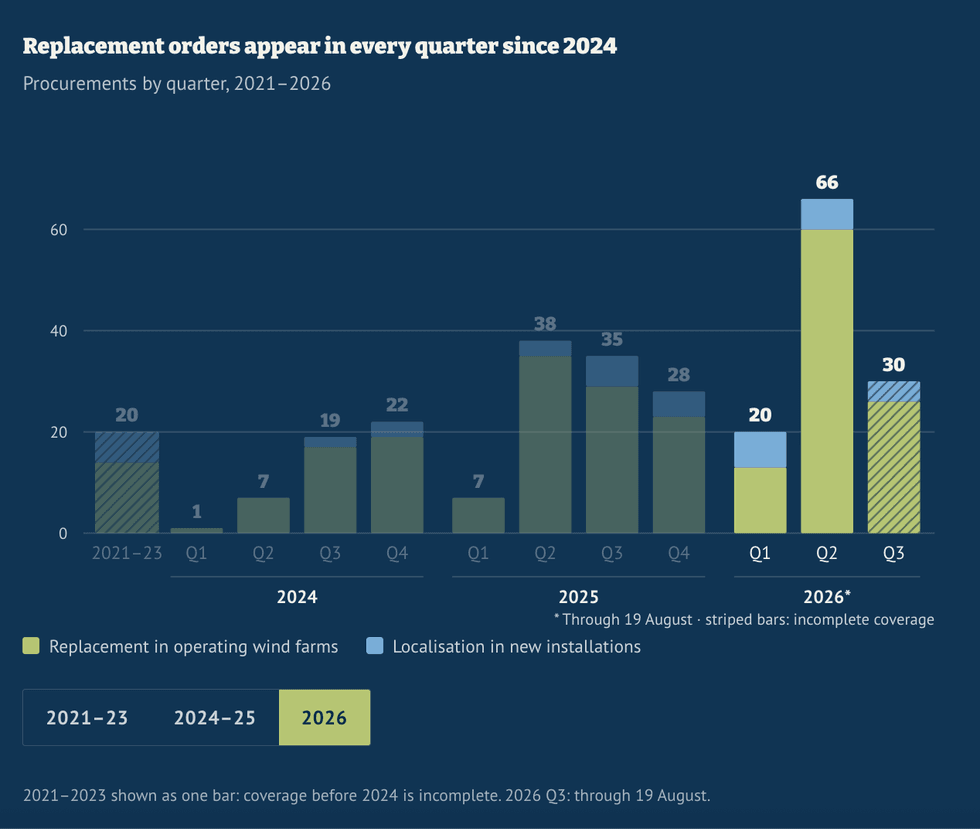 The great localization push of 2026. OSW
 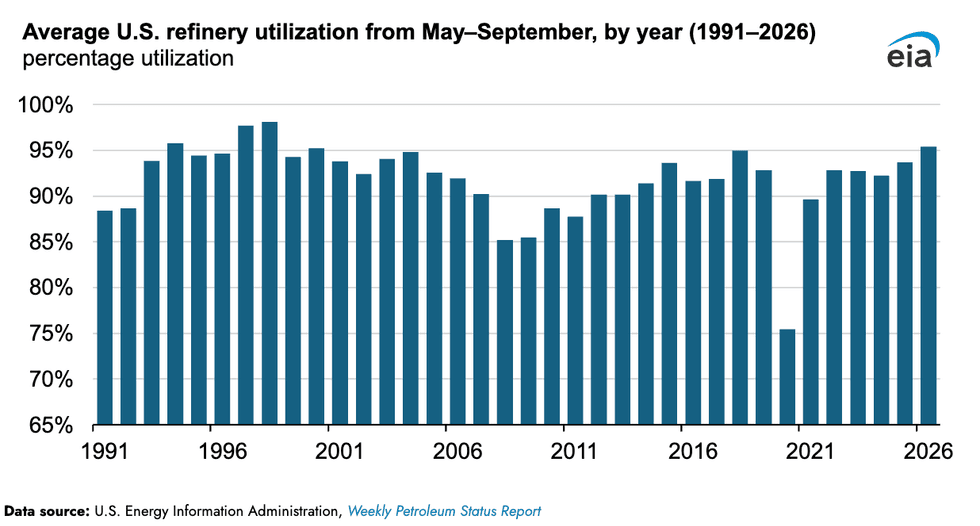 The 1990s are back. EIA