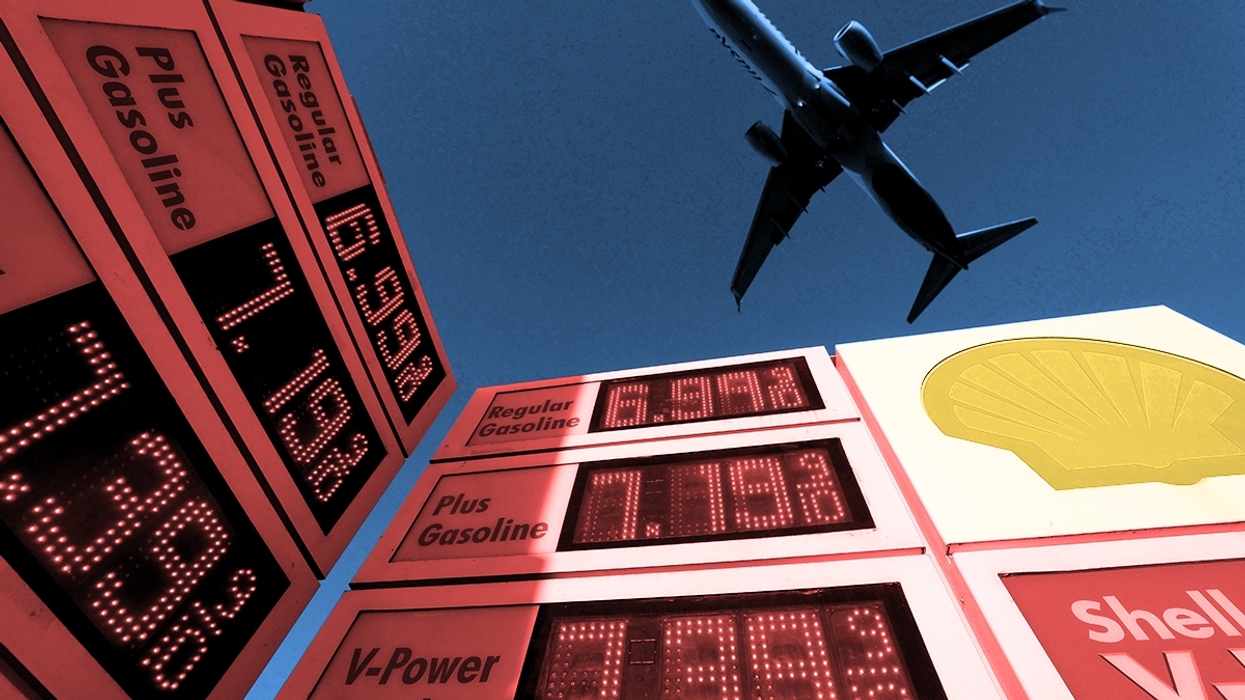
While the gasoline that powers Americans’ cars has seen dramatic price hikes following the effective closure of the Strait of Hormuz, the price of the natural gas that provides the bulk of the electricity that powers Americans’ homes, office buildings, factories (and, indirectly, some cars) has actually been roughly flat since the war began, meaning that a huge portion of American energy consumption remains unaffected by the global energy crisis.
Except in Hawaii.
The state has a series of (literally) islanded electrical grids that rely heavily on burning oil to generate electricity, unlike the other 49 states whose grid-connected power plants are largely natural gas, coal, or nuclear. This puts Hawaii ratepayers at the mercy of the global oil market — and it will be exacting a higher price.
“Hawaiian Electric customers should prepare for potential increases in energy costs in the coming months, driven by rising global oil prices linked to escalating geopolitical tensions, including the ongoing conflict involving Iran,” the utility Hawaiian Electric said in a statement last week.
The utility, which serves the vast majority of Hawaii’s residents, said that typical residential bills “may rise between 20% and 30% over the next several months,” with customers on Oahu seeing hikes in April and the rest of the state seeing hikes in May and June.
On Oahu, the utility owns two oil-fired plants with around 1,000 megawatts of capacity, alongside diesel and biodiesel plants. It also buys power from other oil, biomass, and biofuel plants.
About two-thirds of Hawaii’s electricity comes from oil, with the balance coming from renewables, according to the Energy Information Administration. The state — uniquely among the 50 — has no natural gas-fired power or nuclear power, and its last coal-fired power plant shut down in 2022. It has accordingly high electricity prices, with the highest average price of any state, according to the EIA, but also the lowest per-capita electricity demand. (Hawaii isn’t exactly a center of electricity-intensive industrial production.)
The average electricity bill in Hawaii in March was around $195 a month, according to Heatmap and MIT’s Electricity Price Hub, compared to $158 in California, $189 in Texas, and $144 in New York. The average price of electricity of $0.42 per kilowatt-hour is well above California’s $0.36, New York’s $0.24, or Texas’s $0.21.
Hawaii’s crude oil largely comes from Libya, Argentina, Nigeria, and Brazil, according to the Energy Information Administration, before being processed at the state’s sole refinery on Oahu.
With the United States and Israeli war with Iran now well into its second month, that oil is getting more expensive. Benchmark oil prices have jumped from $67 to $115 per barrel since the war began on February 28. Gasoline prices in Hawaii average $5.60 per gallon, according to Triple AAA, compared to $4.48 a month ago.
The state’s dependence on oil for both electricity and transportation has driven residents to use its electricity efficiently, and lawmakers to attempt to transition to locally produced, non-fossil sources of energy. The state has a net-negative carbon target for 2045, and two of its islands, Kauai and Hawaii, already get at least half of their electricity generation from renewable sources, including solar, geothermal, and hydropower. However Oahu, the state’s most populous island, gets only around 30% of its electricity from renewables.
The electricity price spike could also imperil Hawaiian Electric’s ability to get out from under its substantial liabilities related to the 2023 Maui wildfires. The utility was named as a party to a $4 billion settlement for wildfire damages that has been inching towards completion since the state Supreme Court ruled in February that insurers couldn’t “go directly after Hawaiian Electric Industries, the parent company of Hawaiian Electric Co., and other parties at fault for the fire who agreed to fund the settlement,” Honolulu Civil Beat reported.
The settlement “is closer to resolution than ever,” Jefferies analyst Julien Dumoulin-Smith wrote in a note to clients Tuesday. The investment bank has maintained a negative rating on the stock, he wrote, in part because “the affordability backdrop is deteriorating at the worst possible time.”
Hawaiian Electric “remains one of the most oil-exposed electric utilities in the United States, and the recent Iran-related oil spike could begin pressuring customer bills in late spring, subject to procurement timing and fuel inventory drawdown,” he wrote. The price hike could affect the utility’s ability to “rebase” — i.e. increase — its rates, as it has proposed to state regulators.
The utility has argued that it needs to increase prices to deal with inflation, including the price of electrical transformers, which have more than doubled since 2020. The proposed rate hike would raise bills by between $8 and $12 next year. The utility has said that “fortifying the reliability and resilience of the electric grid and power generation assets requires investments that keep pace with the costs of maintaining and improving the systems serving five islands,” pointing to $183 million it plans to spend on grid improvements in Honolulu by the end of the decade, which outstrips the revenue request of $170 million. It has also said it needs higher revenue to deal with higher insurance premiums following the Maui fires.
Hawaii’s wholesale dependence on oil for electricity generation is almost completely anomalous in the 50 states. About 90% of its total energy usage comes from petroleum, according to the EIA, compared to about 38% for the country as a whole.
While much of the United States electricity system is at least somewhat insulated from shockwaves emanating throughout the global economy, there are two notable exceptions in the country’s far west and far east.
The only other region where oil plays a key role in the electric grid is Hawaii’s geographic opposite: New England.
New England has several dual-fuel power plants that can use oil when demand for natural gas for heat spikes in the winter. And like Hawaii, New England is hooked into global energy markets, though in the latter case that has more to do with liquified natural gas, which the region is forced to import due to its sparse natural gas pipeline network.
But if the war with Iran ends up spiking electricity prices in New England this winter, the world will have far larger problems than Bostonians’ electric bills.