You’re out of free articles.
Log in
To continue reading, log in to your account.
Create a Free Account
To unlock more free articles, please create a free account.
Sign In or Create an Account.
By continuing, you agree to the Terms of Service and acknowledge our Privacy Policy
Welcome to Heatmap
Thank you for registering with Heatmap. Climate change is one of the greatest challenges of our lives, a force reshaping our economy, our politics, and our culture. We hope to be your trusted, friendly, and insightful guide to that transformation. Please enjoy your free articles. You can check your profile here .
subscribe to get Unlimited access
Offer for a Heatmap News Unlimited Access subscription; please note that your subscription will renew automatically unless you cancel prior to renewal. Cancellation takes effect at the end of your current billing period. We will let you know in advance of any price changes. Taxes may apply. Offer terms are subject to change.
Subscribe to get unlimited Access
Hey, you are out of free articles but you are only a few clicks away from full access. Subscribe below and take advantage of our introductory offer.
subscribe to get Unlimited access
Offer for a Heatmap News Unlimited Access subscription; please note that your subscription will renew automatically unless you cancel prior to renewal. Cancellation takes effect at the end of your current billing period. We will let you know in advance of any price changes. Taxes may apply. Offer terms are subject to change.
Create Your Account
Please Enter Your Password
Forgot your password?
Please enter the email address you use for your account so we can send you a link to reset your password:
Democrats in Congress are determined to restore them. That isn’t necessarily what the industry wants.
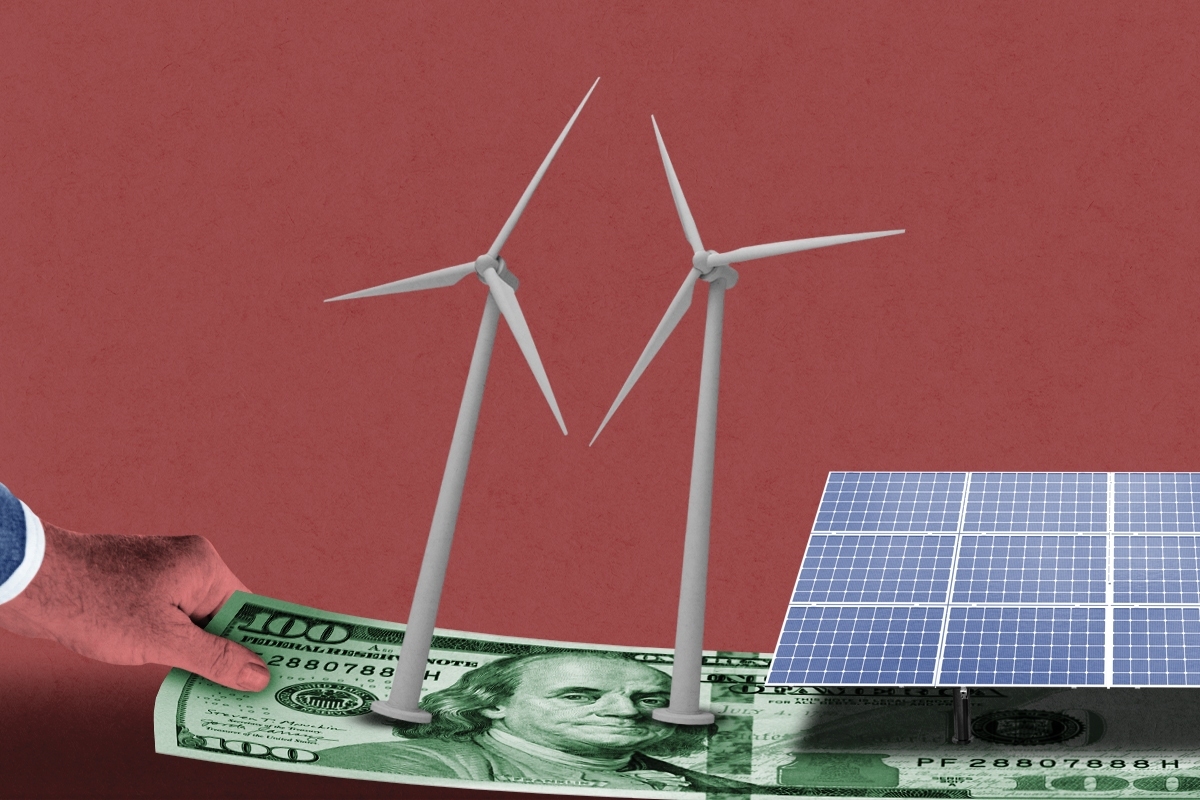
As many Americans celebrate the country’s 250th birthday this weekend, the clean energy industry will be mourning a death. Independence Day marks the expiration of federal tax credits for wind farms and solar arrays, subsidies that have been in effect in some form or another since 1978.
They may not be dead forever. Leading Democrats in Congress are preparing to reinstate the tax credits the next chance they get — whether or not the clean energy industry is asking for it.
“Republicans letting these clean energy credits expire is bad for families, bad for workers, and a gift to China,” Senate Minority Leader Chuck Schumer told me in an email. “Democrats will fight to bring these incentives back and keep pushing every policy that lowers energy costs, strengthens American manufacturing, and protects America’s clean energy future.”
While the tax credits were not initially created to tackle climate change, they became the backbone of American climate policy as fossil fuel companies mired federal attempts to regulate carbon pollution in court challenges.
The original credits, passed as part of the 1978 Energy Tax Act, were intended to reduce the country’s reliance on oil and natural gas during the oil crisis. They included a 30% tax credit for homeowners and a 10% tax credit for businesses on the cost of wind or solar, among other “alternative energy” technologies. Congress passed extensions of the credits numerous times in the decades that followed, making tweaks along the way: Lawmakers took away the credit for wind farms in the mid-1980s; then, in 1992, they created a new production tax credit for wind based on the amount of energy a given project generated.
Throughout the history of the tax credits, there was often a will-they-won’t-they precarity to their reauthorization. And yet in the end Congress always extended the credits on bipartisan votes. It wasn’t until the 2022 Inflation Reduction Act, which wrapped up tax credit reauthorization in a larger, highly partisan package, that even Republicans who supported the credits withdrew their votes in protest.
The IRA dramatically extended and expanded the subsidies, opening up both the investment and production tax credits to any carbon-free electricity source — not just wind and solar — and authorized them for as many years as it would take to cut emissions from the electric grid by 75%. It also offered developers increased tax relief, covering up to 70% of their costs if they used equipment from U.S. factories and built in designated low-income “energy communities.”
This combination of tweaks — the seemingly infinite timeline, the generous boost for domestic content — contributed to a boom in investment in new wind and solar projects in the U.S. and onshore manufacturing of the equipment to build them. But unbounded optimism gave way to uncertainty when Trump took office in early 2025 and pushed through the One Big Beautiful Bill Act, which cut short subsidies for wind and solar. Projects that begin construction on or after July 4 of this year are no longer eligible for the tax credits, though other carbon-free energy sources such as new nuclear reactors, geothermal plants, and energy storage systems remain eligible until 2033.
The effects of the tax credit cliff for wind and solar will not be noticeable right away. Developers have stockpiled solar modules and turbine parts and ordered custom transformers, strategies that will enable them to claim they have “begun construction” on projects before July 4, even if they haven’t broken ground yet. Wood Mackenzie analysts estimate that companies have safe harbored between 216 gigawatts and 240 gigawatts of solar capacity, and nearly 30 gigawatts of onshore and offshore wind capacity. It will take four to five years for the industry to work through this pipeline. Any slowdown during that time is more likely to be a result of Trump’s gauntlet of permitting challenges for renewables or community opposition than it is to come back to the lack of tax credits.
Post-2030, however, the picture is murkier. No one I spoke to for this story expects clean energy development to come to a halt. Solar is the fastest growing energy source in the United States, and with demand for electricity surging, that’s unlikely to change. Without the tax credits, however, solar projects may become more difficult to finance, and the energy they generate will cost more. According to market research by LevelTen Energy, a company that connects corporate clean energy buyers and sellers, developers expect average prices for power purchase agreements, or PPAs, to rise by 40% to 120%.
That’s a wide range, and these numbers are still hypothetical, as developers aren’t yet selling power from non-tax credit-eligible projects, Connor Valaik, a senior manager for energy marketplace transactions at LevelTen, told me. When I asked him whether corporate buyers will still be interested at those rates, he noted that PPA prices have already increased year over year due to tariffs and inflation, “and we still see really strong demand for PPAs.” What matters most is the price of a solar or wind PPA relative to the market price of power. If electricity demand continues to explode in the 2030s, as it is expected to, “that will push energy market prices up, which could buoy that value to buyers.”
When I started asking whether the clean energy industry itself would fight to bring the tax credits back, the responses I got were mixed. The developers I reached out to declined to comment. The American Clean Power Association sent an ambiguous quote from JC Sandberg, its chief policy officer, stating that it was “focused on delivering durable policies to support American-made clean energy.” The Solar Energy Industries Association repeated an earlier quote from its president and CEO, Tim Pawlenty, stating that “SEIA will of course consider any policy, including tax credits, that accelerates solar and storage growth.”
One staffer in the House told me there’s a split between bigger developers that don’t need the tax credits for their projects to be viable and smaller companies that do, which is making it difficult for the trade associations to take a position. Another staffer told me that while they’ve heard some in the industry argue that it would be better not to put a target on their backs by reinstating the credits, that is not the majority view.
Maya Gibbs, a senior policy advisor for clean energy deployment at the center-left D.C. think tank Third Way, said the industry has bigger fish to fry right now. “There’s better bang for our buck, so to speak, in reducing the structural and non-cost barriers that are getting in the way of projects,” she told me. That includes speeding up permitting and building more transmission. Even if Democrats win a trifecta in 2028, she said, she’d caution against trying to reinstate the credits on another party-line vote.
The biggest lesson from the IRA was that “for legislation to be durable, it needs to be bipartisan,” she said, “and I don’t anticipate enough Republican support for wind and solar tax credits to get that across the finish line.”
There is one corner of the clean energy industry that’s been vocal about its concerns: solar manufacturers. The tax credits — and specifically the bonus they offered for using domestic content — generated demand for U.S.-produced technology to an extent that reshaped the American solar manufacturing landscape. The United States now has enough solar manufacturing capacity to meet domestic demand two times over, much of which was built in the past four years.
The caveat to that statistic: Those new factories mostly assemble the final solar modules. The parts still come from elsewhere, primarily China. Manufacturers have only just started to onshore the rest of the solar supply chain, with just a small handful of factories currently operating or in development to produce cells, ingots, wafers, polysilicon, and other subcomponents. Manufacturers like Qcells, which is building some of that upstream capacity at its factories in Georgia, argue that it’s crucial to national security to diversify the supply chain away from China.
“We see domestic content as probably the most critical tool to supporting the factories that we’re investing in,” Marta Stoepker, the head of corporate communications for Qcells, told me. “Not having direct access at home to that technology opens a myriad of vulnerabilities from an energy standpoint. Until we can actually catch up, we need policies that are really, really proactive and aggressive to onshore.”
Tax credits aren’t the only option. Protective trade policies like tariffs on imported modules and anti-dumping duties have also helped. And Stoepker and Martin Pochtaruk, the CEO of solar manufacturer Heliene, both suggested that permitting reform could be another potential vehicle to support domestic manufacturing, for example by offering faster approvals to projects that use U.S.-made equipment.
The problem with that idea, Gibbs told me, is that it means adding additional administrative complexity to a policy that’s supposed to remove red tape.
Everyone I spoke to agreed that in the near term, the most important thing Congress could do to help clean energy is break down some of the non-cost barriers to development through permitting reform. Some, like Gibbs, were optimistic that a package could come together by the end of the year. She argued that both parties have learned they can’t afford to wait for the perfect deal. “Every single year of inaction on permitting reform means that less new energy gets built, and that’s higher cost for consumers,” she said.
Representative Jared Huffman, the ranking member on the House Natural Resources Committee, was less sure. He told me that as long as the Trump administration continues to shut down clean energy projects, “I don’t think Democrats can engage in a serious way with Republicans on permitting reform.”
When I reached out to Democrats in Congress, I asked them whether they still saw a need for solar and wind incentives, whether tax credits were still their favored mechanism, or if there were other ideas being tossed around. The response was nearly unanimous — they told me they were determined to restore the tax credits. “Bottom line, the tax credits worked and the U.S. saw a clean energy boom like never before,” Senator Ron Wyden of Oregon, who serves as the ranking member of the Senate Finance Committee, told me in an email. “So we need to put that framework back in place.” The only departure from that narrative came from a Hill staffer who told me there was a general lack of imagination in the Democratic caucus about where energy policy and climate policy should go next, hence the focus on the tax credits.
While nobody thinks restoration will be possible under Trump, some in Congress are already preparing for the next opening. Two Democrats in the House, Sean Casten from Illinois and Mike Levin from California, introduced the Energy Bills Relief Act in March, which would reinstate the credits, among other policies to support energy affordability. In an interview, Representative Levin told me he thinks it’s become “one of the consensus House Democratic blueprints for energy affordability.” The tax credits are “a tried and true way to incentivize people to build clean energy, for consumers to invest in clean energy,” he said.
For Huffman, who supports Levin and Casten’s bill, the tax credits aren’t necessarily about helping wind and solar compete. The point is to get off of fossil fuels faster. “If you believe the science that we are in a race against time to avoid tipping points that could make this planet unlivable,” he told me, “then I think you lean towards a more aggressive policy of speeding up this transition, and that’s where I fall.”
Log in
To continue reading, log in to your account.
Create a Free Account
To unlock more free articles, please create a free account.
On Puerto Rico’s grid, West Virginia’s rare earths hub, and China’s trucking fight
Current conditions: Flooding from heavy rains in Ivory Coast and Ghana has killed at least 71 people so far • Barreling northwest of the Philippines, Tropical Depression Henry could strengthen into a storm by this evening • Philadelphia is roasting in 100 degrees Fahrenheit and bracing for thunderstorms as France and Paraguay prepare for Saturday’s World Cup knockout game.
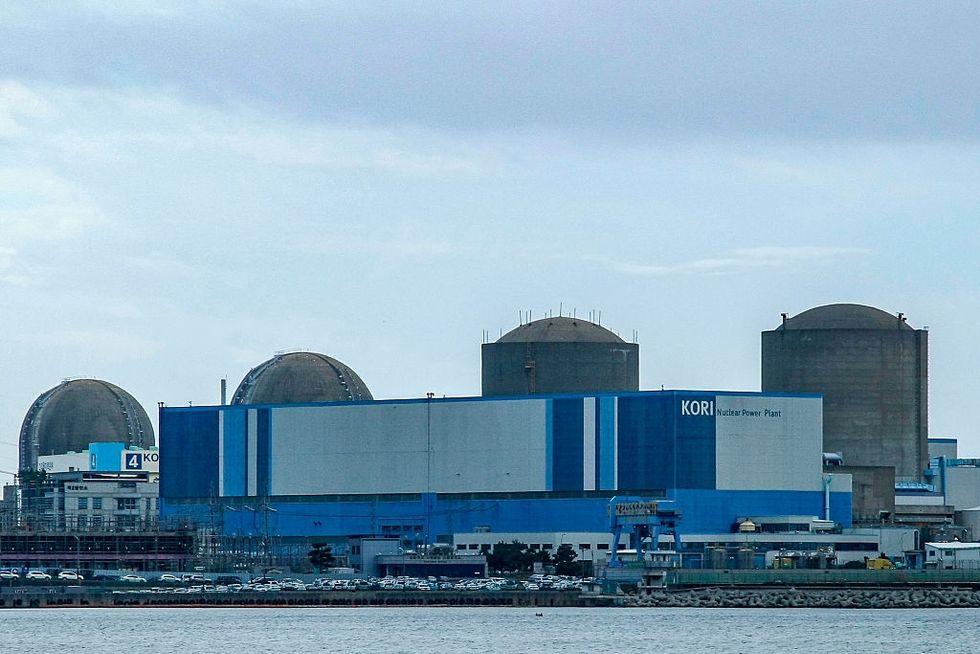
On Wednesday afternoon, the Nuclear Regulatory Commission pitched two sweeping overhauls of the nation’s rules for building atomic power stations. The first proposal calls for replacing a radiation protection standard called As Low as Reasonably Achievable, or ALARA, with hard dose limits. “This rulemaking is raising the bar on clarity in our regulations. It is not lowering the bar on our safety standards,” Ho Nieh, the NRC chairman, told a small group of reporters on a call. “Dose limits for members of the public? They are not changing. We’re just really putting in clarifications on how to address doses below regulatory limits.” The second proposal expands the menu of options available to developers pursuing licensing through one of the NRC’s existing pathways, allowing some novel approaches to weighing the risk of certain technologies to factor into older processes.
The announcement came the same day the Department of Energy reached a milestone in its reactor pilot program. Launched last year, the program set a goal of three of its 10 participating companies building test reactors and splitting atoms for the first time by July 4. On Wednesday, the startup Deployable Energy, which is seeking to commercialize a 1-megawatt reactor, said it had reached criticality on its Unity test reactor at the Idaho National Laboratory, becoming the third developer after fellow microreactor companies Aalo Atomic and Valar Atomics to sustain a chain reaction within its reactor. “Yesterday, we accomplished a significant milestone on a timeline many thought was unachievable,” Secretary of Energy Chris Wright said in a statement. “Advanced nuclear technologies like Unity will help power the next generation of American industry, strengthen our energy security, and ensure the United States remains the world’s nuclear innovation leader.”
PJM Interconnection’s struggle to muster up enough electricity generation to meet surging demand from data centers and air conditioners is well known at this point. But the difficulty the nation’s largest power grid system has just predicting how much electricity it will need raises real concerns over whether PJM can keep the lights on. Between 4 p.m. and 5 p.m. ET today, demand for electricity in PJM Interconnection could top out at 166 gigawatts, according to the energy consultancy ICF. That’s roughly 10 gigawatts higher than PJM’s projected summertime peak of 156 gigawatts for all of this year. “Because PJM’s planning methodology relies on a rolling 30-year historical weather average, it operates under the assumption that the future will resemble the past,” ICF wrote in a memo. “This modeling creates systemic risk, underestimating the frequency and severity of future extreme weather events.” As Heatmap’s Matthew Zeitlin wrote last month, PJM territories such as New Jersey have seen average bills soar from about $91 to $140 over the past five years, while prices are up some 52%, per data from the Heatmap-MIT Electricity Price Hub.
In New York City, meanwhile, Mayor Zohran Mamdani has urged residents in the five boroughs to keep air conditioners set to 78 degrees to conserve electricity and avoid brownouts. “A stable grid means the AC stays on, and lives are saved,” he wrote in a post on X. “Let’s ease demand — and get through the heat — together.” New York’s statewide grid operator has warned for months that the zone that includes New York City and its surrounding suburbs is at risk of outages due to a gap between supply and demand that virtually matches the output of the Indian Point nuclear plant that shut down in 2021.

Of the $14.3 billion the federal government earmarked for the reconstruction of Puerto Rico’s grid, 75% of the funding remains unspent nearly a decade after Hurricane Maria laid waste to the U.S. territory’s electrical system. The Federal Emergency Management Agency alone is sitting on $8.4 billion, and just 400 of the 16,000 miles of transmission and distribution lines that were slated for tree trimming have had overgrown vegetation cleared. That’s all according to the findings of a new report from the Government Accountability Office, an independent federal watchdog within the government. One bright spot for Puerto Ricans has been the success of residential solar panels and batteries in supplying power during frequent outages. But the report notes that the Energy Department canceled up to $350 million in grants for installing solar panels on the homes of disabled and low-income Puerto Ricans. “The GAO report confirms what we’ve been saying for months: This administration’s shortcomings and the lack of coordination among all stakeholders have delayed the disbursement of funds,” Representative Pablo José Hernández Rivera, Puerto Rico’s resident commissioner, a nonvoting delegate to the U.S. Congress, said in a statement. “Puerto Rico needs less division and excuses and more teamwork with results.”
Sign up to receive Heatmap AM in your inbox every morning:
Last year, Wyoming, the country’s top coal-producing state, announced that its first new coal mine to open in decades would also produce rare earths. Now West Virginia, where the waning coal industry nevertheless remains a central part of the culture and economy, is getting in on the rare earths game. On Wednesday, an investment company led by the Trump administration’s former critical minerals czar unveiled plans to develop a new hub for refining rare earths out of ore in Rupert, a tiny mountain town in southeastern West Virginia. The project is being developed by the White House and led by Drew Horn, who worked as an adviser to the Energy Department and the Office of the Director of National Intelligence during Trump’s first term. Described as a “partnership,” the deal includes the Houston-based rare earths refiner Flash Metals USA, the industrial giant AmForge, and the Greenbrier Smokeless Coal Company, which already operates a metallurgical coal mine in Rupert.
“The initiative is backed entirely by private investment — not state government subsidies, taxpayer funding, or state incentives,” GreenMet, the investment company leading the project, said in a statement. “Instead, private investors recognized West Virginia’s abundant natural resources, skilled workforce, and strategic advantages, committing approximately $150 million to launch this first-of-its-kind processing hub.” While the future refineries aim to extract traces of rare earths left behind in coal mine waste, the project has already secured deals to buy more ore from Greenland, Canada, and Cameroon to beef up its output.
There was once a time when hydrogen fuel cells seemed like a serious rival to lithium battery packs as the energy source to power future passenger vehicles. But over the past decade, battery-powered electric vehicles won the market as prices came down and the infrastructure for buying hydrogen fuel lagged. Still, the limits of batteries — which are already very heavy in passenger cars, and weigh multiple tons when large enough to propel trucks — to affordably power tractor-trailer trucks seemed to leave the heavy-duty vehicle market open to hydrogen. But an article in the in-house magazine of Sinopec, China’s state-owned oil company, now calls into question hydrogen’s future in trucking in the People’s Republic, which has one of the most built-out networks for using the technology anywhere in the world. “In the past, it was generally assumed that electric vehicles would replace gasoline and hydrogen vehicles would replace diesel,” the Mandarin-language article reads, according to a translation I ran through Claude. “But with advances in EV technology and the development of charging and battery-swapping infrastructure, the traditional hydrogen vehicle scenarios of ‘medium-to-heavy loads and long range’ are now also trending toward being taken over by battery-electric heavy trucks.”
Meanwhile, in the inland Henan province, a pair of deep geothermal wells were connected to create a closed-loop system. The wells, dug nearly 11,500 feet deep, reach a temperature of nearly 245 degrees Fahrenheit. Once completed, the wells will be part of seven separate systems designed by developer Wanjiang New Energy to provide district heating. The technology, Think Geo Energy noted, “unavoidably draws comparisons to the closed-loop geothermal technology designed and built by Eavor Technologies,” whose CEO Mark Fitzgerald joined Heatmap’s Shift Key podcast last year.
Build Your Dreams? More like Beat Your Deliveries. Chinese auto giant BYD delivered 557,090 fully electric vehicles in the second quarter of 2026 — trouncing the roughly 400,000 deliveries Tesla is expected to report for the same quarter, according to Electrek. We’ll find out later today when Tesla announces its latest earnings.
Plus, Google and Amazon report on what hyperscaling has done to their emissions.
There’s an interesting new report out today from the progressive think tank Groundwork Collaborative that makes a case for how Democrats can harness the artificial intelligence and data center boom to help the power grid — while also cutting costs for electricity customers.
But first, some news. We’ve known for some time now that artificial intelligence is transforming America’s biggest technology companies, turning them into major energy consumers and even quasi-industrial firms. Now we have even more evidence that it’s driving up their carbon emissions, too.
Google and Amazon released their annual sustainability reports yesterday, and both show huge surges in their energy use and climate pollution. Google’s greenhouse gas pollution grew by 18% last year, its largest year-over-year jump on record, and its energy use leapt by 37%. The company’s energy use rose by more than a quarter last year; it now uses roughly 3.5 times as much energy as it did before the pandemic.
Amazon’s climate pollution, meanwhile, increased by more than 16%, surging by the equivalent of more than 10 million metric tons of carbon dioxide. Emissions from its purchased electricity increased 34% since last year. If you feel like you’re seeing more Rivian-made Amazon delivery vans on the road, you’re not wrong: The company claims it deployed an additional 21,000 last year.
What’s driving this surge? The AI boom, of course. “Our AI infrastructure buildout is currently accelerating faster than the grid is decarbonizing,” Kate Brandt, Google’s chief sustainability officer, said in a statement.
What to do about it? That’s what Groundwork’s report is about.
“How do we bring down costs now? How do we bring down costs in the long term? And how can we make those two things mutually reinforcing?” Grayson Flood, the report’s author and a former policy adviser to Representative Alexandria Ocasio-Cortez, told me. “We wanted to be pretty direct about addressing what we see as a broken incentive structure within the system, particularly for interregional transmission.”
The report outlines a few novel ideas about how to lower prices immediately, in part to get through a coming multi-year “crunch,” during which the power grid in some regions will be maximally constrained while utilities work to bring new power plants online:
The report also imagines several policy ideas to help build out the grid. One of them is a Grid Trust Fund, a new federal bank account funded through an excise tax on data centers and other large electricity loads.
The government has often turned to funds like these to support infrastructure that creates a natural monopoly at national scale, Flood said. “The interstate highway is the most notorious example, but you can look at airports, you can look at seaports — they have these types of trust funds. There’s a lot of precedent for this in the tax code, and they tend to be financed with excise taxes on some sort of corresponding usage of the infrastructure.”
Under his scheme, the new excise tax would fall on big power users like data centers or crypto miners that don’t generate many permanent local jobs — in other words, aluminum smelters, steel mills, and semiconductor fabs would be exempt from it. But even just taxing electricity for large loads at 1 or 1.5 cents per kilowatt-hour, he said, could throw off more than $100 billion in a decade. That money could then be used to fund new transmission projects, technical assistance for utilities, ratepayer relief, or economic development.
That trust fund would be partly overseen by a National Power Authority, a new government corporation modeled on the Tennessee Valley Authority or the Energy Department’s existing power marketing administrations. This authority would have limited powers and would be partly inspired by Texas’ successful effort to centrally plan transmission lines in order to expand its electricity market.
The new authority would plan and develop interregional transmission, linking far-flung regions of the country to create new power markets. It would also have the power to build new 24/7 zero-carbon electricity power plants with high up-front capital costs, such as new geothermal projects, offshore wind farms, or nuclear plants.
“People talk about the power grid as a platform,” Flood said. But “right now, the grid is not functioning as a backbone and platform, it’s functioning as a bottleneck.”
The goal of the report, he said, is to ask: “How do we build [the power grid] as a backbone to support the growth of private markets, whether that’s in renewable energy generation, or an AI data center, or a new hospital that’s showing up?”
It’s an interesting document. Many energy wonks have proposed plans to shift some of the costs of expanding the electricity system out of the ratebase — that is, out of customers’ power bills — and onto the tax base, which is funded in a more progressive way. (I recently argued for a national, publicly funded grid buildout in The New York Times.) The new Groundwork report, in essence, tries to reframe those ideas for an era of populist politics — and one in which Americans are suspicious of data centers, as Heatmap’s polling has shown.
In its fusion of populist and pro-growth attitudes, this new set of proposals reminds me of New York City Mayor Zohran Mamdani’s attempt to freeze the rent for some tenants while passing major supply-side reforms allowing new housing construction. That effort has won Mamdani praise from many housing advocates in New York (even as some remain dubious about his de facto rent freeze). Whether that kind of politics works at a national level remains to be seen.
The bill is part of a package now sitting on Governor Mikie Sherrill’s desk.
Data center politics are continuing to evolve rapidly, and almost always in the direction of increasing costs and restrictions for data center development.
In New Jersey, which has become ground zero for the political backlash to high electricity prices, a gaggle of bills relating to data centers and electricity prices just hit the desk of newly elected Governor Mikie Sherrill, including a large load tariff bill, a water and energy reporting bill, and a bill to scale back tax credits available to data center projects.
All of these pieces of legislation are consistent with national and local trends (federal regulators are encouraging regional electricity markets to come up with large load tariffs, for example), with tax credits getting an especially close look in statehouses across the country.
Thirty-eight states have “ dedicated tax incentives for data centers,” according to an April study by the National Conference on State Legislatures. These often include exemptions from sales taxes for data center equipment like servers and routers, or property tax abatements for newly constructed data centers.
In Virginia, which last year elected Sherrill’s former House colleague Abigail Spanberger as governor, the sales tax exemption has become a hot issue of political contestation, as powerful Virginia State Senator Louise Lucas has come out in opposition to it. A budget deal recently reached in the state’s General Assembly included a tax on data center electricity consumption, while the data center tax exemption question will be kicked to a working group for now, according to the Virginia Mercury.
The New Jersey bill currently on the governor’s desk targets a tax credit program called Next New Jersey, which has some $500 million to disburse for tax credits. Half of that has been allocated for a CoreWeave data center project on the site of an existing laboratory, State Senator Joseph Cryan told me. The remaining $250 million would be used to bolster a number of existing state programs.
“The reason for eliminating it was, frankly, because people are outraged over the amount of money CoreWeave got,” Cryan said.
CoreWeave did not respond to a request for comment. A Sherill spokesperson didn’t comment on the record about when or whether the bills would be signed.
New Jersey and Virginia’s examination of tax credits comes after another state with a Democratic governor, Illinois, paused tax incentives for data centers that had been worth almost $1 billion in the first five years of this decade.
The turn against tax incentives for data centers comes as the public is increasingly wary of the latter and their perceived effect on electricity prices. This turn in sentiment has forced governors — like, say, Indiana Governor Mike Braun — to pivot away from their typical cheerleading for new businesses.
“States are very focused on attracting industries of the future, attracting jobs for their residents, attracting business,” Justin Balik, a former economic development official in New Jersey and vice president for states at the climate group Evergreen Action, told me. But, he asked, “Does the economic development strategy for a state reflect its other policy priorities?”
New Jersey itself is an example of how quickly the politics of economic development can turn. When the bill establishing the Next New Jersey program passed in 2024, then-Governor Phil Murphy trumpeted the bill for “capitalizing on this moment to ensure we establish ourselves as a frontrunner in generative AI innovation.”
“AI has already started to revolutionize our everyday lives, and New Jersey is capitalizing on this moment to ensure we establish ourselves as a frontrunner in generative AI innovation,” Murphy said in a statement typical of the more boosterist era of, uhhh, two years ago. “AI will be a transformative industry that will change lives and grow our economy and New Jersey is ready to take the lead.”
That was in July 2024. Now it’s July 2026. Electricity bills in New Jersey have gone up from $108 per month in May 2024 to $140 this past May, according to the Heatmap-MIT Electricity Price Hub, while rates have gone up some 38%. And while it’s often difficult to attribute electricity rate hikes directly to data center development — or even determine whether data centers raise rates at all — New Jersey, which is part of the PJM Interconnection electricity market, is almost certainly seeing hikes due to data center construction. PJM has struggled to bring on new generation or adequate transmission, and its own market monitor said in March that “data center load growth is the primary reason for recent and expected capacity market conditions, including total forecast load growth, the tight supply and demand balance, and high prices.”
The conditions have forced lawmakers to reconsider their typical bias toward economic development, Balik told me. “I think we’re seeing a moment where there’s a reckoning with the energy affordability conversation,” he said, “Where folks are rightly saying, hey, we care about clean energy in some cases, and in a lot of cases we care about energy affordability. Does our economic development strategy match those priorities, or are these two things at odds with each other?”
Cryan, the state senator, put it more bluntly: “The reason for doing it was to show the public that we hear their outrage and can do something about it,” he said. “The governor and the legislature have heard the voices of the people of New Jersey.”