A tsunami is coming for electricity rates in the western United States — and it’s not data centers.
Across the western U.S., states have begun to approve or require utilities to prepare their wildfire adaptation and insurance plans. These plans — which can require replacing equipment across thousands of miles of infrastructure — are increasingly seen as non-negotiable by regulators, investors, and utility executives in an era of rising fire risk.
But they are expensive. Even in states where utilities have not yet caused a wildfire, costs can run into the tens or hundreds of millions of dollars. Of course, the cost of sparking a fire can be much higher.
At least 10 Western states have recently approved or are beginning to work on new wildfire mitigation plans, according to data from E9 Insights, a utility research and consulting firm. Some utilities in the Midwest and Southeast have now begun to put together their own proposals, although they are mostly at an earlier phase of planning.
“Almost every state in the West has some kind of wildfire plan or effort under way,” Sam Kozel, a researcher at E9, told me. “Even a state like Missouri is kicking the tires in some way.”
The costs associated with these plans won’t hit utility customers for years. But they reflect one more building cost pressure in the electricity system, which has been stressed by aging equipment and rising demand. The U.S. Energy Information Administration already expects wholesale electricity prices to increase 8.5% in 2026.
The past year has seen a new spate of plans. In October, Colorado’s largest utility Xcel Energy proposed more than $845 million in new spending to prepare for wildfires. The Oregon utility Portland General Electric received state approval to spend $635 million on “compliance-related upgrades” to its distribution system earlier this month. That category includes wildfire mitigation costs.
The Public Utility Commission of Texas issued its first mandatory wildfire-mitigation rules last month, which will require utilities and co-ops in “high-risk” areas to prepare their own wildfire preparedness programs.
Ultimately, more than 140 utilities across 19 states have prepared or are working on wildfire preparedness plans, according to the Pacific Northwest National Laboratory.
It will take years for this increased utility spending on wildfire preparedness to show up in customers’ bills. That’s because utilities can begin spending money for a specific reason, such as disaster preparedness, as soon as state regulators approve their plan to do so. But utilities can’t begin passing those costs to customers until regulators review their next scheduled rate hike through a special process known as a rate case.
When they do get passed through, the plans will likely increase costs associated with the distribution system, the network of poles and wires that deliver electricity “the last mile” from substations to homes and businesses. Since 2019, rising distribution-related costs has driven the bulk of electricity price inflation in the United States. One risk is that distribution costs will keep rising at the same time that electricity itself — as well as natural gas — get more expensive, thanks to rising demand from data centers and economic growth.
California offers a cautionary tale — both about what happens when you don’t prepare for fire, and how high those costs can get. Since 2018, the state has spent tens of billions to pay for the aftermath of those blazes that utilities did start and remake its grid for a new era of fire. Yet it took years for those costs to pass through to customers.
“In California, we didn’t see rate increases until 2023, but the spending started in 2018,” Michael Wara, a senior scholar at the Woods Institute for the Environment and director of the Climate and Energy Policy Program at Stanford University, told me.
The cost of failing to prepare for wildfires can, of course, run much higher. Pacific Gas and Electric paid more than $13.5 billion to wildfire victims in California after its equipment was linked to several deadly fires in the state. (PG&E underwent bankruptcy proceedings after its equipment was found responsible for starting the 2018 Camp Fire, which killed 85 people and remains the deadliest and most destructive wildfire in state history.)
California now has the most expensive electricity in the continental United States.
Even the risk of being associated with starting a fire can cost hundreds of millions. In September, Xcel Energy paid a $645 million settlement over its role in the 2021 Marshall fire, even though it has not admitted to any responsibility or negligence in the fire.
Wara’s group began studying the most cost-effective wildfire investments a few years ago, when he realized the wave of cost increases that had hit California would soon arrive for other utilities.
It was partly “informed by the idea that other utility commissions are not going to allow what California has allowed,” Wara said. “It’s too expensive. There’s no way.”
Utilities can make just a few cost-effective improvements to their systems in order to stave off the worst wildfire risk, he said. They should install weather stations along their poles and wires to monitor actual wind conditions along their infrastructure’s path, he said. They should also install “fast trip” conductors that can shut off powerlines as soon as they break.
Finally, they should prepare — and practice — plans to shut off electricity during high-wind events, he said. These three improvements are relatively cheap and pay for themselves much faster than upgrades like undergrounding lines, which can take more than 20 years to pay off.
Of course, the cost of failing to prepare for wildfires is much higher than the cost of preparation. From 2019 to 2023, California allowed its three biggest investor-owned utilities to collect $27 billion in wildfire preparedness and insurance costs, according to a state legislative report. These costs now make up as much as 13% of the bill for customers of PG&E, the state’s largest utility.
State regulators in California are currently considering the utility PG&E’s wildfire plan for 2026 to 2028, which calls for undergrounding 1,077 miles of power lines and expanding vegetation management programs. Costs from that program might not show up in bills until next decade.
“On the regulatory side, I don’t think a lot of these rate increases have hit yet,” Kozel said.
California may wind up having an easier time adapting to wildfires than other Western states. About half of the 80 million people who live in the west live in California, according to the Census Bureau, meaning that the state simply has more people who can help share the burden of adaptation costs. An outsize majority of the state’s residents live in cities — which is another asset, since wildfire adaptation usually involves getting urban customers to pay for costs concentrated in rural areas.
Western states where a smaller portion of residents live in cities, such as Idaho, might have a harder time investing in wildfire adaptation than California did, Wara said.
“The costs are very high, and they’re not baked in,” Wara said. “I would expect electricity cost inflation in the West to be driven by this broadly, and that’s just life. Climate change is expensive.”





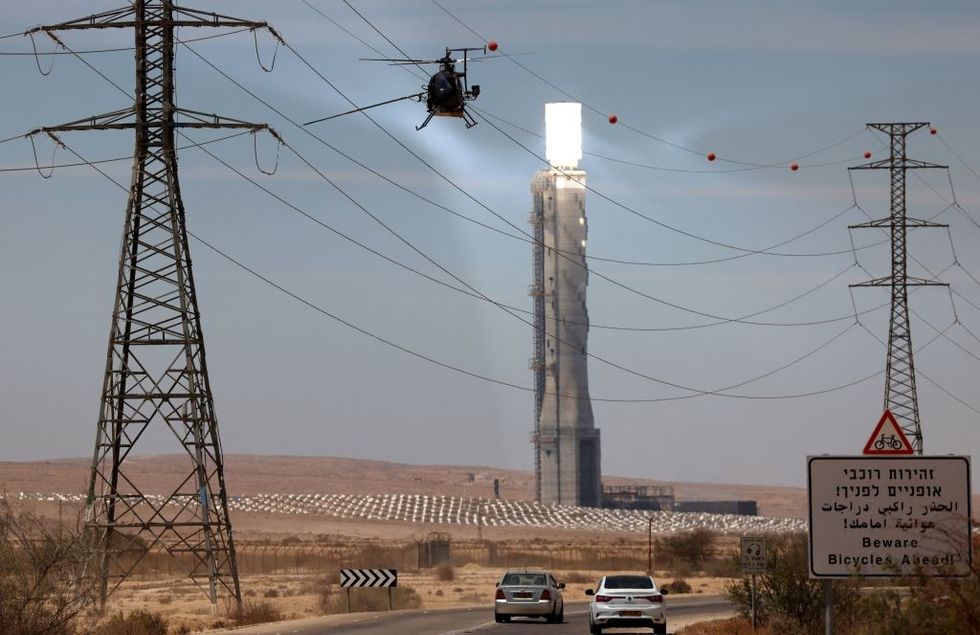 A crew cleans power lines at Israel’s Ashalim solar plant.EMMANUEL DUNAND/AFP via Getty Images