The Fight

Sign In or Create an Account.

By continuing, you agree to the Terms of Service and acknowledge our Privacy Policy

Hotspots

More Moratoria in Michigan and Madison, Wisconsin

Plus a storage success near Springfield, Massachusetts, and more of the week’s biggest renewables fights.

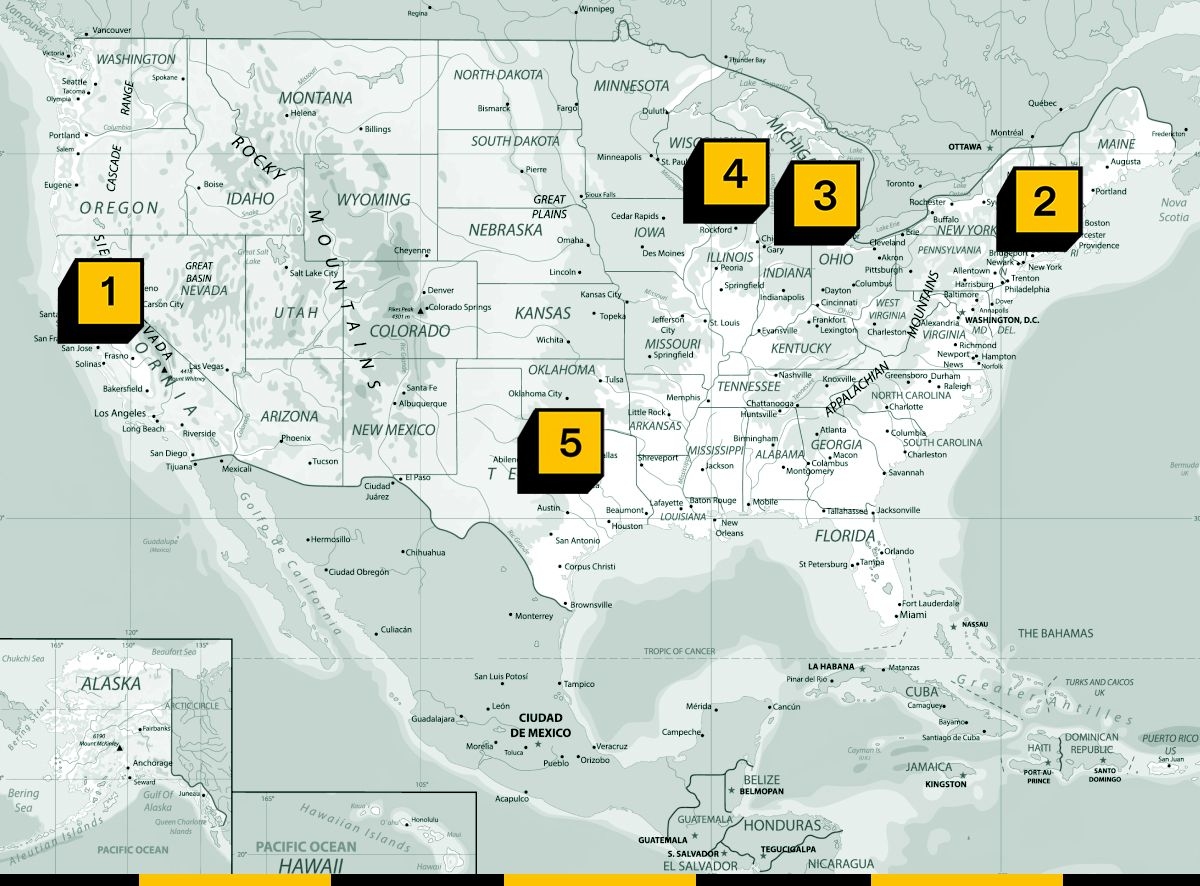
The United States.
Heatmap Illustration/Getty Images

1. Sacramento County, California – A large solar farm might go belly-up thanks to a fickle utility and fears of damage to old growth trees.

  • The Sacramento Municipal Utility District has decided to cancel the power purchase agreement for the D.E. Shaw Renewables Coyote Creek agrivoltaics project, which would provide 200 megawatts of power to the regional energy grid. The construction plans include removing thousands of very old trees, resulting in a wide breadth of opposition.
  • The utility district said it was canceling its agreement due to “project uncertainties,” including “schedule delays, environmental impacts, and pending litigation.” It also mentioned supply chain issues and tariffs, but let’s be honest – that wasn’t what was stopping this project.
  • This isn’t the end of the Coyote Creek saga, as the aforementioned litigation arose in late December – local wildlife organizations backed by the area’s Audubon chapter filed a challenge against the final environmental impact statement, suggesting further delays.

2. Hampden County, Massachusetts – The small Commonwealth city of Agawam, just outside of Springfield, is the latest site of a Massachusetts uproar over battery storage…

  • … though Longroad Energy’s battery storage project in Agawam is moving forward quickly in spite of the opposition. At an informational meeting Monday, Agawam Mayor Christopher Johnson told attendees that the state’s new battery storage siting rules mean it’s far more difficult for localities to block projects.
  • I expect this project to be built, full stop. But as we’ve seen in Westfield, Oakham, and other Massachusetts towns, there is a wave of resentment building in more rural areas of the Commonwealth that suggests future legislation or legal action could occur, akin to what’s happened in Michigan.

3. Washtenaw County, Michigan – The city of Saline southwest of Detroit is now banning data centers for at least a year – and also drafting regulations around renewable energy.

  • Saline Township, which is an autonomous municipality abutting the larger city of Saline, is the site of the ginormous Stargate data center complex, expected to involve OpenAI and Oracle. The project is drawing the ire of many Michiganders, including state Attorney General Dana Nessel, while getting support from Governor Gretchen Whitmer.
  • Responding to concerns among locals, the city of Saline this week instituted a year-long moratorium to provide time to draft fresh regulations. Per public statements at the vote, Saline city officials plan to also plan to ponder restrictions on how and where renewable energy projects may be sited.
  • “[I]t gives us an opportunity to look more into the support systems and the support businesses around the data center, the battery storage facilities, construction and the alternative energy, windmill technologies, solar panels, all of that could generate potential interest in business industrial parks in the same community,” council member Jim Dell’Orco said at the vote, per local newspaper Sun Times News.

4. Dane County, Wisconsin – Another city with a fresh data center moratorium this week: Madison, home of the Wisconsin Badgers.

  • As we’ve previously reported, Madison is south of myriad data center conflicts, including the QTS project in DeForest we’ve been following closely. As with other county-level moratoria, officials say the pause is intended to provide time for regulations governing data center construction and operation.
  • I expect land use and energy consumption to be the two biggest priorities in the rulemaking process as city councilors made plain in their public statements about the moratoria that a key focus will be deciding where data centers would be preferably sited.

5. Hood County, Texas – Last but not least, I bring you one final stop on the apparent data center damnation tour: Hood County, south of the Texas city of Fort Worth.

  • Hood County this week gave conditional approval to the Comanche Circle data center park. Proposed by real estate firm Sailfish, Comanche Circle will reportedly require upwards of 5 gigawatts of power, span more than 2,500 acres, and rely on a mixture of off- and on-site power, including small modular nuclear reactors and solar farms. On the water front, reports indicate that it’ll rely on private groundwater wells.
  • Residents in Hood County are, as per usual, piping hot mad about the development and are calling for a moratorium of their own. The county will hold its first meeting on a moratorium in early February. But the county’s attorney explained at a recent hearing on Comanche Circle that the project is too far along to be impacted by any temporary ban.
Yellow

This article is exclusively
for Heatmap Plus subscribers.

Go deeper inside the politics, projects, and personalities
shaping the energy transition.
To continue reading
Create a free account or sign in to unlock more free articles.
or
Please enter an email address
By continuing, you agree to the Terms of Service and acknowledge our Privacy Policy
Spotlight

How the Tech Industry Is Responding to Data Center Backlash

It’s aware of the problem. That doesn’t make it easier to solve.

Data center construction and tech headquarters.
Heatmap Illustration/Getty Images

The data center backlash has metastasized into a full-blown PR crisis, one the tech sector is trying to get out in front of. But it is unclear whether companies are responding effectively enough to avoid a cascading series of local bans and restrictions nationwide.

Our numbers don’t lie: At least 25 data center projects were canceled last year, and nearly 100 projects faced at least some form of opposition, according to Heatmap Pro data. We’ve also recorded more than 60 towns, cities and counties that have enacted some form of moratorium or restrictive ordinance against data center development. We expect these numbers to rise throughout the year, and it won’t be long before the data on data center opposition is rivaling the figures on total wind or solar projects fought in the United States.

Keep reading...Show less
Yellow
Q&A

What Happens After a Battery Fire

A conversation with San Jose State University researcher Ivano Aiello, who’s been studying the aftermath of the catastrophe at Moss Landing.

Ivano Aiello.
Heatmap Illustration

This week’s conversation is with Ivano Aiello, a geoscientist at San Jose State University in California. I interviewed Aiello a year ago, when I began investigating the potential harm caused by the battery fire at Vistra’s Moss Landing facility, perhaps the largest battery storage fire of all time. The now-closed battery plant is located near the university, and Aiello happened to be studying a nearby estuary and wildlife habitat when the fire took place. He was therefore able to closely track metals contamination from the site. When we last spoke, he told me that he was working on a comprehensive, peer-reviewed study of the impacts of the fire.

That research was recently published and has a crucial lesson: We might not be tracking the environmental impacts of battery storage fires properly.

Keep reading...Show less
Yellow
Q&A

How Trump’s Renewable Freeze Is Chilling Climate Tech

A chat with CleanCapital founder Jon Powers.

Jon Powers.
Heatmap Illustration

This week’s conversation is with Jon Powers, founder of the investment firm CleanCapital. I reached out to Powers because I wanted to get a better understanding of how renewable energy investments were shifting one year into the Trump administration. What followed was a candid, detailed look inside the thinking of how the big money in cleantech actually views Trump’s war on renewable energy permitting.

The following conversation was lightly edited for clarity.

Keep reading...Show less
Yellow