This article is exclusively
for Heatmap Plus subscribers.
Log in
To continue reading, log in to your account.
Create a Free Account
To unlock more free articles, please create a free account.

Sign In or Create an Account.
By continuing, you agree to the Terms of Service and acknowledge our Privacy Policy
Welcome to Heatmap
Thank you for registering with Heatmap. Climate change is one of the greatest challenges of our lives, a force reshaping our economy, our politics, and our culture. We hope to be your trusted, friendly, and insightful guide to that transformation. Please enjoy your free articles. You can check your profile here .
subscribe to get Unlimited access
Offer for a Heatmap News Unlimited Access subscription; please note that your subscription will renew automatically unless you cancel prior to renewal. Cancellation takes effect at the end of your current billing period. We will let you know in advance of any price changes. Taxes may apply. Offer terms are subject to change.
Subscribe to get unlimited Access
Hey, you are out of free articles but you are only a few clicks away from full access. Subscribe below and take advantage of our introductory offer.
subscribe to get Unlimited access
Offer for a Heatmap News Unlimited Access subscription; please note that your subscription will renew automatically unless you cancel prior to renewal. Cancellation takes effect at the end of your current billing period. We will let you know in advance of any price changes. Taxes may apply. Offer terms are subject to change.
Create Your Account
Please Enter Your Password
Forgot your password?
Please enter the email address you use for your account so we can send you a link to reset your password:
Catching up with the American Council on Renewable Energy’s Ray Long.

Today’s chat is with Ray Long, CEO of the American Council on Renewable Energy. We first discussed the odds of permitting reform a year and a half ago, for one of the first Q&As in The Fight. Flash forward and we’re still in the same situation, but now also wrestling with added demand for electricity to power data centers. I wanted to talk again about whether he thought the rise of artificial intelligence would increase the odds of some federal deal happening any time soon. The result: a wide-reaching conversation about the future of the electric grid, the struggles to win community buy-in and the sclerotic nature of the U.S. Congress.
The following conversation was lightly edited for clarity.
Do you think the buildout of our energy grid is entwined with the rise of the nation’s data center buildout?
When you look at what we need over the next four years — 166 gigawatts, 15 times the peak load of New York City — that’s a lot of power to build. Roughly half of that is for data center and AI growth.
There are five things we can build in the next four years at scale to address that collective amount. First, it’s transmission — the transmission buildout will help to get a modern grid to enable power flow to where it’s needed in a much more effective way. That’s the first step because if we just build all that power, the current grid can’t handle it.
Second, there are four supply technologies that can be built: solar, batteries, wind, and natural gas. All four of those technologies, we know there’s enough equipment here in the U.S. available for purchase that we can build at volume. And I’ll say this — natural gas is only about 10% of all those gigawatts because of the availability of turbines from suppliers. You can’t get enough over the next four years. So when I talk about decarbonization, most of what is built to address this issue is zero-carbon resources, renewable energy resources.
If you were to compare the current conversation around data center development to the debate over developing renewable energy in the U.S. — or energy in general — do you see any similarities or differences?
There are always issues with permitting projects. Communities are always going to have concerns about what’s built in their backyards.
What’s new — and your polling shows this — is the level of concern communities have. But here’s the thing: Most of this can be overcome by developers going in, listening to what the needs of the communities are, then responding and through the permitting process addressing those concerns. You can’t do that 100% of the time. But my experience is, when you take that sort of approach, you can overcome a lot of it.
Most of the large data centers are actually doing the things I’m discussing — going in and saying, Look, we want to be grid interconnected because grid connection at the end of the day means the resources we’re bringing to bear are also going to make a stronger grid. Number two, it's investing in power generation sources like the ones I said — and those power sources will be on the grid, so they’ll solve for the increased power demands of a community.
Third, water. They should bring the water solutions. You’re seeing data centers coming in and saying it head on now, that they have closed-loop systems or whatever the solution is. At the end of the day, the communities they’re proposing these in have a real negotiating opportunity to make sure they’re holding the data center developers accountable to the needs of the community.
For a community to say we don’t want it here misses a real opportunity for those communities to get the power they need, the grid they need, and the ability to bring down energy costs.
How is the data center debate affecting permitting reform conversations in Washington, from your perspective?
Permitting reform in the U.S. at the state and federal level has been broken for years. The SunZia transmission project? It took 17 years to permit. Ribbon-cutting is in a week or two and there’s still litigation around it. From a business perspective, it’s just untenable, and it’s a miracle that the project is getting built. Developers need a chance to come in and have their project evaluated. Both the community and the developer should be able to get to a go or no-go in a couple of years on one of these projects.
How is data center growth affecting the permitting reform discussion? It’s a very hot issue right now. Right now I think in part because the data center issue is so huge — because we’ve only got four years to solve for the first really big tranche of power we need and prices across the board for electricity are escalating — this is coming to a head. The data center load is a part of the catalyst to get people talking about it [permitting reform].
Do you expect legislating in Congress on permitting reform this year? Anything beyond more conversation?
My hope is that we get a bill. A few weeks ago someone from the administration was quoted as saying they wanted a framework for a bill by the end of May, and it’s June now. We haven’t seen both sides or the administration coalesce around a final project yet.
We’re in a midterm election cycle. Typically it’s very difficult during these cycles to move bills like this. At the same time, with electricity prices increasing and the need to build more, to fix this, I’m very hopeful something will come together. And look at the Senate — you’ve got Republicans and the Democratic ranking members talking about this. It’s all good signs.
If everyone’s talking about energy and affordability during this election, isn’t that a good thing for action in the next Congress?
I’ll say this: You’re seeing the catalyst for it right now with prices rising, and almost every grid operator around the country has raised concerns about shortages at some point this year or next year. It’ll hopefully be enough to have policymakers do something about it this year.

Log in
To continue reading, log in to your account.
Create a Free Account
To unlock more free articles, please create a free account.
Plus more of week’s biggest development fights.
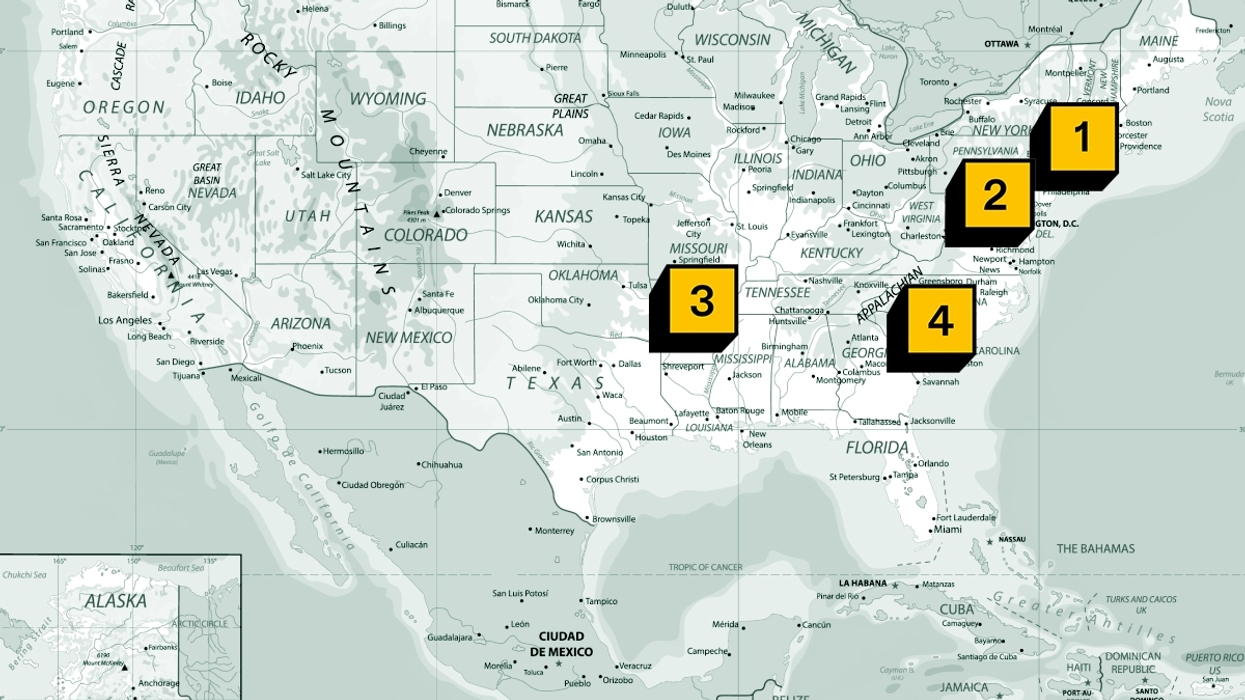
1. Ohio — This state might just be the most important flashpoint in the national fight over advanced energy and tech infrastructure.
2. Laramie County, Wyoming — The Cowboy State’s capital city is one of the few to reject a data center moratorium. But tech companies. don’t get your hopes up too high.
3. Los Angeles County, California — Elsewhere, we saw the first city in California vote to ban data centers … once and for all.
4. Charles County, Maryland — This populous county south of D.C. is now out of reach for data center development.
5. Baldwin County, Alabama — There will be a vote at the end of this month on whether to ban solar in the county whose opposition nearly prompted a statewide moratorium on development.
6. Hopkins County, Texas — I have one last update related to a large data center legal fight we’ve been covering closely.
The national AI data center moratorium has momentum.
As I’ve been documenting for months here at The Fight, data center opposition is surging across the country. Our latest Heatmap Pro poll puts some very hard numbers behind that picture. More than 7 in 10 Americans oppose new data center construction near where they live, up from just over 4 in 10 last fall. Part of what’s driving that opposition: More than half of respondents hold data centers largely responsible for rising electricity prices, and nearly half are pessimistic about the effect artificial intelligence will have on their lives.
Here’s yet another data point from our poll that underscores the intensity of the opposition: A majority of Americans now say they support a nationwide halt to new data center construction.
Digging into demographics, support for a national AI data center moratorium breaks predictably based on age and gender — younger people are more likely to back the idea, as are women. Americans are just as likely to back moratoria in their own states as they are a national stop to development, indicating the public relations rot may run deep amongst its critics in the public.
The notion of an AI data center moratorium comes from the political left, specifically Senator Bernie Sanders and Representative Alexandria Ocasio-Cortez, who introduced the first bill to enact such a pause earlier this year. Yet its appeal straddles political lines. Among Democrats, 66% said they’d back a national moratorium, compared to just 19% opposed; in the Republican camp, 55% said they backed the idea, compared to 28% opposed. Independents echoed those views as well, with answers falling neatly in between the two sides (58% support, 21% oppose).
The surge in support for a country-wide stop to new data centers stands in contrast to the more hesitant attitude politicians of all stripes have shown toward the opposition movement. That includes the White House, which until this week embraced a deregulatory approach to fostering AI tech before abruptly changing course this week and seeking early access to new models.
A good example of this political distance exists in Missouri, where Republican Governor Mike Kehoe last month proudly declared that Google was investing $15 billion in a hyperscale data center project in the rural town of New Florence in Montgomery County. After Kehoe’s announcement, the White House’s rapid response media account joined in on celebrating this economic investment, touting the potential for “thousands of construction jobs and hundreds of permanent jobs” from the Google project.
Among the hoi polloi, however, discontent was rife. This was actually the second large data center project in New Florence, and locals in and around this town of fewer than 1,000 residents have been busy suing the county to halt a separate Amazon data center proposed directly across from Google’s project.
Montgomery County is incredibly conservative politically and “has voted red since I can’t even remember,” Sabrina Cope, an organizer with opposition group Preserve Montgomery County, told me over the phone. “They’re turning up their nose at the White House’s support for these kinds of projects. This isn’t an issue solely Democrats or Republicans are upset about.” (The White House did not respond to a request for comment.)
The political mismatch here is also bipartisan.
In New York, state legislators on Thursday passed legislation to enact a one-year pause on new data center permitting. The bill now goes to the desk of New York’s governor, Democrat Kathy Hochul, who has signaled she’s against a broad moratorium. “This is a local decision for municipalities,” Hochul told reporters last month, according to a Politico report. “It’s not a statewide approach, necessarily, but it’s something I’m looking at intensely.”
The scene in the Empire State feels eerily similar to what happened in the Pine Tree State when Maine Democrats sought to enact a moratorium, only to be stymied by a veto from Governor Janet Mills, also a Democrat. Should Hochul spurn the state legislature, it would defy what our polls say is the overwhelming political opinion.
Our poll also found rural voters are almost 10 points more likely than suburban and urban denizens to support a moratorium on new data centers. Knowing how often land use conflicts occur in upstate New York, where voters skew Republican, the yeoman’s calculus in both parties might lead more politicians to support temporarily stopping or stalling data center industry growth.
In Illinois, we’re starting to see policy start to align at least a little more closely with what Democratic voters want. On Friday, Governor J.B. Pritzker announced he would pause data center tax breaks and ask the state legislature to enact a new statute governing the industry’s water and energy use as well as deployment of non-disclosure agreements. If Illinois is a harbinger of things to come in blue states, we’ll see more action like this.
The American climate movement is beginning to look a lot like AI doomers versus the techno-optimists. It’s a dynamic that is winning local bans – and very little else for now.
On one side, you’ve got the left-leaning insurgent grassroots movement against data centers. In many cases this push is in the name of climate action and environmental justice, with activists citing the risks of pollution from gas-fired power and the potential for strain on existing electricity supplies. But in many, many other cases, this movement is decidedly not about climate action; instead it’s a movement addressing everything from energy prices and power over large corporations to AI use generally.
Or, perhaps the anti-data center movement’s big tent is best summarized in this quote from comedian and activist Ilana Glazer: “The thing that is genuinely waiting for us on the other side of AI and data centers is the collective.”
On the other end of the spectrum, you have a raft of data center-curious centrists, liberals, and, for lack of a better term, capitalists. This diametrically oppositional political force wants to ensure data centers continue being built as states and the federal government figure out how to make policy surrounding them. Yes, they want regulations, but they’ll have to qualify even supporting the idea of a single full state – any state – pausing data centers.
“I tend to find myself in the middle of all of this AI and data center policy, because I don’t think a heavy-handed approach in either direction is smart or productive,” said Tre Easton, vice president of public affairs for the Searchlight Institute, a policy think tank geared toward pushing Democrats into positions more broadly popular in the general electorate. “If you’re doing moratoria in one state and Meta says, okay, fine, they’ll go to a different state where they’ll run roughshod.” He added: “This buildout is happening. Let’s just make the rules. Put out rules of what this should look like.”
I spent weeks talking to activists fighting data centers to better understand their end goals. Right now what folks want to talk about most is moratoria, until industry-specific regulation is in place governing all things energy, water, noise, and labor.
“Our motto is ban, legislate, regulate,” said Ben Dziobek, founder of Climate Revolution Action Network, which is fighting data center expansion in New Jersey. Dziobek’s organization is one of roughly five dozen in the Garden State that have called on newly-elected Democratic Gov. Mikie Sherill to institute a moratorium on data centers, including state representatives from The Nature Conservancy and ACLU.
When I asked Dziobek what he’d like to see after a moratorium, the answer was clear: he wants to see Big Tech pay for the energy transition. “It would be beneficial if we could get companies who are using more load than entire states to build out the clean energy future. Someone’s gotta pay for this. The largest companies in the world have to come in.”
Undoubtedly this movement is increasingly influential and rooted in a now bipartisan concern about data centers founded in valid concerns about data center impacts and the rise of AI. But at least right now, In New Jersey, and so many other Democrat-controlled states, this movement has won little ground outside the local level and no statewide Democratic leader (e.g. governor) has made a data center moratorium their raison d'être. Neither have I seen the push for a moratorium pick up steam in any state known as a deep blue bastion for climate policy. Its greatest achievements by the numbers are the cancellation rate of projects that have faced local pushback (37%, according to Heatmap Pro), the city-wide moratoria in large left-leaning bastions like Denver, and the sheer existence of a federal data center moratorium bill led by progressive celebrities like Sen. Bernie Sanders and Rep. Alexandria Ocasio-Cortez.
In fact, what I am seeing is Democratic statewide leaders rejecting efforts to curtail their development or regulate energy and water usage. In California last year, Gov. Gavin Newsom vetoed a bill requiring data center developers to report their water use. In New York, Gov. Kathy Hochul has so far shrugged off a push for her to back a three-year moratorium on new data centers. In Massachusetts, Gov. Maura Healey supports continuing to foster the state’s data center buildout and the state is preserving its data center sales tax exemption at a time when GOP leaders in other states want to repeal similar subsidies. Colorado legislators abandoned a push to regulate data centers earlier this month, after Washington state did the same.
Perhaps infamously in Maine, the Democrat-led state legislature nearly enacted a two-year moratorium on data center development only to be vetoed by Gov. Janet Mills. Democrats then failed to override the veto.
Some Democratic leaders are taking up the light-touch approach. On Wednesday, Pennsylvania Gov. Josh Shapiro released long-awaited principles for data center developers seeking fast-track permitting processes with state agencies. Under these policies, companies can get permitted more quickly if they abide by a number of energy, water, and labor standards.
On a granular level, even this policy quietly represented a disappointment for climate activists. One of the principles called for data centers to get at least one third of their power from “clean” sources by 2035 – which sounds nice until you realize Shapiro only two years ago was calling for utilities to get at least half of their electricity from carbon-free sources by then. Food & Water Watch, a national group calling for country-wide data center moratoria, blasted a press release going after Shapiro to the media after the principles were released: “[This] is a naive effort to placate widespread data center opposition. It won’t work.”
For climate activists, the best case scenario right now may be blue states taking up bills to regulate the sector as opposed to a blanket moratorium, where the push for a pause functions as leverage. Often these bills are focused on energy costs for consumers, not environmental protection, like in Oregon where last year legislators enacted a measure requiring data center companies to pay for their share of electricity demand. In Vermont this week, the state legislature passed a similar bipartisan data center bill focused on energy affordability, with some restrictions on fossil fuel generation. (Republican Gov. Phil Scott is expected to sign it.)
Indeed, the climate movement’s smartest play could be to push legislation requiring facilities not only pay for their power but ensure it is zero-carbon emissions. So far, Democrat-led bills that would accomplish this goal gained steam this year in other states but struggled to become law before the end of the legislative session too (Washington, for example).
In Illinois, the bill is known as the POWER Act, but despite lots of Democratic support behind it, it’s languishing in committee limbo ahead of the end of legislative session this week. One can imagine Illinois Gov. J.B. Pritzker getting a bill like the POWER Act into law and then running for president as The Guy Who Made Data Centers Cleaner. Heaven knows that’s why folks like Hannah Flath, climate communications manager for the Illinois Environmental Council, are so bullish on the bill. “I think it’ll eventually become law. Just not this session.”
I asked Flath why her organization was so focused on this bill as opposed to a data center moratorium. “We just don’t think it is politically feasible. Especially given how attractive these things are to our governor and some state lawmakers,” she said. “Currently, I view climate work as harm reduction work. This is perhaps a cynical view to have but that’s unfortunately where we’re at. How can we ensure changes happening in the world bring more benefits than they do harms?”
But Flath said that as a push for moratoria grows, it provides pressure on state policymakers to act: “What we’re offering state legislators now is a middle ground solution.”
I suppose for now, we’ll have to see if this side can come together on any solution – let alone a middle ground.