You’re out of free articles.
Log in
To continue reading, log in to your account.
Create a Free Account
To unlock more free articles, please create a free account.
Sign In or Create an Account.
By continuing, you agree to the Terms of Service and acknowledge our Privacy Policy
Welcome to Heatmap
Thank you for registering with Heatmap. Climate change is one of the greatest challenges of our lives, a force reshaping our economy, our politics, and our culture. We hope to be your trusted, friendly, and insightful guide to that transformation. Please enjoy your free articles. You can check your profile here .
subscribe to get Unlimited access
Offer for a Heatmap News Unlimited Access subscription; please note that your subscription will renew automatically unless you cancel prior to renewal. Cancellation takes effect at the end of your current billing period. We will let you know in advance of any price changes. Taxes may apply. Offer terms are subject to change.
Subscribe to get unlimited Access
Hey, you are out of free articles but you are only a few clicks away from full access. Subscribe below and take advantage of our introductory offer.
subscribe to get Unlimited access
Offer for a Heatmap News Unlimited Access subscription; please note that your subscription will renew automatically unless you cancel prior to renewal. Cancellation takes effect at the end of your current billing period. We will let you know in advance of any price changes. Taxes may apply. Offer terms are subject to change.
Create Your Account
Please Enter Your Password
Forgot your password?
Please enter the email address you use for your account so we can send you a link to reset your password:

This transcript has been automatically generated.
Subscribe to “Shift Key” and find this episode on Apple Podcasts, Spotify, Amazon, or wherever you get your podcasts.
You can also add the show’s RSS feed to your podcast app to follow us directly.
Robinson Meyer:
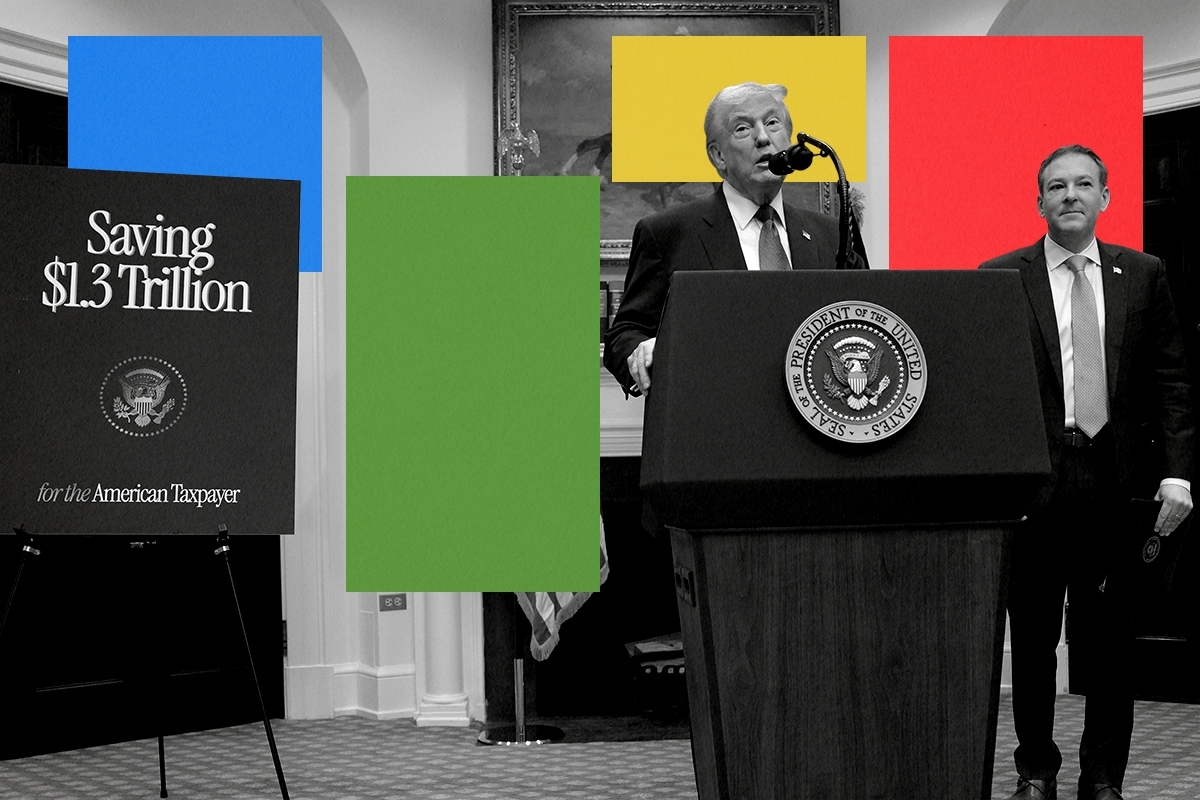
[1:25] Hi, I’m Robinson Meyer, the founding executive editor of Heatmap News, and you are listening to Shift Key, Heatmap’s weekly podcast about decarbonization and the shift away from fossil fuels. It is Monday, February 16. This is a semi-emergency episode of Shift Key. And on this show, we are talking about what else is the endangerment finding from the EPA. So at the tail end of last week, the Trump administration repealed the endangerment finding. That is the scientific determination made by the Environmental Protection Agency, the EPA, that carbon dioxide and other greenhouse gases endanger human health and the natural world. It’s a big deal. This is the most aggressive attack on American climate law that I think has come out of the Trump administration so far. It is certainly the most aggressive attack on U.S. climate regulation that President Trump has ever attempted. This is more aggressive, I think, on climate change than anything they did this term or the past term from 2016 to 2020. If this were to become law and be upheld by the Supreme Court, then it would essentially undo the EPA’s ability to regulate greenhouse gases under the Clean Air Act at all and leave future Democratic presidents with a much, much smaller playbook to regulate climate change.
Robinson Meyer:
[2:37] I should say, it took the Trump administration a very long time to tell us how they were actually going to do this. So on Thursday around noon, President Trump went out with Lee Zeldin, the EPA administrator, and said, we’re repealing the endangerment finding. He called climate change a giant scam. He talked about how this was this giant deregulatory action. It then took like 24 hours for the EPA to actually post legal documents saying how they were going to repeal the endangerment finding. They have now done so. And it is now, just to let you into our digital recording studio. We are recording this the very tail end of Friday, because we have finally had time to look at the documents, metabolize them, and be joined by a great legal
Robinson Meyer:
[3:17] expert who’s going to help us understand them. Joining me on this week’s show is Jody Freeman, former, future, and present shift key guest. She’s also the Archibald Cox Professor of Law at Harvard Law School and the Director of the Energy and Environmental Law Program there. And she has worked on these issues directly for a long time. She was Counselor for Energy and Climate Change in the Obama White House from 2009 to 2010. And while in the White House, she was the architect of President Barack Obama’s agreement with the U.S. Auto industry to double fuel economy standards and to regulate greenhouse gases under the Clean Air Act. So this has been an issue, as you’ll hear, near and dear to her heart for a long time. And it’s always fun to talk about this stuff with her. Jody Freeman, welcome to Shift Key.
Jody Freeman:
[4:01] Great to be with you, as always.
Robinson Meyer:
[4:03] So, Jody, you worked on these issues, in fact, this exact set of legal questions in the Obama White House more than a decade ago when these decisions were made that set us up for the Clean Air Act regulating greenhouse gases.
Robinson Meyer:
[4:18] Before we get into this discussion, what do you think is the headline here? How should we think about the announcement that the Trump administration and President Trump just made?
Jody Freeman:
[4:27] So first of all, you’re right. These issues are near and dear to my heart, I have to say. I guess I’d summarize it as they’re going for the juggler, they’re swinging for the fences, any other metaphor like that. They’re going big, trying to essentially knock out the ability of the Environmental Protection agency to regulate greenhouse gases. And, you know, why does this matter? The Clean Air Act has been the main driver, the main legal vehicle for trying to control emissions of these pollutants in our economy. And it’s been the legal authority to regulate transportation sector emissions, which are the issue here in this rule, but also power plant emissions and methane emissions from oil and gas. And it’s also been the basis for our pledges to the international community. So to knock out the Clean Air Act is really consequential and serious, and they are bent on doing it.
Robinson Meyer:
[5:23] Can you lean in a bit on what the Clean Air Act has done? Because the Obama administration, right when it came in, did quite innovative regulatory work using the Clean Air I think the history, even if you closely follow these issues, the history of using the Clean Air Act to regulate climate change has been one legal battle after another. It’s been in and out of the courts. It seems like there’s always fighting about something. The Supreme Court’s always curtailing or hearing arguments that then don’t actually matter because the administration changes. How has the Clean Air Act actually reduced greenhouse gas emissions since 2009?
Jody Freeman:
[6:07] Well, that’s a big question. And it’s a very important question because you’re right. The headline of the Clean Air Act is one battle after the other. But you might also say that’s because it’s such a consequential law. I mean, it’s a major statute to protect American public health. That’s really what this law was passed to do in 1970 and to allow the EPA to regulate harmful pollution. And the only part of what you said in your description there that I might take a little bit of issue with is that it was innovative to address greenhouse gases. I’m not so sure. I think it follows in the pattern of what the Clean Air Act was set up to do.
Jody Freeman:
[6:47] There was an open question, are greenhouse gases a pollutant under the law? Do they fit the definition of what Congress meant when they
Jody Freeman:
[6:57] Defined that term pollutant, that was the open question back in the George W. Bush administration. And it was decided in Massachusetts v. EPA, the famous Supreme Court case that yes, greenhouse gases are pollutants regulable under the act. And that meant they would be treated like other pollution. And so back in the Obama administration, we took the EPA decision seriously and said, okay, now what are the legal steps we have to follow if greenhouse gases are pollutants? And the other question in Mass v. EPA was, could the Bush administration at that time refuse to make a finding that this pollution endangers the public health and welfare for the reasons that it set out? It didn’t want to do that because it knew that making an endangerment finding, that’s what it’s called, would lead to a requirement that they set standards. And they didn’t want to do it. So when the Obama administration came in, we said, well, we do need to make this finding. The science supports it. Greenhouse gases do harm public health or welfare of Americans, not just others, not just globally. And if we make that finding, we’re obligated to set standards first for cars and trucks. And that’s what we did. And the idea is just to control pollution from the cars, just like you would any other pollution from the cars, which makes them cleaner over time.
Jody Freeman:
[8:14] And I think the law, you know, Rob, you asked about what it’s done. I think this law has proven very effective at cleaning up harmful pollution from cars, trucks, and other transportation sources. And I think it’s helped to drive the power sector, you know, power plants toward a decarbonization agenda as well. I actually think it’s been very successful as a lever here to advance cleaner production, cleaner vehicles,
Jody Freeman:
[8:45] Cleaner systems for producing electricity, I think it’s been a major component of what has made the U.S. start to clean up its act, for lack of a better word, in terms of GHG emissions. It was never meant to be the only instrument. You know, the Clean Air Act is one statute. It’s a powerful statute. I think it’s been a hugely successful statute overall in terms of public health generally. You know, there are studies that show that while Clean Air Act regulations can be very expensive, the expenses, the costs are dwarfed by the benefits to the public. And so that’s really important to cite because this is part of why it’s one battle after another. They’re really important rules. They affect really powerful industries. They sue all the time and always have historically going back to the 1970s. There’s nothing new about that. Any major air rule is going to be litigated. And so it is in fact trench warfare, you know, and it has been for decades, I think climate change introduced a new level of contentiousness. There are folks who lost the battle over Massachusetts v. EPA who never thought greenhouse gases ought to be regulated under this law, essentially have never given up. And the truth is, I think they’re largely behind this proposal. They’re now in the Trump administration. And their argument is, they’re not explicitly calling to overturn Massachusetts v. EPA, but the arguments really are a rehash of the losing arguments.
Robinson Meyer:
[10:14] And to some degree, like a number of other Trump regulatory decisions, including what they’ve attempted actually successfully at this point or nearly successfully at this point with independent agencies, what they’ve attempted in some parts of labor law, they’ve basically taken an extremely aggressive regulatory action, acting as if they’ve won a landmark Supreme Court case, and then turned to the Supreme Court and said, don’t you want to give us this landmark ruling that will allow us to actually go do this? Like, it’s an invitation to the Supreme Court to deliver them a landmark ruling, even though the Supreme Court had not yet done so.
Jody Freeman:
[10:51] Yeah, how you put that is so right and so interesting. The idea is they can read their audience. They know they’ve got a new Supreme Court composed of different kinds of justices than back in 2007 when the Mass v. EPA case was decided. They know that all the justices that voted in the majority in that case to say greenhouse gases or pollutants and to say if you make the endangerment finding has to be based on science, they’re gone. And they know they’ve got three justices from the dissent, including the chief, that they are targeting. And they think they have a sympathetic audience and maybe can attract a couple more votes. And what they’re arguing now is a version of or cousins to the kinds of arguments they made in that case that didn’t win at the time, but they think they can win now.
Jody Freeman:
[11:36] And there’s some nuance to what they’re saying. They’re saying two main things.
Robinson Meyer:
[11:39] I was going to say, so let’s get into it. What are they arguing in the legal brief? Because, and before we even get into it, we should say, the president announced that they were repealing the endangerment finding at like 1:30 p.m. on Thursday, and they did not actually release the documents to do it until about 24 hours later. So we’ve only had, at the time we record this, just the end of the day on Friday, we’ve only had these documents for a few hours. But what is their legal argument that they’re making?
Jody Freeman:
[12:05] Just to say, this is a huge package. This is, you know, hundreds of pages, but here’s a super simple summary. There’s a section of the Clean Air Act that says that EPA has to set emission standards for vehicles, cars and trucks to control their pollutants. If those pollutants contribute to air pollution that endangers health or welfare. So there’s two parts of that. First, you decide, is there air pollution that endangers public health or welfare? That would be greenhouse gases in the atmosphere that create global warming that cause harms. That would be the air pollution that endangers health or welfare. And then the first question you ask is, do emissions from our cars and trucks contribute to that? And in 2009, EPA said yes. And the scientific record supports both of those. And now the EPA is saying that’s wrong for two main reasons. First, the quote-unquote air pollution that endangers public health or welfare, well, that’s global pollution. And we can only regulate local or regional pollution that creates direct harms. So we don’t have the authority to regulate that air pollution. Now, that argument seems to conflict directly with Mass v. EPA that said greenhouse gases are pollutants, but it never technically addressed what air pollution was.
Jody Freeman:
[13:28] It said GHGs are pollutants, but it didn’t say it’s air pollution that endangers health or welfare. See my point? So there’s this subtle linguistic difference here, and they’re all over that. And their argument is really a rehash of saying this law is really just about local pollution. And if the court were to go for that argument, they’d be saying, right, EPA can’t regulate anything other than local pollutants. And so essentially that would overturn Mass v. EPA. Okay. The second part of their argument is, and it’s separate. So they all sort of, they want them to stand alone.
Robinson Meyer:
[14:05] They’re saying- And they kind of have set this up so that they could say, well, if you don’t like this argument, you could go for this argument and it would also.
Jody Freeman:
[14:11] Prove- It’s a box of chocolates and the Supreme Court can take whatever chocolate they like. So the idea is Well, even if, you know, we can regulate global pollution that creates an endangerment, we don’t contribute to it. Car and truck emissions don’t contribute to it. They’re just such an infinitesimally, fractionally small share of global emissions. They don’t make a dent. That’s not a contribution. You know, for something to be a contribution, their argument is it has to be enough that if you were to reduce our contribution, it would make a difference and it won’t. Their argument is it doesn’t matter that nothing we do can make a dent in global climate change and the harms the flow from it and so it’s futile they say it’s futile to do it and they jump ahead to setting standards which is not part of this analysis but they sort of merge the next step which would be setting the standards into their analysis when they say and you know doing it would be hugely costly for the American consumer and have all these problems and so they actually lumped two parts of their legal obligation together to help them out.
Jody Freeman:
[15:18] And while at the same time, splintering another part of the analysis to help them out by saying, you know, the way we’re looking at contribution is we look at each category and class of motor vehicle. We shouldn’t consider all the cars and trucks, all the new cars and trucks. We should slice and dice them. Because when we slice and dice them,
Jody Freeman:
[15:37] you see that the share of emissions is so, so nothing. It’s so little so they sort of divide things up when it suits them when it helps them and they merge stuff when it helps them and the collection of arguments is one way or another supreme court we’re either too small a share of this to matter and it’s futile or we don’t even have the authority in the first place to deal with this problem and we would like you very much to shut us down so that no future administration can do this if they want to
Robinson Meyer:
[16:06] And if the future administration is really the way we should think about the ultimate legal consequences of this, of this derogatory action and the Supreme Court case that could potentially result, because to be clear, this, the Trump administration is not going to come out with some kind of future rule on tailpipe pollution or power plant pollution before 2028. This is all about taking away regulatory authority from a future likely Democratic president, right?
Jody Freeman:
[16:33] Right. That’s a key insight because we all know that we’re not going to see any climate regulation out of this administration and we’re going to see the opposite, right? They’re trying to stymie renewable energy. They’re trying to revive coal. They’re going in the exact opposite direction. But that’s what I mean when I say swing for the fences or going for broke. They’re really trying to stop the future administrations from using the Clean Air Act without having Congress amend the law. You know, they’re trying to set it up. So you need a congressional amendment to authorize this regulation. It’s really important to note the Supreme Court has never shown any interest in upsetting the endangerment finding. That’s considered to be the basic scientific finding that undergirds all greenhouse gas rules in the Clean Air Act. And while they’ve narrowed the EPA’s authority to set standards in certain situations or to set it using a certain method that the EPA preferred, like EPA was using a method for power plants that the court rejected and said, you can’t set up a rule that shifts generation from dirty sources to clean sources and so on. The Supreme Court has rejected certain approaches EPA has taken, but they’ve never in all these cases since Mass v. EPA been interested, it would seem, in upsetting the endangerment finding. So it’s odd, right, that they would do so now, but the EPA now thinks they might have a sympathetic audience.
Robinson Meyer:
[17:49] I remember talking to Trump officials during the first Trump administration and the feeling, I mean, this was an earlier class of Trump oil and gas official. But I think their feeling at the time was like touching the endangerment finding, that’s going to be a mess. Like we don’t need to do that and we don’t want to do that because that’s going to really get us into hot water if we were to lose.
Jody Freeman:
[18:12] Can I say one thing about that,
Robinson Meyer:
[18:13] Though? Yeah, please. Yeah.
Jody Freeman:
[18:14] Because what you’re saying is really important. It gets to why they dropped one of their arguments. You’re exactly right. I think historically people have said the science is so solid on greenhouse gas causing global warming and the harms that flow from it are only getting clearer and worse that nobody would want to take issue with the science. But what they’ve done here is say, well, we thought we’d attack the science. Our proposal attacked the science, but we’re dropping all that. And this final rule rests on interpreting the law in the ways I described to say, well, it all turns on what a contribution is and it’s too small. It all turns on the meaning of air pollution and it should be local. And they affirmatively say science has nothing to do with that. We’re not interested in the science. Now, of course, they’re wrong about that. Science does have something to do with that. In fact, the National Academy study that came out in August that updated climate science concluded very clearly that the severity of climate impacts gets worse with every additional ton. So small shares do matter, but they’re trying to say the scientists have nothing to do. This is all legal interpretation.
Robinson Meyer:
[19:19] It’s so funny because we were just about to talk about this, where one key argument that we thought they were going to use because they used it in the proposal, they’ve completely dropped out of this document. And that is this argument about climate science, where the Department of Energy kind of got together this set of, I think they’re often referred to as contrarian. They are the most out there kind of ideological set of seven or eight climate scientists who take some distinction with the official lot, with I think what scientific consensus is, where they say, well, actually, if you look at this particular record, we should be thinking about differently. If you look at this particular statistic, that actually pokes this tiny hole in the way that people like to word these conclusions. And once you poke that tiny hole, we really can’t say whether the climate is changing at all. Now, I do think, I did not originate this line of thinking, but I think it’s a true one. If you read between the lines of this DOE contrarian science report that they put out last year, you actually can still make an affirmative case for the endangerment finding because they are unable, they have to cite existing science and they are unable to knock it all down. And from the existing science they leave standing, I think you can go and say, oh, that sounds like carbon dioxide is a big problem. Maybe not as big of a problem as other people think, but still a big problem we should do something about and someone that’s dangerous. But they’ve totally dropped it.
Jody Freeman:
[20:45] There are so many problems with this. So first of all, it was, like you say, a handful, I think it was five. Now, these scientists and one I think is an economist, they were published in peer-reviewed journals, but they were considered to be far outside the mainstream and their claims have been debunked in the past already. So they were already known to be, as you say, the contrarians. But the problem is DOE handpicked these people. They didn’t create a balanced review process. In fact, they canceled the government’s normal multi-agency review process. So it already looked really suspicious. And then they came out with this report that was just, I mean, just so completely misleading and cherry picked and so on. Now, a federal court has held that the process DOE used violates federal law. So that’s number one. So that’s a problem. And then they scattered, like they disbanded and ran away.
Robinson Meyer:
[21:30] Yeah, rather than try to defend it, they were just like, actually, this is all over. We’re done with this.
Jody Freeman:
[21:34] So it’s not a shocker that EPA concluded that to rely heavily on this would just invite judicial overturning, right? Or at least the eyebrows would go up in the courts and make them look like they were so off base. And it might sort of lead to more skepticism about the rest of their arguments, right? So it makes some sense that they dropped it. The other feature I have to give a lot of credit to the scientific community.
Jody Freeman:
[21:56] You know, filed comments on this proposal and just knocked all of the claims in the report out of the box and made clear how much evidence not only there was in 2009 for the endangerment finding, but much more now. And they made this very clear. And the National Academies of Science report was excellent on this. So they did their job. They reflected the state of the science and EPA has dropped any frontal attack on the science underlying the endangerment finding. Now, it’s funny. My reaction to that is like twofold. One, like, yay science, right? Go science. But two is, okay, well, now the proposal seems a little less crazy, right?
Jody Freeman:
[22:38] Or the rule seems a little less crazy. But I still think they had to fight back on this sort of abuse of the scientific record. And now it is the statutory arguments based on the meaning of these words in the law. And they think that they can get the Supreme Court to bite on their interpretation. And they’re throwing all of these recent decisions that the Supreme Court made into the argument to say, look what you’ve done here. Look what you’ve done there. You’ve said that agencies need explicit authority to do big things. Well, this is a really big thing. And they characterize regulating transportation sector emissions as forcing a transition to EVs. And so to characterize it as this transition unheralded, you know, and they need explicit authority, they’re trying to get the court to bite.
Jody Freeman:
[23:28] And, you know, they might succeed, but I still think some of these arguments are a real stretch.
Robinson Meyer:
[25:09] One thing I would call out about this is that while they’ve taken the climate denialism out of the legal argument, they cannot actually take it out of the political argument. And even yesterday, as the president was announcing this action, which I would add, they described strictly in deregulatory terms. In fact, they seemed eager to describe it not as an environmental action, not as something that had anything to do with air and water, not even as a place where they were. They mentioned the Green News scam, quote unquote, a few times. But mostly this was about, oh, this is the biggest deregulatory action in American history. It’s all about deregulation, not about like something about the environment, you know, or something about like we’re pushing back on those radicals. It was ideological in tone. But even in this case, the president couldn’t help himself but describe climate change as I think the term he used is a giant scam. You know, like even though they’ve taken, surgically removed the climate denialism from the legal argument, it has remained in the carapace that surrounds the actual.
Jody Freeman:
[26:12] And I understand what they say publicly is, you know, deeply ideological sounding and all about climate is a hoax and all that stuff. But I think we make a mistake … You know, we all get upset about the extent to which the administration will not admit physics is a reality, you know, and science is real and so on. But, you know, we shouldn’t get distracted into jumping up and down about that.
Jody Freeman:
[26:34] We should worry about their legal arguments here and take them seriously.
Robinson Meyer:
[26:38] How much does this whole argument rely on the major questions doctrine, which is this recent Supreme Court idea or doctrine that if the government, seemingly usually democratic administrations want to do something ambitious under a law that’s already on the books. They’re not allowed to.
Jody Freeman:
[26:58] Well, they need express authorization.
Robinson Meyer:
[26:59] They need express authorization from Congress.
Jody Freeman:
[27:01] And that’s a bit of a trick because many statutes, including the Clean Air Act, broadly delegate authority to agencies, especially when those agencies have to address public health concerns or safety concerns where there’s changing technology over time. The statutes are drawn broadly by Congress specifically to leave room for the agencies to adjust to new developments over time. But the court has now said broad authority isn’t clear enough. You need pointed express authority, and we don’t really know what will qualify, right? It would mean Congress has to be prescient and say, one day there will be something called global climate change, and you should address that too, right? So that is sort of an aspect of this that makes it really hard for Congress to ever anticipate that conditions will change and give authorities power. When you ask how big a deal is this doctrine playing, I think that they could win without it. They don’t need to succeed. It would be a knockout blow to say, look, whatever you think about climate change and whatever you think about cars contributing to it, the bottom line is this agency, meaning us, they’re saying that about themselves. This would be such a big deal to do that we want the Congress to tell us again that we should do it very clearly. That’s a knockout blow. That says, send this back to Congress. It invites the court to really say, we don’t need to get into the details. We just think that’s true. And we’re going to stop the agency there.
Robinson Meyer:
[28:28] I think one line that’s worth pulling out that came out in some of your earlier comments that I just want to spell out for listeners is like the power plant, you know, the Clean Air Act, can be used on any number of polluting facilities or polluting technologies. But the two that are responsible for the most emissions and the two that there’s been the most regulation about are cars and trucks, moving vehicles, and power plants. And what happened first, what Mass v. EPA is about, is whether California or the EPA could regulate greenhouse gas emissions from cars. And regulating greenhouse gas emissions from cars has actually been relatively straightforward. Forward and the automakers have accepted it, it’s then taking that and apply taking the fact that you can regulate greenhouse gas emissions and applying it to power plants that has been the thing that’s bumped in and out of the courts for the, you know, 15 years.
Jody Freeman:
[29:21] Well, I agree with you that regulating car and truck emissions is really very straightforward. And on top of it all, it doesn’t really meet the test for being a, quote, major question, because this is something EPA has done since the 1970s. They set standards for auto manufacturers that they have limits on how much pollution per mile the cars can produce. And that’s just very well understood. And it definitely forces internal combustion engines to get cleaner over time. And it has driven some additional plug-in hybrids and battery electric vehicles. But this idea that it’s forcing an abandonment of the internal combustion engine and everybody has to drive an EV is false. And even the EPA’s most ambitious car and truck standards issued under the Biden administration had a very significant share of internal combustion engines still. Nobody is forced to drive anything they don’t want to drive.
Robinson Meyer:
[30:11] I just want to say that very clearly. That’s right, though. I do think that the Biden administration, or at least there’s some political messaging that like they didn’t help themselves there, where these things initially come out. They want to describe, they want, and the Biden administration wants to show to environmental groups and environmentalists how far it’s going.
Jody Freeman:
[30:28] This is the tension. You have a Supreme Court that says, major questions, watch out. You shouldn’t do transformative stuff without express authority. You have politicians standing up to say, look how transformative we are. And not a great media strategy if it’s going to come back to bite you in court.
Robinson Meyer:
[30:45] Well, and ultimately what this may require is environmental groups that can translate for politicians. So politicians can say, we’re actually doing completely boring and uninteresting stuff with the power sector and with cars. You don’t need to worry about it at all. It’s not going to change your life. And then environmental groups can be, they’re actually really going to reduce emissions a lot.
Jody Freeman:
[31:03] The other thing I just want to mention is that in this rule, EPA is making a lot of this case called Loper, Loper Bright, which overturned the very famous Chevron doctrine. And all that means, I mean, people may have been following this. I think you probably have talked about it on your show.
Jody Freeman:
[31:18] All that new case Loper means is that courts will interpret statutes, and there’s no deference to agencies when the language is ambiguous, okay? When the language is ambiguous, the courts will decide. But sometimes the language will give the matter to the agency. Sometimes the matter will delegate the discretion to the agency, and that instance is happening here because this section of the law says in the administrator’s judgment, you know, does the pollutant contribute to air pollution and so on. So they’re trying to suggest that this Loper case changes everything and somehow it should lead them to rethink what they did in Massachusetts v. EPA. But that is completely wrong because, bear with me here, in Mass v. EPA, the court expressly cited the prior cases that raised this major questions idea. And they rejected that argument and said, no, this statute’s clear. This statute means one thing. And the one thing is pollutants include greenhouse gases. So this sort of thing about Loper Bright and rejecting Chevron, it’s sort of beside the point because the court has said the law is already clear.
Robinson Meyer:
[32:37] And I would say that in the course of reporting the story, I’ve actually been surprised by how clear the law is, how clearly the law does seem to apply to greenhouse gases. There’s this term of art that’s in the law, which is welfare that I think we summarize in our story is like the natural world. But when you look at the law, the law is like, this is about soils. This is about water. This is about vegetation. This is about animal life. This is about human property. This, it’s about the climate. Like, the law is quite clear.
Jody Freeman:
[33:05] Your wellbeing and economics.
Robinson Meyer:
[33:07] Yeah. And welfare is meant that this other term that, you know, does a certain pollutant endanger human health or welfare, that welfare should be taken extremely expansively.
Jody Freeman:
[33:18] The bottom line here is, you know, there are folks who are deeply committed
Jody Freeman:
[33:23] to the idea that this law should never have been used to do anything about climate change. It was a misapplication, and they’re back fighting that fight. I don’t agree with that. I think the statute is perfectly capable of being legitimately used to address climate change because I do think greenhouse gases fit the definition of pollution. If you want to fight about how stringent the standard should be, that’s something to have a discussion about. But the Act also addresses that. When EPA sets the standards for cars and trucks, when it sets the standards for power plants, they have to consider cost. They have to consider technological feasibility. They have to consider lead time when it comes to cars and trucks. In other words, Congress thought about making sure the agency couldn’t do extreme things without considering the implications. So I do think this is a rather well thought through statute and its application, at least to cars and trucks. The issue we’re talking about, as you said, is pretty straightforward.
Robinson Meyer:
[34:18] Let’s say that the repeal is upheld, that the Supreme Court says that actually, yes, the Clean Air Act doesn’t apply to greenhouse gases. Does that have unintended upside for state or local governments? Because one thing that started to some climate activists or climate groups have started to say is like, look, states and local governments have wanted to pass laws penalizing oil and gas companies or finding some kind.
Robinson Meyer:
[34:43] Of responsibility for oil among oil and gas companies for climate change. The argument that oil and gas companies, fossil fuel companies have made in court is like, look, we’re actually not responsible in these kind of common law terms or under this part of the law, because the Clean Air Act regulates greenhouse gases. And therefore, we have legal immunity at the state and local level and from civil law claims, because this is actually a federal issue. And as long as the EPA is regulating greenhouse gas, we can’t be found liable for that. If the Supreme Court were to go in and say, okay, actually, clean air doesn’t apply to greenhouse gases, does that create this legal opening? Or can the Supreme Court just as easily close that opening the moment they create it?
Jody Freeman:
[35:25] This is a hard question because those lawsuits that have proceeded to some extent, the sort of nuisance cases seeking damages or some other remedy because of power plants or oil and gas companies’ contributions to emissions, they have largely failed because of a causation problem proving the linkage between those emissions and the impact that’s a hard thing to do in tort law right the chain of causation the other reason you cited is also real which is we have another supreme court decision that says when congress delegates greenhouse gas regulation dpa under the clean air act plaintiffs can’t come into federal courts and plead nuisance cases. Those cases are precluded. The federal court common law claims are precluded by the Clean Air Act, which gave the matter to the EPA.
Jody Freeman:
[36:16] You’re saying, well, if the court says it doesn’t belong with the EPA, maybe they can come back into federal court and file these nuisance claims again. I have no doubt that a decision that holds, if it were to happen, that the Clean Air Act doesn’t cover greenhouse gases would unleash a chaotic barrage of litigation. But I’m not sure all of that succeeds, partly because there are complicated landing spots where the court could wind up saying something as thread the needle-ish as, well, EPA still has authority to regulate greenhouse gases as pollutants. That’s true. But in this instance, it doesn’t reach the contribution threshold that would be required. It’s not a significant enough contribution so EPA can choose not to regulate because it’s too small a share of the global problem. And that leaves us in this no man’s land of
Jody Freeman:
[37:08] EPA still owns the regulatory issue, but it does nothing about the regulatory issue. And somebody might argue, well, too bad, you’re still precluded, right, from bringing federal common law claims. So I don’t know how that will all play out, but I can guarantee you that certainly there will be follow-up litigation, you know.
Robinson Meyer:
[37:27] Would that, I guess, would that apply? There’s another kind of local climate action we’ve seen lately, these climate superfund laws where a state says, if you sold oil and gas in our state a certain amount, you have to pay into a fund that will then use for climate adaptation. I mean, does, would that kind of...
Jody Freeman:
[37:45] Those are already being attacked by the administration, right? Which argues that they’re unconstitutional and that will play out. I guess I’m not a fan of us pursuing a strategy of exclusively litigation. I think we have to have a strategy of what does new legislation look like, whether or not this case winds up coming down in favor of the Trump administration or they lose. Because let’s face it, the Clean Air Act is a magnificent instrument and very
Jody Freeman:
[38:16] useful for controlling pollution that harms Americans, including greenhouse gas pollution. But it was never meant to do everything on its own. It was never meant to get us everywhere we need to get to address climate change and the harms that flow from it, both mitigation and adaptation. It was never meant to be the only tool that would help us accomplish an energy transition. So it’s time, regardless of this rule rescinding the endangerment finding, regardless of what happens to it, for us to think about new approaches. So that means new legislation when we get an administration and a Congress that wants to do something about this issue, new state level initiatives, new ideas about how to get capital into the market to support renewables and alternatives. And so we have to rethink the whole package of policy approaches. That’s my message, that the Clean Air Act cannot bear the weight that people want to put on it.
Robinson Meyer:
[39:10] And it does seem like if the Supreme Court were to rule that the EPA does get to regulate greenhouse gases, but it can’t do anything about them. That’s like the apotheosis of where they’ve been trying to get for the past 15 years. They’ll finally have done it. They’ll finally have figured out how to.
Jody Freeman:
[39:25] I hope it doesn’t come to that.
Robinson Meyer:
[39:26] The perfect John Roberts decision.
Jody Freeman:
[39:28] And I also want to just defend the Clean Air Act as this law, you know, this historic law, because even if you, if as you pointed out, the power plant standards never got implemented. Right. Like in the Obama administration, they created the clean power plan to try to transition these power plants to cleaner energy. And the court struck it down. Right. Now, this took a long time before they reached it and struck it down. It had never been implemented. And you could say, well, that was a total failure.
Robinson Meyer:
[39:53] They didn’t really strike it down until they put it on the back burner. And then Biden won. And they were like, actually, we’d like to rule on this. We don’t think it’s legal. Yeah.
Jody Freeman:
[40:00] But the point of all this is to say you can make an argument. Well, look, this act hasn’t panned out. Right. We never got these power plant standards anyway. I would just disagree with this. Number one, we’ve had two to three generations of vehicle standards that have helped drive cleaner cars, okay, already saving many, many millions of metric tons of pollution, but also reducing costs for consumers who don’t have to spend as much for gas at the pump, like FYI. So they’ve been very successful with car standards to date. They also, even the so-called failed clean power plan, that process helped to spur a decarbonization conversation among utilities and in the states that helped them plan for the future and was really consistent with the market going in the direction of cheaper renewable energy, solar, wind, et cetera. So I still think the process around the clean power plan was really productive and helpful. And I would give a lot of credit to the Clean Air Act here. Likewise, with methane leaking from oil and gas facilities regulating that getting the oil and gas companies in a conversation about cleaning up their own leaks a valuable product so Even if when we move forward, we’re going to need a new suite of tools, I think we have to give a lot of credit to how the Clean Air Act performed in the first generation of climate regulation.
Robinson Meyer:
[41:20] I’m looking forward to talking about those new tools and what could happen. But for now, we’re going to have to leave it there. Jody Freeman, thank you so much for joining us on Shift Key. Thanks so much for listening. That will do it for our show this week. You can follow me on, as always, on X at @robinsonmeyer or Bluesky or LinkedIn at my name. If you enjoyed Shift Key, leave us a review on your favorite podcast app or send this episode to one of your friends, your most clean, air-act, concerned friend. We’ll be back later this week with a new episode of Shift Key. And until then, Shift Key is a production of Heatmap News. Our editors are Jillian Goodman and Nico Lauricella. Multimedia editing and audio engineering is by Jacob Lambert and by Nick Woodbury. Our music is by Adam Kromelow. Thank you so much for listening and see you soon.

Log in
To continue reading, log in to your account.
Create a Free Account
To unlock more free articles, please create a free account.
On fusion’s big fundraise, nuclear fears, and geothermal’s generations uniting
Current conditions: Severe thunderstorms across the Great Plains are raising the risk late into Friday night of nocturnal tornadoes, which are nearly three times as deadly as daytime twisters • The Red and Mississippi rivers are poised swell as clouds dump up to 4 inches of rain on the region • Strong katabatic winds up to 65 miles per hour are blasting Antarctica with blizzard conditions.

Back in November, I told you that China’s emissions had stayed steady in the third quarter of last year, extending a flat or falling trend that began in March 2024. Earlier this week, the Financial Times reported that the country’s solar boom had balanced out an increase in planet-heating pollution from other sectors of the world’s second-largest economy. So Beijing’s announcement yesterday that it would slightly water down its climate goals for the rest of the decade came with only muted criticism. In its latest five-year plan published Thursday, the People’s Republic pledged to cut carbon emissions per unit of gross domestic product by 17% between 2026 and 2030, down from the 18% set out in the document that covered the 2021 to 2025 period. Lauri Myllyvirta, lead analyst for the Helsinki-based Centre for Research on Energy and Clean Air, told Climate Home News the target was “underwhelming.” Li Shuo, director of the China Climate Hub at the Asia Society Policy Institute, told the publication that China’s decarbonization efforts were stymied by the pandemic and slowing economic growth, noting that the new target “indicates a quiet recalibration, effectively acknowledging how difficult the goal has become.”
In the United States, meanwhile, scientists published a first-of-a-kind assessment of the health of American nature and wildlife on their own after the Trump administration pulled its support from the project commissioned by the Biden administration. The 868-page draft went live this week, seeking public comment and scientific review. The findings paint what The New York Times called a “grim” picture: “Freshwater ecosystems across the country are in crisis, ‘overdrawn, polluted, fragmented and invaded.’ Marine and terrestrial ecosystems are degraded, with reduced biodiversity. An estimated 34% of plant species and 40% of animal species are at risk of extinction.”
On Wednesday, the Department of the Interior ended the Trump administration’s first Alaskan oil and gas lease sale without a single bidder for more than a million acres of federal waters in the Cook Inlet. In a statement, the Sierra Club called the auction, which it opposed, “a big fat failure” and a repeat of the last offshore lease sale in Alaska in 2022, which brought in just one bid. At the time, the Biden administration tried to cancel the lease, citing a lack of interest from industry. Senators Lisa Murkowski and Dan Sullivan accused Biden of “blatantly lying to the American people” and presenting a “fantasy” about industry demand as part of a broader attempt to “shun U.S. energy production.” In statements to the television outlet KTUU in Anchorage, both Republicans called this week’s results “disappointing.”
Get Heatmap AM directly in your inbox every morning:
Heatmap’s Jeva Lange had a big scoop yesterday: The embattled Federal Emergency Management Agency suspended all of its training and education programs for emergency managers across the country — except for those “directly supporting the 2026 FIFA World Cup.” Jeva got her hands on an internal communication from the agency’s leadership directing the National Training and Education Division to “cease course delivery operations” for the nearly 300 trainings it provides to local first responders and emergency managers. “In states like California, where all public employees are sworn in as disaster service workers, jurisdictions have been left without the resources to train their employees,” she wrote.
Outgoing Secretary of Homeland Security Kristi Noem, the first cabinet chief fired since Trump returned to office, “all but killed” FEMA by shredding its budgets, as Grist put it. Long delays for FEMA assistance in disaster-struck states such as North Carolina spurred Republican fury at Noem, The New York Times reported. Whether her successor, Oklahoma Senator Markwayne Mullin, represents a significant change from Noem’s worldview remains to be seen.
Sign up to receive Heatmap AM in your inbox every morning:
Amazon, Google, JPMorgan Chase and other corporate giants signed onto a $100 million effort to fund projects that cut climate superpollutants such as methane, black carbon, and refrigerant gases. The campaign, called the Superpollutant Action Initiative, is set to supply financing through 2030. For a taste of what it might mean, Axios reported that “Randy Spock, Google's carbon credits and removals lead, cited potential project areas like cutting landfill methane and stemming the release of refrigerant gases when HVAC systems are replaced.”
The announcement came a day after both Amazon and Google joined the White House’s “ratepayer protection pledge,” which Politico called the “build your own power plant pledge.” Aside from the obvious fact that it’s voluntary, the pact has limits. Namely, a lot of decisions about power plants are dictated by local regulations and regional electricity markets.
BYD just revealed a new battery that InsideEVs said “makes Western EV tech look ancient.” The second generation of its Blade battery can charge from 10% to 70% in just five minutes and 10% to 97% in 10 minutes. The release comes as sales at the world’s largest electric automaker decline amid mounting competition in the Chinese market.
The global asset manager Galvanize has raised $370 million for a new subsidiary focused on helping “undercapitalized” commercial buildings slash energy bills. The Galvanize Real Estate Fund will target buildings “in supply-constrained, high growth U.S. markets that represent attractive opportunities to drive net operating income growth.” The company will then come into the buildings with “decarbonization and resilience interventions — which include a combination of on-site renewable energy generation, energy efficiency retrofits, and electrification — aim to protect against rising costs and reduce building emissions.”
Rob hosts a Heatmap roundtable about Iran, Ukraine, long-duration batteries, seabed mining, and more.
We’re watching a new global energy crisis unfold in the wake of America and Israel’s campaign in Iran — and it could rapidly spiral into other industries and commodities. At the same time, there’s been legitimately promising news on iron-air batteries, suggesting the cheap and long-term energy storage technology might be ready for take-off.
Rob is joined by Heatmap staff writers Matthew Zeitlin and Katie Brigham, as well as Heatmap’s deputy editor Jillian Goodman, to discuss the busy news week. They discuss whether we’re looking at two different (but linked) energy crises, gauge how insulated the U.S. economy actually is, and share which energy news stories have gotten lost in the shuffle.
Shift Key is hosted by Robinson Meyer, the founding executive editor of Heatmap News.
Subscribe to “Shift Key” and find this episode on Apple Podcasts, Spotify, Amazon, or wherever you get your podcasts.
You can also add the show’s RSS feed to your podcast app to follow us directly.
Here is an excerpt from their conversation:
Robinson Meyer: As I’ve been thinking about this story, I hadn’t realized, Matt, the degree to which the two most volatile commodity prices are affected by this, in that this is now both an energy inflation story and a food inflation story because of fertilizer. I think as I’ve been thinking about this domestically, because of how the U.S. plugs into the global economy and because U.S. liquified natural gas export is basically already running at full bore — we’re exporting it basically as much natural gas as we can with the system that we have, which means that there’s not a ton of passthrough that could happen into our domestic natural gas prices — we’re kind of looking at a system — and you should correct me if this is wrong, but as I think through what, politically, the ramifications of the war are, at least as far as energy goes, obviously, this is globally going to be a gas and fertilizer story and energy security story.
Domestically, this is probably far more likely to be an oil price story. You know, gas prices now are like at $3.25 nationally. They could very well be higher by the time we release the episode. Conventional wisdom is that gas prices don’t really matter until they get above $3.50. It’s nice to have them for a president below $3, and it’s bad to have them above $4. And so they were previously, the U.S. average was right below $3. Now it’s like $3.25. It’s gone up $0.25 in just a few days. And so as I think about what are the constraints on the Trump administration’s economic policymaking? What are the constraints on the president’s decision-making insofar as he feels any constraints from the economy? Domestically, it’s far more of an oil story than it is a gas story.
Matthew Zeitlin: Yeah. I mean, domestically, to the extent that the natural gas matters at all, it’s good for the United States. Some of these cargoes will be more expensive that we’re able to sell, which will, you know, improve the terms of trade for the U.S., and will probably make it so, you know, construction workers will have to spend less time at casinos in Lake Charles and have to spend more time finishing up these projects that are supposed to be online this month. Yeah, I mean, gas prices are — gasoline prices, sorry, do feed in, are kind of more twitchy and responsive to the global economy.
You can find a full transcript of the episode here.
Mentioned:
From Heatmap: Oil Is Surging. Clean Energy Stocks Are Down Anyway.
From Heatmap: War With Iran Isn’t Just an Oil Story
From Heatmap: Inside Form Energy’s Big Google Data Center Deal
BlackRock and other infrastructure investors are buying AES for $10.7 billion
The fate of New York’s climate law is in doubt
Luckin Coffee to buy Blue Bottle Coffee
This episode of Shift Key is sponsored by …
Accelerate your clean energy career with Yale’s online certificate programs. Explore the 10-month Financing and Deploying Clean Energy program or the 5-month Clean and Equitable Energy Development program. Use referral code HeatMap26 and get your application in by the priority deadline for $500 off tuition to one of Yale’s online certificate programs in clean energy. Learn more at cbey.yale.edu/online-learning-opportunities.
Music for Shift Key is by Adam Kromelow.
This transcript has been automatically generated.
Subscribe to “Shift Key” and find this episode on Apple Podcasts, Spotify, Amazon, or wherever you get your podcasts.
You can also add the show’s RSS feed to your podcast app to follow us directly.
Robinson Meyer:
[1:26] Hi, I’m Robinson Meyer, and you are listening to Shift Key, Heatmap’s podcast about decarbonization and the shift away from fossil fuels. It is Friday, March 6, and it’s been an enormous week for energy news. At the time we’re recording this, at least 870 people have been killed in the fighting in the Middle East since the United States and Israel attacked Iran on Saturday, setting off Iranian counterattacks across the region. Six American soldiers died in a strike in Kuwait. They were members of the U.S. Army Reserve. In energy, Qatar, the world’s second largest producer of liquified natural gas, has totally shut down its production, which could take weeks to restart. Oil exports are significantly bottlenecked at the Strait of Hormuz. Gasoline prices in the U.S. are on average already up $0.27 per gallon. Our reporters here at Heatmap have been tracking this burgeoning energy crisis, so today we’re going to talk to them about it. Catch up, find out what’s been affected so far and what might still be yet to come. Today’s a special panel episode of Shift Key about the Iranian energy crisis. And I should add the rest of the week in climate news, too. It’s not all bad news this week. We have some good climate tech news for you. Joining me now are Heatmap staff writers, Matthew Zeitlin and Katie Brigham, as well as Heatmap’s deputy editor, Jillian Goodman. Let’s just get into the discussion. Matt, Jillian, Katie, welcome to Shift Key. Let’s start with what is clearly the biggest news of the week.
Robinson Meyer:
[2:48] Iran. And I think that the topic that has pushed every other energy topic to the side and driven, at this point, it’s pushed some conversations aside and it’s pushed other topics that like feel like things we were talking about in 2022 back to the fore. And so let’s just start here. Matt, you’ve been tracking the energy fallout from the Iran war. What have been the biggest like real world energy consequences so far?
Matthew Zeitlin:
Yeah, obviously, the Persian Gulf area is best known for being oil production. You know, you have Saudi Arabia, Iraq, Iran, Qatar, UAE. But I think the biggest story has been the natural gas, liquified natural gas specifically, Qatar produces something like a fifth of the world’s liquified natural gas. It’s the second largest exporter. And when the Strait of Hormuz, which is how all these Gulf countries are able to access global maritime shipping, was effectively closed over the weekend and then on Monday and Tuesday. Tankers don’t want to go through there anymore. Natural gas prices instantly shot up and a lot of countries were kind of rerunning a playbook that they had seen from 2022 when Russia invaded Ukraine. And there were similar kind of shortfalls in natural gas locally and then also prices going up globally. As you look around the global economy, like what’s been the biggest effect of higher natural gas prices so far, given that we’re only what at the time of recording this three or four days into this? Yes, I’d say the most immediate effect has actually not been electricity, although people are definitely expecting higher electricity prices, especially in Europe, which is very dependent on natural gas imports. I’d say the biggest effect has actually been on fertilizer. Lots of fertilizer is synthesized. If you remember from your high school chemistry class or the Haber-Bosch process, and then another process to make urea in the Persian Gulf, in Qatar specifically, and surrounding countries. And natural gas is an energy source, and most crucially, it’s part of the chemical reactions that create synthetic fertilizer. And so a lot of fertilizer synthesis happens in and around the Persian Gulf, and that is all slowing down. South Asia, which is obviously historically and geographically linked to the Persian Gulf, has seen a lot of this kind of fertilizer slowdown happen immediately with plants reducing production. And so when that happens, it’s affecting agricultural yields. It means the input for farmers all over the world will kind of shoot up in price if they’re even able to get it. So it’s kind of a shock to the global food system, probably more immediately than the global energy system.
Jillian Goodman:
[5:29] I think it might be worth even taking a step back and clarify why we’re talking about liquified natural gas in particular versus like natural gas as the more general commodity, because this is the way we ship natural gas around the world. And so we’re talking about natural gas exports and imports. We’re not talking about like the gas that Qataris use and we’re not talking about, importantly, the gas that Americans use either. We’re talking about the gas that like the Japanese and the South Koreans use.
Matthew Zeitlin:
[6:02] Yeah, that’s exactly right. I mean, Qatar has been exporting liquified natural gas since the 1996 or 1997. The U.S. has been doing it since the mid 2010s. This is a huge technological and economic development. Natural gas is plentiful. It’s drilled off in the same place oil is, but traditionally it could only be moved around through pipelines. And that kind of limited its ability to be exported. And it also meant that you had a bunch of different natural gas prices based on where it was. When people realized that you could get a really, really, really cold, put it into a ship, sail the ship, heat it up again, called regasification, you kind of create a global natural gas market. And so this meant that countries, especially in Asia, which don’t always have the same domestic fossil fuel capacity, could start having a more gas-fired economy in terms of electricity and industrial processes. Whereas before, it had been kind of more limited in the United States, North America, Europe, too.
Robinson Meyer:
As I’ve been thinking about this story, I hadn’t realized, Matt, the degree to which the two most volatile commodity prices are affected by this, in that this is now both an energy inflation story and a food inflation story because of fertilizer. I think as I’ve been thinking about this domestically, because of how the U.S. plugs into the global economy. And because U.S. liquified natural gas export is basically already running at full bore, we’re exporting it basically as much natural gas as we can with the system that we have, which means that there’s not a ton of pass through that could happen into our domestic natural gas prices. We’re kind of looking at a system, and you should correct me if this is wrong, but like as I think through what politically the ramifications of the war are, at least as far as energy goes, obviously. This is globally going to be like a gas and fertilizer story and energy security story. Domestically, this is probably far more likely to be an oil price story. You know, gas prices now are like at $3.25 nationally. They could very well be higher by the time we release the episode. Conventional wisdom is that gas prices don’t really matter until they get above $3.50. It’s nice to have them for a president below $3, and it’s bad to have them above $4. And so they were previously, the U.S. average was right below $3. Now it’s like $3.25. It’s gone up $0.25 in just a few days. And so as I think about what are the constraints on the Trump administration’s economic policymaking? What are the constraints on the president’s decision-making insofar as he feels any constraints from the economy? Like domestically, it’s far more of an oil story than it is a gas story.
Matthew Zeitlin:
Yeah. I mean, domestically, to the extent that the natural gas matters at all, it’s actually, it’s good for the United States. I mean, just like the, some of these cargoes will be more expensive that we’re able to sell, which will, you know, improve the terms of trade for the U S and we’ll probably make it so, you know, construction workers will have to spend less time at casinos in Lake Charles and have to spend more time finishing up these projects that are supposed to be online this month. Yeah, I mean, gas prices are, gasoline prices, sorry, do feed in, are kind of more twitchy and responsive to the global economy. Now the U.S. is the world’s largest oil exporter as well.
Jillian Goodman:
[9:25] What’s so interesting to me too, and this is something you wrote about this week, Matthew, is that, you know, I think people in clean energy, especially I think the knee-jerk response is to kind of say, oh, well, this will be great for renewables, like high gas prices. Great. More people buying EVs. And yet we’ve seen that has not been the way the market has responded, which very much reflects just the complexity of global supply chains. But like Tesla was down, you know, more than the market as of Monday morning, the first market open day after the attacks commenced, for instance.
Matthew Zeitlin:
[9:58] Yeah, it’s really more in the developing world where you see these kind of crash electrification efforts. I was talking to Kingsville Bond, kind of a big energy thinker at Ember. And he was pointing, I think, to Nepal and Ethiopia as countries that have really aggressively electrified their transportation so they don’t get on the wrong side of these kind of oil gasoline price shocks. And the U.S., depending on how you look at it, is either blessed or cursed by, abundant fossil fuel resources. And so you’re never going to have that moment where you wake up one day and it’s like. We need to immediately get off of oil so that we can make sure cars work all the time in a way that a poorer country that’s more dependent on the global market might think.
Robinson Meyer:
Or even in the way that China thinks. I mean, I think this is the struggle here is that China has made a set of decisions around its energy security that have led it to a very rapid electrification pathway, basically because it has secure supply of coal and the sun and wind, and doesn’t have secure supply of oil and that’s pushed it to adopt EVs. I think the challenge for American, you know, decarbonization advocates, this is something I think about all the time, is like, if you were to adopt a similar mindset in the U.S. to security of supply is really what matters, we should focus on that. It’s not clear to me that you wind up making the same technology decisions that China has made. And there could be very good reasons for national competitiveness, for economic development, for manufacturing, for the U.S. To ultimately pursue an electrification pathway that’s like similar to China’s electrification of its light vehicle fleet. But it’s like you don’t have the same constraints.
Matthew Zeitlin
Yeah, it works both ways, too. The U.S. being now an energy superpower in the way it was in, say, 20 years ago, I don’t think it’s a coincidence that the U.S., especially with Donald Trump as president, is so much more aggressive around Iran, especially, than the Bush administration was. Because in 2003, 2004, 2005, like anytime up to 2008. Risking some kind of huge shock to the global energy system and oil especially would be like a huge problem politically because the U.S. was still a very large oil importer. The price of oil is still set globally, so we’re still, you know, vulnerable to price shock, but it’s not existential in the same way that it may have been 20 years ago. And so I think, ironically, as the U.S. energy situation has kind of gotten more stable and more secure, The global energy situation may have gotten less stable and less secure because it increases the freedom of action of a sometimes volatile state in the Western Hemisphere.
Robinson Meyer:
[12:47] It also means that you wind up with these bizarre situations where the U.S. Has a long-term security interest in protecting and being the military hegemon in the Middle East, partially because of the region’s importance to global energy supplies. But the largest users of those global energy supplies are like China and East Asian countries. And specifically, there’s a chance that we see, even potentially before this podcast comes out, the image of American naval ships ferrying tankers to the Strait of Hormuz when those tankers will now go entirely to service Chinese oil demand, which has been the country buying almost all of Iran’s oil up until the current moment. I think there’s something else, too, about how different things are from the 2000s that in some ways I feel like the politics had never quite caught up to, which is that there were enormous anti-OPEC politics in the 2000s. And they were quite bipartisan. And they were hooked into U.S.-Israel politics because the long-term rivalries between the Arab states and Israel played into American resentment of OPEC’s control of the oil markets. And the rise of America as an oil producer has in some ways already reshaped some of these relationships around the U.S.. But I sometimes feel like American politics hasn’t caught up to the ways that.
This should change how we view the Middle East.
Matthew Zeitlin:
Can I say one more thing here that was kind of funny about, you know, so those 2000 energy.
Politics, one thing it gave us was kind of this massive subsidy scheme for biofuels, because this was seen as homegrown energy resource, especially in kind of politically influential rural states like Iowa. And then yesterday, yesterday, amidst, you know, many tweets about kind of the DHS situation and stuff that senators talk about. Chuck Grassley, a long tenured senator from Iowa, said, a key to President Trump’s affordability agenda, biofuels, E15. It’s a regulatory scheme that they get fed into refineries. Year-round nationwide E15 and lower consumer costs and shore up our fuel supply amid unrest in Iran. We need it now. This is basically idea you require refineries over all year to have a certain amount of ethanol, biofuel in them. And so this is like pure uncut energy crisis economics policy. You could see this in the 70s, you would see this in 2000s. And, you know, biofuels, they’re obviously a huge industry, but they’re not like the backbone of America energy independence anymore. We kind of just have enough fuel now, but because the policy was set during a different time, you have this vestigial interest in things like biofuels.
Robinson Meyer:
Oh, and the subsidy itself created a kind of parasitic industry. I mean, I remember looking at this after the war in Ukraine began where. All of American energy politics after the 1970s is basically about developing alternatives to Middle Eastern hydrocarbons. And Congress makes a number of bets. And the politics of all of this works because the bets are kind of regionally distributed and don’t break in a clear way on a partisan basis. And one of those bets is biofuels. But another set of the bets is wind energy. And another bet is solar. And another bet is hydraulic fracturing and advanced extraction techniques from shale. And part of what has happened, and in some ways it happened very quickly from like 2008 to 2015, is that a number of those bets actually worked out. And what we used to call alternative energy, like solar or wind or renewables, and at the same time with alternative oil and gas extraction, became real energy resources that could operate and meet demand at the scale of the full economy. And that divergence of, I would say, wind, solar, fracking, and batteries from biofuels, from other forms of experimental energy technology, that scrambled energy politics in a way that I feel like Congress has struggled to come to a new bipartisan playbook because now that wind and solar are real.
And now that fracking is such a big deal in the U.S. economy, you can’t craft the same that you could in, say, the 2005 Energy Act.
Jillian Goodman:
[17:20] Well, I was thinking about this this morning because the other big trade story that we’ve covered since the start of the Trump administration is tariffs. And that it was so easy to point to like pretty specific effects for clean energy. Like, OK, we get our rare earths from China and if tariffs go up and we really need a lot of copper. And so you could kind of draw out these very specific sort of chains of events. The supply chain disruptions from this, especially regarding clean energy, are extremely diffuse about just like the global economy is a little bit scrambled, like all inputs are getting more expensive. And so I think that the way we will see this filter out at the company level, at the microeconomic level, is going to be a lot more subtle and take a lot longer.
Robinson Meyer:
[18:09] If this war ends in a week or even in two weeks, it’s very possible that we look back on this as a minor economic event and not one with lasting changes. Now, some of what’s already happened is going to be hard to reverse on, say, week-long timeframes. So it seems like Qatar is going to fully shut down its LNG production. That takes like a week to spin down. It’s going to take two weeks to spin back up. That basically could mean that Qatar is like a month behind over the next six to seven months. And that’s a problem because the summer is when the Northeast Asian countries, when Western Europe, when countries in the Northern hemisphere that rely on LNG broadly, like stock up on LNG and buy it at off season rates. And so we could see this event in European LNG stocks in a year, even if this event kind of dissipates in the next few days.
Robinson Meyer:
[19:10] If it doesn’t dissipate, then we’re in energy crisis territory. And Democrats have already reframed, I think, a lot of their climate policy in terms of affordability rather than decarbonization per se. One point that Leah Stokes always makes is that you tend to get big climate policies historically when there’s an energy crisis. And I think if this continues, it opens the window a little bit to maybe more ambitious, decarbonization policymaking on the back of an energy crisis and affordability concerns that maybe we’ve thought we would see from Democrats in, say, the 2026 or 2028 cycle. I also am required to note here that the president in 2024, President Trump, while campaigning, promised to cut Americans’ electricity bills in half and their energy costs in half. And he said it would take him six to 12 months. We’re now fully past the deadline. It didn’t happen. And he’s completely failed at it. It was bizarre and he was never going to be able to do it, but he didn’t do it.
Robinson Meyer:
[21:47] To totally pivot here from war and destruction and the breakdown of the international order to some good news, you recently reported on a huge deal between the iron air battery company Form and Google. Can you tell us about this deal?
Katie Brigham:
[22:03] Yeah, totally. So last week it was announced that Form Energy would deploy what would be the largest battery in the world by energy capacity for a new Google data center in Minnesota. This iron air battery would be capable of delivering 300 megawatts of power continuously while storing 30 gigawatt hours of energy. That means it’s capable of continuous discharge for 100 hours straight. That’s about four days. And just to put this in perspective, by comparison, the entire U.S. Grid added just 57 gigawatt hours of storage over all of 2025, meaning like this single form battery is over half the size of all the energy storage capacity that was added nationwide last year. So it’s huge.
Robinson Meyer:
Which is also crazy because last year was seen as a very good year for battery installation. Like 57 gigawatts was a lot of batteries to add to the U.S. I think we set a new record last year. It was not like we kind of had a middling year with batteries last year, but this one installation is basically going to come close to 50% of our installed capacity, our new installed capacity from last year. I remember when Form first announced it was a Wall Street Journal story. I feel like it was in 2021 or 2022. And they were very excited about their technology.
Robinson Meyer:
[23:17] Crucially, as we’ve been alluding to, they use this novel battery chemistry that isn’t lithium ion. It’s a rust battery, basically. If you can interject to even explain what’s happening here, but it like turns, it rusts iron and then de-rusts iron as a way of discharging energy.
Katie Brigham:
At a high level, when it’s discharging, the battery oxidizes iron, which basically means rusts iron. And this process of oxidation releases electrons that then are able to flow through a circuit to provide electricity. And the inverse of this process just converts that iron rust back into metallic iron. So at a high level, that’s how it works. Obviously, like iron is cheap. All of the elements that go into making this are extremely cheap, way cheaper than lithium ion batteries. And that’s kind of one of the main promises is not only can it, you know, discharge energy, presumably economically for way longer than lithium ion batteries can, but it can do it using these elements that are very abundantly available.
Robinson Meyer:
I remember when they first announced this technology. And at the time, they didn’t have manufacturing for it. And they said the technology worked, but there was no proof of it. At this point, they have a factory set up in West Virginia. And they are now selling the biggest battery in the country to Google like it. It seems like. In a way that was not clear two years ago, the Form technology seems to work, or at least Google thinks it seems to work.
Katie Brigham:
Totally. Google and the kind of third partner in this deal, Xcel Energy, which is it’s really like a Google data center being developed with Xcel Energy. And Xcel Energy is the entity that has like a longstanding relationship with Form. And so, yeah, at this point, both Google and Xcel Energy have toured the Form factory in West Virginia. And when I asked the, you know, form CEO last week, what kind of made this level of scale up possible? He just said, it’s because the company has been basically heads down for the last 18 months working on scaling up its manufacturing operations. He said something that I thought was kind of poignant, which is like, you can’t really say your chemistry works until you’ve scaled it. And so now that they, you know, have convinced themselves, convinced Google, convinced Xcel that they have the manufacturing capability at scale locked in, that’s when they, you know, in some sense can finally say like, okay, this does work. And even though they haven’t done a deployment like near this size, the facility was able to demonstrate that it has the capability to do this at scale such that like Xcel and Google were all in on announcing this magnitudes larger battery.
Robinson Meyer:
Elon Musk, complicated figure, but something that I think about that he said all the time is that the product is the factory. Like the factory is the product itself and the ability to scale the technology that works in the manufactured setting is actually what. The test of the company is, not whether the technology works in some kind of demonstrative capacity, but whether it works when you’ve scaled manufacturing of it. And then it’s actually that manufacturing process that is the product you’re selling, even if you’re ultimately selling batteries. I mean, there was another big thing about this deal that I thought was interesting, which was that the data center, because it has this massive storage capacity, is going to run on largely renewable electricity, on entirely renewable electricity. As we talked about with Peter Freed a few weeks ago is like not the case for a lot of data centers, even if they’re building huge batteries at the moment. How does Form compare to other long duration energy storage technologies that
Robinson Meyer:
[26:40] are out there at the moment? Are they the best demonstrated technology? Are they the technology that scaled the most at the moment?
Katie Brigham:
[26:50] So there are other companies that are even targeting this same market segment as Form, the 100 plus hour duration. I reported on a company called Noon Energy a while ago, which recently completed a demonstration of its own fuel cell system. And Form has done internal demonstrations that it hasn’t really been public about. So there are other companies that are out there talking about their long duration pilots and demonstration plans more than Form has. And there are those pilots and some are grid connected already. And so Forum has kind of been lower key than some of these other long-duration storage companies making announcements. But the announcement they made live this week is by far, like, blows every other announcement out of the water just in terms of its scale. So, yeah, Forum has raised $1.2 billion to date. So it’s by far the best-funded startup in this space.
Jillian Goodman:
[27:34] Yeah, I was just going to ask, is this just, like, a first-mover advantage? It sounds like it’s also a funding advantage. How was Forum able to land a deal this size?
Katie Brigham:
[27:43] It is partially first-mover advantage. I mean, they were the first to publicly come out and say that they, you know, could do this 100 plus hour battery storage. Most of the other long duration storage companies in this space have been later to enter than them. They were really the first ones when they made this announcement in, you know, 2021, I think it was. It wasn’t like they initially came out with a ton of scientific evidence and like a lot of third party studies to back it up. So there was still some skepticism, but that did soon follow. And so, you know, the technical validation is very much there at this point. And I think being the first to raise like a really significant sum of capital. And I think they’re farther along now they’ve demonstrated with their manufacturing scale up than probably anyone else at this stage. I think that’s what’s allowed them to make this deal with Google. And they’ve definitely been on the radar, I think, of a lot of these hyperscalers for a long time. This was just the first publicly announced deal that came together.
Robinson Meyer:
What’s the biggest non-form news in climate or energy tech this week, Katie?
Katie Brigham:
[28:41] Yeah, I’ve been following the deep sea mining debate pretty closely. The International Seabed Authority, which is the sort of organization that monitors and sets rules for the open ocean, which has no national jurisdiction, is meeting this week to finalize a plan and establish rules that would hopefully set the boundaries at which private companies would be permitted to collect these, what they’re called like nodules, which are rich in minerals from the ocean floor. So they’re hopefully finalizing the plans this week. The hope is that a draft of these rules could be completed by this year.
Robinson Meyer:
[29:11] But like a lot of that work is happening in this convening right now. I think there’s a lot of nervousness around it from all sides, but it pits like the critical minerals like bowls against like a lot of people that just have grave concern over what this is going to do to the ocean ecosystem and what the risk is of private companies just sort of being unleashed to go do this themselves in an arid area of the world where there’s no national jurisdiction.
Robinson Meyer:
[29:35] And simultaneously, the U.S. is preparing its own competing scheme for this, right? Or the U.S. is preparing to issue permits about this.
Katie Brigham:
The U.S. wants to issue permits. The Trump administration is very enthusiastic about the potential of deep sea mining. And the leading company in the space called The Metals Company is extremely bullish on this, too. They are trying to partner. They have already acquired a partner in an island nation that can be a partner to them in mining these metallic nodules off the floor and off the seabed. So they’re working in tandem with the administration in many ways to get this going as soon as possible, which I think a lot of people are, from an outside perspective, quite worried about because they haven’t necessarily given people great confidence in their ability to do this responsibly.
Robinson Meyer:
Because of the Trump administration, yes. Stepping back, so because of Iran, it’s been funny. There’s been a number of news stories outside of energy this week that would have been massive, massive stories, such as France potentially extending its nuclear umbrella over all of Western Europe that really didn’t get a lot of attention because the U.S. and Israel are conducting an open-ended war against Iran. I just wanted to go around before we close and ask each of you for one story this week that stuck out that you think didn’t get the attention it deserves because the campaign in Iran has understandably led global headlines at this point for several days?
Jillian Goodman:
[30:52] Can I go first? Because I’m afraid Matthew has the same story as I do.
Robinson Meyer:
[30:56] Jillian will go first.
Jillian Goodman:
[30:59] For me, speaking of big deals, it is BlackRock, well, a subsidiary of BlackRock, buying the utility AES. The deal also includes a Swedish private equity called EQT, as well as CalPERS, the California pension fund. And this was a $33 billion deal. It’s expected to close next year. And it shows the extent to which America’s largest asset manager is banking on the expansion of data center. Power and really thinks that this is going to drive value for shareholders over the next years.
Robinson Meyer:
[31:36] And not only that, but banking on the returns from the utility business, which even if you think electricity demand is going to go up, is not necessarily a sure thing. And I remember Warren Buffett in his penultimate investor letter in 2024 was like, people are going to keep using electricity. I’m not sure that the utility industry is going to be a great business going forward. But evidently, Calpers and BlackRock disagree. That’s so interesting. Matt, did Jillian just steal your story? And if not, what is your biggest story of the week that should have gotten attention but didn’t?
Matthew Zeitlin:
[32:09] Julian made a great choice, but it was not my story. Maybe it should have been. My biggest story this week is one that’s close to home. It’s tussling over New York’s landmark climate law. Kathy Hochul and the New York State government have been preparing these estimates of the costs of fully implementing the law, which includes a very aggressive decarbonization, renewable energy pathway by 2030 and later. Kathy Hochul seems to be preparing the ground to kind of soften, delay, not implement, not go as hard as maybe the law’s biggest boosters would want her to, essentially by trying to portray it as contrary to kind of the affordability narrative that so many, especially Democratic politicians, are pushing right now. And Hochul, of course, is also running for re-election this year. I mean, I think it’s interesting because it just shows like how different the times we are in right now is. This law was passed at a time when, for one, it was signed by Andrew Cuomo, which is in 2019, just seems so long ago. And it was at a time when there was just a lot more optimism about how quickly renewable energy and how quickly and cheaply renewable energy could be deployed, especially in the Northeast, with offshore wind being a huge part of it. Obviously, that has not happened in the same way that the law’s proponents have wanted it to. And who knows Kathy Hochul has done these kind of fake outs before you know she canceled congestion pricing to help Long Island Democrats win and then she just brought it back but yeah I mean I think we’re going to see a lot of this a lot of Democratic states pass very aggressive have been passing very aggressive climate laws and have very aggressive climate targets you know they’re usually decadal so in 2030 a lot of this stuff is kicking in and like there’s just you see this in Europe a lot you’ve seen in Washington you’ve seen in other places as climate laws, that are effective, that would actually work if implemented to reduce emissions, become binding, the chance that they will be delayed or watered down skyrockets. It’s like an asymptotic situation. And I think we’re seeing something like that happening in New York.
Robinson Meyer:
And I don’t think that’s only going to happen in New York. I think this is maybe one of the most interesting aspects of the Mamdani campaign in that in New York, Local Law 97, which requires aggressive decarbonization from the existing building fleet, is going to start really kicking in 2028 during the current mayor’s time in office.
Robinson Meyer:
[34:39] And Mamdani, who had been a fairly aggressive advocate of climate policy in the State House, not only didn’t really run on climate policy, but didn’t try to polarize it at all either. And I think the question of how he now manages.
Robinson Meyer:
[34:55] The Local Law 97 implementation while also meeting his affordability goals is like one of the biggest questions facing his administration going forward. And he says to be clear that he’s going to enforce the law as written. We’ll also maybe look for ways to help companies meet the law’s standards. And so there’s an entire set of companies too that made a set of commitments in the early 2020s that are all going to hit between 2028 and 2030. And how those companies approach those commitments in a world where it turns out, for instance, that there are far more binding constraints on renewable deployment than it seemed, in a world where there is significant electricity load growth in a way that wasn’t maybe projected in the same way in the early 20-teens, and in a way where I think also there’s just been more recognition of the physical constraints on decarbonization than maybe there was in 2020, and an understanding of how many of those physical constraints are political as well. That is maybe one of the biggest stories of the next few years before we go though. Katie what’s your big story that didn’t get attention and should?
Katie Brigham:
Sure, yeah so Jillian actually did take mine. I’m no utilities reporter, but I did think that that was really interesting as it comes on the heels of a lot of other big financial institution acquisitions of utility companies as well which again like Jillian said is just interesting in terms of the bet that they’re taking on load growth continuing but anyway. Instead, I think there’s, and again, I don’t know if this is like the hugest news, but there’s some interesting like things happening in the green hydrogen space, which is obviously like doing terribly overall, but there’s been some small rays of sunshine. There’s a 220-megawatt project in Utah, green hydrogen project. It’s by far the largest in the U.S. and it’s now ready to come online. As of last week, like was reported in our AM newsletter, all 40 of the electrolyzers at the facility are now installed, are fully operational. So I think it will be really interesting to monitor that and how the financials of that facility end up working out in an environment that has become far less favorable for green hydrogen as incentives go away and consumers are worried about price. And then as was also reported another day on our AM newsletter, Spain is also moving forward with a green hydrogen project that’s way bigger than this one in the U.S. It’s 2 gigawatts. It’s called the Andalusian Green Hydrogen Valley Project, and it’s worth $1.2 billion. And so even though this is like supposedly a scaled down version of what this project is going to be, again, it’s still two gigawatts. Total value of the project is $1.2 billion. And so I think just monitoring both of these projects will be interesting. Europe is often seen as like a more viable market for this technology, but I think it’s struggling overall here and abroad. So some rays of hope potentially for a, you know.
Matthew Zeitlin:
Some green shoots, if you will.
Robinson Meyer:
Green shoots for the technology that I think has performed worst overall during the Trump administration. Can I have one?
Jillian Goodman:
[37:49] Yes.
Robinson Meyer:
[37:50] Great. Okay, great. The story that I think deserved a lot of attention this week and may still get it, we’re recording pretty soon to when it was announced, is that Luckin Coffee, the Chinese coffee chain. Did anyone see this?
Jillian Goodman:
No.
Matthew Zeitlin:
They bought Blue Bottle. No. Luckin Coffee has bought Blue Bottle.
Jillian Goodman:
What? That’s wild.
Robinson Meyer:
And I think that is so interesting. And let me say why it’s interesting, because even though this is a story of two coffee companies, I think it’s relevant to things we talk about here on Schiffsky and a kind of broader question about the integration of the Chinese and American economies, which is that Luckin Coffee is very famous for selling very cheap coffee. And for producing lattes and frappuccinos and any number of kind of iced, sweet, milky drinks and selling them for far below what Starbucks would sell them for. We’re talking coffees that in U.S. dollar terms are $1 or $2 or $3. Blue Bottle, meanwhile, is on the total other end of the spectrum, right? It’s hard to get anything coffee flavored at Blue Bottle for less than like $6 or $7. And Blue Bottle, to be clear, is this frou-frou chain that exists primarily, I think, in California.
Jillian Goodman:
[38:57] Yeah, it was venture-funded, if I recall correctly.
Robinson Meyer:
[39:00] Yes, exactly. It was a venture-funded coffee chain that kind of came out of the Bay Area. Now you can find it in Washington, D.C., in New York City, and it’s in both New York and D.C.’s big train stations. It’s very expensive. It’s like $7, $8, $9, $10 per coffee. These are two classic companies of their type, right? You have Luckin Coffee, which sells very cheap goods to mass consumers. And then you have Blue Bottle Coffee, which has these, through brand differentiation, commands incredible profit margins with its largely American audience. And the question historically has been like, if, say, some Chinese electronics brands or Chinese.
Robinson Meyer:
[39:46] Consumer brands were to expand in the United States or in Canada. We were talking about this back when Prime Minister Carney opened up the Canadian auto market to Chinese EVs. If we see Chinese companies expand in North America, are they going to use the North American market to undercut existing producers? Or are they going to use it to harvest profit from the incredibly wealthy North American consumer? Right. And so here you have Luckin Coffee, purveyor of the $2 coffee and Blue Bottle, purveyor of the $9 coffee. And Luckin’s going to absorb Blue Bottle. And I’m so curious to see what they do to Blue Bottle because in some ways it’s a guide to what the U.S.-China economic integration story could look like going forward and how as Chinese firms and Chinese brands continue to enter the United States and sell themselves as Chinese brands, how they accommodate themselves to the American consumer base.
Jillian Goodman:
[40:39] Well, I think that comparison is especially interesting because we have a contributor on EVs named Andrew Moseman who’s written about various stories about the ways that Chinese EVs could be integrated into the U.S. Market. And one point that he has made is that there is no way an American version of the cheapest Chinese EVs, as cool as they are, as zippy as they are, could be as cheap in the U.S. Because of American safety and manufacturing requirements. And so the idea that they would not try to undercut American manufacturers and instead try to extract value from American consumers kind of squares that circle.
Robinson Meyer:
[41:20] Yeah, totally. It gets at this kind of challenge for American companies in meeting the competitiveness demands of Chinese companies, which is that the Chinese consumer, part of why the Chinese companies are so good at making low-cost products, is the Chinese consumer is not as wealthy as the American consumer. And they will buy a $9,000 car. They will buy a $15,000 car. And there isn’t the same competition from the existing used vehicle fleet that exists here in the U.S. when consumers are making the decisions they’re making, or they might have different consumption preferences. Anyway, this is all to say, such an interesting story. And we’re going to keep covering it here on Shift Key. I want to thank Matt Zeitlin, Jillian Goodman, and Katie Brigham for joining us in this special panel episode of Shift Key. Thank you, Matt.
Matthew Zeitlin:
Thanks for having me. It’s a lot of fun.
Robinson Meyer:
Thanks so much for joining us, Katie.
Katie Brigham:
Thanks for having me.
Robinson Meyer:
And Jillian, it’s so good to have you on the other side of the digital recording studio. We’ll be back next Wednesday with a new episode of Shift Key. Until then, Shift Key is a production of Heatmap News. Our editors are Jillian Goodman, our very own, and Nico Lauricella. Multimedia editing and audio engineering is by Jacob Lambert and by Nick Woodbury. Our music is by Adam Kromelow. Thank you so much for listening and see you next week.