This transcript has been automatically generated.
Subscribe to “Shift Key” and find this episode on Apple Podcasts, Spotify, Amazon, or wherever you get your podcasts.
You can also add the show’s RSS feed to your podcast app to follow us directly.
Jillian Goodman:
[1:26] Hi, I’m Jillian Goodman, deputy editor of Heatmap News, and you are listening to Shift Key, Heatmap’s podcast about decarbonization and the shift away from fossil fuels. Your host, Robinson Meyer, is out today because he’s spent this past week in Houston, Texas, at the annual CERAWeek Energy Conference by S&P Global. This year’s event, of course, has taken place in the shadow of the U.S. And Israel’s war with Iran, which has scrambled the global energy economy in ways we haven’t seen since well, ever. In Houston, Rob had a chance to catch up with Karim Fawaz, an oil and refineries expert and a director in the Energy and Natural Resources Group at S&P. They talked almost exactly four weeks into this conflict about where things stand in the oil market, what effects have already been locked in, and how this energy crisis could reshape our global climate trajectory. Here’s their conversation now. I hope you enjoy.
Robinson Meyer:
[2:26] Kareem Fawaz, welcome to Shift Key.
Karim Fawaz:
[2:28] Thanks. Thanks for having me.
Robinson Meyer:
[2:30] So obviously the topic of the day is the closure of the Strait of Hormuz and the broader U.S.-Israeli war on Iran. One thing I’ve been trying to understand is to what extent are we already committed to the worst energy supply crunch ever? Let’s say Trump kind of TACOs today or at least we see no more strikes today and the war kind of peters out. To what extent are we already in an energy crunch and how much longer would this need to go for it to be the worst one ever?
Karim Fawaz:
[3:03] That’s a great question. That’s kind of the topic of the week here at CERAWeek this week. And I think the way I like to think about it, we’re now entering, what is it, 24th, 25th day of this conflict. When it started three plus weeks ago, our thinking was there’s a narrow window of opportunity here where if it gets resolved relatively quickly, as it seemed to be the initial intent of the attack, If it were to get resolved within three, four days, then it remains much more manageable by the market. It’s a flow issue. You have a backlog of ships within the Strait of Hormuz that make their way out, and progressively the market adapts to it within the span of a few weeks to months.
Karim Fawaz:
[3:39] That window’s closed. We’re now very much in the middle of a supply crisis. And on a volume basis, it is already the largest supply crisis in history. And throughout this week, the theme has been duration, duration, duration. But the question is how long it lasts. And also from there, what the recovery trajectory looks like. Because the more it goes, the more you have shut-ins of production upstream,
Karim Fawaz:
[4:03] the more you have refineries targeted and refineries shutting down. The whole industry is now starting to adapt to a world which is very different than what we had before the war started a month ago and to your question about the TACO and whether you can step back from this the biggest kind of reckoning i think in the market now is it’s becoming apparent that the U.S. in particular does not have a pathway to single-handedly declare victory and step back yeah iran has gained a great deal of leverage through this Hormuz closure and has proved something it now knows something that it thought it had but never had proven the ability to do it on an extended basis we’re now in an environment where clearly the strait has been you know quasi shot for traffic for the past three weeks and that leverage changes the dynamic where it’s not just a matter of the U.S. declaring victory it’s also a matter of how does iran.
Karim Fawaz:
[4:58] Kind of reopen the flow through the strait or alternatively how do the U.S. and its allies do it and that’s a much harder question to answer general mattis the former secretary of defense was here yesterday giving a long a long talk with carlos pasquale and one of his kind of the takeaways it was a very sobering discussion and the kind of short version of it and a lot of quotes are available everywhere. There’s no clear or easy solution to this. And it takes the asymmetric capabilities of Iran make the strait kind of very difficult to secure on a sustained basis.
Robinson Meyer:
[5:34] Well, and there was reporting in the Washington Post yesterday that U.S. officials, unspecified, have concluded that the original aims of the war are out of the question. And basically, the war now needs to be fought around restoring the status quo of February 1, 2026. Can you sketch out for us, the war’s kind of been like COVID in that we are three weeks into it. There was disbelief when it began that we would ever get three weeks into it. But because of the daily iterative nature of events, we find ourselves three weeks into it. And because of that, we haven’t maybe fully adjusted to the world. It’s almost like we’ve put off a deadline every single day and now we’re three weeks late. And it’s like, oh, I guess. If the strait remains closed for another week, what are the effects? If it remains closed for another month, I mean, how long could this go?
Karim Fawaz:
[6:24] And I think COVID is a very useful kind of thing. It’s not a parallel, but the scale of it, when it happened, when COVID happened, I mean, as an oil market analyst looking at it, the scale of it was so mind-boggling at the time that it was hard for us to wrap our heads around 10, 15, 20 million barrels a day demand destruction. This is a similar situation in scale, right? You have an active disruption of 12 million barrels a day that’s not moving through the strait. You’ve been able to reroute some of it to alternative routes, the Red Sea, the Gulf of Oman. But ultimately, you’re talking about a double-digit scale disruption and you have knock-on effects.
Robinson Meyer:
[7:00] And this is against what? 12 million barrels a day against 104 right now.
Karim Fawaz:
[7:04] So the global oil market is 100 million barrels a day. But I mean, the traded market is half of that. So you’re talking about 20%, 30% kind of disruption on a refined product basis. Because this is kind of a cascading disruption.
Karim Fawaz:
[7:17] The further downstream you go, the bigger the relative size of disruption for the market in question. So the jet fuel market, for example, has been hit very hard. and you see it in prices.
Robinson Meyer:
[7:27] Is that because the refinery capacity is up at the top?
Karim Fawaz:
[7:30] Because the market is smaller and the Middle East is a bigger source of ... So, for example, the jet fuel traded market is somewhere around 2 million barrels a day. Around 500,000 barrels a day of that came from the Gulf. Okay. So it’s ...
Robinson Meyer:
[7:42] So it’s a 25% disruption.
Karim Fawaz:
[7:43] It’s a 25% disruption. And then the other factor that happened on the product side, and I’m going on a tangent here, but China was pretty quick after the crisis started to shut its own exports and China is also a major source of refined product exports into the Asian market. So you have these cascading effects happening around the core. So the core disruption is the Gulf and what’s happening in the Gulf. But you’re starting to have these pockets of disruptions around the system. But to go back to the COVID analogy and kind of about the scale of the problem, the difference with COVID and why it’s so much scarier in a way is COVID was a demand crisis that required supply management. So demand collapsed by 10, 15, 20 million barrels a day. and you had to have large shut-ins across the system to kind of have supply correct we have the opposite happening now where you have basically supply
Karim Fawaz:
[8:35] rebasing significantly lower and demand having to adapt to that reality and the longer this goes the harsher that process has to go through and if you think about the demand collapse during the during the pandemic one of the key features of that was the developed world bore a large share of it yeah it was work from home it was demand in the U.S. it was demand in europe it was demand in kind of developed markets that kind of took the biggest hit to that correction. In this environment, emerging markets will not be spared. They were spared in 2020. And that can be a lot messier in process. If it becomes a crisis of availability and affordability of barrels and kind of lack of physical supply in the system, it can get a lot more significant. And to your question about what happens if it lasts another week, another month, another two months, I think it compounds so the analogy to you just to go back to kind of the common analogy of the bathtub, yeah.
Robinson Meyer:
[9:28] Which is leaking. It’s funny because we use the bathtub analogy both to describe global oil supply dynamics and also global atmospheric CO2 concentrations but which in some ways a very related bathtub one is draining into the other
Karim Fawaz:
[9:41] Exactly, fair enough, but this one, I mean in the context of oil it’s like a bathtub which has a massive gash all along the bottom of it and you’re trying to refill it with a cup, which is the SPR releases and some of these buffers that we have in the system, whether it’s lifting sanctions on oil at sea from Russia or lifting sanctions on oil at sea from Iran or it’s releasing oil from the SPR, you have a flow problem, which is the rate at which these barrels can come into the market to help is
Karim Fawaz:
[10:07] is dwarfed by the size of the loss of flow through this rate on an ongoing basis. So the longer it goes, you’re creating this yawning gap in your balance, both on the crude side and the refined product side, that will be increasingly difficult to backfill.
Robinson Meyer:
[10:21] Just give us a sense of how this compares to the 1970s and whether you expect to see a 1970s-like dynamic, at least in the developed world of gas lines and rationing and that whole playbook, Or has the playbook on supply crises evolved to the point where we’re unlikely to see it’s not going to be like 1978, but it is going to be, we could see $6 gas?
Karim Fawaz:
[10:43] I mean, look, at the end of the day, these are global markets. Now, the U.S. has a difference with, there is a difference with the 70s and even the early 2000s in terms of the vulnerability from a physical standpoint of the U.S. refining system. So the U.S. is relatively balanced as a system on gasoline. The U.S. has abundant domestic crude production and sufficient refining capacity. So you’re unlikely to kind of come into necessarily a very large physical shortage situation in the U.S., but the price transmission system is a global price transmission system. The price of Brent affects the price of U.S. gasoline. The price of gasoline in Europe and in Asia, even if initially might dislocate, these arbitrages get captured. There is a very efficient kind of trading system around these things,
Karim Fawaz:
[11:24] which will not insulate the U.S. unless you have some type of control to stop that transmission.
Robinson Meyer:
[11:29] Let’s talk about exactly that. So can you describe right now what the physical situation is that we’re seeing in Asia, which I think right now is the nexus, the ground zero of this supply crunch, and how that is feeding into or not feeding into global financial prices right now? Yeah.
Karim Fawaz:
[11:46] So I think this is a great question because you see a lot of people, especially from in the U.S., which have a perception of this, which is it’s not the worst we’ve ever seen. You know you’re at $4 gas, country ...
Robinson Meyer:
[11:57] I mean I will say last night, I was late getting into Houston. The first Uber drive in a long time — I mean, here I am, I’m committing the journalistic flub of citing my cab driver, right — brought up gas prices totally out of nowhere. She was like, I’m gonna do an extra few rides today because I have to buy gas tomorrow.
Karim Fawaz:
[12:17] I mean, it’s starting, it’s starting, but it’s not unheard of. I mean, we’ve lived at $4.55 gas in the past. We’ve seen it. It’s not uncharted territory. And if you want to argue, really, the inflation argument as a percentage of kind of disposable income, it’s less than it was last time we were higher. And the other perspective on it is if you look at crude prices, benchmark crude prices, whether it’s dated Brent or even WTI, you’re at $95, $100 a barrel. So it’s not as alarming. Now, if you look at what’s happening in Asia and if you look at assessed prices of crude as of yesterday or two days ago, we’re trading in the $170, $180 a barrel. Jet fuel was trading above $200 a barrel. So you’re talking about a different order of magnitude in terms of the assessed physical prices. So the physical market is telling you there is acute distress. And the locus of that is Asia. And the reason why Asia is so hard hit is because the Middle East to Asia was one of the oil market’s core trunk lines that has been ruptured. And basically what’s happening is, and I mentioned the China export cuts before, you’ve had these compounding factors too. So you have a threefold kind of tightening in Asia. The first is the direct impact, flows are cut, you’re not getting products into the system.
Karim Fawaz:
[13:30] The second is refineries in Asia that are reliant on crude coming from the Middle East don’t get the feedstock they need to be able to produce refined products in the region. Those have to cut runs. That’s the second impact. The third is China’s becoming more protectionist. Basically, you cut those export flows. South Korea is reducing export flows as well. And you have this kind of threefold crisis where a lot of markets now suddenly face real physical shortages. You saw news in Australia yesterday. A lot of markets that are net importing, highly vulnerable, start to become kind of invisible and how it feeds back into the U.S., how it feeds back into the Atlantic basin as we call it, so the U.S. and Europe, is you’re creating what is these massive arbitrage windows, which are,
Karim Fawaz:
[14:10] Asia starts to become a sinkhole, which is going to absorb every spare barrel available in the global system because of the severity of the crisis there. And you’ve started to see it. You’re seeing cargoes going from the U.S. Gulf Coast to Japan via Panama. You’re seeing flows that what I call unnatural flows kind of come into the picture because you have this breakdown, basically. And ultimately, this is kind of about the fungibility of the oil system. It’s still a free-traded market. and you can’t have one market be in acute distress
Karim Fawaz:
[14:43] and other markets be insulated unless you have trade protectionism start to come in.
Robinson Meyer:
[14:48] So on that point, you mentioned WTI, which is West Texas Intermediate, the U.S. benchmark price for a barrel of unrefined crude oil. Why isn’t it higher? There’s barrels, physical barrels trading in the $170s, $180s, but the U.S. benchmark price for oil has kept hitting this mysterious ceiling at $100. Nobody’s really sure why.
Karim Fawaz:
[15:07] I mean, there’s a number of reasons why that could be without getting into conspiracy theory about whatever involvement or not kind of public authorities might have had with that. But from a physical standpoint, there’s some explanations. First of all, it is a futures contract as well. So at the same time, it’s kind of pricing a month or two months delivery ahead, which, given what’s happening in the market, prices for expectations of some resolution in the future, that might change down the line. You have other factors that come into play as well, which are hedging potentially. So you have more selling across the curve, more producers stepping into the market to sell future barrels. So that adds downward pressure on prices. You also have potentially some profit taking. There was a lot of positions taken on the WTI market prior to this crisis or early days of the crisis above $100 a barrel that since then have been probably unwound to some extent by investors. So you’ve had a number of these factors that are coming into effect. But more broadly, you also had this fear last week that kind of got most acute that the U.S. was getting ready to impose some type of export ban on crude that would potentially dislocate the WTI market from the Brent market. Now, on a physical basis, WTI is a much looser market than Brent because Brent is exposed to all of the tightening that’s happening in Asia. That’s where the locus of disruption is. So from a physical transmission mechanism, our U.S. market ...
Robinson Meyer:
[16:31] The WTI measures a physical ...
Karim Fawaz:
[16:34] The underlying physical grounding of the WTI benchmark is still the U.S. crude market.
Robinson Meyer:
[16:39] It’s still the U.S. while Brent is in northern Europe.
Karim Fawaz:
[16:41] And in the U.S., you don’t have the disruption and you’re going to have the SPR release on top of it. So you’re adding more barrels on top of the market itself. So you’re relatively loosening the WTI market at a time where the Brent market is facing a very severe disruption from the Middle East. Now, over time, it’s created this wide arbitrage window that has also opened up the door for U.S. exports to move to Asia, to move to faraway markets, even though freight rates are astronomically high, because that differential has made it possible. But ultimately, if Brent were to continue moving up, WTI will follow suit unless you, kind of dislocates that market. And you go back to a pre-2015 kind of landlocked system.
Robinson Meyer:
[17:22] Pre-2015 landlocked, because the U.S. had export restrictions as recently as 2015.
Karim Fawaz:
[17:26] Correct. So we lifted the export ban at the end of 2015.
Robinson Meyer:
[17:29] But not on refined products.
Karim Fawaz:
[17:31] No, never on refined products. I mean, not on refined products. So the ban was strictly on crude and it was lifted in late 2015. And then we’ve become now a major source of global crude exports. Obviously, it would have, putting an export ban on crude would have cataclysmic kind of ramifications for a lot of the markets that are now facing disruption in the Middle East. European markets, a lot of importing markets reliant on U.S. crude exports, but from a U.S. perspective, it would depress prices, obviously.
Robinson Meyer:
[19:27] Let’s talk about the long-term ramifications here. So in the intermediate term, this is going to be resolved basically by Asia becoming a black hole that sucks up every available ...
Karim Fawaz:
[19:39] I mean, yes. And demand will have to, I mean, ultimately the market bounces. This is kind of the old, you know, the old adage is ultimately supply and demand will come together one way or another. There is no such thing as a sustained supply gap. It will get bridged through demand realigning with supply wherever it is.
Robinson Meyer:
[19:58] It does feel like this market moment, in oil specifically, is kind of the culmination of like a storyline that’s been building up since Liberation Day, where investors are so scared of getting wrongsided by Trump undoing a destructive policy that the market can no longer signal the level of destruction that is actually in the system. Because investors are so worried about getting wrong footed by it that they don’t want to wind up on the wrong side of that trade. And so it’s no longer signaling like the full scale of destruction necessary. But in this case, it does feel like that has kept the market from ever fully signaling other than in these physical markets for refined products, just the level of demand destruction, the level of supply shortage that’s coming down the path.
Karim Fawaz:
[20:43] That’s right. And if you want to parallel, think back to 2022 and the Russia invasion. At that time, what you had was you had fears. Outpacing the ultimate physical impact. So you had the concern about what could happen, drive prices at the time back north of $100 a barrel. So you had this strong fear factor. Now, obviously, markets were a lot tighter coming into that environment versus we entered this year in an environment where the market was oversupplied, markets were relatively comfortable, you had barrels available. But your point is correct. And I think part of it is Trump and this fear of getting the rug pulled from under you. And markets have been wrong-footed a number of times in the past year and a half, where every time you’ve gotten worried about something, he’s reversed, or every time you’ve tried to think ahead or anticipate, you’ve been caught short. This is a different situation, I think, in the sense that, and we talked about it earlier, the market will slowly realize that it might not be at the mercy of the U.S. position.
Robinson Meyer:
[21:44] And Trump has created a situation he cannot talk about.
Karim Fawaz:
[21:47] He’s created a situation that cannot be contained strictly through U.S. decision-making. And that’s something that’s very difficult to think about. Now, more broadly, and I think this is something in my conversations over the past two days here at CERAWeek, I’ve kind of noticed. And you feel it in the market as well. Because the conversation is always, why is the market so optimistic about this? When you listen to, whether it’s generals or any foreign policy experts talk about this, be quite pessimistic about the prospects of a short-term resolution. And it’s kind of something which I’m starting to think about as kind of hopeful optimism in the sense that it’s not optimism because we’re inherently optimistic and because we think things are going to work out. If anything, oil markets and oil investors are notoriously pessimistic and always think the worst and overreact to risks. What’s different is I think the scale of the potential disruption and potential destruction that this crisis can bring is so kind of large and disruptive and daunting that the market kind of doesn’t want to believe it. And I think we were even in this boat, us as analysts, in the first few days. This can get so bad that there’s no possible way this will last three weeks, let alone three months.
Robinson Meyer:
[22:57] But the issue then is that the fears of a Trump rug pull are also failing to keep this from signaling into the market itself, correct?
Karim Fawaz:
[23:04] And the longer it goes, that recognition will happen. Ultimately, physical markets will tell you what you need to know. And you can only run from that so long if the market is has to if you have to signal demand destruction the market is going to signal demand destruction some one way or in one shape or form yeah and we’ve been able to keep it at bay so far but ultimately you will start to feel that impact and trump has been able to their credit through messaging yeah through this recurrent kind of tweet or Truth, yes, of we’re close to a deal, we’re getting close to something, we have an agreement, we have something, we have a pathway to diplomacy. It has had the effect because it’s reflecting what as you were saying this kind of constant fear that this can end now the kind of the interesting wrinkle to that I think for us is as we look at this we’ve already passed the stage where you can go back to the way it was pre-crisis relatively quickly whether it’s on the production side or on the refining side or on the demand side, this will already, even if it were to end tomorrow by some kind of fortuitous circumstance, it would still be probably a six months to a year type recovery,
Karim Fawaz:
[24:20] if not longer for a lot of the segments of the market that have been impacted on the upstream side.
Robinson Meyer:
[24:25] Let’s talk about some of the longer growth. Possibilities here as we see them, because it’s interesting because of the kind of day-to-day nature of the crisis. In some ways, we haven’t seen as much thinking about what the long-term implications here are. However, you already do sense it in the chatter in that people are more amenable to Chinese-style energy security thinking. There’s more openness to what oil people would call demand destruction, what climate people would call decarbonization of the transport sector, that, hey, maybe we should have had more cheaper electric vehicles here because they’d sure come in handy for consumers right now. How are you thinking about the long term implications of this in Asia and then around the world?
Karim Fawaz:
[25:08] It’s a great question. And to your point, I mean, the thing is, events are happening at such a pace that it makes it very difficult for not just markets, but even us as analysts to sit down and have that thoughtful exercise to think through the ramification of this. But I think regardless of where this ends, and this could end a month from now or three weeks from now or two months from now, whatever it is, it is an energy security crisis that has two dimensions to it.
Karim Fawaz:
[25:32] It has an energy security and availability of physical buffers in the system dimension to it, which will create, I think, significant incremental demand for all types of resources, but in particular, petroleum, whether it’s crude or refined products, over the next few years. Because you’re going to see this view that even the SPR as we have it today might not be enough to continue to create these buffers. And not just in the OECD, you’re going to see non-OECD countries because as I was going back to my point earlier about emerging markets getting hit, you’re going to see emerging markets start to think in that Chinese style of thinking of we need to have buffers, we need to have inventories, we need to have backup plans, we need to have ways to diversify and to extend our flexibility in the event of this physical disruption. So you’re going to see that, at least if you think about it in the medium term, if not necessarily the long term. So not in the 2050 timeframe, but in the 2027 to 2030, 2031, you’re going to see a significant pull on barrels that way. And the way I try to think about it is, if you think about the China model over the past few years, which has been, China has seen domestic end-use fuel demand kind of start to decline, especially transport fuel, where gasoline and diesel are declining, strong penetration of EVs, end-user demand being reduced and pressured, but at the same time.
Karim Fawaz:
[26:52] Significant imports of crude into storage so that overall demand has been backstopped by the strategic. So strategic demand has been strong and user demand has been pressured.
Karim Fawaz:
[27:04] You might see a similar phenomenon at a global level over the next few years where you’re going to see the biggest driver of global oil consumption or global oil demand, if you want. It’s not necessarily consumption because it’s not getting consumed, but it’s going into creating these buffers around the world, that might outpace, I think, in a big way, what is end-user demand. Because the end-user demand, to your point, Energy security shocks breed kind of pressure to accelerate the displacement. Now, the difference with the 70s is you have fewer low-hanging fruit than you had at the time. You could move the power sector to coal back in the 70s, which is not necessarily there now. But China is now fortuitously at the right place at the right time from an industrial capacity standpoint. You suddenly have a lot of spare EV capacity sitting in China and available to the world that is ready to step into potentially that need or that want or that urge that is created by this shock to diversify and try to bridge, to leapfrog basically this era of oil dependence forward. And I think that’s a big long-term implication, especially in emerging markets, especially in Africa, especially in some markets that so far should have been or would be the biggest engines of oil demand growth for the next 10 years?
Robinson Meyer:
[28:22] Well, I think this is where the oil story becomes a climate story, because from the climate perspective, the big question about whether it’s 2C, whether it’s 2.5C, whether it’s 3C and 2100 is actually about what is the scale of fossil demand from the markets that haven’t developed yet from india which is further along indonesia and then sub saharan africa and the question of like what is the scale of liquid fuel demand what is the scale of coal demand from these markets is basically the decisive one for what’s the global average rise in temperature going to be in 2100 is this the scale of event that would push in india or in indonesia toward never reaching the peak of gasoline demand or diesel demand that was maybe forecast a few years ago?
Karim Fawaz:
[29:05] It’s hard to answer in the early innings, because it has the potential, going back to my emerging markets point, it has the potential to be a very disruptive geopolitical event and socio-economic event in a lot of these markets. And these things we’ve learned in the developed world in the 70s have a way to have real long-term policy implications in a way which initially seem unthinkable, but when you … when .. Same thing
Robinson Meyer:
[29:30] Who would have though after COVID.
Karim Fawaz:
[29:31] even in the U.S., if you’re, if you’re at $7 gas at the pump, the policymakers are probably willing to do some things that you today think there’s no way they’re going to do that yeah just because of the severity of the crisis.
Robinson Meyer:
[29:44] Nothing changes sentiment like a crisis.
Karim Fawaz:
[29:45] The interesting thing is Indonesia and sub-Saharan Africa, the China acceleration and EV penetration has been kind of a real model shift in the way we think about electrification more generally. As I was thinking about this 10, 15 years ago, we had a model for electrification that was relatively linear where you start in the developed world, you move to kind of middle-income countries, and then eventually you get to the developing world much later and the back end of the 2030s and 2040s. What you saw with China kind of accelerating that timeline and via exports opening the door for potential leapfrogging where sub-Saharan markets, sub-Saharan Africa markets now have the availability to electrify early on in their vehicle penetration curves, which has much more long-term implications for kind of how dependent they become on oil. Same on India, same on Indonesia. So I think it is a high risk of that happening. And even in Europe, it’s difficult because what’s happened in Europe and the U.S. over the past couple of years has been the reverse move over the past two or three years where you have policy kind of scaled back, both in terms of ICE mandates, both in terms of SAF penetration targets on the sustainable aviation fuel, also on blocking Chinese EVs from our markets. Yeah.
Karim Fawaz:
[31:00] In Europe today, obviously, there’s still this intent to kind of shield their domestic market from Chinese EVs. But if this crisis deepens and deepens and deepens and the pecking order of priorities shifts away from protecting domestic industry to we need to move this transition as fast as possible, as soon as possible, because we’ve now been through two fuel crises in the last five years between Russia and this. And our economies cannot sustain a third one and we need to accelerate the rate at which we displaced oil demand, that could change how the policy perceives
Karim Fawaz:
[31:34] Chinese EVs in that framework.
Robinson Meyer:
[31:36] It does strike me that there is another part of the Chinese and Norwegian, which I think are the two fastest electrifying transport markets. The kind of X factor of their rapid transition is that those are two countries that are also very talented at building infrastructure. And maybe the infrastructure would show up in a $7 gasoline world in the U.S.. But that’s been a huge obstacle to U.S. electrification, to parts of European electrification. And it would be a necessary part of a India or Indonesia or Southeast Asia.
Karim Fawaz:
[32:04] Yeah, that’s where government, and I was on a talk earlier today when one of the speakers were talking about state capitalism. That’s kind of where state capitalism has to come into play, where you have to have top-down, not necessarily full China model, but you need to have some intent to push this, not from a purely, let’s let the market create this on demand. We need to force this demand through, and this is the way it’s going to happen, and it has to come from the top. China’s willing to probably assist with building out some of that grid infrastructure and everything. But at the end of the day, it’s an important kind of prerequisite for this scenario to play out, is you need the infrastructure to scale up at the scale of that
Karim Fawaz:
[32:42] demand availability as well.
Robinson Meyer:
[32:44] We are a climate podcast. We do cover decarbonization. also, there’s no substitute for flying right now, at least in the United States. There are in other countries. Your assessment of the market Is it too late for people to have bought their spring or summer flights, both domestically, international, or if you haven’t done it yet, should you go do it?
Karim Fawaz:
[33:05] I mean, based on the trajectory we’re going, if you trust the jet fuel prices the way we’re seeing them, I think the sooner you can buy them, the better at this stage. Anything you can lock in now, do it. This is not a short-term crisis, especially on the product side, especially for jet. It’s going to be a long ... You’ve heard that United cut 5% of flights last week.
Robinson Meyer:
[33:25] Yeah, they say $175 oil.
Karim Fawaz:
[33:26] So you’re going to see, you’re starting to see the airlines adjust to that reality and it’s going to start to affect flights and flight availabilities and obviously prices. So I think. It’s going to have lasting impact. So if you find the price you like, go for it.
Robinson Meyer:
[33:41] Well, it is funny because there’s a whole set of other effects from this. We’ve only talked about liquid fuels, right, in the show. There’s fertilizer. There’s LNG. And for Europe, it’s the LNG and liquid fuels combined that are going to really crunch because, you know, they can electrify. And that’ll be great. But also, you know, what degree are seaborne LNG prices driving their domestic electricity?
Karim Fawaz:
[34:06] And this is the same thing as the Russia crisis from one dimension, which is it’s a crisis of everything. Because it has so many different kind of linkages across where it’s not clearly just a narrow oil crisis. As much as the Middle East is associated with crude oil because that’s kind of the historical kind of flow coming out of the region. But it’s become so much more than that. And it’s also the cascading impacts across these various countries. That’s where a lot of things might not be clear today. And then when you get into economic slowdown and economic recessions and geopolitical kind of pressures, you know, a lot of things can change very quickly. So I think that’s the world we are, we’re heading into.
Robinson Meyer:
[34:42] That is such an interesting point is that certainly as compared to the 1970s, which was the last big Middle East centered supply crunch, sort of, well, the last, let’s say, of this magnitude, right? There has been enormous amounts of domestic industrial policy and economic development within the Gulf states, within the Middle Eastern states to move up the crude supply chain. And now all of those products, that’s what we’re talking about with refining too, chemicals, naphtha, fertilizer, all of that, that’s all. Even Emirates ... and Dubai Airlines itself are an industrial policy based on the availability of domestic crude.
Karim Fawaz:
[35:17] Correct. I mean, it’s grown so much from being just, you know, a source of crude to the global system. And within refining specifically, what you’re also seeing, and we don’t need to talk about kind of narrow kind of regional trends, but what’s happening in California is also part of this as well. We’ve shut down a lot of refineries over the past couple of years. So we’re creating these regional vulnerabilities in the Atlantic Basin and the developed world because progressively refineries have shut down. Refining capacity has migrated to mega export hubs in the Middle East, India, China, big refinery in Nigeria. And that’s creating potential vulnerabilities down the line as well, which is localized pressures, localized vulnerability. The West Coast of the U.S. Became quite dependent on imports from South Korea of jet fuel. So when jet fuel went to $200 of oil, then suddenly you start to feel it in the U.S. In a way which you wouldn’t have otherwise. The Jones Act waiver does help with that, though.
Robinson Meyer:
[36:11] It does feel like, and this is the last thing, there’s a lot of optimism from climate people that, oh, this is going to lead to decarbonization. Look, this is the best advertisement for EVs you could possibly get. It’s very hard to see the actual consequences of this. And the paranoia that an energy security moment creates is not always good for these kind of global economic development or global pollution reduction goals. To the point where if the story becomes actually we’re deficient on refining capacity and we concentrated in these big geographically concentrated hubs and now the rest of the world has captured that, or if the story becomes actually the Chinese model is right and you should have EVs, you should have solar, you should also have coal, then that’s a potentially different emission trajectory.
Karim Fawaz:
[36:58] It’s a much more nuanced conversation, I think, than just a clear cut, this is a clear win. In the same sense that if you’re an oil and gas producer and you see $100, $120, $130, sounds great now, but the context that’s behind this is an unsustainable trajectory that will kind of inevitably reverse very violently. And we had demand responses, and you don’t know where the demand responses are. It took five years to recover from the pandemic in terms of global oil demand. So the same thing, there’s a lot of kind of direct impact, direct first take type interpretations that are directionally sound. But at the same time, it’s a much more nuanced picture because these shocks have impacts that we might not be able to think about now, that in a few months, if we ever do another discussion six months from now, it’ll be interesting to kind of revisit this conversation and see what have we seen in the last six months that we expected versus what surprised us. Yeah.
Robinson Meyer:
[37:48] Well, let’s have that conversation in six months. And until then, we’ll have to leave it there. Karim Fawaz, thank you so much for joining us.
Karim Fawaz:
[37:53] Thanks for having me. It was fun.
Jillian Goodman:
[37:59] That will do it for Shift Key today. We’ll be back in your feeds next week with some exciting new episodes. But until then, Shift Key is a production of Heatmap News. Our host is Robinson Meyer. Our editors are Jillian Goodman, me, and Nico Lauricella. Multimedia editing and audio engineering is by Jacob Lambert and Nick Woodbury. Our theme music is by Adam Kromelow. Thank you so much, as always, for listening, and we’ll see you soon.







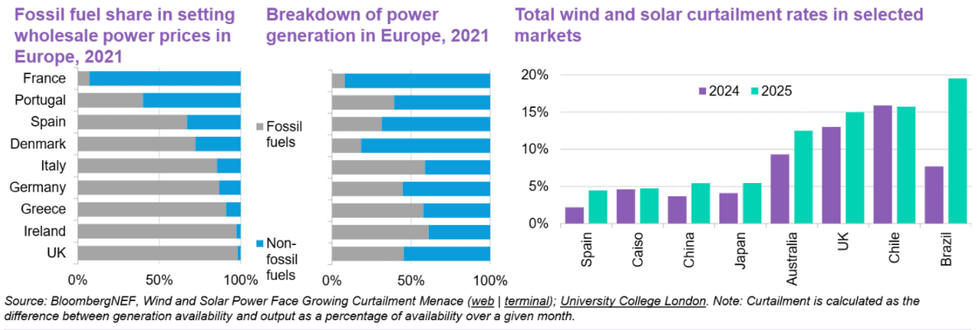 Curtailments are on the rise. BNEF