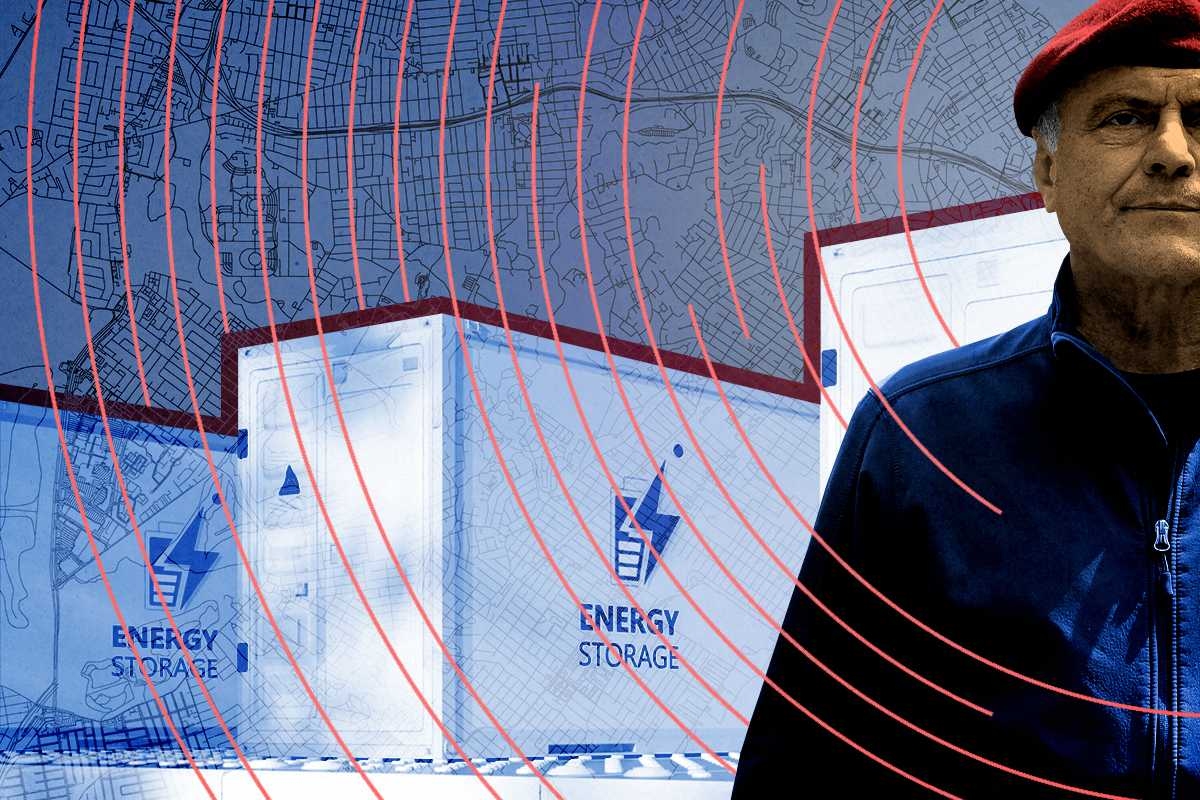
The biggest battery project in New York has been canceled in a major victory for the nascent nationwide grassroots movement against energy storage development.
It’s still a mystery why exactly the developer of Staten Island’s Swiftsure project, Fullmark Energy (formerly known as Hecate), pulled the plug. We do know a few key details: First, Fullmark did not announce publicly that it was killing the project, instead quietly submitting a short, one-page withdrawal letter to the New York State Department of Public Service. That letter, which is publicly available, is dated August 18 of this year, meaning that the move formally occurred two months ago. Still, nobody in Staten Island seems to have known until late Friday afternoon when local publication SI Advance first reported the withdrawal.
Second, Swiftsure was going to be massive. It was the largest planned battery storage project in New York State, according to public records, with the ability to store upwards of 650 megawatts of electricity — enough to power more than half a million homes. That makes Swiftsure likely one of the largest battery projects in the country, with more capacity than any other energy storage project currently facing opposition in the U.S., according to our very own Heatmap Pro database. This is the second Fullmark project to totally flop in recent months. We reported last week that one of the company’s projects outside of Los Angeles had its permits voided in a court ruling that also blocked battery storage development in unincorporated areas outside the city.
Third, and potentially most significant for energy developers in New York City: Swiftsure’s death will almost certainly embolden the anti-storage activist movement.
Curtis Sliwa, the Republican nominee in next week’s New York mayoral election, was one of many local politicians who opposed Swiftsure and rallied with residents close to the proposed site in May. He’s part of a broader trend of Republican politicians becoming skeptical of battery storage sites near where people live and work, including in Democrat-ruled New York.
Putting batteries in the five boroughs has always been a challenge, but January’s Moss Landing battery fire in California created a PR frenzy in the city, as conservative figures seized on the online panic created by the blaze. Once-agnostic GOP members of Congress from New York City are now anti-battery storage in their backyards, including Anthony D’Esposito, Nicole Malliotakis and Mike Lawler. Trump’s Environmental Protection Agency administrator, Lee Zeldin — a former NYC congressman — is now weighing in against individual battery projects on Long Island and Staten Island.
Swiftsure was proposed in 2023 and permitted by the state last year. Fullmark was given a deadline of this spring to submit routine paperwork demonstrating how it would comply with conditions of the site’s permit, including how the battery storage project would be decommissioned. In August, the New York Department of Public Service gave Fullmark an extension until October 11.
Instead of meeting that October deadline, it seems Fullmark quietly withdrew its Swiftsure proposal.
It’s unclear how Democrat Zohran Mamdani or independent Andrew Cuomo would handle the rise of the anti-battery movement if either of them wins the November 4 mayoral election. That’s partially because energy policy and climate change have been non-issues in the campaign, saving small mentions of nuclear power, heat pumps, or gas prices in one-off debate answers or social media posts.
Sliwa, who has referred to Swiftsure as a “mini Chernobyl,” told me that he anticipates this victory will lead to more protests at more battery sites, no matter who wins the mayoral election. “The cancellation of this lithium-ion battery warehouse will reverberate throughout the boroughs,” Sliwa told me Monday. “It’ll be a rallying cry [because] it’s not a fait accompli that these facilities will be complete and operational.”
The Mamdani and Cuomo campaigns did not respond to requests for comment on Swiftsure’s cancellation.