Sign In or Create an Account.

By continuing, you agree to the Terms of Service and acknowledge our Privacy Policy

Sparks

Utilities Asked for a Lot More Money From Ratepayers Last Year

A new PowerLines report puts the total requested increases at $31 billion — more than double the number from 2024.

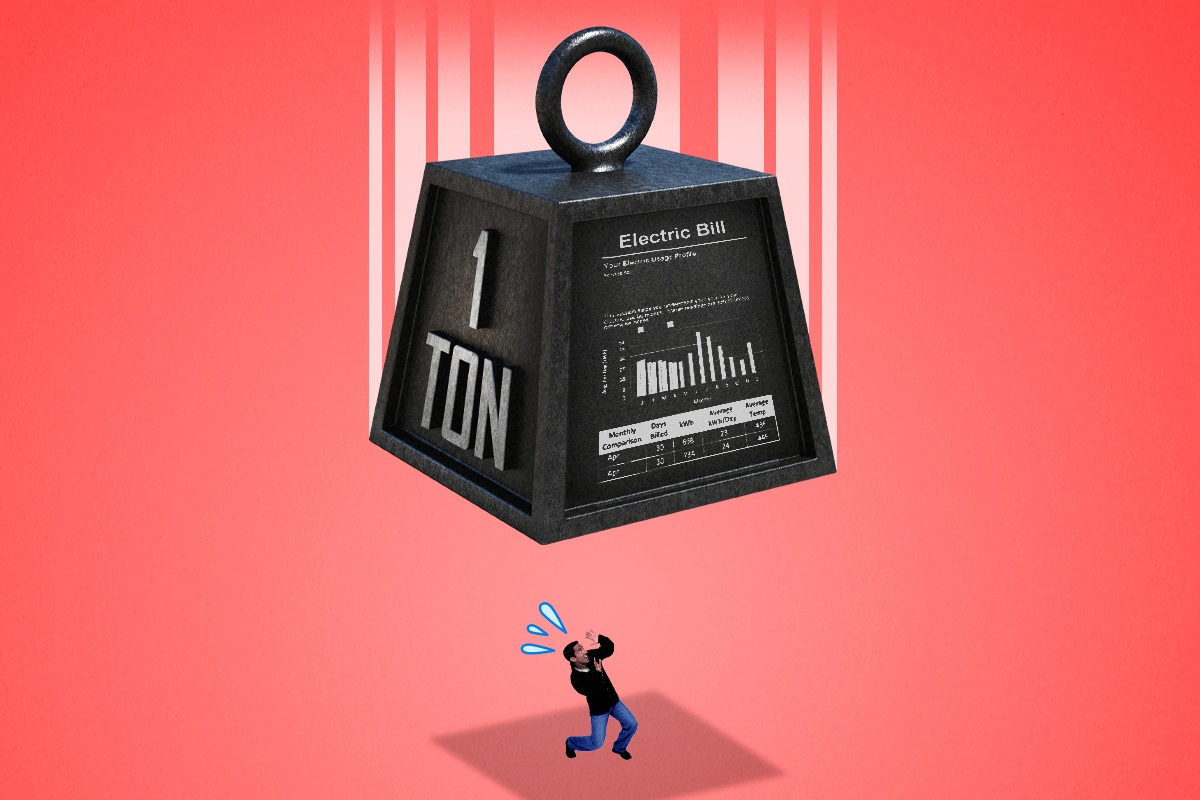
A very heavy electric bill.
Heatmap Illustration/Getty Images

Utilities asked regulators for permission to extract a lot more money from ratepayers last year.

Electric and gas utilities requested almost $31 billion worth of rate increases in 2025, according to an analysis by the energy policy nonprofit PowerLines released Thursday morning, compared to $15 billion worth of rate increases in 2024. In case you haven’t already done the math: That’s more than double what utilities asked for just a year earlier.

Utilities go to state regulators with its spending and investment plans, and those regulators decide how much of a return the utility is allowed to glean from its ratepayers on those investments. (Costs for fuel — like natural gas for a power plant — are typically passed through to customers without utilities earning a profit.) Just because a utility requests a certain level of spending does not mean that regulators will approve it. But the volume and magnitude of the increases likely means that many ratepayers will see higher bills in the coming year.

“These increases, a lot of them have not actually hit people's wallets yet,” PowerLines executive director Charles Hua told a group of reporters Wednesday afternoon. “So that shows that in 2026, the utility bills are likely to continue to rise, barring some major, sweeping action.” Those could affect some 81 million consumers, he said.

Electricity prices have gone up 6.7% in the past year, according to the Bureau of Labor Statistics, outpacing overall prices, which have risen 2.7%. Electricity is 37% more expensive today than it was just five years ago, a trend researchers have attributed to geographically specific factors such as costs arising from wildfires attributed to faulty utility equipment, as well as rising costs for maintaining and building out the grid itself.

These rising costs have become increasingly politically contentious, with state and local politicians using electricity markets and utilities as punching bags. Newly elected New Jersey Governor Mikie Sherrill’s first two actions in office, for instance, were both aimed at effecting a rate freeze proposal that was at the center of her campaign.

But some of the biggest rate increase requests from last year were not in the markets best known for high and rising prices: the Northeast and California. The Florida utility Florida Power and Light received permission from state regulators for $7 billion worth of rate increases, the largest such increase among the group PowerLines tracked. That figure was negotiated down from about $10 billion.

The PowerLines data is telling many consumers something they already know. Electricity is getting more expensive, and they’re not happy about it.

“In a moment where affordability concerns and pocketbook concerns remain top of mind for American consumers, electricity and gas are the two fastest drivers,” Hua said. “That is creating this sense of public and consumer frustration that we're seeing.”


You’re out of free articles.

Subscribe today to experience Heatmap’s expert analysis 
of climate change, clean energy, and sustainability.
To continue reading
Create a free account or sign in to unlock more free articles.
or
Please enter an email address
By continuing, you agree to the Terms of Service and acknowledge our Privacy Policy
Sparks

Trump Loses Another Case Against Offshore Wind

A federal judge in Massachusetts ruled that construction on Vineyard Wind could proceed.

Offshore wind.
Heatmap Illustration/Getty Images

The Vineyard Wind offshore wind project can continue construction while the company’s lawsuit challenging the Trump administration’s stop work order proceeds, judge Brian E. Murphy for the District of Massachusetts ruled on Tuesday.

That makes four offshore wind farms that have now won preliminary injunctions against Trump’s freeze on the industry. Dominion Energy’s Coastal Virginia offshore wind project, Orsted’s Revolution Wind off the coast of New England, and Equinor’s Empire Wind near Long Island, New York, have all been allowed to proceed with construction while their individual legal challenges to the stop work order play out.

Keep reading... Show less
Blue
Sparks

Chris Wright Is Overhauling $83 Billion of Loans. He Won’t Say Which Ones.

The Secretary of Energy announced the cuts and revisions on Thursday, though it’s unclear how many are new.

The Energy Department logo holding money.
Heatmap Illustration/Getty Images

The Department of Energy announced on Thursday that it has eliminated nearly $30 billion in loans and conditional commitments for clean energy projects issued by the Biden administration. The agency is also in the process of “restructuring” or “revising” an additional $53 billion worth of loans projects, it said in a press release.

The agency did not include a list of affected projects and did not respond to an emailed request for clarification. However the announcement came in the context of a 2025 year-in-review, meaning these numbers likely include previously-announced cancellations, such as the $4.9 billion loan guarantee for the Grain Belt Express transmission line and the $3 billion partial loan guarantee to solar and storage developer Sunnova, which were terminated last year.

Keep reading... Show less
Green
Sparks

New Jersey’s New Governor Froze Electricity Prices During Her First Speech

Mikie Sherrill used her inaugural address to sign two executive orders on energy.

Mikie Sherrill.
Heatmap Illustration/Getty Images

Mikie Sherill, a former Navy helicopter pilot, was best known during her tenure in the House of Representatives as a prominent Democratic voice on national security issues. But by the time she ran for governor of New Jersey, utility bills were spiking up to 20% in the state, putting energy at the top of her campaign agenda. Sherrill’s oft-repeated promise to freeze electricity rates took what could have been a vulnerability and turned it into an electoral advantage.

“I hope, New Jersey, you'll remember me when you open up your electric bill and it hasn't gone up by 20%,” Sherrill said Tuesday in her inauguration address.

Keep reading... Show less
Blue