The surprise is not so much the car itself, but rather its maker. Over the years, we’ve called out Toyota numerous times for dragging its feet about electric cars. The world’s largest automaker took the hybrid mainstream and still produces the hydrogen-powered Mirai. Nevertheless, Toyota publicly cast doubt about the viability of fully electric cars on several occasions and let other legacy car companies take the lead. Its first true EV, the bZ4X, was a disappointment, with driving range and power figures that lagged behind the rest of the industry.
Suddenly, though, the Toyota narrative looks different. Working at its trademark deliberate pace, the auto giant is revealing a batch of new EVs this year, just as competitors Ford, GM, Honda, and Hyundai-Kia are pulling back on their electric lines (and writing off billions of dollars to tilt their companies back toward fossil fuels). There is the Toyota bZ, which Car and Driver called “quicker, nicer inside, and better at being an EV” than the bZ4X, its predecessor. There is the C-HR, a small crossover that had been gas-powered before it became fully electric this year. And there is the large Highlander SUV, a popular nameplate that’s about to become EV-only.
To see what’s changed with the cars themselves, I test-drove the C-HR last week. A decade ago, I’d taken its gas-powered predecessor on a road trip down Long Island and found it to be a fun but frustrating vehicle. Toyota went way over the top with the exterior styling back then to make the little car scream “youthful,” but under the hood was a woefully underpowered engine that took about 11 seconds to push the C-HR from 0 to 60 miles per hour. Now, thanks to the instant torque of electric motors, the new version finally has the zip to go with its looks: It’ll get to 60 in under five seconds, and feels plenty zoomy just driving around town.
Inside, C-HR feels like an evolved Toyota that isn’t trying too hard to be a Tesla. The brand took the two-touchscreen approach, with a large one in the center console to handle main functions such as navigation, entertainment, and climate control, and a smaller one in front of the driver’s eyes where the traditional dashboard would be. There are still physical buttons on the wheel to manipulate music volume and cruise control, but climate controls are entirely digital.
The big touchscreen is a work in progress. It’s too crowded with information compared to a clean overlay like Tesla’s or Rivian’s, and the design of the navigation software had some profound flaws. (Whether you’re using the voice assistant or keyboard input to search for a destination, the system lags a troubling amount for a brand-new car. Maybe Toyota just expects you to use Apple CarPlay and ignore its built-in system.) Still, the interface is more iPhone-like and intuitive than what Hyundai and Kia are using in their EVs.
Here’s the real problem with the C-HR: Although it accomplishes the mission of feeling like a fun-to-drive Toyota that happens to be electric, it’s not terribly good at being an electric car. The Toyota lacks one-pedal driving, the delightful feature where the car slows itself as soon as you let off the accelerator, negating the need to move your foot between two pedals all time. Nor does it have a front trunk, a.k.a. frunk, the fun bonus on EVs made possible by the absence of an engine. According to Toyota, the C-HR is so small that engineers simply didn’t have room for a frunk (or a glovebox, for that matter).
The C-HR’s NACS charging port makes it possible to use Tesla Superchargers, and its charging port location on the passenger’s side front should make it simple to reach them. But instead of sitting on the corner of the car, easily reachable by a plug right in front of the parked vehicle, the port is several feet back, just behind the front wheel. And its door opens toward the charger, so the cord has to reach over or under the door that’s in the way. I made it work at a Supercharger in greater San Diego, but only after several frustrating tries and with less than an inch of cord to spare.
Those are the complaints of a longtime EV driver, and they might not matter to some C-HR buyers. The deepest oversight is the C-HR’s nav, which, at least right now, doesn’t have compatible charging stations built into its route planning — a warning message will notify you if the chosen route requires recharging to reach the final destination, but the car won’t tell you where to go. This is a glaring omission for potential buyers who’ll be taking their first EV road trip. (Get PlugShare, folks.) Planned charging is effectively an industry standard — even Toyota’s legacy competitors like Chevy and Hyundai will choose appropriate fast-chargers and route you to them, even if their interface isn’t as seamless and satisfying as what’s in a Tesla or Rivian. At least that’s a problem that could be solved later via software update, though.
Because of these faults, it’s difficult to imagine someone choosing this as their second or third EV. But maybe that’s not the game at all. There is a legion of Toyota drivers out there, many of whom might think about buying their first electric car if their brand built one. Despite its flaws, the C-HR is that. It’s got enough range for city living and occasional road trips, enough power to be fun to drive, and a Toyota badge on the hood.
Whatever their quirks, the very existence of the C-HR and its electric stablemates is a testament to Toyota’s plan to play the long game with EVs rather than ebb and flow with every whipsaw turn in the American car market. And they’re here just in time. Amidst volatile oil prices because of the Iran war, drivers worldwide are more interested in going electric.
In the U.S., that interest has buoyed used EV sales — not new — because so few affordable options are on the market. Although C-HR starts near $38,000, Toyota has begun to offer discounts that would bring it in line with gas-powered crossovers that are $5,000 cheaper. Maybe that’ll be enough for the subcompact to join its bigger sibling, the bZ, on that list of best-sellers.



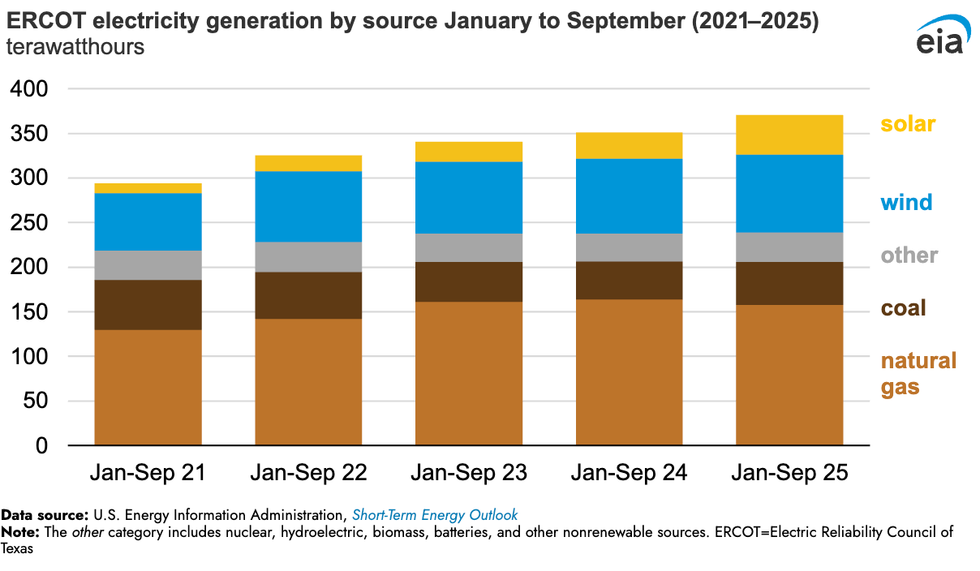 While coal and gas stay static, wind and solar grow as a share of Texas' power. EIA


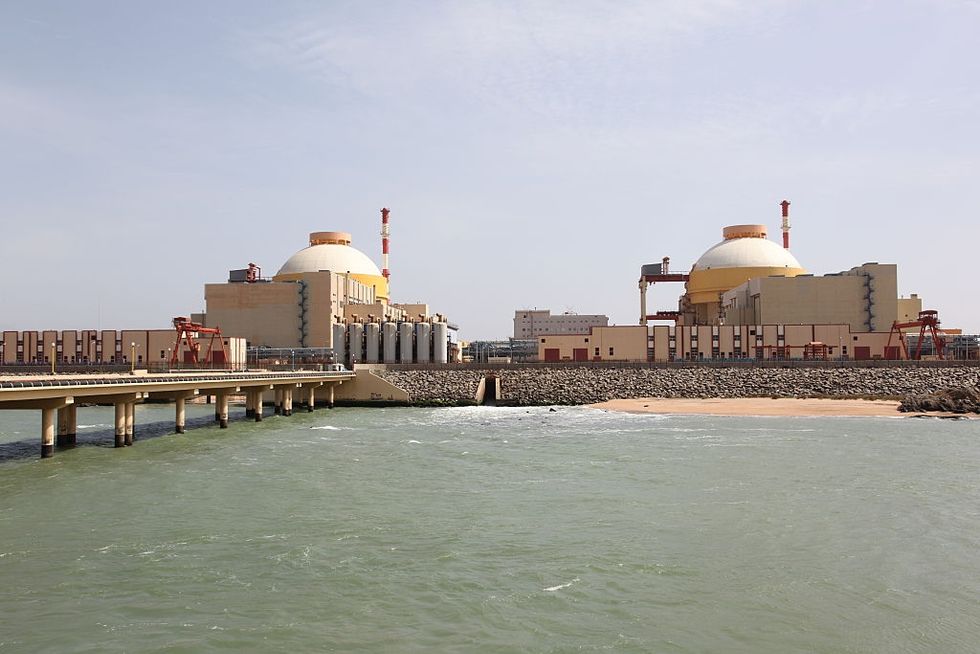 The Kudankulam nuclear power plant, India’s largest atomic station. Pallava Bagla/Corbis via Getty Images