You can also add the show’s RSS feed to your podcast app to follow us directly.
Robinson Meyer:
Hello, it’s Thursday, November 12, and Congress is still debating the Senate Permitting Bill, officially known as the Bipartisan American Affordability and Jobs Act. We’ve been covering the bill here at Heatmap, as you know, and it would do a lot of different things, so many that it’s actually a bit of a struggle to summarize them all in just the introduction to this show. But let’s say briefly, it would initiate a federal buildout of long distance transmission lines, rework some parts of the National Environmental Policy Act, and changed some of how the federal government works with tribes. It would also rewrite parts of the Clean Water Act to generally give states less power and rewrite the Endangered Species Act to generally give states more power.
Robinson Meyer:
As I’m sure you’ve seen, it’s divided the environmental community and the broader set of interest groups that are aligned with the Democratic Party. The Wilderness Society opposes the bill, as does Earth Justice and former Vice President Al Gore. The AFL-CIO, the International Brotherhood of Electrical Workers, the Electrician’s Union, and the National Urban League all support the bill. One of the few environmental groups that has endorsed the bill is Evergreen Action. They were founded by alumni of Jay Inslee’s entirely climate change-focused presidential campaign back in 2020.
Robinson Meyer:
And I would say in the firmament of environmental NGOs, they are a relatively young star. They’re focused entirely, as you’ll hear, on climate change, decarbonization, and clean energy. And that gives them, I think, a unique focus compared to some other environmental groups that have kind of long-term conservation interests or biodiversity concerns and have only recently kind of adjusted for an era of climate politics. Our two guests today are both from Evergreen. Lena Moffitt is the executive director of Evergreen Action. She’s originally from New Mexico and has a long career in climate advocacy. She spent about a decade with the Sierra Club where she worked on campaigns that included the fight against the Keystone XL pipeline, the effort to regulate methane emissions. Before that, she was at the National Wildlife Federation and their climate and energy program. And she also worked at the Union of Concerned Scientists to pass the Waxman-Markey climate legislation back at the beginning of the Obama administration. We’re also joined by Pete Wyckoff. You will hear on this show how Pete and I know each other, but he’s currently VP of Policy at Evergreen. Before that, he was Deputy Commissioner of Energy Resources in the state of Minnesota and a Senior Policy Advisor even before that to U.S. Senator Tina Smith. He is an environmental scientist by training.
Robinson Meyer:
Pete, Lena, and I talk on this show about why Evergreen is endorsing this bill, why they think Democrats should take what is a relatively painful compromise for many lawmakers, and what keeps them up at night about this bill, even though they are endorsing it. We also have to talk about what would need to happen if this bill does pass for this bill to be as effective as they hope it will be. I’m Robinson Meyer, the founding executive editor of Heatmap News and all that and more. It’s all coming up on Shift Key. Lena Moffitt and Pete Wyckoff, welcome to Shift Key.
Pete Wyckoff:
Thanks for having us. Thank you so much, Rob.
Robinson Meyer:
So I feel like, Pete, you and I have to just briefly start here, which is that for me, this is the continuation of a long journey that we’ve had together because we watched the, I will always remember this, the night the Inflation Reduction Act passed, it was an overnight voterama, as they always are on reconciliation bills. I went to the Hill. I stayed in the Hill overnight because I was not going to miss this event in the Hill. You worked for Senator Tina Smith at the time. The sun was coming up. I thought, I’m going to go outside and watch the sun come up. And you were there, too, when we watched the sun rise on the Inflation Reduction Act together.
Pete Wyckoff:
I very much remember that. I told Lena that before we got on this podcast. And she said, oh, bring that up. It adds color. So you beat me to it. So, yes, I had a bagel, too, from the bagel shop over by the Heritage Foundation.
Robinson Meyer:
Oh, my gosh.
Pete Wyckoff:
I don’t think I shared my bagel with you.
Robinson Meyer:
You didn’t share your bagel.
Pete Wyckoff:
We did watch the sunrise.
Robinson Meyer:
We did watch the sunrise. What a day that was. And to some degree, it has brought us to this conversation. It has brought us to where we are now. And so one thing that hasn’t maybe been discussed as much, but which is very apparent to those of us who’ve, like, been in the trenches the whole time, is that you don’t get this bill, the Bipartisan American Affordability and Jobs Act, Baja, Baja, whatever we’re calling it, without the Inflation Reduction Act. And you don’t get Democrats who feel as strongly about it as they do, and as Senator Heinrich does and Senator the White House do, without the IRA experience. And so we’re going to talk about that today. But first, Lena, let’s bring you in. It has been so interesting watching the politics of this bill play out. We’re recording this at the moment where the Senate has already had its procedural votes on the permitting bill. It has yet to do the amendments. It’s yet to do the substantive vote. But there’s been a real divide in the environmental community on this bill. And largely that divide has been some groups opposing and some groups staying silent. But Evergreen chose to speak out and endorse this permitting bill.
Robinson Meyer:
Why did Evergreen choose to endorse this bill?
Lena Moffitt:
I’ve so enjoyed your coverage of this, and it has been really intense to watch and intense to be in the middle of it in the past few days. So hopefully your listeners are familiar with Evergreen, but just in case they’re not, we are a small climate advocacy organization that was founded about five years ago by staff of then-Governor Jay Inslee, when he was running for president, and we are committed to carrying forward Jay Inslee’s vision on climate, which is essentially that you can tackle climate change and, build an inclusive, thriving, clean energy economy at the same time. And we all know that to do that, that means moving away from fossil fuels and towards clean energy. And to power our economy with clean energy means a couple of things. Building a whole lot of clean energy fast and building a lot of transmission to carry that clean energy from where it’s generated to where people live, as you and your interviewees have talked about quite a bit. But unfortunately, that is not happening in our country right now. And to solve the climate crisis, we need that clean energy and that transmission. And this bill would open the floodgates for speedy construction of the interregional transmission that we just have not been building.
Lena Moffitt:
And even though this is very much a compromise bill, it has a lot of really hard tradeoffs in it that have, genuinely kept me up in the middle of the night for months on end now. We believe that this bill would take us one step closer to tackling the climate crisis, and therefore it is worth it because we’re not going to be able to make that transition, simply put, without this transmission. And if we don’t, the climate crisis will just get worse and worse and more people will die. And so we decided to support it mostly because of that.
Robinson Meyer:
I feel like I’ve said this a few times about this bill, but it’s always the case that where there’s conflict generates the most journalistic coverage. Because if there’s conflict, that means people disagree. And that means we I think this is more than just an if it bleeds, it leads thing. I think like as journalists, we want to feel useful. And if there’s conflict, that means we can go do fact finding. We can go referee discussions and debates, and then we can maybe come up with an answer. The transmission section maybe has not generated as much coverage because everyone has sort of gotten religion on this section. But this has all meant that we haven’t talked as much about what the transmission section would do. So can you just briefly explain how the transmission section works and why it’s so good that you’re able to overcome these other points that may be more troubling?
Lena Moffitt:
Definitely want Pete to talk about this one because he’s got a front row seat to experiencing what the lack of transmission has meant for our inability to transition over the past few years, especially since the Inflation Reduction Act. But I would say as a movement strategist at the highest level, I’ve been lucky enough to be in the environmental space my entire career, spent most of it fighting pipelines. I spent most of it fighting fossil fuel infrastructure projects. And I don’t want to throw any shade on my colleagues in the environmental movement, but I do think that we need to be focusing on removing barriers.
Lena Moffitt:
Uncorking the floodgate of clean energy that we know is needed, and take what we can get right in front of us. Like I do think that we need to get more comfortable with compromise, frankly, and more comfortable with like, let’s take this and build on it. And we are very much willing to do that because we are so focused on the climate crisis. We have that singular area of attention and transmission is it is a structural necessity. Like we can build a lot of clean energy in regions like we’ve seen Texas and the ERCOT region do, gangbusters. But we are not doing it at scale in our country in a way that the speed and the calamity of the crisis, and also not to mention affordability, necessitate because we haven’t been able to build that transmission. And this bill essentially removes those roadblocks and takes a bunch of other good steps, too, which you have been covering and I appreciate. But that is a structural step that we have to take. And without that step, like, I don’t see how we get out of this mess of the climate crisis. Like, there is no path to addressing this crisis without the clean energy transition, and transmission is essential to that. So it gives us that chance, that fighting chance to keep addressing climate change that we were built to do, and that’s why we support it.
Robinson Meyer:
Pete, what stands out to you as maybe the most important transmission provision in the bill?
Pete Wyckoff:
So can I back up for a second and say, why do we need transmission?
Robinson Meyer:
Yeah, please.
Pete Wyckoff:
So my experience is this. I was an academic for a long time. I started a second career when I went out and started working for Al Franken over a decade ago. So I worked on the federal side. And as you mentioned, then I worked for Senator Tina Smith. That’s where I got to know you. We worked on clean energy policy and were very deep into the IRA. After the IRA passed, I went back to Minnesota to work for Governor Tim Walls. I ran his energy division in the Minnesota Department of Commerce. And we did both usual state energy office stuff. We were doing IRA implementation, but we also had a regulatory function. We were essentially the governor’s rep, state’s attorney at the Minnesota PUC, but also at RTOs. So we worked in both MISO and SPP. So I came to see sort of firsthand that limitations on, transmission were holding us back not just holding us back on moving to clean while I was there as I got there we passed a state level 100 clean energy standard but, it’s not just about clean it’s about affordability right now in the dakotas and minnesota which crosses the miso spp seam I don’t know how technical you want me to be these are the.
Robinson Meyer:
Basically the two different electricity markets I mean as we’re literally talking about that straddle the middle of the country. So they have various names. It’s called the Southwest Power Pool or SPP, even though it’s largely not in the Southwest. Yep.
Pete Wyckoff:
Including Western Minnesota. A sliver of Western Minnesota.
Robinson Meyer:
Exactly. Famously Minnesota, a Southwestern state. But these are the two electricity markets in the middle of the country.
Pete Wyckoff:
So one of the things you can look at all the time is on one side of Minnesota, end of the Dakotas, power is one price. On the other side, its power is a different price and if we could just move through transmission power across that seam presumably, One could take advantage of lower cost electricity, no matter which side of that seam you were on. And in fact, under the Biden administration, when I was at the Minnesota Department of Commerce, we got a giant grant from the bipartisan infrastructure law, along with six other red states, to build some seam lines across MISO-SPP. We took a long time for us to talk the Trump folks into not canceling that grant, but they didn’t cancel that grant. And we’re moving ahead on that work. But the fact that is like earth shattering and new.
Pete Wyckoff:
Just kind of illustrates we have a long ways to go and it’s not just about getting clean it’s about getting affordability and reliability up to snuff what, this bill recognizes is that the really hard thing to do is move energy from market to market from state to state across utility lines so that’s where a federal intervention starts to make some sense. One of the big things for transmission this bill does is it gives federal backstop sighting some teeth so that if you’re trying to build across states moving from one region to another, that becomes an interstate commerce sort of thing that you would think there would be a federal intervention, but the feds and FERC have been really reluctant, not sure if they fully had the power to intervene and help build those transmission lines. This gives them that power. This also mandates regional and interregional planning. Like you’re not going to build, well, this is a coherent way, the ideal system. And you would think there was more planning than there is in the world. And this will beef that up. And that is an important first step. I’ll say someone who worked in MISO North, which is the sort of Midwestern Northern states, We kind of led the country in terms of regional transmission planning, and yet we still had a long ways to go, and I think this bill helps out MISO North. So if MISO North was the poster child for doing it as best as anybody’s doing it.
Pete Wyckoff:
Think of what other places need in terms of planning. We also have to have the same data available everywhere, and people have to have access to that data. There’s just a lot of these logistical hurdles to not only building transmission, but moving electricity across the transmission that’s built. And we can get into why do we need more transmission rather than let’s just build local generation. But what I’ll point out is the local generation you usually build quickly is gas. Who benefits from transmission. It is the kind of energy that needs to travel far. And wind and solar, you want to bring from where the sun shines well and where the wind blows well. And it might not be your local area. And there might not be the space for it in your local area. So transmission becomes key.
Robinson Meyer:
If I can ventriloquize my former podcast co-host Jesse, who, Jesse, if you’re listening to this, we really do need to do an episode. We’re just both very busy. He would say at this point that the difference between the worst solar resource and the best solar resource is a 2x difference. But the difference between the worst wind resource and the best solar wind resource is like a 10x difference. And so transmission helps for solar. It definitely helps for solar. Your economics can get two times better. But transmission is transformative for wind transmission is like the thing that makes large-scale wind projects either make sense or not make sense
Pete Wyckoff:
Yeah, I mean, can I be a physics nerd for a second. What I would like to point out to people about wind is that it scales to a power of three or four, depending on how you’re looking at it. Ao a solar array that’s twice as big is twice as good, but a wind array that has twice the wind resource or twice the size of the wind tower is multiples better. So it doesn’t scale the same way. It’s not how people think about it.
Robinson Meyer:
Do you think of the transmission provisions in this bill as good for the climate on their own sake? Or do you see them as a down payment? Because more transmission is better. You have more transmission, more electrons moving around. That means there’s more arbitrage opportunities than when solar wind. Or do you see it as almost a down payment for a future policy that is more deliberate about where transmission might go and who might benefit from it?
Pete Wyckoff:
I think it’s both. In Minnesota, we are a state that gets a large fraction of its energy from wind, but we’re already transmission limited. We’re already getting curtailment. And this will unleash already built clean. But it also, like I said, if we’re already curtailing and we need to build out a lot more, we’re going to need a lot more transmission. So this becomes important. I think one of the things to keep in mind is people hear like, oh my gosh, there’s these new large loads coming on and they’re like taking, jet engines out of scrapyards and they’re hooking them up and calling them gas plants. I mean, that’s a little like cyberpunk and sci-fi, but I think mostly they’re doing it because they have no other choice. That is a really expensive way to procure electricity. Nobody really wants to do that. The reason you would do that is you can’t get, hooked to the grid. And the reason you can’t get hooked to the grid is the grid is not adequate. So by building out the grid, we will disincentivize folks from doing that sort of crazy stuff. And we will be hooking into a system that we know how to make clean and is getting clean. And in a fair world where there aren’t fingers on the scale, wind and solar is what you’re going to build and then you’re going to move it.
Robinson Meyer:
Lena, how do you, there has been an idea, some folks have argued about the bill or a claim some folks have made that, well, look, right now, Republicans control the Senate and the House. But on Jan. 1, Democrats will have a big majority in the Senate. Democrats will have a big majority in the House. Why are you endorsing this particular bill now?
Lena Moffitt:
It’s a really fair question and it’s the second question that we’re getting in all of the the interest in this including from many of our friends and there are a bunch of reasons, and I take my closest advice from pete who was in the senate for seven years and has a pretty good understanding of how things work up there, and you know I’ve been working as an advocate on Capitol Hill for a long time but there are, very expert opinions on both sides of this one and our belief is that this was a very carefully negotiated compromise that strikes a really delicate balance between all of the parties, that inevitably will have to come to the table to get this across the finish line, including utilities, Republicans, and Democrats, and then Trump. And considering all of the other additional stakeholders here, we don’t see a better deal coming around the corner. Democrats will be in charge, and we are so excited. Hopefully, this bill will pass and we will be able to build on it. But this is a really contentious issue that requires tough compromises, even like from within the Democratic Party. We saw on the cloture vote that it directly split the current Democrats. The reality is some of the reforms to NEPA, some of the reforms to National Historic Preservation Act that the tribes are really interested in, some of those reforms are really tough but also are good for clean energy and good for transmission.
Lena Moffitt:
And those are hard issues to grapple with. And next year, I am stoked about all of the priorities that the Democrats are going to have, including health care, including the war in Iran, a ton of things that they’re going to have to get done. An issue that is really sticky and kind of unpleasant and splits the caucus is just like not going to be at the top of their priority list. And even if it were, it’s really tough to negotiate a bill. And we know the folks up there like Senator Whitehouse and Senator Heinrich, who I think the climate movement owes a debt of gratitude to for trying to do anything in this horrible landscape, let alone a climate bill. And I think this is a climate bill. I think a national grid absolutely is inherently good for the climate. Like the patchwork of what seven or eight RTOs that we have right now that is both dirty and unreliable to different levels is a huge challenge unto itself. But as we think about what we know we need to do for the climate, which is electrify everything, including our vehicles, including ultimately our industry, of course, our buildings, we need clean electrons and we need cheap electrons flowing everywhere. And we don’t get there in our huge country where the central part of the country is the sunniest and the windiest often –.
Lena Moffitt:
Without transmission. And so that inherently transmission is good for the climate and it will enable the investments and the certainty that more clean necessarily needs to carry it from the middle to the population center. So it’s awesome they negotiated this. And I think if we don’t do this now, we definitely have to wait at least two years because it will take them two years to come back and negotiate it and do all the balancing. And then we’re like maybe we’re five years down the line. And in the meantime, energy gets more expensive and dirty. People get more jet engines in their backyards powering off-grid data centers. And the climate crisis just spirals out of control. So I say, get started now. Trump cannot stop all the paperwork that will be needed to start all these transmission lines. He can’t get in the way of all of it. I just don’t believe even he will be able to do that. And in two years, we’ll have a hopefully a dem trifecta and we build on it a lot. So, yeah.
Robinson Meyer:
One point Senator Heinrich made when I talked to him yesterday that I had also just kind of written a similar piece along these lines. So, of course, I was thrilled to have a senator repeat. Was that if the midterms raised your odds of a Democrat winning the White House in 2029, then suddenly the bill looks a lot better because the person who really benefits from anything disinflationary in this bill is whoever is the next president. And the president who will be able to build, let’s say, projects, whether they be transit lines or bridges or whatever, is the next president. And that’s a gamble for Democrats, but it’s a gamble they might be feeling a lot better about today than they were two weeks ago. And it reminds me a little bit about how Reagan benefited from a lot of the policies that Carter did, that there were a number of changes that were all disinflationary that Carter kind of got through Congress, and it turned out that Reagan benefited from them. But ultimately, they did produce disinflation. It just took several years. And so everyone has to take a flyer on whether they’re going to happen to be in the White House when that happens. But Democrats might feel better about that flyer now than they were previously.
Robinson Meyer:
Pete, you got the whole lifespan ban of the IRA. You helped write it in Tina Smith’s office, and then you helped implement it in Governor Walz’s office.
Robinson Meyer:
And I think one thread in the story of this bill has been the degree to which folks in the Biden administration or in that trifecta saw the permitting apparatus up close and changed their minds. Can you talk about what role federal permitting played in the implementation of the IRA as you experienced it and you saw it?
Pete Wyckoff:
Yeah, just to back up and to reinforce the point Lena made first is... With the IRA and the bipartisan infrastructure law, we passed a lot of climate policy. We passed the stuff that Democrats mostly agreed on, and then we tried to do permitting. I think the order was wrong, but I wouldn’t wish a new trifecta or even a new Congress next year the battle as the first thing out of the gate within the party.
Pete Wyckoff:
Like let’s get this done so then we can do the things that we agree on this is a fundamentally optimistic bill it’s saying when I look to the future I don’t see Trumps all the way down, I don’t see like Trump advanced to whatever I see that we will be able to do good clean energy policy and that this is, this is Obi Wan Kenobi releasing the tractor beam so that the team can just go do good stuff and save the universe but to answer your actual question rob Wow. So I got back to Minnesota. I was supposed to be point on implementing IRA, but also we had an unexpected trifecta, which is what drew me back to Minnesota after the 22 election locally in Minnesota. And we passed a whole bunch of stuff, which I called Minnesota’s mini IRA. And we passed a 100% clean electricity standard by 2040. And then we came to realize even locally that we weren’t going to reach that without passing state level permitting reform. which we came back the next year and did. And that was honestly harder with a trifecta to pass than it was to pass the fun stuff, which is the clean energy encouraging policies. I’ll tell a story that I think is well known. In the last decade, in the teens, MISO North did a whole lot of building out of.
Pete Wyckoff:
Transmission lines in the northern part of the Midwest is still held up as this is the planning process. We all should go through. They built all those lines. Those lines are now full. And now we’re doing new rounds of we need more. We need more. And MISO is doing its best to keep up. There’s a line that was proposed in 2010 that just went online two years ago, that was to take clean electricity from Minnesota and Iowa and get it to Chicago and Milwaukee, where those people live but don’t have any good wind near them. And it got held out for 14 years, basically. I mean, not all of it for this, but with crossing the Mississippi River. And that was a federal permit that it just couldn’t get. And we don’t have that much time to waste. Down where Lena comes from, this amazing new wind farm that’s, I think, close to four gigawatts. Biggest wind farm in the country, the South Lena. It’s being transmitted west of New Mexico, and you can talk more about this, Lena, by a line that is brand new, but is not brand new, and when it was proposed, it was a long time held up by interstate permitting friction. We can’t wait 14, 16, 18 years for these lines to get built.
Robinson Meyer:
If I remember correctly, the power line that was trying to cross the Mississippi was held up specifically by a single district court judge who just kept tossing it back on one NEPA ground after another and managed to extract years of delays from this project. And one of the reforms in this bill is that it removes NEPA entirely actually from the domain of district court judges and says that if you have a NEPA challenge, you have to take it to an appellate court. You have to take it to the circuit and you get a straight shot to the circuit.
Robinson Meyer:
Pete, in that answer, you did a very good job of talking about obstacles to transmission. But this bill does make a number of changes to the National Environmental Policy Act. And I think it is actually on NEPA that Biden folks in some ways got radicalized the most Did you happen to see changes or did you happen to see NEPA hold up projects you wanted to do or just impose a speed limit? Or is transmission so important that it’s the transmission changes here that you think of first?
Pete Wyckoff:
Yeah, so Minnesota, where we build most of our energy infrastructure, is not on federal lands. So this might be a better question for Lena, who has a more southwestern bent. So a lot of our generation projects don’t need federal permits with, let’s give the caveat, Trump is coming up with new ways to pretend that, yes, you do need federal permits and federal approval to move forward with even things that shouldn’t really have a federal nexus, particularly in the wind space.
Lena Moffitt:
Yeah. The Sun Zia line in particular was held up by some challenges brought under NEPA. It was held up by a number of things, including the National Historic Preservation Act as well. But I’m struck by a conversation I had at Climate Week actually with a representative from a transmission developer. And I asked her, like, what’s your top ask? What’s the biggest problem for your trade members who are trying to build transmission? And she said, absolutely NEPA. And like this is a place where I take the developer’s word for it and this bill helps a lot on that front. And those are some of the really challenging changes that are hard to stomach in many ways as an environmentalist and as someone who is really committed to, ensuring that people have access.
Lena Moffitt:
The ability to say something about projects that are impacting them. But also, at the end of the day, Evergreen is a climate organization. I am a climate advocate first and foremost. And the climate crisis is spiraling out of control in a way that is really impacting people. And we know impacting the most vulnerable communities first and worst, but impacting everybody in a way that is truly an emergency. And we have to treat it like an emergency. And that includes being willing to make really hard choices and have hard conversations and lose friendships over in service of solutions that will make a difference. And transmission is one of those.
Robinson Meyer:
It’s a tough bill, and we are going to talk about that. But the strategy has been to create sufficiently plausible lies about the bill that can then go viral enough that it totally poisons the politics here. But I think some supporters of the bill have alleged that the environmental response to the bill, the classic environmental NGOs, oppose the bill because they’re all about anti-growth or they’re all about restricting different forms of development. Do you agree with that diagnosis?
Lena Moffitt:
No, no, not at all. I actually don’t work with any de-growthers in all of the movement and time that I’ve spent with thousands and thousands of people over the two decades of my career. No, like, I don’t believe that for a second. I’m sure there are degrowthers out there. I just haven’t encountered any of them. I think what is true is that. My environmental colleagues are all trying to make the world a better place from their vantage point and from the lived experience that they have and from the expertise that they have. And the movement has gotten really good at slowing things down and saying no to fossil fuel projects. And I helped lead a lot of those strategies for a long time. And there is something innately, emotionally, viscerally galvanizing about fighting a bad project. I get that. And as an organizer, that’s critically important to recognize. And it’s also understandable that people are really pissed off about curtailments of laws that have given impacted communities a voice at the table. And like that is really hard. And I don’t fault any of my friends across the movement for their perspectives on this bill or for their opposition to this bill. I get it. I understand. And I also think that it’s a deal worth taking because of the climate crisis and also affordability. And I want us to, as much as we possibly can, agree to disagree respectfully and then keep on fighting because fighting amongst ourselves is exactly what the opposition wants. And we don’t need to do that. We’re pulling in the same direction. We have different strategies and we’re better off for it. Like we want diverse opinions and diverse strategies because that’s how we win at the end of the day. So that’s what I’m telling my colleagues all over the place. And I’ll keep doing that.
Robinson Meyer:
You both brought up transmission or clean energy in the Southwest. Very well done, you’re both on message, the North American Transit Association endorsed this bill. There’s a reason that the Center for Public Enterprise, which wants to build more public housing and public transit, big public projects, endorsed this bill. And this is where I think the politics of the bill get tricky. Some of the quote-unquote bad things in this bill for environmental groups Such as these procedural hurdles in the National Environmental Policy Act are good things for large scale federal infrastructure projects like transit or like housing or like large scale power projects. I mean, people want to do energy transition on the back of public renewables and more power to them. You can’t do it with our current permitting system. If you want to do that, you need NEPA reform because and you need a reform that’s pretty aggressive because right now the government faces a speed limit for doing any of that stuff.
Lena Moffitt:
This is one of the reasons why we think we should take this compromise now, because these are hard, hard decisions that Democrats are not going to want to take up because there are streamlining components to NEPA that need to happen for transmission, for clean energy, for things like transit and housing that we want Democrats to deliver on. And transit is a really big one that is also very good for the climate. Transportation is the second highest cost for families in America. Also the single largest source of greenhouse gas emissions. Let’s get more transit built and streamlining and lessening the requirements for clean transportation projects to have to go through. Lengthy NEPA reviews is a good thing for the climate.
Robinson Meyer:
What keeps you up at night about the bill?
Lena Moffitt:
That’s a really hard one. I literally have had nightmares about pipelines, gonna be honest. More gas pipelines probably will come in the next couple of years. The Clean Water Act streamlining is extremely painful. That is a straight give to the fossil fuel industry. And it’s a give in response to effective organizing, frankly.
Lena Moffitt:
But are those bills the tools we need to solve the climate crisis? They’re not. They’re just not. I think we’ve been effective at using them, but the climate crisis is getting worse. And we never set out to go permit by permit forever when I started working on Keystone XL in 2010. We wanted to stop as many horrible projects as we can and stand hand in hand with frontline allies like the First Nations people in Canada and the Appalachian people in, the mountains of North Carolina and build up a movement that was strong enough to elect leaders who would pass comprehensive policy that would more systematically get us off of fossil fuels. At the time, I thought that was maybe going to be cap and trade. I maybe thought that was going to be another carbon tax. And then it became the Inflation Reduction Act. And that is so awesome. And now we have to build from where we’re at and be willing to adjust our strategy and have a broad tent and meet people where they are and deliver on both affordability and cutting pollution. And like that is the strategy of the day. And I want us to prioritize that. And that, I think, is how we get forward progress in this tough moment. But I don’t fault anybody for their perspectives on the bill because it’s truly filled with a lot of challenging things.
Robinson Meyer:
You’ve both framed the bill as optimistic.
Robinson Meyer:
What needs to happen for the bill to be as good as it can be for the climate?
Lena Moffitt:
Pete and I were talking to another former Biden person, actually, about the bill and about what needs to happen going forward. And there is a lot in this bill that hangs on federal regulators. I want to be transparent about that, too. If folks haven’t read the text like we have, like we know FERC is going to play a central role here. And FERC hasn’t always been clean energy or the climate movement’s best friend. But it’s been interesting over the past couple of years to see FERC’s willingness to push a little bit and then also, frankly, under Trump, be way more, I won’t say unleashed yet or aggressive yet, but like that’s the vein we need to continue in. And FERC unleashed, I think, is the phrase that we’re going to want to just keep putting out into the universe so that these regulators can go forth and do their jobs and put out these rulemakings that are going to speed the data center payment plans and the transmission at all. A lot of it hangs on FERC. And so we want a good FERC. That’s going to have to be a top priority. I think reinstating the tax credits is probably the second thing that I would say. Pete, what’s on your wish list?
Pete Wyckoff:
I would start from there. I’ve always argued that if you just level the playing field, clean is going to keep expanding because it is the one that is cheap and getting cheaper. It’s going to be really hard to get cheaper with mining coal and bringing it to a coal plant. I am also the one, someone who would say we should accelerate that transition to a cleaner electric system that will be cheaper to be a part of. So we’re accelerating the time to cheaper electric bills for folks. Through things like reinstating the tax credits. Jesse Jenkins, keep referring to Jesse, he came out with some modeling after the IRA that I think is probably fundamentally true, that if you want to put clean energy on sale, which is what the IRA did through those tax credits mostly, you’ve got to have a way to take advantage of that. Even if wind and solar have gotten cheap, but you can’t get the electricity you would generate from that new cheap generator out, then you haven’t gotten anywhere. I took to heart the real limitations of other things in the real world for reducing the power of tools like the tax credits. So I’m all for reinstating the tax credits, but I want to remove those other barriers to make them to be the most effective thing. And this goes back to the optimistic sort of case. I think I don’t see Trump’s all the way down when I look forward in this country. I see a restoration of the party that I’ve worked for in terms of being able to push through federal bills and get them enacted. And the sort of things we want to do will speed the deployment of clean electricity, but not if you can’t actually move the electrons.
Lena Moffitt:
There are a couple of other barriers that it’s worth calling out that Evergreen and our colleagues across the movement have been working on at the state and local level, too, that are critically important. And one is local siting and permitting. Like, we do have to ensure that the clean actually can get built at scale across the country. And that is a wild patchwork of mostly roadblocks at this point to utility-scale clean getting built. And so that’s a huge priority for us. And then the RTO Governance one is the other one, like, we got to make sure, again, FERC Unleashed, that they actually are leaning in to leveling some of the bureaucratic insanities in places like PJM and making sure they do their jobs. And then utilities writ large, like, I am really excited, especially after talking to my friend Dave Pomerantz about many of the utility components of this bill. The oversight of utilities has been so lax and captured, frankly, that it is unbelievable what they are allowed to do with this bargain that they struck. Yeah, they’re monopolies, but that’s because they’re supposed to deliver cheap, reliable power and they’re doing neither. So this bill, I think, takes steps towards reining them in a bit back to the agreement in the compact of the Federal Power Act, but nowhere near enough. And I think this is like a down payment to more action on that front that we’re going to see from states across the country. Hopefully in January, like we’re working on an ROE reform bill in Pennsylvania and maybe Michigan and all over the place. There is an energy in the air to take the utilities on a bit more on this front, too, at the state level.
Robinson Meyer:
Lena, you mentioned that the key of this bill is going to be FERC unleashed.
Lena Moffitt:
Mm hmm.
Robinson Meyer:
And FERC is appointed by the president, confirmed by the Senate, about to be a big Democratic majority. So that’s a little balanced. But the way it works is that the president’s party has a majority, but the minority party has a say. What sense have we gotten of what the current FERC thinks about the provisions in this bill? And what keeps future FERC from just watering everything down and or what needs to happen to make it so that the bill is implemented essentially as written?
Lena Moffitt:
Yeah, really good question. There are a couple of data points that have given me really surprising optimism about this current FERC. One, the data center rulemaking that they put out that required some interesting components in there was stronger than we thought it would be. And I am not an expert on that rulemaking, but there were components in there that I remember thinking, wow, I actually can’t believe those are in there. That is fascinating. They’ve done, I believe, different rulemakings that included at least assessing things like advanced transmission technology, which was a surprise to see from, majority Republican chair, better than it was a couple of years ago. And then even more directly, the technical conference they just did on PJM governance. Also was an indication to me that they are recognizing the failures of our current system to some extent, at least in PJM, and they want that additional authority, which is fascinating. I think they’re moving more in that direction. And also, frankly, under Trump, where he has horribly just taken a sledgehammer to so many of our federal agencies, has also said, like, that agency isn’t independent. Okay, so interesting. Maybe we take a page out of that and keep going with that. There is something to be said for the environmental community paying more attention when we put our list of priorities into the next hopefully Democratic president after we deliver on affordability over the next couple of years to FERC. They got to make really strong appointments and we got to fight to make sure that the Senate approves them. So prioritization, but nothing’s guaranteed. This bill is very much like a starting gun and then we have a lot of work to do and making sure that we have a strong FERC that is going to live up to the powers that this bill gives it is one of the things that we’ll have to keep doing.
Pete Wyckoff:
So I’ve now worked at the federal level and the state level and in the state level did a lot of RTO work. And it has reinforced several things to me. One, there are powers that should be rendered federally because that’s where the system makes sense. And then you need to make sure that FERC is good. There are powers that should be rendered locally because that’s where it makes sense. And then you need to make sure your PUCs are good. I’m more cynical about PUCs than I was four years ago. And less cynical.
Robinson Meyer:
These are the state-level utility regulations.
Pete Wyckoff:
Yeah, sorry. And less cynical about FERC to tell the truth. But I also just think it is like, where is the right place to be doing this sort of planning and intervention? Our grid is a national, sorry, ERCOT, national minus Texas, resource that is interconnected. It is all about things that cross state lines. it would really be good if we had a great regional and federal planning infrastructure. And I’ll back up what Lena just said. I liked working in MISO and SPP and looked in horror at PJM when I was in Minnesota. And now I’m working for a national group that focuses on the horror of PJM. And I think there is bipartisan agreement that the horror of PJM must be fixed. And I, in some ways, trust politicians more than that RTO to fix itself, of both parties. I think utility power is actually stronger at the state level. And so one way to overcome it is to work at a higher level.
Robinson Meyer:
I’m sure I have listeners who are like, get it done, pass the thing. But I think that probably listeners are more likely to fall into two buckets. Folks who want the bill to pass, but are uncomfortable about it. It’s a compromise. Compromises mean everyone feels a little skittish.
Robinson Meyer:
And then I think there are folks who are really probably on the fence and don’t know what to think here. Can you make the case? Why is it time to get in line now?
Lena Moffitt:
For your listeners who care first and foremost about either clean energy or the climate, and increasingly they are the same thing, we need to pass this bill now because if we don’t, with this compromise that is before the Senate right now, we’re not going to get it for many years is my strong belief. And if we don’t get started with building transmission at the speed and scale that we need to facilitate a whole lot of clean getting built and plugged into that grid. The possibility of addressing the climate crisis slips further and further away, and more people die, frankly. And we cannot wait. And at the same time, we can do other things to build on it after this bill is passed. And I believe that we will and that our movement will do that to make it even stronger and to ensure that clean wins out. But we can’t afford to wait to put in place just this structural necessity. Not sufficient, but structural necessity of transmission to unleash the clean energy transition we need to address the climate crisis. We can’t afford to wait for five years. We can’t afford to wait for two years. And that’s why we need this bill now. And it is also central to helping the Democrats deliver on their affordability promises. We have been fighting like heck as a movement to convince Democrats over the past two years that clean energy is the way to deliver. Deliver on affordability. Deliver on affordability. And we have to be laser focused on that in the next two years. And this bill also opens the possibility for them to deliver on affordability with clean energy. And without this bill, I don’t think we get there. So it is critical for helping them win as well, in my view.
Pete Wyckoff:
I’ll just say, I agree with everything Lena just said. I will add a few things. One, this is really about affordability. And as someone who advocates very hard for a transition to clean, particularly clean electricity to power our climate progress in so many sectors, we need to do that transition to clean in a way that is also maximizing why clean is affordable. Yeah. I’ve worked with a lot of utilities and their incentive structure, and they are incentivized to, yes, build whatever. I had a first encounter when I entered the Congress with the utility lobbyists that, Pete, you’ve got to remember, we’re not in the business of selling electricity. That’s a loss leader. We’re in the business of building stuff. You want us to build clean? Fine. You want us to build dirty? Fine. We just want to build stuff.
Pete Wyckoff:
But they don’t want to build it in the cheapest way. And I think parts of what we are seizing in a moment right here is where both parties agree, whatever the utilities build, it should be the cost-effective thing. I think the reconductoring requirements and the grid-enhancing technology requirements and the virtual power plant requirements, which aren’t getting a whole lot to play, are really important and show, for the first time, really a bipartisan push to say, whatever we build out, clean or not, and in my case, clean, has to be affordable. And that is going against the way our system is set up in terms of the incentives of the big players. And I think we need to seize that moment. I think the other thing is this bill extracts a huge pound of flesh from the data center industry in a way that’s bipartisan. I don’t want to miss that moment either. I’m not sure we’re going to have bipartisan agreement on we need to rein in some of the utility excesses and we need to extract things from data centers. We didn’t have it six months ago. I don’t know if we’ll have it in six months. So let’s take it now. So I think that’s another argument for why to do this now.
Robinson Meyer:
Lena and Pete, thank you so much for joining us. It’s a pleasure to have you both here on Shift Key.
Lena Moffitt:
Thank you so much for having us.
Pete Wyckoff:
Thank you so much, Rob.

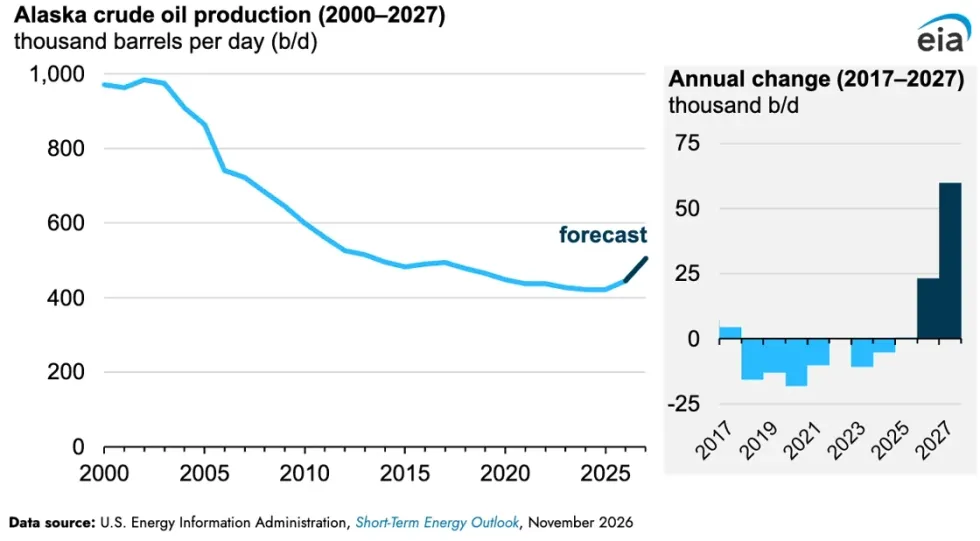 Call it the Balto boom. Chart: EIA
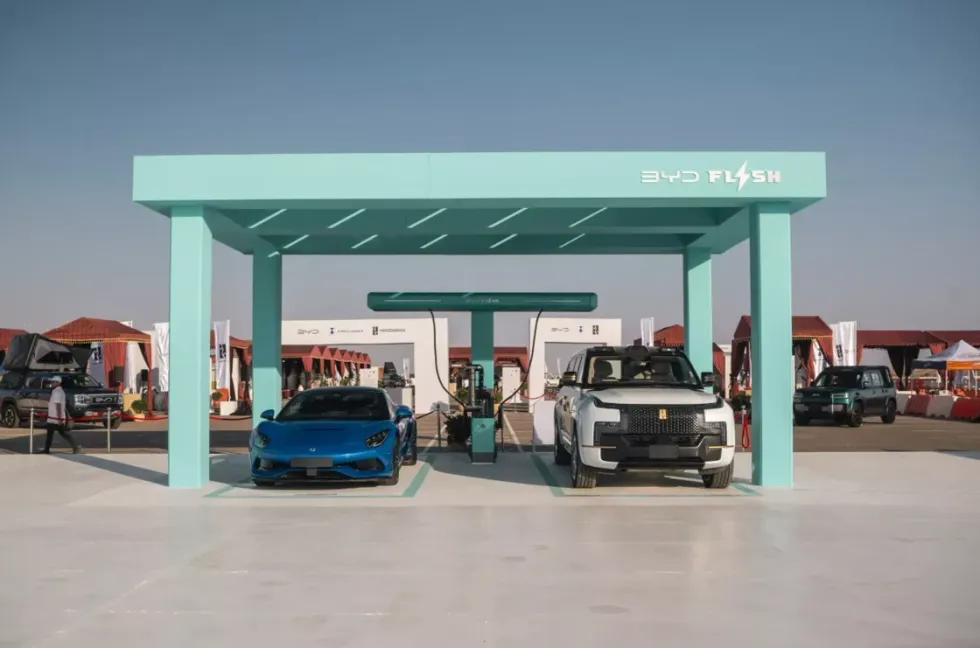 Get pumped.BYD





 MUDA SAGALA / AFP via Getty Images
 MUDA SAGALA / AFP via Getty Images
 Afan Anugerah / AFP via Getty Images