Current conditions: New York City’s temperature is set to rise as high as 80 degrees Fahrenheit this week before plunging as the coldest weather so far this season blows into the Northeast • Temperatures in Denver have been above 80 degrees for the past 11 days straight • Nearly 200,000 households, mostly in Florida, are still without electricity after Hurricane Isaias.
THE TOP FIVE
1. Oil prices spike as attacks on Saudi Arabia overshadow Russian diesel deal
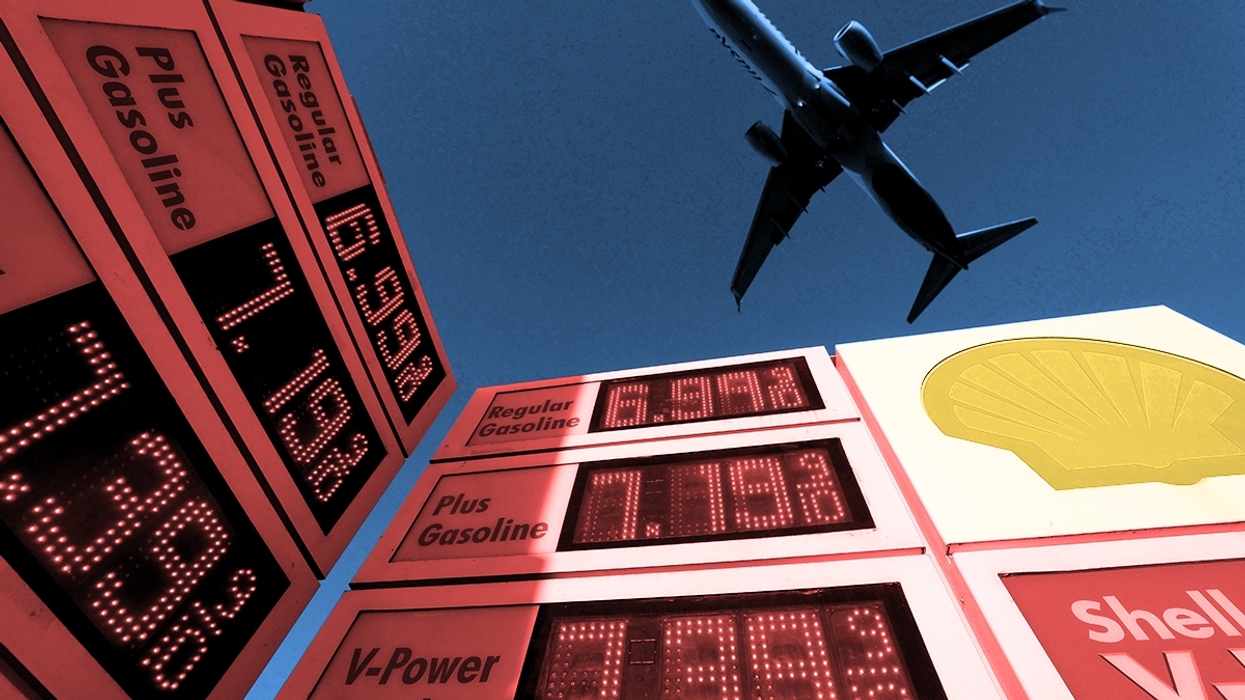
In theory, news of President Donald Trump’s deal with Russia to pump millions of tons of diesel into the global market should have eased oil prices. Instead, all three major crude benchmarks spiked Monday by nearly 1.5%. Only West Texas Intermediate, the U.S. metric that has largely evaded the worst knock-on effects of conflict in the Middle East, remained below $100 per barrel. The hike came as the Houthi attacks on Saudi Arabia over the weekend weighed heavily on investors’ minds, eclipsing whatever impact the diesel deal could have had.
Speaking at an industry summit in Riyadh, from which executives from Western oil majors bowed out at the last minute following missile strikes on the airport in the Saudi capital, the head of the country’s state oil company warned that not even Saudi Arabia had the capacity to protect all the supply routes off its coasts for getting hydrocarbons from the region to the world. “No nation, even one as capable and confident as ours, can safeguard them alone,” Aramco CEO Amin Nasser said, according to Arab News.
2. TotalEnergies buys a bunch of U.S. solar after quitting offshore wind
TotalEnergies took more than $1 billion from the Trump administration to kill off its offshore wind projects. But don’t take that as a sign the French energy behemoth is abandoning American renewables. The company’s joint venture with private equity giant KKR announced a deal to add 700 megawatts of solar to its portfolio of 1.4 gigawatts. The $1.2 billion acquisition includes three utility-scale solar farms in Texas and Ohio that are expected to reach commercial operation in the first quarter of next year.
3. South Korea is angling for up to 10% of Westinghouse
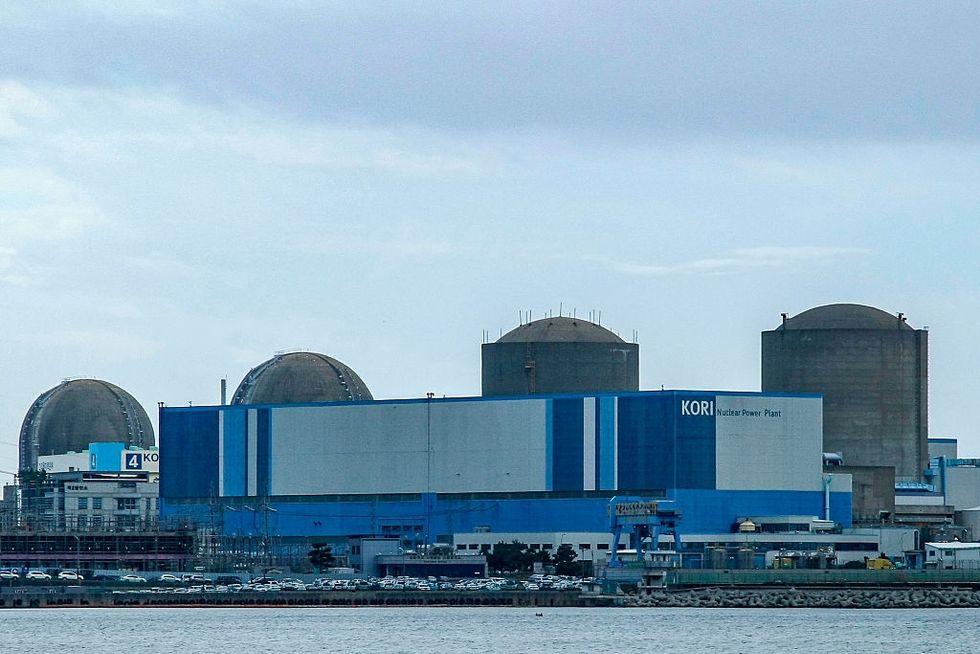
 A South Korean nuclear plant in Busan. Seung-il Ryu/NurPhoto via Getty Images
South Korea is in a bind. The Korea Electric Power Corporation, through its subsidiary Korea Hydro & Nuclear Power, represents the most competent financier and builder of nuclear reactors anywhere in the democratic world, having constructed the United Arab Emirates’ debut atomic power stations relatively on time and on budget compared to U.S., French, and British projects. But the leading Korean reactor, the APR1400, allegedly borrowed from the American nuclear champion Westinghouse’s pressurized water reactor design. A yearslong legal feud ended last year with a settlement that bars the Koreans from bidding on projects in Europe or North America. In a deal this month with the Trump administration to stave off tariffs, Seoul has agreed to help finance and construct six Westinghouse AP1000s and two of its own APR1400s in the U.S., giving the Americans a leg up on nuclear construction and the Koreans a foothold in North America.
In South Korea, where the Westinghouse settlement has widely been considered unfair, the government is signaling other plans to gain more leverage. For starters, KEPCO’s chief executive Kim Dong-cheol said the claim that the settlement requires the company to pay Westinghouse $2 billion per nuclear plant to use its technology was misunderstood. “It is true that $2 billion is the ceiling, but it does not mean we will pay all of it,” he said. But the more eyebrow-raising detail in his interview with the financial newspaper Business Korea is that KEPCO is considering a plan to acquire an equity stake of between 5% and 10% in Westinghouse. Rumors of a potential deal to buy part of Westinghouse have been circulating in the Korean press for weeks now. Anything seems to be on the table these days, but when I have asked multiple sources on the U.S. side about it, all of them shrugged off the possibility to me.
Sign up to receive Heatmap AM in your inbox every morning:
4. Lithium startup EnergyX inks a $2 billion binding offtake deal
When The New York Times ran a glowing profile of the lithium startup EnergyX back in 2021, industry sources at the time mocked the coverage to me as too credulous — a sign of how unsophisticated the popular American press was at writing about critical minerals at the time. The Wall Street Journal glazed the firm’s chief executive, Teague Egan, in its own profile three years later. So it was with light surprise and amusement that I read Reuters reporter Ernest Scheyder’s latest story about the company: EnergyX just signed a $2 billion binding offtake to supply the commodities giant Trafigura with the battery metal from Chile and the U.S. It’s one of the largest deals ever tied to direct lithium extraction, the technology EnergyX is trying to commercialize, which uses less water than standard methods of mining the metal. The 10-year contract comes amid growing demand from the stationary battery storage market as the grid and data centers eat what unsteady sales of electric vehicles has left on the plate.
5. Britain is cutting funding for heat pumps
The British government plans to cut hundreds of millions of dollars from the national program to upgrade boilers in England and Wales, providing £9,000, or nearly $12,000, to finance the switch to heat pumps. The cuts, which the Financial Times reported Monday had drawn a backlash against the ruling Labour Party, are part of a broader bid by Prime Minister Andy Burnham to slash £2 billion in the budget to make way for more military spending. The reductions began in June under former Prime Minister Keir Starmer with a study to identify potential cuts. Starmer singled out the Department of Energy Security and Net Zero, particularly after the agency received a 16% annual increase to fund projects such as the nuclear buildout at Sizewell C, carbon capture infrastructure, and insulation to make homes more energy efficient.
The move is sure to ripple across the climate policy world. Roughly a week ago, Daniel Aldana Cohen, an assistant professor at the University of California at Berkeley, was extolling the benefits of ramping up U.S. production of heat pumps in response to soaring heating prices this winter due to the fossil fuel supply crunch. “Every year that we don’t do a wartime mobilization on heat pumps, we’re ruining people’s lives,” the early advocate of a Green New Deal wrote in a post on X. “Heat pumps will always outperform heating oil, cut costs, add summer AC. And would be fantastic for labor, small businesses, worker co-ops.”
THE KICKER
As quickly as a spark of atmospheric electricity strikes, the Ford F-150 Lightning disappeared, with the final model of the all-electric pickup truck rolling off the assembly line last year. Now, Bloomberg reports, “it has become one of the most coveted cars in America and a glowing ember in the red-hot market for used electric vehicles.” The price of a used Lightning is 50% to 60% of the sticker price, which one expert told the newswire “is really a sweet spot.”



 A South Korean nuclear plant in Busan. Seung-il Ryu/NurPhoto via Getty Images

 Turning over a new leaf on overcapacity? Xu Changliang/VCG via Getty Images