You’re out of free articles.
Log in
To continue reading, log in to your account.
Create a Free Account
To unlock more free articles, please create a free account.
Sign In or Create an Account.
By continuing, you agree to the Terms of Service and acknowledge our Privacy Policy
Welcome to Heatmap
Thank you for registering with Heatmap. Climate change is one of the greatest challenges of our lives, a force reshaping our economy, our politics, and our culture. We hope to be your trusted, friendly, and insightful guide to that transformation. Please enjoy your free articles. You can check your profile here .
subscribe to get Unlimited access
Offer for a Heatmap News Unlimited Access subscription; please note that your subscription will renew automatically unless you cancel prior to renewal. Cancellation takes effect at the end of your current billing period. We will let you know in advance of any price changes. Taxes may apply. Offer terms are subject to change.
Subscribe to get unlimited Access
Hey, you are out of free articles but you are only a few clicks away from full access. Subscribe below and take advantage of our introductory offer.
subscribe to get Unlimited access
Offer for a Heatmap News Unlimited Access subscription; please note that your subscription will renew automatically unless you cancel prior to renewal. Cancellation takes effect at the end of your current billing period. We will let you know in advance of any price changes. Taxes may apply. Offer terms are subject to change.
Create Your Account
Please Enter Your Password
Forgot your password?
Please enter the email address you use for your account so we can send you a link to reset your password:
On deepsea mining Saipan, geothermal oil deal, and Manila fears

Current conditions: Cyclone Nardelle made landfall three times in Australia in the past week and now it’s strengthening and preparing to return once again • The historic heat wave in the Southwest is expected to last through Friday, driving temperatures up into the triple digits across the region • Temperatures in Timbuktu, Mali, are nearing 110 degrees Fahrenheit today.
Just days after Orsted’s Revolution Wind project off the coast of Rhode Island began pumping electricity onto the New England grid, Dominion Energy’s Coastal Virginia Offshore Wind farm started sending surges back to Virginia’s wires. The two projects are at very different stages. Dominion has so far switched on just one commercial turbine, while Orsted’s facility is nearly complete. Once finished, the 2.6-gigawatt project off Virginia’s coast will be the biggest offshore wind farm in the U.S. “This project is not just about energy — it’s about national security,” Representative Jen Kiggans, a Republican from the Virginia Beach area, told the Virginia Mercury. “Reliable, domestically produced power strengthens the resilience of critical military infrastructure, including our local bases, ensuring our forces can operate without disruption.”
The milestone marks a setback for President Donald Trump, whose efforts to yank permits from offshore wind projects have repeatedly failed in court. The White House did, however, notch a victory this week when the French energy giant TotalEnergies agreed to abandon two offshore wind projects in exchange for $1 billion and strong federal backing for new gas projects.
Applied Atomics joined the nuclear race this year promising to be “a developer and operator of full-stack nuclear power plants,” with the capacity to scale the size of its facilities from 100 megawatts to 1,000 megawatts to meet the needs of industrial customers. “Everybody’s excited about data centers, and we are too. We are fortunate that we are able to go after a few different industry verticals. So we’re focused on decarbonization of hard-to-decarbonize industries,” Benjamin Kellie, Applied Atomics’ founder and chief executive, told Heatmap’s Katie Brigham exclusively for this newsletter. “That includes data centers, but it also includes things like concrete and steel. It includes chemical plants and these established heavy industry players are a big focus for us.”
Kellie said the company already has more than 8 gigawatts of potential power purchase agreements and aims to produce its first electricity in 2030. Applied Atomics is “looking at four years for first power,” which it plans to get down to 24 months per module before eventually reducing the construction time to 18 months. “We are targeting $4,000 per installed kilowatt, which is a little bit north of natural gas but much lower than traditional nuclear. And that’s for first-of-a-kind,” he said. “Then nth-of-a-kind we see getting down to around the $3,000 per installed kilowatt range.” Counting the latest investment round, the company has raised a total of roughly $12 million in its first 12 months.
Sign up to receive Heatmap AM in your inbox every morning:
The Bureau of Ocean Energy Management has begun widening the scope of potential seafloor mineral leasing that could take place in the waters off the Northern Mariana Islands, one of America’s five populated non-state territories. Last week, the agency completed the “area identification” step for holding a lease sale in the outer continental shelf off the Pacific archipelago’s shores in what the trade publication gCaptain called “an early but consequential milestone that determines which tracts will move forward for environmental analysis under the National Environmental Policy Act.” While BOEM can’t authorize mining or commit the federal government to a lease sale, the latest step “effectively locks in the geographic footprint for further review.” The National Oceanic and Atmospheric Administration, meanwhile, finalized a rule to fast-track permits for deepsea mining.
The Northern Mariana Islands, which are located near Guam, isn’t the only Pacific territory the Trump administration is targeting for mineral development. In January, NOAA announced plans to start surveying the waters around American Samoa, a South Pacific island where residents — who, interestingly, are the only territorial denizens who hold status as American nationals but not American citizens — have been looking for new industries to diversity away from the one tuna cannery that sustains much of the island’s economy.
In yet another sign of the synergies between next-generation geothermal and the oil and gas industries, the developer XGS Energy just inked a major deal with the drilling services giant Baker Hughes. On Wednesday morning, the two Houston-based companies announced a “strategic collaboration” that included an initial order for Baker Hughes’ engineering services to advance XGS’ planned 150-megawatt geothermal project in New Mexico. Once developed, the project is poised to supply electricity to the Public Service Company of New Mexico to support Meta’s data center operations in the state. “By aligning our technology with Baker Hughes’ expertise across subsurface, surface, and power solutions — and one of the most capable project delivery teams in the world — we’re demonstrating that XGS has the execution muscle and industrial collaborations required to deliver at scale for our customers,” Ghazal Izadi, XGS’s chief operating officer, said in a statement. XGS — which uses a closed-loop technology known as “advanced” geothermal, as distinct from the “enhanced” geothermal pioneered by fellow next-generation companies such as Fervo Energy — aced its field tests last year, as I reported for Heatmap. The company, as I reported last year, is also a favorite of the atomic energy industry, with the venture arm of the nuclear utility giant Constellation serving as a lead investor.
Over at the CERAWeek conference, meanwhile, Form Energy announced a deal with the data center giant Crusoe to deliver 12 gigawatt-hours of multi-day energy storage to support more artificial intelligence factories starting in 2027. The agreement “ensures access to Form Energy's 100-hour iron-air battery technology as Crusoe scales its AI infrastructure.”

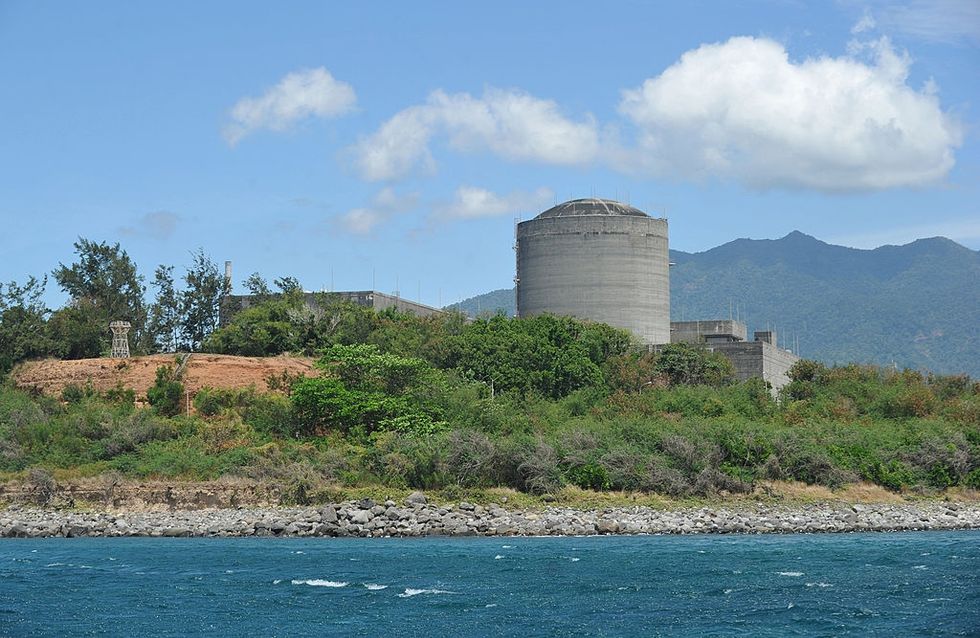
With a fast-growing population and economy and few domestic energy resources, the Philippines already paid the third-highest electricity prices in all of Asia. Now the Southeast Asian nation has declared a national energy emergency to deal with the energy shock from the Iran war. The procedural step grants the government of President Ferdinand “Bongbong” Marcos, Jr. new authorities to plan for issues such as rationing and prevent people from hoarding fuel. It may also spur on Manila’s plans to finally bring a nuclear power plant online in the country decades after a nearly complete facility was all but abandoned. As I told you back in January, the Trump administration provided funding to the Philippines to help it assess U.S.-made small modular reactors as a potential new grid resource.
It’s hardly the most urgent tragedy of the conflict, but here’s a statistic that illustrates the long-term destructiveness of the U.S.-Israeli war with Iran. In just the first two weeks of the conflict, the warring parties released almost 5.1 million metric tons of carbon dioxide and other greenhouse gases “by firing carbon-intensive weapons, powering fighter jets and ships, and bombing infrastructure such as oil storage facilities and civilian buildings,” researchers told Live Science. That’s already higher than all the carbon emissions Iceland produces in a year. If the emissions continue at the same rate for a year, the volume would be equivalent to the annual emissions of the 84 lowest emitting countries in the world combined.
Log in
To continue reading, log in to your account.
Create a Free Account
To unlock more free articles, please create a free account.
Current conditions: Severe thunderstorms are drenching the American South from New Orleans to Virginia Beach • Mount Mayon has forced thousands to evacuate within the Philippines’ Bicol peninsula • Temperatures in Denver are poised to plunge from about 75 degrees Fahrenheit yesterday to 39 degrees today with a chance of snow.

The North American Electric Reliability Corporation, the quasi-governmental watchdog that monitors the health of the power grids that span the United States and Canada, has issued a rare Level 3 warning. The alert, announced Monday, marks only the third time NERC has put out a notice with that degree of severity in its 58-year history. The warning comes on the heels of reports that data centers abruptly went offline in Virginia and Texas, prompting concerns of potential blackouts. “Computational loads, such as data centers, could increase exponentially in the next four years,” NERC said in a draft of the alert, adding that “significant risks” to the power network “need to be addressed through immediate industry action.” Lee Shaver, a senior energy analyst at the Union of Concerned Scientists, told E&E News that NERC’s action was a “big deal.”
The California Energy Commission has issued an administrative investigative subpoena to Golden State Wind seeking documents and information related to the company’s recent deal with the U.S. Department of the Interior to take a payout in exchange for abandoning its offshore wind lease. Last week, the developer announced a deal to scrap its lease in the Morro Bay Wind Energy off the central California coast for $120 million as part of the Trump administration’s efforts to kill off an industry he failed to destroy through regulatory fiat alone. The facility was supposed to be California’s first offshore wind farm, and planned to use floating turbines to account for the steep continental shelf dropoff on the nation’s Pacific Coast. Now the administration’s latest “shady deal” is drawing scrutiny from state regulators. “The Trump Administration is recklessly spending billions of taxpayer dollars on backroom deals that would turn back the clock on innovation,” David Hochschild, the chairman of the California Energy Commission, said in a statement. “Californians deserve immediate answers about the nature of this payout. Taxpayer dollars should be used to build a sustainable energy future, not to pay to make projects disappear.”
Meanwhile, California’s grid operator has switched on a new regional electricity market as part of what E&E News called “a major milestone in the yearslong push to expand energy trading” across the American West. The California Independent System Operator launched its new Extended Day-Ahead Market early Friday morning, allowing California’s investor-owned utilities and the Northwestern giant PacifiCorp, whose coverage area spans two million customers across six states, to trade electricity on the regional market for the first time. “The West is rich with a diverse mix of renewable resources, and this market will capture their potential,” Michael Colvin, director of the California energy program at the Environmental Defense Fund, said in a statement. “Through better sharing of cheap, clean energy beyond state borders, the market will cut household bills, reduce reliance on expensive, polluting fossil plants and build a grid that's bigger than any single extreme weather event.”
For nearly as long as there have been nuclear power plants, there have been thorium bulls insisting the metal is a better fuel than uranium. In most places, the thorium dream faded long ago as ample new sources of uranium were discovered. But China revived the thorium race in 2023, when its experimental molten salt reactor powered by the metal split atoms for the first time. Now the only serious contender in the entire West looking to commercialize thorium is a Chicago-based company taking an unusual approach. Rather than creating a whole new kind of reactor to run on thorium, Clean Core Thorium Energy has designed fuel assemblies that blend thorium with a special kind of uranium fuel and work in existing reactors without any modifications. Clean Core’s technology only works, at least for now, in pressurized heavy water reactors, which make up the bulk of the fleets in Canada and India, though the U.S. has none in operation. But the key verb there is that: It works. On Tuesday, I can exclusively report for this newsletter, Clean Core plans to announce that its patented fuel completed a high burnup irradiation test at Idaho National Laboratory’s Advanced Test Reactor. The fuel burnup represented “more than eight times the typical” output from the traditional uranium fuel used in pressurized heavy water reactors. The latest test “provides meaningful performance data” and demonstrates that Clean Core’s fuel “achieve burnup levels comparable to those seen in PWR fuels while offering improved fuel utilization, enhanced safety characteristics, inherent proliferation resistance, and meaningful reductions in long-lived nuclear spent fuel radioisotopes,” Mehul Shah, Clean Core’s chief executive, told me in a statement. “Our objective has been to introduce thorium into the nuclear fuel cycle in a practical way using existing reactors, and this milestone represents a significant step toward that goal.”
It’s the latest good news for Clean Core. Last month, as I reported for Heatmap, the company inked a deal with the Canadian National Laboratories to manufacture its first commercial fuel assemblies.
Sign up to receive Heatmap AM in your inbox every morning:
In July 2017, South Carolina abandoned its $9 billion expansion of the V.C. Summer Nuclear Station, leaving ratepayers holding the bag and utility executives facing prison time for lying about the project’s viability. Now the pair of Westinghouse AP1000s planned at the site are making a comeback. On Monday, Westinghouse-owner Brookfield Asset Management formed a new joint venture with The Nuclear Company, a reactor construction manager, to work together on building more Westinghouse reactors such as the AP1000 or the smaller version, the AP300. V.C. Summer is the likely first project. “Our team was built on the field of Vogtle and on some of the most complex energy projects in the world,” Joe Klecha, The Nuclear Company’s chief nuclear officer, said in a statement. “We know what it takes to deliver nuclear. What’s been missing is a model that brings together the people, the capabilities, and the capital to do it at speed and scale. That’s what this partnership creates.” The announcement comes as the Trump administration meets with utility executives to discuss funding deals to build the 10 new large-scale reactors President Donald Trump ordered the Department of Energy to facilitate construction on by 2029, as Heatmap’s Robinson Meyer reported. Completing 10 AP1000s would give the U.S. economy a trillion-dollar boost, per a PricewaterhouseCoopers report Westinghouse released in March.
That’s not the only nuclear developer making deals. On Tuesday morning, Blue Energy, another startup focused on serving as a project developer for existing reactor designs, announced a partnership with GE Vernova to work on building the world’s first gas-plus-nuclear plant in Texas. The 2.5-gigawatt project would include GE Vernova’s gas turbines and its BWRX-300 small modular reactors through its joint venture with Hitachi. “Innovative projects like this one will help advance the future of nuclear power and meet the surging demand for electricity,” Scott Strazik, GE Vernova’s chief executive, said in a statement.
Steel, if you’re unfamiliar, is made in two big steps. Traditionally, iron ore is melted down in a coal-fired blast furnace, then forged into steel in a basic oxygen furnace. New plants typically run on something called direct reduced iron, which uses natural gas to turn the ore into iron, then made into steel in an electric arc furnace. The latter process is far cleaner. It can even be green, if the natural gas is swapped for green hydrogen and the electric arc furnace is powered by renewables or nuclear reactors. Nearly 40% of all global clean steel investments to date are hydrogen-powered DRI facilities. That’s according to new data from the Rhodium Group, which released its latest estimates Tuesday. Another 57% of investments are gas-powered DRI plants. While Europe has so far dominated investment into hydrogen DRI, “the region will likely see relatively little demand growth for iron over the coming decades,” the report found. In the fastest growing regions, such as India, Africa, and South America, “most new demand is being met with traditional, fossil-based ironmaking technologies, which risks locking in emissions for decades.” The consultancy’s modeling shows that clean steel supply capacity is on track to exceed demand by between 1.8 and 4.3 times by 2030, “risking a collapse of the nascent industry, where existing projects cannot find buyers and scale production to drive down costs.”
It may be time for a new New Orleans. The city has reached a “point of no return” that will see it surrounded by ocean within decades as climate change worsens. That’s the conclusion of a new paper in the journal Nature Sustainability. “In paleo-climate terms, New Orleans is gone; the question is how long it has,” Jesse Keenan, an expert in climate adaptation at Tulane University and one of the paper’s five co-authors, told The Guardian.
A ubiquitous byproduct of the oil and gas industry just got a green competitor.
The chemicals industry, which accounts for about 5% of global emissions, can seem like a black box. Fossil fuel-based feedstocks go in and out pop plastic toys or agricultural fertilizer or laundry detergent. But most of us don’t understand what happens in between. That’s the part of the supply chain where Trillium Renewable Chemicals is focused, as it scales production of bio-based acrylonitrile, a key chemical intermediate used to make products ranging from carbon fiber aircraft components to plastic Lego bricks and rubber medical gloves.
Though you might not have heard of this mouthful of a chemical, acrylonitrile’s production is a major contributor to the embedded emissions of all the products that it goes into, as it’s typically derived from propylene, a byproduct of the oil and gas industry. “When you look at the lifecycle analysis of these products, the thing that jumps off the page is acrylonitrile dominates that lifecycle,” Trillium’s CEO, Corey Tyree, told me. “It is the number one challenge.”
The startup, which spun out of a Department of Energy-funded nonprofit called the Southern Research Institute, just announced a $13 million Series B round led by HS Hyosung Advanced Materials, alongside the completion of the world’s first demonstration plant for bio-based acrylonitrile. Tyree was determined, he told me, to ensure that the work did not remain just another “research project that goes in the research closet.”
He credits much of Trillium’s progress so far to an intense focus on commercialization and the risk-tolerance inherent to a startup. After all, the underlying concept itself isn’t new — a number of companies have experimented with making acrylonitrile from bio-based glycerol, Tryee told me. “But a lot of these tries happen inside of a large company, which is not as tolerant for risk,” he explained. With Trillium’s investors lined up behind the effort, however, “It doesn’t feel to any one person that if we’re wrong, our whole career is going to go up in flames.”
But there have been technical innovations too. Southern Research had to develop a proprietary catalyst and two-step thermochemical process that converts glycerol into an intermediate molecule and then acrylonitrile. Trillium now has an exclusive license to this process. Once produced, the low-carbon acrylonitrile functions as a simple drop-in replacement for the fossil-based version of the molecule; there's nothing at all different about the downstream supply chain.
Now, the startup is focused on commissioning its newly completed demonstration plant in Texas sometime this quarter, followed by initial shipments soon after. This new capital will also help Trillium conduct the engineering design for its first commercial facility, the potential location of which Tyree would not disclose.
Though glycerol is a relatively cost-effective feedstock, Trillium’s product will still command somewhat of a green-premium, though exactly how much this impacts the final cost of the end product depends on a variety of downstream factors. At the least, Tryee said his company ought to undercut existing green acrylonitrile on the market today, which is produced from low-carbon propylene.
Overall, It’s a promising sign that despite a political environment in which talking about climate is out and affordability is in, a company like Trillium — which depends on customers paying a bit more for a cleaner product — can still raise significant new funding. Political winds aside, Tyree said he’s seen sustained customer interest in cleaning up the chemicals supply chain; there just wasn’t a viable solution for this particular piece of it before now.
“It’s really just been people waiting on somebody to figure out a way to make the product,” he said, referring to low-carbon acrylonitrile“ Now that Trillium has done so, the next question is, who will its initial buyers be, and exactly how much more will they prove willing to pay?
It is a cliché that everyone in the insurance industry believes in climate change. But the same can certainly be said of those in the mountain-guiding business.
May marks the beginning of the recreational mountaineering season on Washington’s Mount Rainier, the most popular technical climb in the country. But for many of the guide companies that take clients up the mountain, the last day of the 2026 commercial climbing season remains an ominous unknown. “We used to run a season through the end of September typically,” Jonathon Spitzer, the director of operations at Alpine Ascents, which has offered guided climbs of Rainier since 2006, told me. “For four of the last five years, we’ve ended around Labor Day or so” due to poor snow conditions on the mountain — meaning a loss of about 20% of the historic season.
In the spring and summer, when the vast majority of Rainier’s 10,000 or so annual climbers attempt to reach the summit, the weather begins to mellow, avalanche danger lessens, and crevasses remain mostly covered. But ideally the mountain should still be frozen hard. A firm snowpack provides crampons and ice axes with the best purchase, allowing climbers to stick to steep slopes without sliding, while reducing the danger of ice and rockslides. Accidents and falls increase when climbing on loose dirt, slush, and rock, as well as when navigating exposed blue glacier ice, which is normally covered in snow and otherwise extremely slick.
Yet high-mountain areas, known as the cryosphere, are warming up to twice as fast as the global average. Rainier has lost half its ice since 1896, with most of that loss occurring in recent years; three of its 29 glaciers have disappeared since 2021. Researchers last fall went as far as to assert that the 14,410-foot mountain is now 10 feet shorter than it was in 1998 due to a rocky outcropping replacing its former highest point, a mound of ice that has since melted away.
For the guides working on Rainier, the weather in April and May sets the stage for the rest of the season, when spring storms ideally dump the snow needed for the summer climbs. “It doesn’t really matter what happens in December, January, February,” Spitzer told me, since winter snow is dry and blows off the summit rather than accumulates. Alpine Ascents had guides on the summit of Rainier last week who reported that the upper mountain has a lot of snow, but Spitzer cautioned that the character of the season ahead is still uncertain. “It’s been really dry in April,” he noted.
And it’s not looking good for May, either. Temperatures in the Puget Sound region are 20 to 25 degrees above average to start the month, a kind of final exclamation point on the wickedly warm winter and ongoing snow drought across the West. The Cascade mountain basins have only around 29% of their historic median snow-water equivalent, the metric used to measure snowpack and provide insight into runoff, water availability, and the fire season ahead. Tom Vogl, the CEO of the Mountaineers, a Seattle-based alpine club that offers local climbing courses, told me that “100%, with almost no uncertainty, we’re going to have a shorter climbing season on Washington peaks this year.”
In Oregon and northern California, where Lassen Peak sits at the southern end of the Cascades’ volcanic backbone, the snow-water equivalent median is as low as 1% in places. “Mount Hood is a mess right now,” Graham Zimmerman, a professional alpinist and the athlete alliance manager at Protect Our Winters, told me.
Zimmerman was on Oregon’s highest peak in February to climb Arachnophobia, a challenging route, and he told me that on “significant sections of the south side of the mountain, up high on the final summit, we were walking on dirt.” Though Zimmerman isn’t a guide himself, many of his friends are, and for “the core season up there in June, it’s going to be pretty intense,” he predicted. “There’s not going to be a lot of ice, it’s going to be pretty dirty, and when those mountains start to thaw out, they get pretty dang crumbly, and that’s going to create a risk for those going up there.”
Think of a mountain like a scoop of Rocky Road in an ice cream cone. Fresh out of the freezer, the scoop holds its shape because everything is frozen in place — but as it starts to melt, marshmallows and nuts begin to slough down the sides.
Except on a mountain, it’s not marshmallows and nuts but avalanches and rockfall. In addition to being a life-or-death hazard in the moment — and top-of-mind for the risk-averse concessioners guiding otherwise oblivious novice clients — the debris on a warming mountain can close routes to the peak, crowding the ones that remain. “When you have a bunch of people on a route, it doesn’t make things safer,” Zimmerman said. “It makes things more dangerous because people knock stuff onto each other, and because it slows things down.”
Even as the season shortens due to inadequate snowpack, more and more people are trying to climb on an ever-smaller number of viable days. That puts additional pressure on the guides, whose clients take time off from work and pay thousands of dollars for the chance to summit within a predetermined window, even as conditions overall become more dangerous.
This strain is particularly visible in the Himalayas, where photos of the conga line headed to the top of Everest go viral every few years. This season, icefall from a glacier closed the route to the world’s highest point for more than a week, with more icefall anticipated, adding to concerns about queues.
Iconic climbs in the Alps are also a mess due to warming weather and snow shortages. Spitzer, of Alpine Ascents, used to guide on Mont Blanc from June through September, but these days, many guides in the Alps stop around July 15 and resume again in mid- to late-August, when the mountains start to firm up again, because the height of summer in Europe is so hot. “The mountains are dynamic right now,” Spitzer said, and “it’s not just here in Washington. We’re seeing it globally.”
This raises, perhaps, the question of “so what?” Mountaineering is a niche, expensive, and often elite pastime. But a low summer snowpack has knock-on effects: “We expect to see pretty significant impacts on [gateway] communities, not just from the perspective of water availability but also how that relates to guiding businesses, water sports, water recreation, and the outdoor industry, which is really big in the West,” Erin Sprague, the CEO of Protect Our Winters, told me. Rafting guides, for example, could also see abbreviated seasons, hurting their bottom line. Outdoor retailers like REI could see sales slump if it’s a particularly bad fire year, keeping people off the trails.
That’s not to mention that 75% of the West gets its water from snowpack, meaning what happens in the mountains will impact even those for whom sweat, bugs, chance bear encounters, and walking uphill for hours sounds like personal torment.
“It’s not just about mountaineers and climbers who experience the glaciers in a more direct way for recreational purposes — it literally touches every person who lives in the Northwest,” Vogl, the Mountaineers CEO, told me. “This should matter.”
It does to me. In 2021, a few weeks after the Pacific Northwest heat dome, I summited Mount Rainier with my dad on the 50th anniversary of his first climb of the mountain when he was 14. In 1971, August 12 had been the peak of the Cascade climbing season; in 2021, we climbed in a haze of wildfire smoke and almost didn’t make it to the summit because of the warm conditions on the mountain. (Vogl, who was leading a trip on the other side of Rainier around the same time, said exposed blue ice and running water were directly responsible for an accident in his group that resulted in a broken femur and required a helicopter evacuation.) Stripped down to my base layers during the descent from the peak, I watched a boulder the size of a minivan come off a rock across the glacier from where we were climbing. In other spots, we had to balance across ladders laid over crevasses so deep you couldn’t see their bottom.
Last fall, I gave birth to my daughter, and I’ve been thinking about what the mountain will look like in August 2071, on the 100th anniversary of her grandfather’s first summit and the 50th of mine. When I asked Vogl what he thought, I expected something optimistic from the CEO of an organization focused on getting people outdoors. But he sounded crestfallen. “Some of the climbs that I’ve done with my kids, I doubt that they’ll be able to do them with their kids because the conditions are going to change so dramatically,” he said.
I also asked Zimmerman, the accomplished alpinist, what he thought about the future of his sport. He meditated on the question throughout our conversation, only to circle back to it at the end. “I don’t think that people are going to stop climbing,” he finally said. “But I think that people are going to need to come to terms with the fact that we’re living in a changing climate.”
“We’re going to have to continue to adapt, to be smart, to really focus on situational awareness while we’re out there,” he went on. The sense of adventure and risk inherent to climbing won’t just be about first ascents and “going to places where people haven’t necessarily been before,” he predicted — because “even the places we have been are changing.”