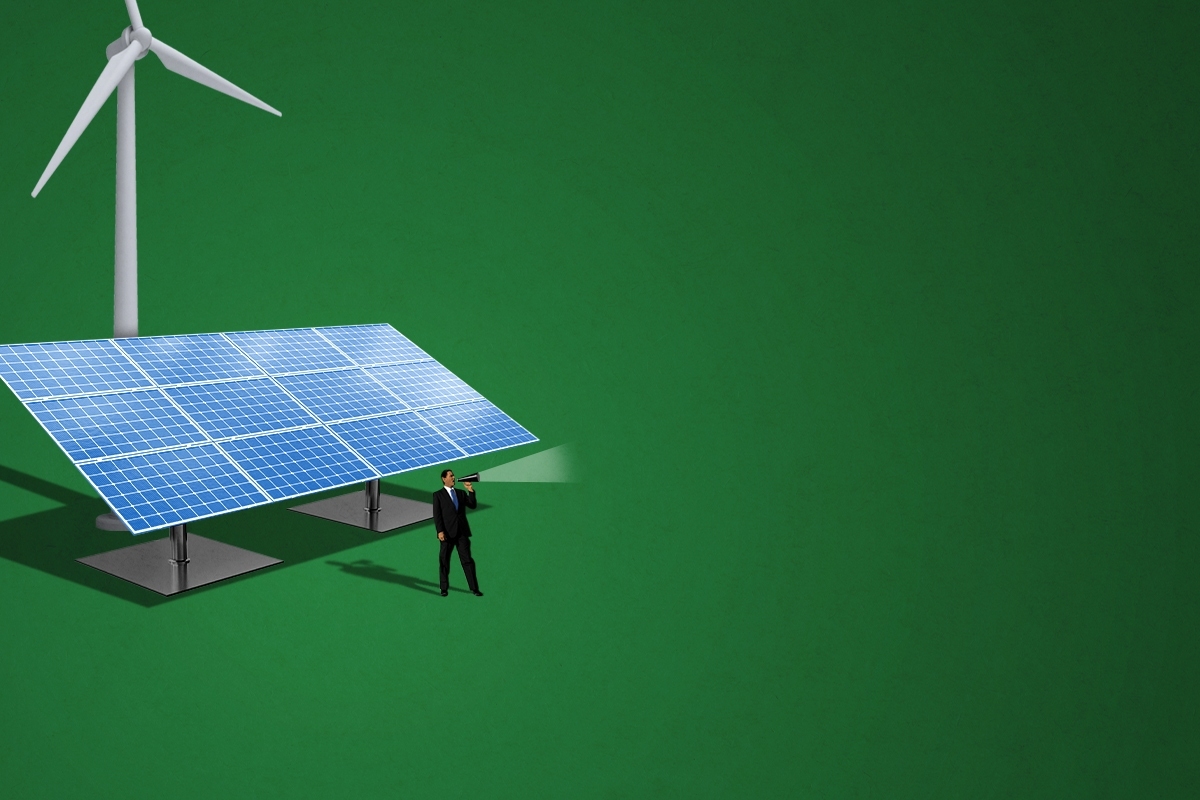
It’s the million-dollar question of clean energy advocacy: How do you persuade climate change skeptics to love renewables?
For years, the clean energy industry has treated the fact that renewables are the cheapest form of new electricity as its messaging trump card. This argument has the advantage of being true. Yes, there is nuance, room for debate, and always the possibility that things could change dramatically in the future. But this summer, the investment bank Lazard reconfirmed what the Lawrence Berkeley National Laboratory and the International Renewable Energy Agency — and plenty of other independent analyses — had found before it: that wind and solar energy are, on the whole, cheaper than fossil fuels.
And yet according to new polling and focus group conversations conducted by Heatmap News and Embold Research, the affordability argument barely moves the needle for the segment of the American public that most needs convincing. More than two-thirds (78%) of voters who are “doubtful” or “dismissive” of climate change — a population segment described by the Yale Program on Climate Communications and that we have labeled as “skeptics” — told us they believe that advocates for wind and solar energy exaggerate how cheap the sources have become (a mere 17% disagreed).
Even for those in the middle who are “persuadable” on climate change (as opposed to the “persuadeds,” who describe themselves as “alarmed” about it), an affordability argument doesn’t land cleanly — 62% believed the claims are exaggerated compared to 24%. In fact, a majority of all voters — 55% — told us that wind and solar are only cost-competitive with oil and gas because of subsidies, even as 75% acknowledge that oil and gas companies get government help lowering costs, too.
Inflation Reduction Act postmortems have a tendency to hand-wring about the Biden administration and its proxies’ lack of success pitching the affordability angle to the American public. Our polling backed up some of this. The pervasive conviction seems to be that the economic upsides of renewable energy aren’t real: 57% of all voters (and 78% of the subset of climate change skeptics) said clean energy advocates exaggerate how cheap wind and solar have become.
But as clean energy advocates look ahead to what to try the next time, our polling offers a cautionary note: The messenger, not just the message, needs a tweak. Independent scientists and researchers were the only group trusted by a majority of voters (63%), and even then, skeptics remained difficult to break through with, as less than a third putting their trust in any messenger at all.
If there’s a bright spot in our polling, it’s that attacks on clean energy have also apparently failed to gain traction. When we asked voters in a separate poll what they think is driving their bills higher, clean energy was among the least identified factors. Just 31% of voters blamed the renewable energy industry, compared with 58% who picked out new data center construction, 55% for the oil and gas industry, 52% for the aging electrical grid, and 48% for rising electricity demand. Our polling appears to describe, then, an electorate that doesn’t blame clean energy for raising electricity bills, but also doesn’t buy the messaging that it could help bring them down.
Breaking through with skeptics and persuadables is obviously the key for turning public opinion in favor of clean energy. In pursuit of that goal, Embold conducted interviews with voters to better understand where the potential openings might be for clean energy messaging to break through — and to identify the kind of language that might hamper that goal. But even after synthesizing the findings and crafting a political message designed to appeal to skeptics’ concerns — one that highlighted the falling cost of renewable electricity alongside arguments about energy security and job creation — a mere 7% of skeptics found it “extremely believable.” “Without my tax dollars, [renewables are] too expensive,” one Trump voter told us. “It will all be in a landfill in 20 years!” (Note that “skeptics” isn’t a political designation, although 89% of them told us they voted for President Trump in the last election.)
Heatmap’s polling offered a more pessimistic view of the electorate compared to comparable polling by other groups, which have found that messages about bringing down electricity bills via increasing clean energy resonate across the broad political spectrum. “We obviously do a fair amount of phone polling, and we’ve been surprised how positive people have been on clean energy and how much they see it as a central part of the solution to the energy affordability crisis that everybody is feeling,” Jesse Lee, a senior advisor at the advocacy and communications organization Climate Power, told me. (Climate Power’s poll notably looks at the whole electorate — skeptics, persuadables, and persuadeds alike — rather than segmenting their findings for more specific messaging purposes.) “But,” he agreed, “certainly there are holdouts.”
Just 20% of the skeptics Embold surveyed, for instance, told us that seeing a comparison of what families saved on their electricity bills after installing rooftop solar would improve their opinion of the technology’s affordability — and 54% said nothing could convince them that solar was affordable. A full 75% of skeptics also agreed with the statement that clean energy technologies such as rooftop solar, electric heat pumps, and electric vehicles have a high enough upfront cost that the savings over time wouldn’t be “worth it.” When asked about utility-scale generation, skeptics viewed nuclear, coal, and natural gas as the least expensive options, with wind being the most expensive, followed by solar.
I asked Lee at Climate Power if he thinks it’s worth trying to reach these entrenched climate skeptics, who make up 22% of the electorate according to our polling. “To the extent that there are limited resources, that’s probably not where you spend all your time,” he said. “You shoot for people that are at least a little bit open to it — but who might be the neighbors of [the skeptics],” he said.
“If that neighbor gets solar panels on their roof, and suddenly they’re walking around the neighborhood telling people their electricity bill was $0 last month, that’s going to have a lot more effect on a person who’s entrenched than hearing a political message from a political group,” Lee went on.
Among people who said they don’t have or can’t afford solar, just 28% told us that “seeing data showing how much money families save on their electricity bills” with solar would help convince them on its affordability. That beat out tax credits (24%), lower upfront costs (23%), financing options (19%) — and yes, “hearing about a neighbor or friend who saved money after getting solar,” which only 12% of people said might change their minds. And though only 20% of skeptics said being shown bill data would change their opinion, bill data was also the only messaging approach that ranked at or near the top of all groups alike.
Unsurprisingly, the “persuadables” group turned out to be more responsive on the question of whether clean energy is affordable. More than a quarter (27%) were receptive to bill savings data, and 60% said they trusted scientists as messengers. But crafting that message is still an uphill battle with the demographic: When Embold tailored a statement intended to move the group, fewer than three in 10 actually found it convincing.
Winning on messaging about clean energy affordability, then, is far more complicated than simply laying out facts and comparisons of renewables in a speech or advertisement. Being asked the question in a poll is not the same as a real-world test case, of course, but, but the wrong messenger risks alienating the people who most need to be convinced, our research shows. Proof needs to be local and tailored — perhaps an impossible ask of a national or even state-level general campaign.
Cost, as a message, is still a winner, in other words. But the window for communicating on it is far narrower than many advocates likely realize. As one 2024 third-party voter told us after reading Embold’s three tailored messages on clean energy, “I don’t really like any of them. They all seem to just be telling me the ‘truth,’ but I don’t know the truth without evidence.”
This is the first in a series of Heatmap reports on how U.S. voters view climate, clean energy, and sustainability issues. If you'd like to receive our latest updates, downloadable reports, and invitations for special briefings, please fill out this form.






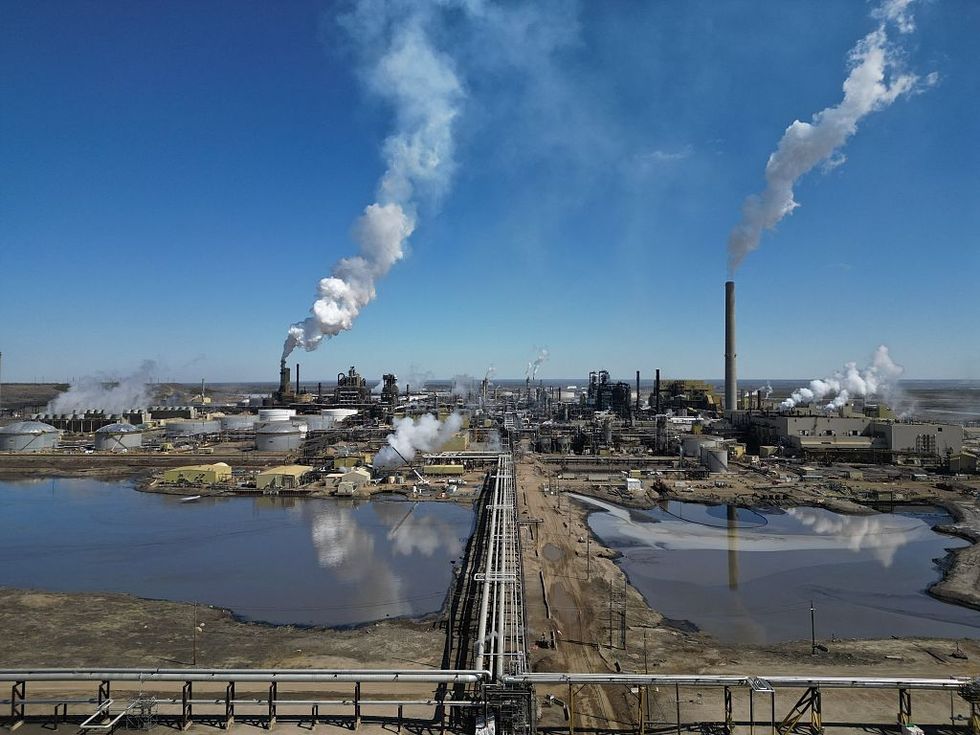 The Syncrude refinery at Mildred Lake in Alberta. Daphné LEMELIN / AFP via Getty Images