Key House Democrats batted back against waiting until the next Congress to do a major permitting reform bill.
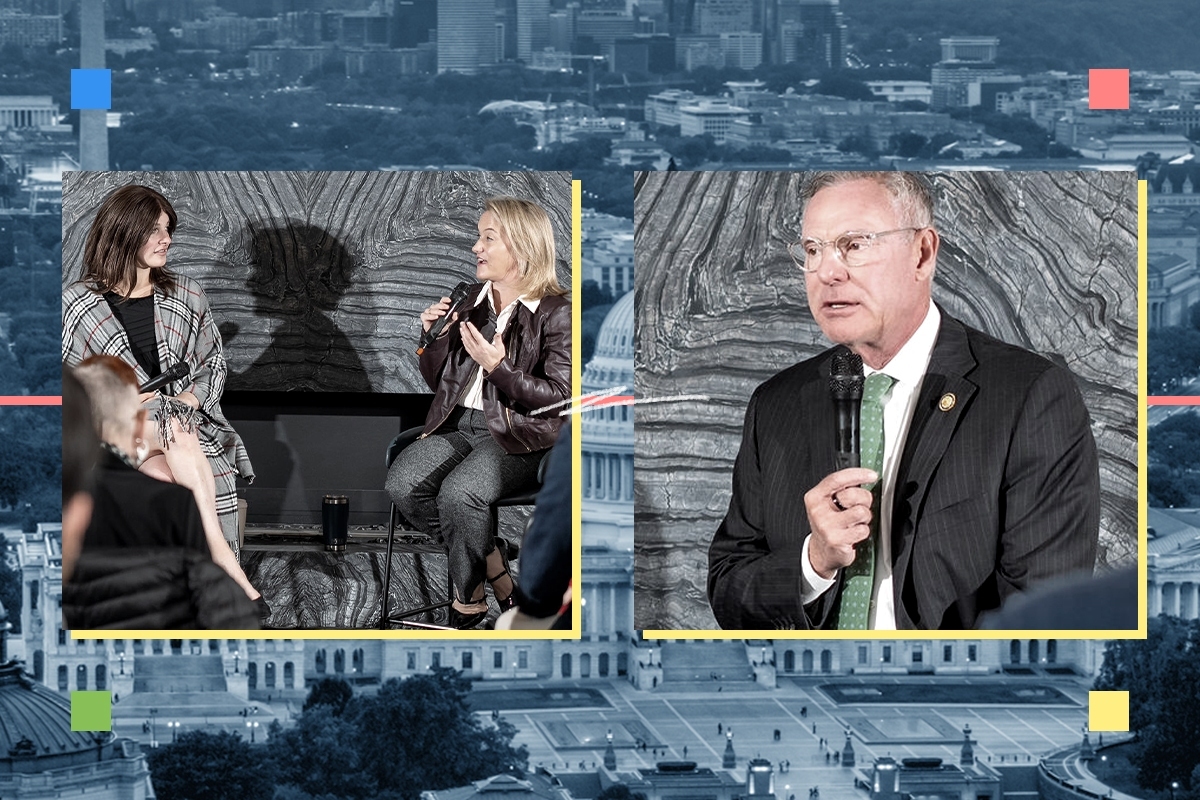
Speaking at a Heatmap event in downtown D.C. on Tuesday morning, multiple House Democrats — Representatives Nikki Budzinski of Illinois and George Whitesides and Scott Peters, both of California — all threw cold water on the idea that Democrats should wait until next year, when they will have full control over both houses of Congress, to advance a permitting bill like the Bipartisan American Affordability and Jobs Act, a.k.a. BAAJA.
“I disagree with that,” Budzinski, who is also vice-chair for policy for the New Democratic Coalition, a large bloc of Democrats, told me. Under the incoming Democratic majority, she said, it may be more challenging to convince Republicans to jump the fence to get to the 60 votes needed in the Senate.
“On these big issues, the question is, do we want to legislate for legislation to become law? Or legislate to talk about issues?” she asked. “I’m done after the last two years of doing messaging bills on the floor. I think this is a very unique opportunity.”
This push for a pause has come most forcefully from the likely incoming chair of the House Natural Resources Committee, Jared Huffman, who outlined his reasoning in an exclusive interview with me in October. Likely incoming Senate Environment and Public Works Chair Jeff Merkley echoed Huffman’s view ahead of the Senate vote to proceed on the permitting bill Monday night, saying this should be taken up by the next Congress, instead. The Senate motion succeeded on a vote of 73 to 25.
Both I and Heatmap founding editor Robinson Meyer asked lawmakers at the Heatmap event what they thought of Huffman and Merkley’s argument. All of them were quite bearish on the idea of a future deal between a Democratic Congress and Trump White House.
Peters went the furthest, summing up his view on the argument with two words: “That’s hokum.”
“That’s just not true,” he told me. “There’s no reason to expect that Jeff Merkley and Jared Huffman are going to do a better deal. I think the more likely thing is that they’re just not going to do a deal.” Instead, he advocated for using “the leverage we’ve just got” to advance the deal already on the table.
“Trump is a two-year problem,” he added. “We’re trying to solve a 30-year problem.”
Whitesides called Huffman, a fellow Californian, “a good friend and a very smart guy.” Of Huffman’s position on permitting, however, “I’m not totally sure that’s true,” he said
“The concern that people have is primarily around, can we trust this administration with anything, and how much of [the] decisions do you make [about] the next two years versus the next 20 years?” Whitesides told Rob. “And I think Senators [Sheldon] Whitehouse and [Martin] Heinrich are people that I trust on a fundamental level on issues of climate, of environment, of smart permitting reform.”
Heinrich, who spoke with Rob at Tuesday’s event, also attacked the notion of waiting, saying that he’s seen this suggestion fail “over and over again.” “When is that a real thing? Give me a break. We should do a lot more in the next Congress. Let’s get this as the floor and then let’s raise the floor everywhere we possibly can,” he said.
Heinrich noted a bizarre event the previous night, just as the Senate was preparing to vote on the motion to proceed. After previously endorsing BAAJA and reportedly striking a deal to advance wind farms in exchange for permitting reform legislation, Trump suddenly told reporters at a White House press briefing that the bill wasn’t finished being negotiated.
“I will not approve wind turbines because wind turbines are a major loser,” Trump said.
To Heinrich, this served to underscore why he will “take a win” with Trump “wherever I can get one, because it is fleeting and he is what he is.”
“My phone blew up” in the aftermath of Trump’s comments, Heinrich added. “The White House was like, sorry, he just says stuff. We all know that, right?”
Ray Long, CEO of renewable energy advocacy nonprofit ACORE, said onstage at the Heatmap event that Trump’s comments were actually “a nothingburger on our end.” He argued that while the wind approval blockade is a “real issue,” the legislation “will help to address this” by giving wind developers new statutory language to their benefit in court. (ACORE was a sponsor of the event.)
“That real check and balance on the system through the courts is working and this bill will only help to underpin unfortunately the future litigation that may have to come out as a result of this,” Long said.




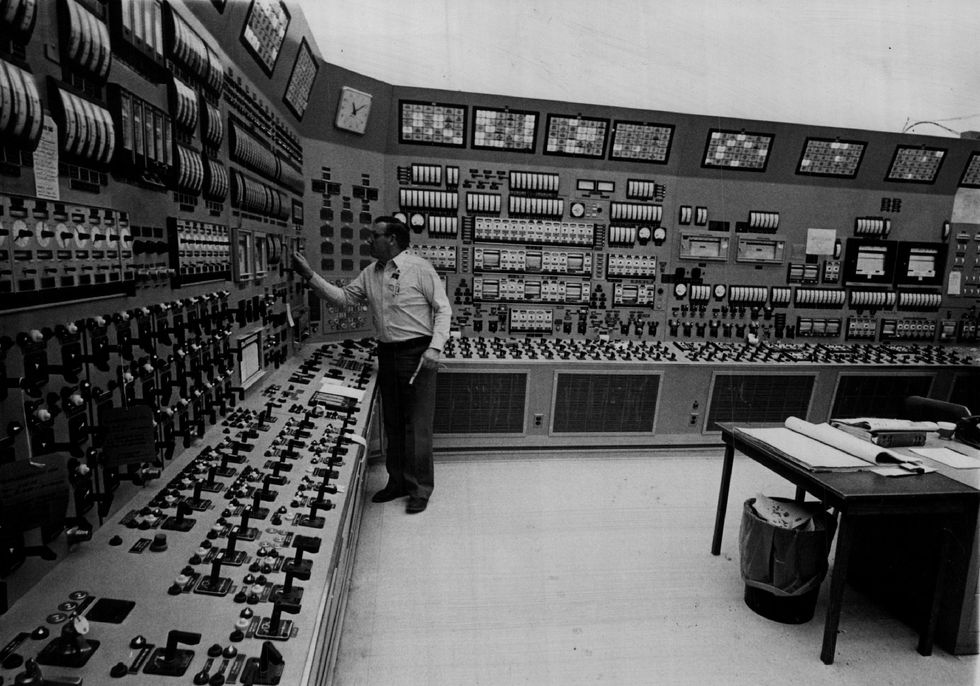 The main control panel at Fort St. Vrain in 1977. Photo: Denver Post, Inc. via Getty Images
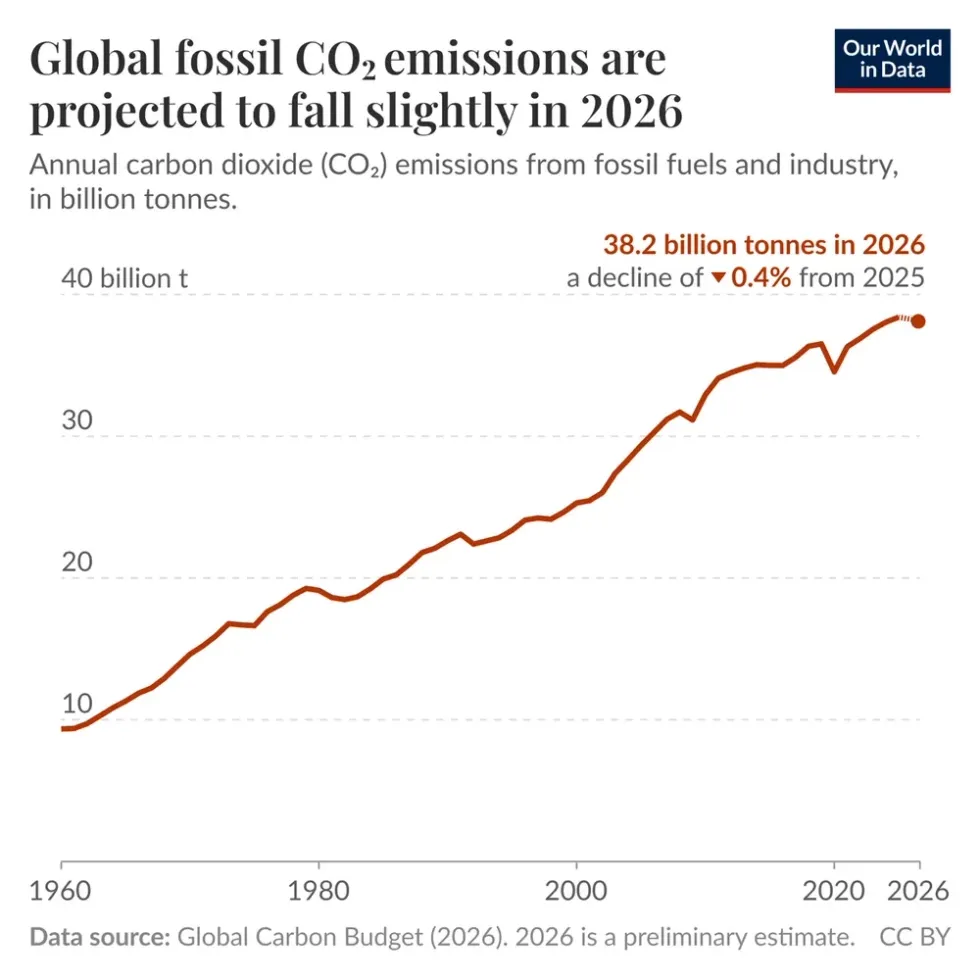 Chart: Our World in Data / Global Carbon Project