You’re out of free articles.
Log in
To continue reading, log in to your account.
Create a Free Account
To unlock more free articles, please create a free account.
Sign In or Create an Account.
By continuing, you agree to the Terms of Service and acknowledge our Privacy Policy
Welcome to Heatmap
Thank you for registering with Heatmap. Climate change is one of the greatest challenges of our lives, a force reshaping our economy, our politics, and our culture. We hope to be your trusted, friendly, and insightful guide to that transformation. Please enjoy your free articles. You can check your profile here .
subscribe to get Unlimited access
Offer for a Heatmap News Unlimited Access subscription; please note that your subscription will renew automatically unless you cancel prior to renewal. Cancellation takes effect at the end of your current billing period. We will let you know in advance of any price changes. Taxes may apply. Offer terms are subject to change.
Subscribe to get unlimited Access
Hey, you are out of free articles but you are only a few clicks away from full access. Subscribe below and take advantage of our introductory offer.
subscribe to get Unlimited access
Offer for a Heatmap News Unlimited Access subscription; please note that your subscription will renew automatically unless you cancel prior to renewal. Cancellation takes effect at the end of your current billing period. We will let you know in advance of any price changes. Taxes may apply. Offer terms are subject to change.
Create Your Account
Please Enter Your Password
Forgot your password?
Please enter the email address you use for your account so we can send you a link to reset your password:
On EU’s EV reversal, ‘historic’ mineral deals, and India’s nuclear opening

Current conditions: Yet another powerful atmospheric river, this one dubbed Pineapple Express, is on track to throttle the Pacific Northwest this week • Bolivia is facing landslides • Western Australia is under severe risk of bushfire.
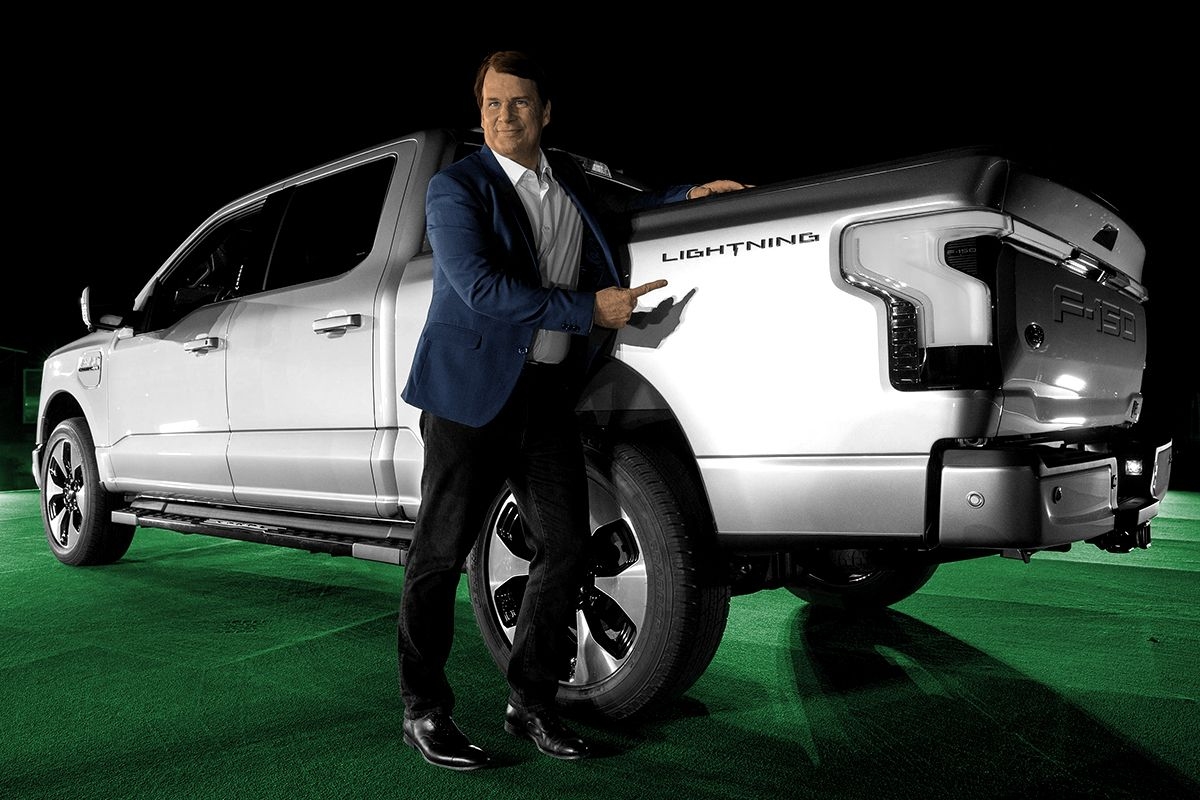
The Ford Motor Company expects to pay roughly $19.5 billion in charges, primarily from its electric vehicle business. In a press release, the automaker said it would refocus on hybrids and “efficient gas engines,” ramp up manufacturing of batteries for a standalone business, and boost truck production. The battery business aims to churn out 20 gigawatts of capacity every year starting in 2027. But the charges the company faces stem from its decision to abandon multibillion-dollar investments the carmaker made in new assembly lines for electric vehicles, demand for which slowed last year and dipped at the end of this year after the Trump administration phased out federal tax credits in September. “This is a customer-driven shift to create a stronger, more resilient and more profitable Ford,” Ford CEO Jim Farley said in a press release. “The operating reality has changed, and we are redeploying capital into higher-return growth opportunities: Ford Pro, our market-leading trucks and vans, hybrids and high margin opportunities like our new battery energy storage business.”
Ford isn’t the only one accelerating in reverse away from electric vehicles. Last week I told you about the deal the European Union struck between its center-right and far-right lawmakers to curb environmental regulations. Now the bloc has moved to scrap its 2035 target to ban sales of new combustion-engine vehicles. The move would have marked a dramatic sea change in the West’s transportation policy, all but eliminating sales of traditional gasoline-powered cars in favor of battery-propelled alternatives. It’s a sign of Brussels’ broader effort to pull back from green mandates that European President Ursula von der Leyen blames for the continent’s economic malaise.

It could have been worse. The Treasury guidance issued Friday dictating what wind and solar projects will be eligible for federal tax credits could have effectively banned developers from tapping the write-offs set to start phasing out next July. In the weeks before the Internal Revenue Service released its rules, GOP lawmakers from states with thriving wind and solar industries, including Senators John Curtis of Utah and Chuck Grassley of Iowa, publicly lobbied for laxer rules as part of what they pitched as the all-of-the-above “energy dominance” strategy on which Trump campaigned. Grassley went so far as to block two of Trump’s Treasury nominees “until I can be certain that such rules and regulations adhere to the law and congressional intent,” as Heatmap’s Matthew Zeitlin covered earlier in August.
Since the guidance came out on Friday, both Grassley and Curtis have put out positive statements backing the plan. “I appreciate the work of Secretary [Scott] Bessent and his staff in balancing various concerns and perspectives to address the President’s executive order on wind and solar projects,” Curtis said, according to E&E News. Calling renewables “an essential part of the ‘all of the above’ energy equation,” Grassley’s statement said the guidance “seems to offer a viable path forward for the wind and solar industries to continue to meet increased energy demand” and “reflects some of the concerns Congress and industry leaders have raised.”
Sign up to receive Heatmap AM in your inbox every morning:
Virginia’s outgoing Republican Governor Glenn Youngkin vetoed more energy bills than he signed last year, killing legislation designed to increase rooftop solar and energy storage, boost utility planning requirements, and make efficiency improvements more available to low-income residents. Now that Democrat Abigail Spanberger is coming in to replace Youngkin as the next governor, those bills are coming back, the Virginia Mercury reported. In a column, lawyer and environmentalist Ivy Main called on Democrats to dream bigger. “Data center development is so far outstripping supply side solutions that if legislators aren’t more aggressive this year, next year they will find themselves further behind than ever,” Main wrote. “As more bills are filed over the coming weeks, we are likely to see plenty of bold proposals. Hopefully, legislators now understand the urgency, and will be ready to act.”
Data centers are now “swallowing American politics,” Heatmap’s Jael Holzman wrote recently. Just 44% of Americans would welcome a data center nearby, according to a poll from September by Heatmap Pro.
The 1984 Bhopal chemical disaster in India never resulted in any serious ramifications for Union Carbide, the Dow Chemical subsidiary responsible for the accident that left more than 3,700 dead from exposure to toxic gases. In 2010, India passed a law that threatened to impose full civil penalties on any private nuclear company that suffered an accident somehow. That legislation has prevented all but Russia’s state-owned nuclear company from entering the Indian market. Hoping to lure American small modular reactor companies to India, the government of Prime Minister Narendra Modi has vowed all year to overhaul the civil liability law. On Monday, Modi-aligned lawmakers proposed legislation to reform the nuclear sector and free foreign vendors from financial responsibility for anything that could potentially happen with their equipment.
The renewables industry, meanwhile, is continuing to boom on the subcontinent. The Japanese industrial giant agreed to invest $1.3 billion into renewable power in India in its latest push into green energy in South Asia, Bloomberg reported.
There’s green hydrogen, made from blasting freshwater with electricity made by renewables. There’s blue hydrogen, the version of the fuel that comes from natural gas mitigated with carbon capture equipment. Gray hydrogen is the traditional kind made with natural gas that spews pollution into the atmosphere. And then there’s pink hydrogen, made like the green kind with clean electricity except generated by a nuclear reactor. Orange is the latest color in the hydrogen rainbow, referring to the version of the gas that comes from a chemical process that accelerates production of the gas in natural formations underground. The startup Vema has announced a 10-year conditional offtake agreement with the off-grid data center power provider Verne to supply over 36,000 metric tons per year of “orange” hydrogen for server farms, Heatmap’s Katie Brigham reported.
Log in
To continue reading, log in to your account.
Create a Free Account
To unlock more free articles, please create a free account.
The startup Vema just signed a new offtake agreement to provide 36,000 tons of orange hydrogen per year for data centers.
Love it or hate it, it’s looking like there may be a good reason to add yet another color to the hydrogen rainbow. In 2022, Florian Osselin, co-founder and CSO of the startup Vema Hydrogen, published a paper in Nature called “Orange hydrogen is the new green,” in which he outlines how to expedite the natural process of hydrogen formation in certain underground geologies, laying the foundation for what the company now calls Engineered Mineral Hydrogen.
Osselin’s startup, Vema, is now announcing a 10-year conditional offtake agreement with the off-grid data center power startup Verne to supply over 36,000 metric tons per year of so-called “orange” hydrogen for data centers. The announcement comes on the heels of Vema’s $13 million seed round earlier this year, which supports the company’s efforts to take its engineered hydrogen experiments out of the lab and into the field.
Vema’s ultimate goal is to produce low-carbon hydrogen at less than $1 per kilogram, making it cost competitive with petroleum-derived hydrogen and magnitudes cheaper than clean hydrogen produced via electrolysis.
“The Earth is generating hydrogen all the time,” Colin McCulley, the startup’s senior vice president of operations, told me. “So those reactions, when they’re close to the surface, are very, very slow and not fast enough to create enough hydrogen to capture.” To expedite natural hydrogen production — which occurs when water interacts with iron-rich rocks underground — Vema will inject water and its proprietary catalyst into suitable formations. The catalyst is designed to increase both the speed and the scale of the reaction, rapidly forming large, commercially relevant quantities of hydrogen.
The company has done extensive exploration and testing, McCulley told me, with the team running over 100 experiments per week for over a year. But though the lab results have been promising, scaling up will be the true test. If the tech is a success, the plan is to begin selling hydrogen in 2028.
“We’re going to start small, in which case we will likely sell truckloads of hydrogen — think 10 tons a day-type scale,” McCulley told me. “The eventual goal is to have on-site — or basically next door — consumption of the hydrogen.” This would eliminate the need to build expensive hydrogen pipelines or transport the fuel via truck. That’s a valuable cost-cutting proposition for producers of clean fuels such as methanol and ammonia, which face steep green premiums and use hydrogen as a feedstock. McCulley also envisions co-locating with data centers.
Right now, the company is starting a pilot project in Canada, and planning for others atr undisclosed locations, where McCulley says there are well-studied deposits of iron-rich rocks that sit relatively close to the surface, ripe for producing engineered hydrogen. West Coast states including Oregon, Washington, California, and Alaska have particularly well-suited subsurface geologies that lie decently close to major metropolitan areas, he explained.
Low exploration risk is a key reason why Vema thinks it’s a better bet than geologic hydrogen companies such as Koloma, which focus on locating and extracting naturally occurring underground hydrogen deposits — no additional stimulation required. But these natural formations typically lie far deeper than Vema is targeting and there’s much less certainty about where they’re located, Vema’s CEO Pierre Levin told me in an email.
“Natural geologic hydrogen depends on complex underground systems with multiple interdependent variables,” Levin, who previously served as CEO of the geologic hydrogen company Hethos, wrote. “With natural hydrogen, you’re at nature’s mercy. [Engineered Mineral Hydrogen] changes the game because we control the subsurface production process, which means predictable, manageable flow rates.”
At the moment, however, investors appear to be lining up behind the geologic hydrogen approach. Koloma alone has raised over $350 million since its founding in 2021 — though it also has yet to produce commercial hydrogen.
McCulley estimates that its hydrogen won’t be cost competitive with fossil fuels until Vema has already completed several large-scale projects, which isn’t likely to happen until 2035 or 2040. “So we need to be able to get through some of these first projects where we’re going to have to sell at a premium price,” he told me. It’s never a guarantee that emerging technologies like this will find patient backers willing to bet on the promise that economies of scale are just over the horizon. The startup is currently raising its Series A, though, and McCulley said he’s seen strong interest from the tech industry in supporting Vema at the price point it’s targeting
The company wouldn’t reveal what price this is, though, and the numbers for its contract with Verne are also under wraps. That deal depends on both Vema and Verne advancing their tech to the point where it’s well-proven and bankable. For Verne, that means demonstrating the viability of its next-generation data center power systems, which include more efficient, off-grid generators capable of running on clean hydrogen. For Vema, it requires completing pilot testing and building a successful demo project. Both sides also have to secure additional funding.
If Vema can pull that together, the payoff looks huge. “If you start producing this stuff at less than $1 per kilogram, the sky’s the limit,” McCulley told me. “The current industrial [hydrogen] gas plants, the biggest ones are, say, around 200 tons per day,” he explained. “We can be five times that from one location.”
The president set an August deadline to deliver guidance for companies trying to qualifying for clean energy tax credits. Four months later — and two weeks before new rules are set to kick in — they’re still waiting.
The One Big Beautiful Bill Act included a morass of new rules for companies trying to claim clean energy tax credits. Some of the most restrictive go into effect January 1 — in other words, in about two weeks. And yet the Trump administration has yet to publish guidance clarifying what companies will need to do to comply, leaving them largely in the dark about how future projects will ultimately pencil out.
At a high level, the rules constrain supply chain options for clean energy developers and manufacturers. Any wind, solar, battery, geothermal, nuclear, or other type of clean generation project that starts construction in the new year — as well as any factory that produces parts for these industries in the new year — and wants to claim the tax credits will have to purge their products and facilities of components sourced from “foreign entities of concern.”
Foreign entities of concern, or FEOCs, are companies that are “owned by, controlled by, or subject to the jurisdiction” of foreign adversaries of the United States — namely China, Russia, Iran, and North Korea.
Companies are already subject to rules under the OBBBA that require them to prove that neither they themselves, nor their projects, are influenced or “effectively controlled” by FEOCs. These requirements, too, lack formal guidance from the Treasury, although tax credit experts told me it was somewhat easier to guess at how to comply with them.
Still, this is all a big new costly headache for developers. Before the OBBBA, the only tax credit that came with such constraints was the consumer subsidy for electric vehicles. Companies developing clean energy generation or manufacturing projects in the U.S. could acquire materials, seek out investment, or buy technology licenses from anyone they wanted and still get federal subsidies. Now obtaining the latter two from Chinese entities is effectively banned.
Come January 1, companies will still be able to source materials from China, but only to a degree. Say you’re a battery storage developer that’s trying to qualify for the 48e clean electricity investment tax credit. Starting next year you’ll have to not just ensure but also document that no more than 45% of the value of the material inputs to the project come from a Chinese owned or influenced company. The rules tighten over time, going down to 25% after 2029. (For other types of clean power generation, the starting threshold is 60%.)
All of that would be difficult enough. But the law itself didn’t specify how to calculate that percentage, leaving it up to the Treasury department to provide further instructions. A few days after signing the OBBBA in July, President Trump issued an executive order directing the Secretary of the Treasury to issue guidance for the FEOC restrictions within 45 days of the law’s enactment. That put the due date in mid-August, which came and went with no clarity for clean energy companies.
Storage developers aren’t sure whether they can base their calculations on the value of finished battery cells, for example, or if they’ll also need to consider the origins and values of subcomponents like anodes and cathodes, or even the critical minerals within those parts.
The Treasury Department did not respond to emailed questions about an updated timeline.
“The further upstream you go, the more difficult,” Mike Hall, the CEO of Anza Renewables, a supply chain data and analytics firm, told me. “That’s one of the fears that I’ve heard. You go upstream enough, then it just becomes impossible, at least in the short term.” China currently dominates the supply chain for batteries, controlling more than 95% of global production of key minerals like manganese and graphite and cell components like lithium-iron-phosphate cathodes and anodes.
In the interim, developers are allowed to follow instructions issued by the Biden administration for tallying up the amount of domestic content in a project and apply the same method to calculate the ratio of FEOC-produced materials. But that won’t work for everyone, David Burton, a partner at the law firm Norton Rose Fulbright, told me, since that earlier document only covers wind, solar, and battery generation projects. For companies deploying fuel cells, geothermal power, or renewable natural gas, for instance, “it’s really just, you know, a coin toss as to how the rules are going to work,” he said.
Beckett Woodworth, a manager of federal credits and incentives at the advisory firm Baker Tilly, told me that another point of confusion is whether tariffs must be included in the calculation. Incorporating the cost of tariffs would inflate the value of any products sourced from China, making it much more difficult to meet the prescribed threshold.
All this uncertainty — and the ultimate guidance itself — matters more for some project types than others. Few large-scale wind and solar developers, for instance, will have to contend with the FEOC material restrictions.
That’s because wind and solar farms face another deadline on July 4 of next year. If they start construction before that date, they will have four years to connect to the grid and still be eligible for the investment or production tax credits, known as ITC and PTC. If they start construction after that date, however, they’ll have to race to become operational before 2028 in order to remain eligible. While smaller projects like rooftop and community solar might be able to work within that timeline, it’s likely impossible for utility-scale projects.
“For large-scale projects, if you don’t get started by next July, you’re not going to hit the ITC deadline anyway,” Hall told me. That means most wind and solar developers only really have to worry about complying with the FEOC rules for the next six months.
Many wind and solar developers will already have their hands full come January 1, and may not even try to add more during that six-month period. Everyone I spoke to told me that companies have been racing to safe harbor as many projects as possible before the rules take effect in the new year. According to a safe harbor provision published by the Treasury in August, developers can claim they “started construction” this year as long as they completed “physical work of a significant nature” before January 1. That could include paving a road at a project site or simply placing an order for a major piece of equipment, like a transformer.
“The industry will have a backlog of safe harbored projects to work on,” Burton said. “It’s going to take a while to work through that backlog and actually have this be a problem.” He shared a research note with me from Roth Capital Partners, an investment bank, which forecast that utility-scale solar would continue to grow year-on-year in 2026 and 2027, largely due to the volume of safe-harbored projects. (This prediction was also based on the assertion that there was “potential for a relaxing of the Trump permitting chokehold,” a reference to the administration’s effective moratorium on solar projects requiring federal approvals.)
The picture is a little different for other types of generation and for clean energy manufacturing, because tax credits for those projects extend for several more years. In the energy research firm Wood Mackenzie’s latest U.S. Energy Storage Monitor report, it wrote that storage installations could drop by 10% in 2027 due to uncertainty over the pending FEOC regulations. “Projects that are not safe harbored in 2025 are at risk if additional FEOC-compliant supply does not materialize in the near-term,” the report says.
Hall said that ultimately, the FEOC rules would probably be a bigger issue for manufacturing projects than for power generation, since many U.S. solar and battery factories have some amount of Chinese ownership or licensing deals with Chinese companies. A number of U.S. solar manufacturers have already started to sell their Chinese ownership stakes, according to the trade magazine Solar Power World. And that’s without knowing exactly what the rules will compel them to do.
The biggest open question in all this is whether the Trump administration will use the FEOC guidance as another opportunity to shut down the clean energy industries it doesn’t like. It’s possible to write a version of the rules that make the tax credits impossible to claim, Burton told me, but he’s optimistic that won’t happen. The subsidies’ Republican defenders in Congress, including Senators Chuck Grassley and Susan Collins, would “have a fit,” he said. “So I don't think they're gonna be vindictive about it.”
On vulnerable batteries, Canada’s about face, and France’s double down
Current conditions: New York City is digging out from upward of six inches of snow • Storm Emilia is deluging Spain with as much as 10 inches of rain • South Africa and Southern Australia are both at high risk of wildfires.
Last month, I told you about China’s latest attempt at fusion diplomacy, uniting more than 10 countries including France and the United Kingdom in an alliance to work together on the holy grail energy source. Over the weekend, The New York Times published a sweeping feature on China’s domestic fusion efforts, highlighting just how much Beijing is outspending the West on making the technology long mocked as “the energy source of tomorrow that always will be” a reality today. China went from spending nothing on fusion energy in 2021 to making investments this year that outmatch the rest of the world’s efforts combined. Consider this point of comparison: The Chinese government and private investors poured $2.1 billion into a new state-owned fusion company just the summer. That investment alone, the Times noted, is two and half times the U.S. Department of Energy’s annual fusion budget.
Still, the race between the two countries is heating up. Cumulative investment in fusion energy soared 30% between June and September to $15 billion, up from a little over $11 billion, according to a report by the European Union’s F4E Fusion Observatory written up by NucNet. That fusion is, as Heatmap's Katie Brigham has written, “finally, possibly, almost” arriving at the same time that data centers to power artificial intelligence are driving up electricity demand is fortuitous. Or, it would be, if AI doesn’t end up proving to be inflated by hype. On Friday, Wall Street showed jitters over the possibility that the bubble may burst, sending shares of companies such as Oracle and Nvidia plunging. It begs the question Katie raised in another story in September: What if we get fusion, but we don’t need it?
The South Korean battery manufacturer SK On canceled its partnership to work on electric vehicles with the Ford Motor Company, throwing the fate of the two companies’ three factories in the American Southeast into jeopardy. The announcement, E&E News reported, also casts doubt over the $9.6 billion loan the Biden administration gave the joint venture, known as Blue Oval SK. The collaboration came as American automakers teamed up with Korean battery companies to hasten the establishment of an EV supply chain. General Motors inked a deal with LG Energy Solution and Ford with SK On. But as sales of EVs flatline — due in part to President Donald Trump axing the federal tax credit for purchases of new electric vehicles — the nascent supply networks are withering on the vine. Ford isn’t down for the count, however. In August, as I wrote in the newsletter at the time, the company unveiled what it billed as its “Model T moment” for EVs, a whole new assembly line structure meant to scale up and iron out production of battery-powered cars.

Prime Minister Mark Carney has scrapped Canada’s carbon tax, inked major oil and gas deals, and pumped the brakes on a scheme to boost electric vehicle sales. Now the leader of the Liberal Party is facing blowback from allies and sustainability-minded executives who say the reversals put Canada’s net-zero goals out of reach. The former environment minister, Steven Guilbeault, quit the cabinet in protest, as have two founding members of the federal government’s Net Zero Advisory Body. “From a climate-science standpoint, this risks undermining the urgency of emissions reduction,” Paul Polman, the former chief executive of home-goods giant Unilever and a campaigner for sustainable capitalism, told the Financial Times. “Betting heavily on unproven massive-scale CCS [carbon capture and storage] and a cleaner-oil narrative while accelerating production ... seems like a gamble with global emissions targets, and with the credibility of net zero by 2050. Gambling with firm science does not seem smart to me.”
Sign up to receive Heatmap AM in your inbox every morning:
Utility-scale battery storage systems are facing increased risk of cyberattack from hackers working either for governments or criminal groups. That’s according to a white paper from the consultancies Brattle Group and Dragos. Battery deployments are expected to grow by as much as 45% in the next five years, raising the need for new protections against digital meddling. “Battery storage systems are being used across the grid to enable the deployment of variable demand sources such as solar and wind,” Phil Tonkin, field chief technology officer at Dragos, told Utility Dive’s sister publication Cybersecurity Dive. “This growing dependence makes them an attractive target.” Even relatively small-scale attacks can have devastating consequences. A single outage involving a 100-megawatt system for four hours in the U.S. would cost up to $1.2 million in revenue, the report found. A large-scale cyber attack that takes out 3,000 megawatts for a day would take a $39 million toll on the economy. Dragos is currently tracking as many as 18 groups that “are known to pose a threat to the electrical grid.”
Canada may be taking a U turn on climate policy, but France just updated its National Low-Carbon Strategy with an end date for using fossil fuels. The document “foresees the end of oil use between 2040 and 2045,” France24 reported, with natural gas phasing out by 2050. France is far ahead of most developed countries toward decarbonizing its power system since the nation has generated the majority of its electricity from nuclear reactors since the late 20th century. Under the plan, the French government expected electricity consumption to increase as heat pumps replace furnaces and electric vehicles swap in for diesel cars. Renewables are expected to cover the increase in electricity production.
Conspiracy theorists who think condensation trails from airplanes are some kind of population-control chemical may have their hands full with the paranoia fodder that geoengineering efforts represent. But actual scientists at Leipzig University have made a discovery about contrails’ effect on warming. The researchers found that “hidden” contrails within naturally forming cirrus clouds — previously not factored into assessments — contribute up to 10% of the warming all contrails cause. “We now know that not only the visible contrails we see in the sky but also those that form within clouds need to be taken into account when assessing the impact of aviation on the climate,” Torsten Seelig, the study's lead author, said in a statement.