Utilities requested $18.6 billion in rate increases in the first half of 2026, including a record $9.2 billion in the second quarter alone. Gas prices are hovering close to $4.50 a gallon, almost a full dollar more than this time last year. Diesel prices are even worse, recently passing $6.50 a gallon, up by over 50% from one year ago.
In the past two years, electricity prices have increased by over 10%. In the past five years, it’s over 36%.
President Trump’s failure to lower costs has tanked his approval ratings, currently just 34% overall and 33% on his handling of the economy. But he’s not alone. incumbent politicians across the country — along with utilities, energy-intensive businesses, and tech companies — have found themselves swept up in the backlash.
Those feelings of blame and distrust have emanated throughout our democracy. Just 27% of Americans trust national institutions, according to a June Gallup poll, a single point above the all-time low. Just 17% trust the federal government to do what's right. Nearly seven in 10 people fear that institutional leaders are deliberately misleading them.
Looking at our energy infrastructure, I understand the feeling. Government and industry have chronically neglected our electricity delivery system, offering impossible-to-fulfill slogans rather than real solutions.
Over the past four years, this has created what I’m calling the Energy Trust Gap. It results from the toxic collision of an aging, neglected, and overstressed grid; rising prices; and voter frustration with policymakers, regulators, and industries that overpromise and underdeliver.
This is not merely a Trump problem, though it is true that the president’s chaotic tariff strategy, his impossibly stupid war in Iran, and his senseless energy obstruction have dramatically widened this rift.
Instead of deploying more energy to the grid, the Trump administration has blocked renewables when Americans need them most. It paid TotalEnergies $928 million and Invenergy $765 million to abandon offshore wind leases — $1.7 billion of public money not to build power. Through the Pentagon, it has halted over 28 gigawatts of onshore wind projects in 21 states, and attempted to suspend five fully permitted projects already under construction. Thankfully, all five won injunctions and resumed development by February. Still, the industry's trade association estimated that the cancellations and delays would add $45 billion in East Coast energy costs over a decade.
Though a federal appeals court recently ruled against it, the administration was also using emergency authority to keep 11 fossil units at seven plants running at a cost of roughly $1.5 million per day. The evidence is quite weak that these units are necessary to maintain grid stability or meet unexpected demand. Some are producing substantially less power than they can, or have even been taken offline.
But the Energy Trust Gap has not been created by Republicans alone. Here is the part my side needs to sit with.
In 2022, then-President Biden promised that the Inflation Reduction Act would “bring down family energy bills by an average of $500 a year.” The White House projected that, alongside the 2021 Bipartisan Infrastructure Law, the IRA would cut electricity rates by up to 9% by 2030. Advocates promised the law would create “more than 9 million good jobs.”
The Trump administration undid some of the efforts to fulfill these promises before they could bear fruit. But others were flimsy from the start.
An accompanying report on the 9 million jobs figure acknowledged, in a footnote, that “not all of the jobs created will be net new employment,” but rather would constitute workers hired away from elsewhere to remedy a tight labor market. It also clarified that “job” was less accurate than “job-year equivalent,” a technical measure of labor volume rather than individual people holding durable positions.
These caveats never made it into the president’s public comments, including at events I helped host.
We expected the government to spur private sector demand and create jobs across the country. We assumed the public would see the benefits and credit our clean energy policies. But voters didn’t see an IRA-driven jobs boom in their communities, didn’t feel its impact in reducing costs amid a crisis, and didn’t see it improving their lives.
Yes, there were jobs. But in an economy as large as the United States, the public simply doesn’t distinguish “clean energy jobs” from other sectors.
The promise of a national electric charging network to enable EV ownership didn’t pan out, either. Congress made $4.4 billion available for chargers in 2022; four years later, states had opened only around 150 public charging stations, a flop for a program designed to fund about 1,600 stations on the path to phasing out gas vehicles. Same story with home heating. The American Council for an Energy-Efficient Economy found that in all four high-electricity-price states it modeled, the average gas household's bills increased after electrification.
When heating homes already accounts for more than 40% of residential energy consumption, you cannot credibly advocate for more expensive options.
These functional failures were also messaging failures. By 2024, 40% of registered voters hadn’t heard anything about the IRA. Governors got more credit for new renewable energy and green manufacturing facilities than President Biden did, according to a post-mortem on the law led by the University of Michigan’s Alexander Gazmararian. The Biden administration placed a big political bet on actions that were misbranded, inadequately promoted, and ultimately undeliverable before November 2024 — the only timeframe that mattered.
Let me be clear: The Energy Trust Gap will cost Democrats elections.
As policymakers head into November’s midterm elections, they are being called upon to answer for the proliferation of data centers and the skyrocketing cost of electricity. In this moment, Democrats could seize momentum from Republicans. But many are still ignoring the lessons of the past four years.
A large number of voters believe clean energy advocates are exaggerating the affordability of renewable energy. If candidates argue that the transition to clean energy is a guaranteed outcome, and that Biden’s climate law worked, they will lose.
Reality is breaking through in some places: Officials are concerned about the cost-of-living crisis, explicitly acknowledging the trade-offs that come with climate policy and prioritizing affordability for ratepayers above all else. In March, for example, Massachusetts Governor Maura Healey signed an executive order to bring more energy and energy storage to the Bay State, calling for an “all-of-the-above approach to energy, including “solar, wind, gas, nuclear and hydro.” In New York, Governor Kathy Hochul has been honest that the state cannot meet its 2030 climate targets “without imposing new and additional crushing costs,” citing state estimates of more than $4,000 a year for upstate households burning oil and gas.
“Something has to give,” she said.
That honesty is critical. Policymakers, clean energy and climate advocates, and industry cannot fix the issues plaguing our energy system without regaining some credibility.
Here’s where I would start:
- We need to ban the bans on energy development, including those on renewables and on necessary natural gas expansions. We cannot ask consumers to give up gas-powered vehicles and HVAC systems in favor of more expensive alternatives. If we promise jobs, we need to deliver jobs and stay engaged with the communities meant to benefit.
- We must make electricity more affordable by adding transmission lines and investing in factories that produce turbines and transformers. Doing that means resolving the intense, bureaucratic permitting burden that so often gets in the way. We need to broaden who pays for the grid, including hyperscalers, so the burden does not fall on ratepayers. Short-term cost relief is a must, as is long-term reform of the rate-and-return structure.
- Finally, clean energy advocates — including us at Third Way — need to defend these tough, realistic decisions against purist crowds on the left.
This is the uncomfortable but necessary path to closing the Energy Trust Gap. The alternative is more broken promises and putting our ambitions for energy, the economy, national security, and climate completely out of reach.
If policymakers can’t be straightforward about the trade-offs and deliver on their solutions, we’ll doom ourselves to policy whipsawing and another energy crisis.
Then another. Then another. Then another.



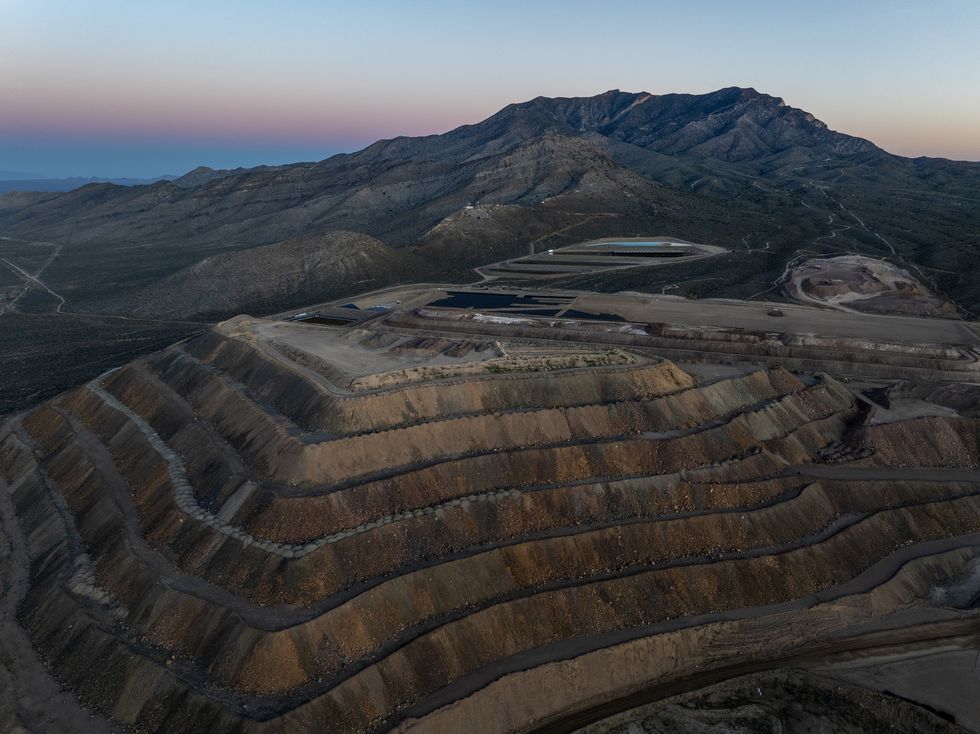 MP Materials’ Mountain Pass Rare Earth Mine. David McNew/Getty Images



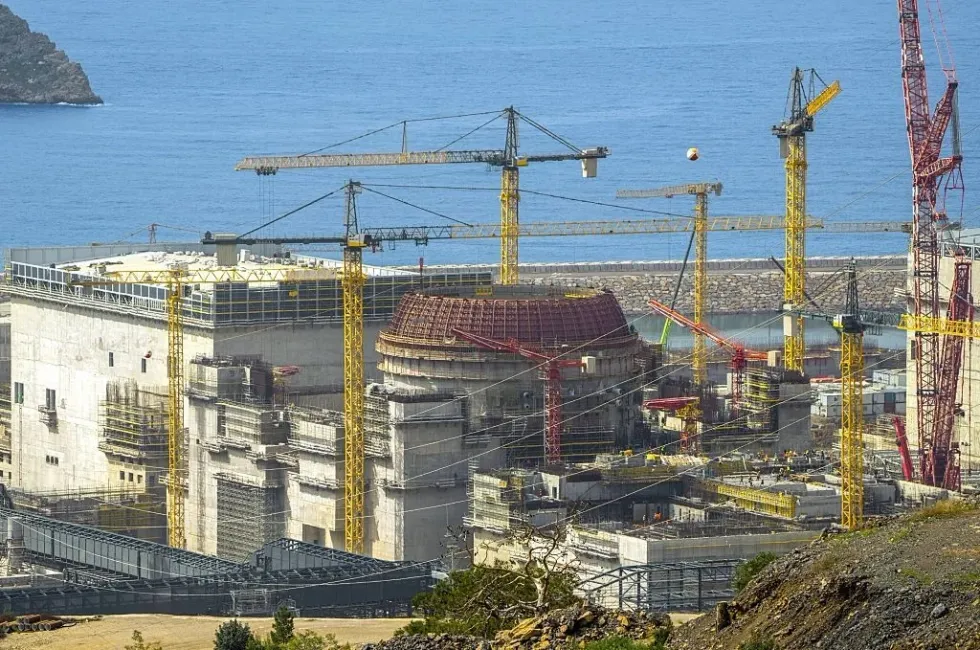 The first nuclear plant being built in Turkey — by Russia. Photo: Akkuyu Nucleer PP/Anadolu via Getty Images