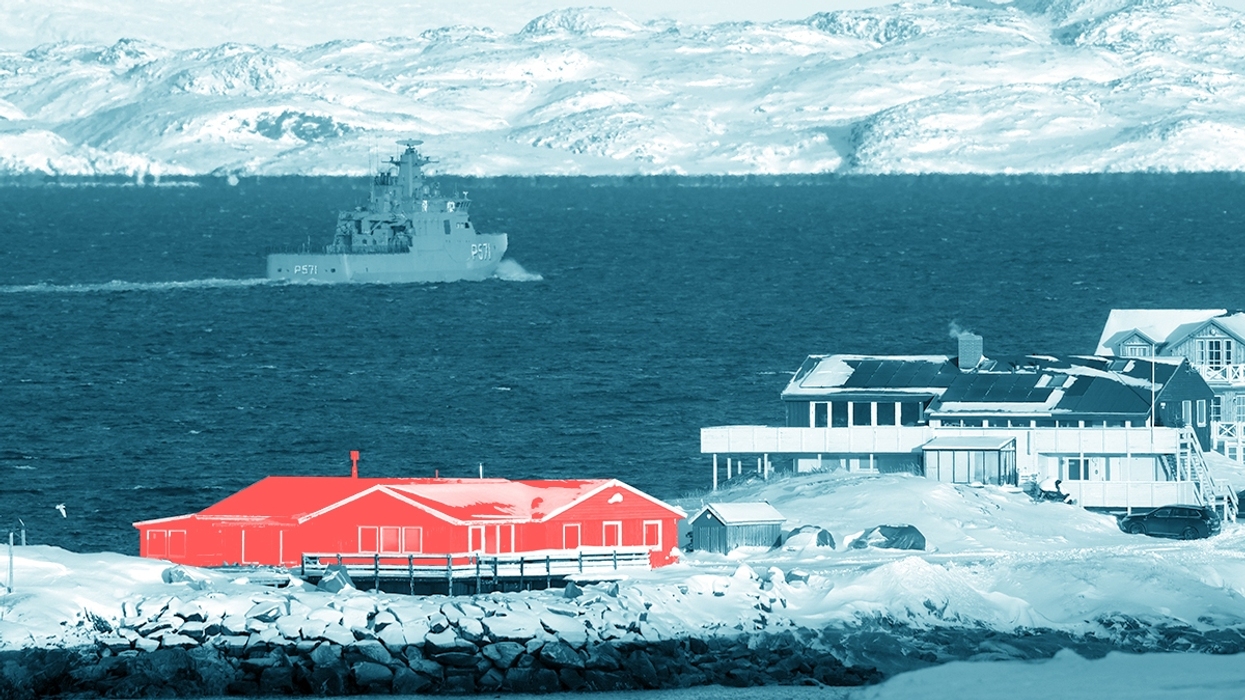
When Denmark fell to the Nazi blitzkrieg in April 1940, the still-neutral United States — fearing a German military expansion into North America — invaded the Danish kingdom’s island territory of Greenland. After the war ended, as part of the North Atlantic Treaty Organization, Washington and Copenhagen agreed to a mutual defense pact that granted the U.S. the right to build and maintain military bases across the world’s largest island. Now President Donald Trump has announced an update to that agreement that would permanently bar foreign adversaries such as China or Russia from setting up rival bases in Greenland, “completely addressing all of our many U.S. concerns.” In a post on his Truth Social platform Friday evening, the president said the U.S. would have veto power over any foreign military base or “sensitive investments” in Greenland. “For over 100 years, presidents have known the strategic importance of Greenland, but none of them were able to do anything about it,” Trump said. “I am proud to be the president that permanently and conclusively addressed this very important situation.” British Prime Minister Andy Burnham hailed the deal as a win for Arctic security. “You had an agreement already,” one Greenlander told CBS News in Nuuk, the capital. “Why not just put more troops here? It’s a little weird.”
The move comes a month after the Greenlandic government rebuked a Trump-linked company called Greenland Energy that has told investors it plans to drill exploratory wells seeking oil. Just two weeks ago, a U.S. company called Greenland Mines inked a deal to buy the Sarfartoq Rare Earths Project in southwest Greenland for over $35 million. But for all the hype over the potential to extract minerals from lands recently made accessible by retreating glaciers, the logistics of producing and exporting material out of the rugged North continue to represent a significant hurdle to commercialization.
2. Trump weighs more than a dozen data centers on federal land
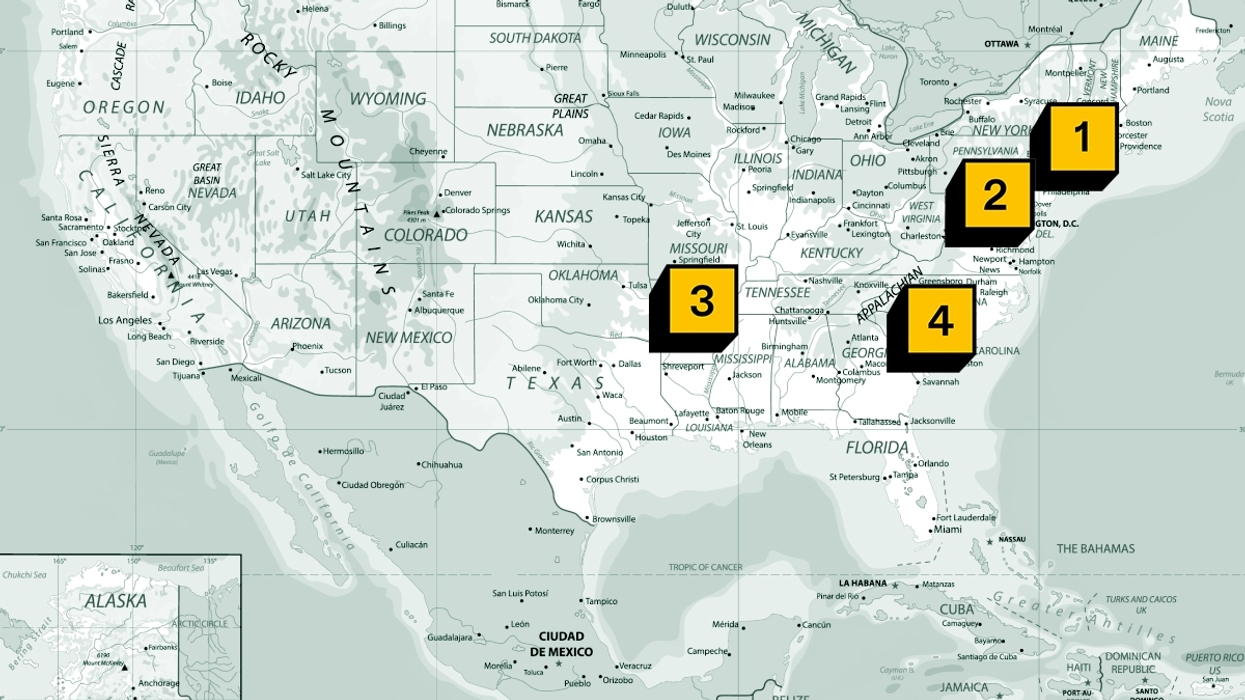
The Trump administration is reviewing proposals for at least a dozen data centers and related infrastructure projects on federal lands spanning at least six states. The Bureau of Land Management is considering applications for at least 17,600 acres of public land across Arizona, Idaho, Nevada, Oregon, Utah, and Wyoming, according to right-of-way proposals reviewed by The Washington Sun. Valar Atomics, the next-generation microreactor developer, later confirmed to the news outlet that it had submitted an application for survey access at a 10,200-acre site in Utah, but said it had abandoned the plans.
Three-quarters of Americans now oppose nearby data center construction, according to Heatmap Pro polling. In response, the Trump administration has sought to speed up construction by using federal lands that aren’t subject to the whims of local and state officials. That effort began with a proposal to site a project at a former Department of Energy nuclear weapons site in Kentucky.
3. Fracking waste is becoming an issue in the Ohio election
The hundreds of millions of gallons of toxic wastewater the fracking industry has disposed of in Ohio over the years is now bubbling to the surface. That’s happening in a literal sense: As The New York Times exposed in a July investigation, wastewater thought to contain radioactive materials is spewing from injection wells meant to store it underground indefinitely. It’s also happening in a figurative sense, with the state’s toxic import now becoming a political issue. Last week, Democratic gubernatorial candidate Amy Acton pledged to back a moratorium on fracking wastewater disposal during a campaign stop in Marietta, a town where the water has been resurfacing, according to the latest reporting from the nation’s newspaper of record.
Sign up to receive Heatmap AM in your inbox every morning:
4. Hitachi Energy plans to double its manufacturing capacity for small and medium transformers
For much of my lifetime, flat electricity demand meant that transformers — the devices that works like locks in a canal to keep electricity flowing smoothly along distribution wires and step the intense voltage down to the levels needed to flow into your home — were in low but predictable demand, too. That’s all changed. The grid is aging, and the U.S. is finally doing something about it, which means swapping out old transformers for now ones. At the same time, increasingly frequent extreme weather is wiping out dozens of transformers at a time, forcing big bulk orders after a disaster. And data centers and electrification are hiking demand even higher. Meanwhile, manufacturers have struggled to keep pace, wrangling with costly assembly line upgrades, uncertain regulations, and high tariffs.
Now, however, factories are getting up and running. As my colleague Katie Brigham wrote in April, a whole new wave of startups is promising to innovate the industry. And more industrial behemoths are investing in more capacity. Hitachi Energy plans to more than double its U.S. production capacity of small- and medium-sized power transformers with a new, $528 million factory in Mississippi, Utility Dive reported last week.
5. Despite tariffs, CATL is still designing batteries for American pickup trucks
The world’s biggest battery maker is betting that the U.S. market will still have plenty of demand for stuff made in China. CATL, based in Fujian province, has developed new battery technology for American pickup trucks despite U.S. tariffs all but banning Chinese automotive equipment and other electronics over security concerns. The company told the Financial Times the batteries had already been tested by U.S. carmakers, but did not specify which ones. The remarks came ahead of Sunday’s meeting between U.S. Treasury Secretary Scott Bessent and his Chinese counterpart He Lifeng in New York, where trade was a top issue. That discussion set the stage for talks in Washington between Trump and Chinese President Xi Jinping, which are scheduled for Thursday.
The fleet of electric vehicles powered by CATL batteries in China can now depend on a slightly cleaner grid. The People’s Republic brought its 61st power reactor online last week. The Changjiang-3 reactor — a Hualong One, the country’s flagship designed that cribs from America’s Westinghouse AP1000 — entered into commercial operation, according to NucNet.
THE KICKER
California’s big virtual power plant experiment just notched a record. During the heatwave on September 9, Sunrun and Tesla dispatched more than 580 megawatts of peak power to the California grid, making “the largest distributed power plant dispatch event on record.” That’s enough capacity to power all households in Sacramento County during peak hours. “Sunrun’s distributed home batteries are operating at a scale larger than many peaker power plants combined,” Sunrun CEO Mary Powell said in a statement. “Families depend on their Sunrun energy systems for outage protection and energy independence. This historic dispatch shows that the benefits of distributed energy go well beyond individual households as we help control the cost of electricity for all Californians and reduce the need for new costly poles and wires.”






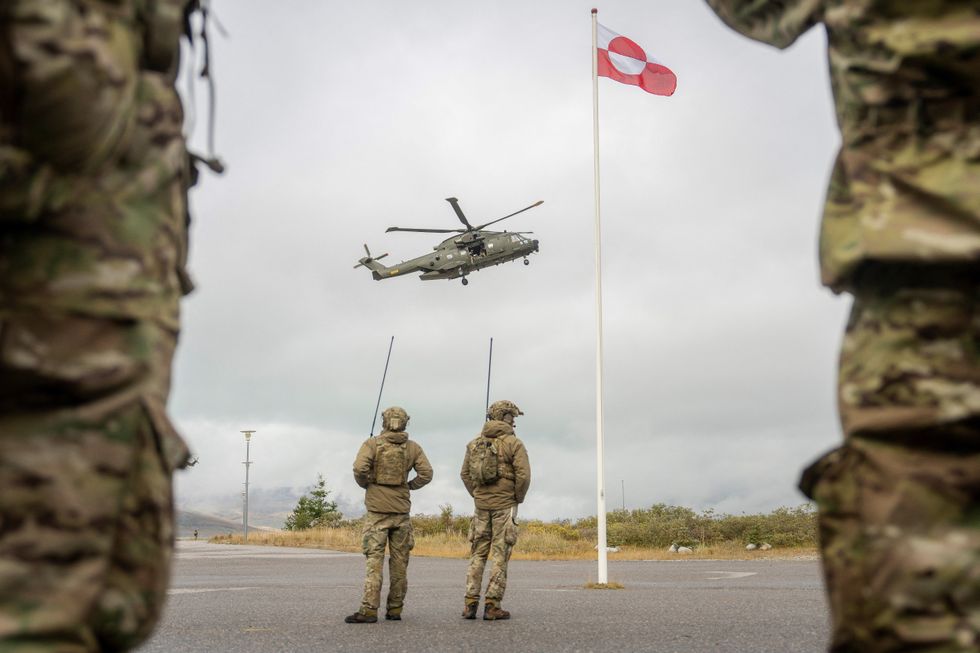 A Danish Air Force EH101 Merlin rescue helicopter comes in to land after the NATO military exercise Arctic Shield 2026 in Narsarsuaq, Greenland, this month. Photo: Mads Claus Rasmussen / Ritzau Scanpix / AFP via Getty Images