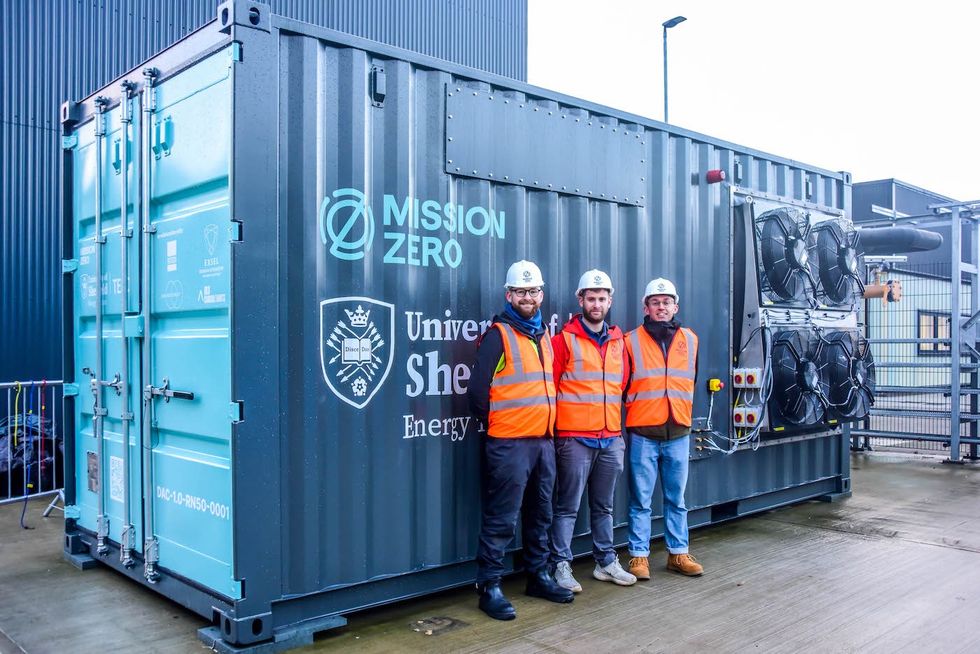
The future of climate-friendly air travel might lie in a 20-foot shipping container that was dropped off on the campus of the University of Sheffield in England in late September.
Inside the box is a system developed by Mission Zero Technologies, a London-based company, that extracts carbon dioxide molecules directly from the ambient air. University researchers purchased the tech for about $762,000 for a pioneering project to turn the captured carbon into e-kerosene, a fuel that’s chemically identical to what’s used in airplanes but is made without oil or gas.
On Monday, Mission Zero announced that this mini “direct air capture” plant is now officially up and running. It has the capacity to capture 50 tons of carbon dioxide per year. That’s tiny compared to the nearly 37 billion tons emitted by humans last year, but it’s sufficient for the university’s quest to demonstrate that jet fuel made from CO2 can be safe and sustainable.
“It is kind of a baby system, for sure,” Nicholas Chadwick, Mission Zero’s CEO told me. “But we think it's delivering something quite unique.”
 Courtesy of Mission Zero
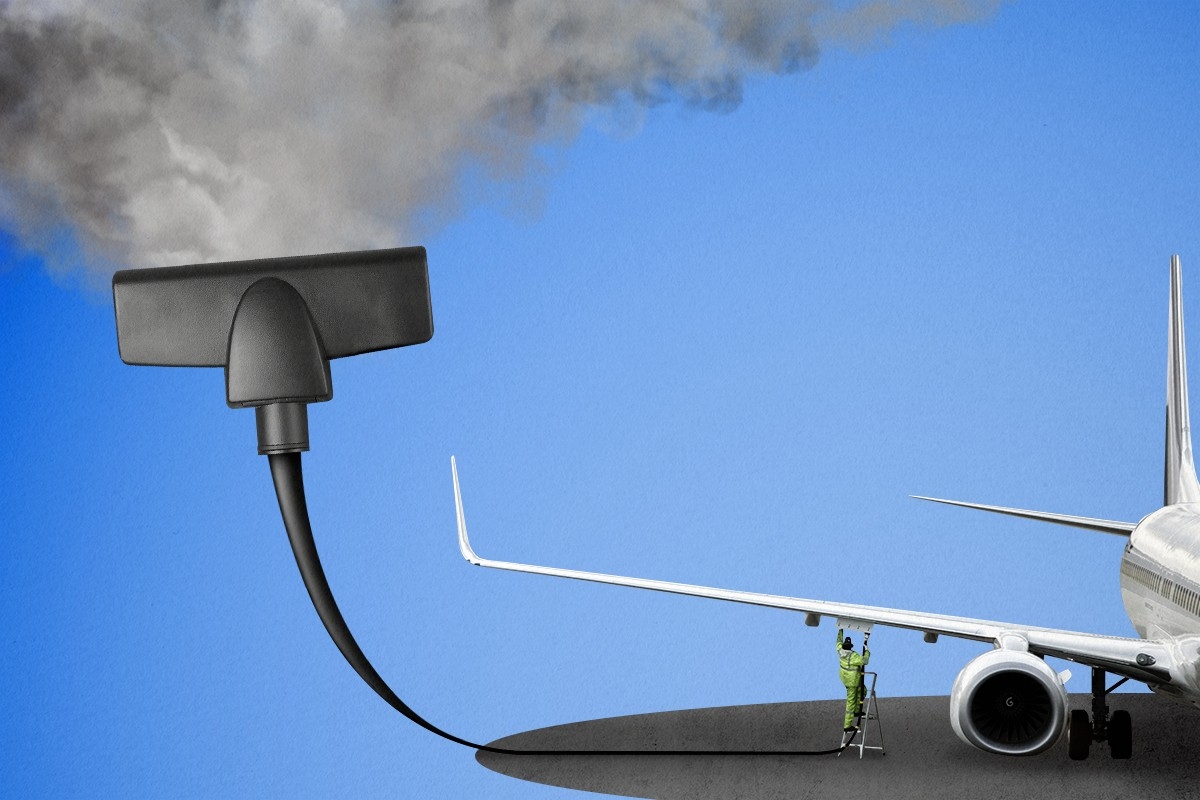
When it comes to safely propelling metal tubes weighing hundreds of thousands of pounds 40,000 feet in the air, without burning fossil fuels, there are two potential paths. We can use what are called sustainable “drop in fuels,” cleaner versions of jet fuel that are compatible with existing planes and engines, but still release carbon emissions, like e-kerosene. Or, we can re-engineer planes entirely so that they can be powered by hydrogen or batteries, neither of which would release any carbon.
The first path is much more viable in the near term. Today, small volumes of sustainable drop-in fuels are already in use. They are mostly made from animal fat and used cooking oils — often literally sucked out of the fryers of fast food restaurants. There’s also potential to make sustainable drop-in fuels from biomass, like algae, wood residues from the forest floor, agricultural waste like corn stalks, or purpose-grown crops like sugar beets.
But these resources are limited. “There's only so much used cooking oil available in the world,” said Nikita Pavlenko, the program lead for aviation fuels at the International Council on Clean Transportation, a research nonprofit. There isn’t enough waste biomass either, he told me, and growing crops for energy competes with food markets and can lead to deforestation. This is why capturing CO2 from the atmosphere and using it to produce e-kerosene is so promising. “The amount of energy and CO2 available is theoretically much, much higher.”
Theoretically is the key word there. Even though the concentration of carbon in the air is high enough to warm the planet, it’s still relatively dilute, and requires a lot of energy to capture. To make e-kerosene, the CO2 has to be combined with hydrogen, which also requires a lot of energy to produce in a clean way. Then the gas mixture is put through a reactor that converts the gas into a liquid fuel.
“You’re kind of swimming upstream in terms of the chemistry and thermodynamics of it,” said Anu Khan, the deputy director of science and innovation at Carbon180. “And so it matters a lot where you get the energy from.”
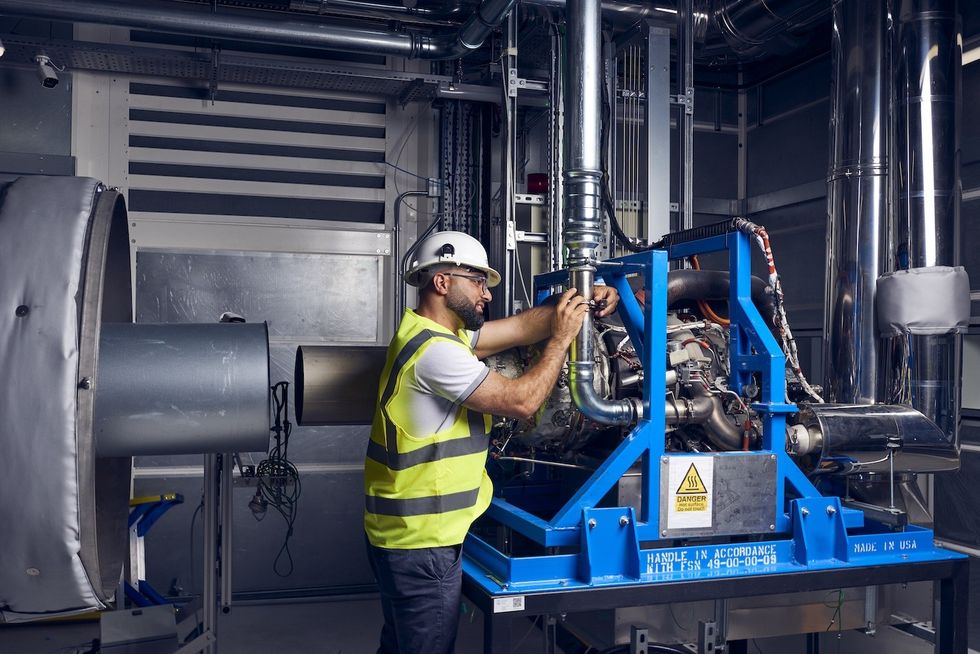
Mission Zero’s technology is unique on that front. Whereas Climeworks and Heirloom, two other direct air capture companies that have plants operating today, rely on heat for their processes, the Sheffield project will run solely on electricity — in part from a solar array on site. Chadwick told me the system uses between three and five times less energy as a result, depending on how it is operated.
Courtesy of Mission Zero
The company also has a unique business model. Climeworks and Heirloom own and operate their own plants, and sell carbon credits to other companies based on the amount of CO2 they remove from the atmosphere and store permanently. Mission Zero, by contrast, is selling the technology itself. Third parties can buy its shipping containers and use the system to do whatever they choose, whether that’s storing the carbon underground and selling credits, using the carbon to make fuels, or something else.
Another benefit of Mission Zero’s tech, according to Chadwick, is that it is made from off-the-shelf parts with established supply chains. The company was able to deliver the project to the University of Sheffield within seven months of landing the contract.
Using carbon captured from the atmosphere to make fuel is one element of a larger vision that some climate advocates have for a “circular carbon economy.” If the carbon is captured and turned into products using renewable energy, the atmosphere will not be any worse-off.
Chadwick said the University researchers hope to develop a certification process to guarantee the fuel’s safety. The U.K. is in the process of introducing a sustainable aviation fuel mandate that will require at least 10% of jet fuel to be made from sustainable sources by 2030, and is considering an additional mandate for some portion of that to come from carbon and hydrogen.
“We’ve got to get started now if the scale is going to be there in seven years,” he told me.


 Courtesy of Mission Zero
 Courtesy of Mission Zero


 The Smith Mountain Project, a 600-megawatt pumped storage facility in Virginia. Education Images/Universal Images Group via Getty Images