From beaming solar power down from space to shooting storm clouds full of particles to make it rain, this week featured progress across a range of seemingly sci-fi technologies that have actually been researched — and in some cases deployed — for decades. There were, however, few actual funding announcements to speak of, as earlier-stage climate tech venture funds continue to confront a tough fundraising environment.
First up, I explore Meta’s bet on space-based solar as a way to squeeze more output from existing solar arrays to power data centers. Then there’s the fusion startup Zap Energy, which is shifting its near-term attention toward the more established fission sector. Meanwhile, a weather modification company says it’s found a way to quantify the impact of cloud seeding — a space-age sounding practice that’s actually been in use for roughly 80 years. And amidst a string of disappointments for alternate battery chemistries, this week brings multiple wins for the sodium-ion battery sector.
Meta Strikes First-of-Its-Kind Deal For Space Solar
One might presume that terrestrial solar paired with batteries would prove perfectly adequate for securing 24/7 clean energy moving forward, as global prices for panels and battery packs continue to fall. But the startup Overview Energy, which uses lasers to beam solar power from space directly onto existing solar arrays, thinks its space-based solar energy systems will prove valuable for powering large loads like data centers through the night. Now Meta is backing that premise, signing a first-of-its-kind agreement with Overview this week that secures early access for up to a gigawatt of capacity from the startup’s system.
Initial orbital demonstrations are slated for 2028, with commercial power delivery targeted for 2030. It’s an ambitious timeline, and certainly not the first effort to commercialize space-based solar, though prior analyses have generally concluded that while the physics check out, the economics and logistics don’t. Overview Energy thinks its found the core unlocks though: “geographic untethering,” which allows it to direct its beam to ground-based solar arrays anywhere in the world based on demand, and high-efficiency lasers capable of converting near-infrared light into electricity much more efficiently than pure sunlight.
The startup is targeting between $60 and $100 per megawatt-hour by 2035, at which point the goal is to be putting gigawatts of space solar on the grid. “It’s 5 o’clock somewhere,” Marc Berte, founder and CEO of Overview Energy, told me when I interviewed him last December. “You’re profitable at $100 bucks a megawatt-hour somewhere, instantaneously, all the time.”
Launch costs have also fallen sharply since the last serious wave of space-solar research, and Overview has already booked a 2028 launch with SpaceX. Solar power beamed from space also sidesteps two earthly constraints — land use and protracted grid interconnection timelines. So while this seemingly sci-fi vision remains unproven, it might be significantly more plausible than it once appeared. And Meta’s certainly not alone in taking that bet — Overview has already raised a $20 million seed round led by Lowercarbon Capital, Prime Movers Lab, and Engine Ventures.
Fusion Startup Zap Energy Is Now Also a Fission Startup
Fusion startups are increasingly looking to nearer-term revenue opportunities as they work toward commercializing the Holy Grail of energy generation. Industry leader Commonwealth Fusion Systems is selling its high-temperature superconducting magnets to other developers, while other companies including Shine Technologies are generating income by producing nuclear isotopes for medical imaging. Now one startup, Zap Energy, is pushing that playbook a step further, announcing this week that it plans to develop fission reactors before putting its first fusion electrons on the grid.
Specifically, the startup is now attempting to develop small modular reactors — hardly a novel idea, as companies like Oklo, Kairos, and TerraPower have already secured significant public and private funding and struck major data center deals. Zap, however, thinks it can catch up to these new competitors in part by leveraging design commonalities between fission and fusion systems, including the use of liquid metals, engineered neutron environments, and high-power-density systems. “Fission and fusion are two expressions of the same underlying physics," Zap’s co-founder Benj Conwayby said in the press release. "This isn’t a pivot — by integrating them into a single platform, we can move faster, reduce risk, and build a more enduring company."
As the company outlines on its website, pursuing both pathways could eventually manifest in the development of a hybrid fusion-fission system, while also giving Zap practical experience interfacing with regulators and securing approvals. As The New York Times reports, the company is targeting an early 2030s timeline for its fission reactors, although Zap has yet to specify a timeline for fusion commercialization. Like so many of its peers, the company is eyeing data centers as a promising initial market, though bringing its first units online will likely require a significant influx of additional capital.
Rainmaker Says It’s Proven Cloud-Seeding Works — to the Tune of 143 Million Gallons This Year
For all the concern surrounding geoengineering fixes for climate change such as solar radiation management, there’s one form of weather modification that’s been in use since the 1940s — cloud seeding. This practice typically involves flying planes into the center of storms and releasing flares that disperse a chemical called silver iodide into the clouds. This causes the water droplets within the clouds to freeze, increasing the amount of precipitation that falls as either rain or snow.
Alarming as it may sound for the uninitiated, there’s no evidence that silver iodide causes harm at current usage levels. But what has been far more difficult to pin down is efficacy — specifically, how much additional precipitation cloud seeding actually creates. That’s where the startup Rainmaker comes in. The company, which deploys unmanned drones to inject the silver iodide, says that its advanced radar and satellite systems indicate that its operations generated over 143 million gallons of additional freshwater in Oregon and Utah this year — roughly equivalent to the annual water usage of about 1,750 U.S. households. The findings have not yet been peer reviewed, but if accurate, they would make Rainmaker the first private company to quantify the impact of its cloud seeding operations.
Cloud seeding is already a well-oiled commercial business, with dozens of states, utility companies and ski resorts alike using it to increase snowfall in the drought-stricken American West and worldwide — China in particular spends tens of millions of dollars per year on the technology. Rainmaker has a particular aspiration: to help restore Utah’s Great Salt Lake, which has been shrinking since the 1980s amid rising water demand and increased evaporation driven by warmer temperatures.
In a press release, the company’s 26-year-old founder and CEO Augustus Doricko said, “With the newfound capability to measure our yields and quantify our results, Rainmaker will go forward and continue our mission to refill the Great Salt Lake, end drought in the American West and deliver water abundance wherever it is needed most around the world."
ESS Partners With Alsym Energy to Build 8.5 Gigawatt-Hours of Sodium-Ion Batteries
Sodium-ion batteries have long been touted as an enticing alternative — or at least complement — to lithium-ion systems for energy storage. They don’t rely on scarce and costly critical minerals like lithium, nickel, or cobalt, and have the potential to be far less flammable. The relatively nascent market also offers an opening for the U.S. to gain a foothold in this segment of the battery supply chain. But especially domestically, the industry has struggled to gain traction. Two sodium-ion startups, Natron and Bedrock Materials, both closed up shop last year as prices for lithium-iron-phosphate batteries cratered, eroding sodium-ion’s cost advantage, while the cost of manufacturing batteries in the U.S. constrained their ability to scale.
But one notable bright spot is the startup Alsym Energy, which announced this week that it has signed a letter-of-intent with long-duration energy storage company ESS Inc. for 8.5 gigawatt-hours of sodium-ion cells and modules, marking ESS’s expansion into the short and medium-duration storage market. Alsym’s CEO, Mukesh Chatter, told me this represents the largest deal for sodium-ion batteries in the U.S. to date — although it’s not yet a binding contract. Notably, it came just a day after the world’s largest-ever order for these batteries, as CATL disclosed a 60 gigawatt-hour sodium-ion agreement with energy storage integrator HyperStrong. Taken together, these partnerships suggest the sector is finally picking up durable traction both domestically and abroad.
ESS, however, is facing its own operational headwinds, nearly shuttering its Oregon manufacturing plant last year before securing an unexpected cash infusion and pivoting to a new, longer-duration storage product. Chatter remains exuberant about Alsym’s deal with the storage provider, however, telling me it represents a major proof point in terms of broader industry acceptance and an acknowledgement that “the benefits [sodium-ion] brings to the table are significant enough to overcome any stickiness” and hesitation around adopting new battery chemistries.
Chatter said that interest is now pouring in from all sides, citing inquiries from lithium-ion battery manufacturers, utilities, and defense companies and highlighting use cases ranging from data centers to apartment buildings and mining operations as likely early deployment targets.






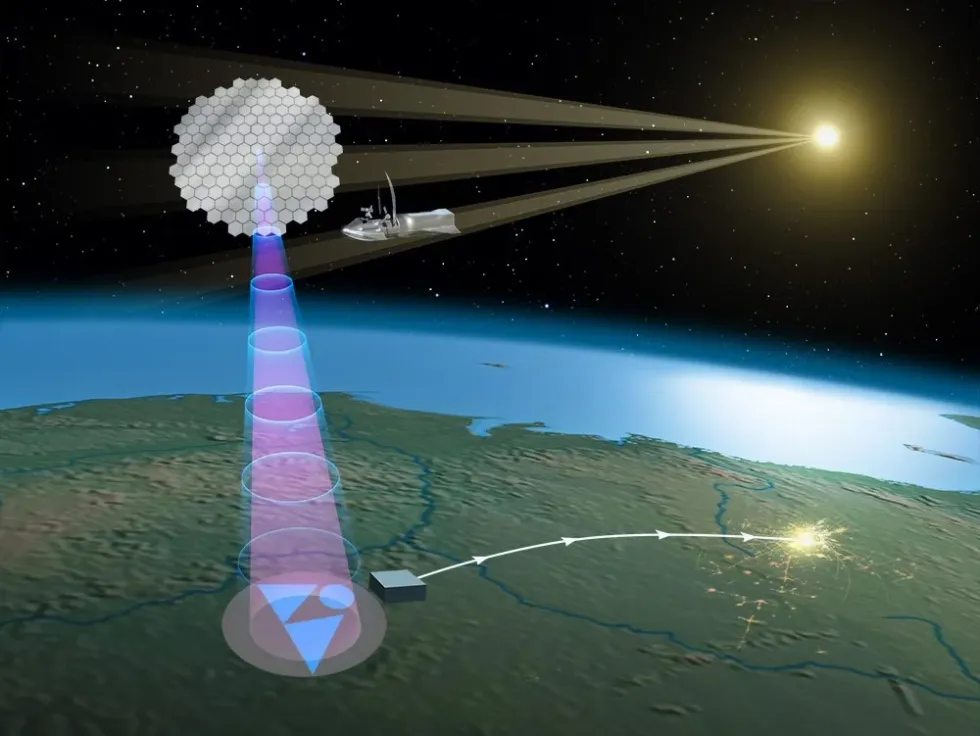 Beam me up to baseload. Virtus Solis Technology