Early in the day, Carlos Araque, the CEO and co-founder of Quaise, an advanced geothermal company, started things off by addressing the elephant in the room: potentially imminent movement on permitting reform. “It’s always easy to be picky and want for more,” he acknowledged, although he added that “my ask has always been — as far back as 2018 — if you can do for geothermal what you do for oil as in terms of regulatory permitting exclusions, then you’re moving 90% of the way to the goal. So that’s happening — that’s slowly and surely happening.”
Get Heatmap in your inbox daily.
New Jersey Governor Mikie Sherrill also spoke about permitting reform at a local scale. “You cannot simply say to people, ‘Sorry, your bills are just going to keep skyrocketing,’” she stressed. “That is not the answer, which is why we’ve acted so aggressively. I approved 18 solar and battery storage projects in the first six months [of my term]. We knew the federal credits were going to run out if we did not get that done, so that’s why we had to take on permitting reform right away to make sure we were growing that.”
And while Jane Flegal, the principal at Flegal Energy Advisors, didn’t have any secret insight into the potential deal, she broke down her predictions into three buckets: reforms to conventional environmental statutes such as the National Environmental Policy Act, the Clean Water Act, and the National Historic Preservation Act; transmission, “which, no one knows what’s in there, but we all know what was in the Manchin deal, and I think we can and should expect something at least that ambitious;” and permitting certainty, which would constrain executive power to cancel permits after they’ve been issued.
Chris Hayes, the host of All In with Chris Hayes on MS NOW and a former climate reporter, took the stage just after Gore, who marked the 20-year anniversary of his Academy Award-winning documentary An Inconvenient Truth. Like Gore, Hayes was in a reflective mood. “I think to some degree, we’re kind of moving forward in this understanding that all of us are implicated in the system that’s going to change very slowly over time,” he said, calling it one of the lessons of the past 20 years. “But I think there was a high-water mark of consumer activism that is sort of gone.”
Then, of course, there was Wright. The energy secretary — whom climate insiders have described to us as the biggest climate villain in the Trump administration after Trump himself — talked to Rob about as many fuels as they could cover. Wind: “There have been very spirited dialogues in the administration about this. I do believe a successful permitting reform thing changes the playing field for anything you want to build in this country, including wind.” Nuclear: “Our thing is just to try to get it back on its feet and get out of the way.” Natural gas: “Gas in my lifetime is going to be the American energy superpower for sure, but you never want all your eggs in one basket.” Batteries: “I’m all in.” And EVs: “Should we have the broader America subsidizing, you know, the habits of wealthy people? I don’t think we should.”
Another running theme of the day was data centers and AI. “We all feel a little bit used by data centers,” Dawn Lippert, the founder and CEO of Elemental Impact, a nonprofit climate tech investor, and a general partner at Earthshot Ventures, its sister fund, told my colleague, Katie Brigham. “We thought, how can you actually use data centers to do the things that we need to do as society? And pulling forward clean energy technologies and sustainable technologies is one of the most interesting ways that they can be a real service to society.”
That thought was explored further when the evening wrapped with a focus on reindustrialization. Tom Steyer, the co-executive chair of Galvanize Solutions, told us he’s doing fine after his unsuccessful bid for California governor. (Nothing a trip to Tahoe with the family couldn’t cure.) He also shared that the climate movement may have lessons for the modern movement opposing AI and data centers. The world’s richest companies can’t just “come in and take people’s water, especially at a time when people are so water insecure,” he stressed. “How could that possibly be right?”
AI — and water — also came up in conversation with Emilio Tenuta, the senior vice president and chief sustainability officer of Ecolab, which provides industrial and commercial water and hygiene solutions. (Ecolab also sponsored our reindustrialization section.) He argued that “what we really need to focus on is the Water Efficiency Index” when evaluating, for example, semiconductor fabrication plants, because it contextualizes water use in more absolute terms than traditional metrics.
Page Crahan, general manager of Tapestry, an Alphabet X moonshot project that uses AI to develop a model of the grid’s electricity network, zeroed in on how best to use artificial intelligence. “We had 10 years to build what it took us 110 years to build globally” in order to meet anticipated energy demand, she told my colleague Jael Holzman. “And that was in 2023, before data centers.” For “computationally intensive challenges, data-heavy challenges, and certainly running simulations and insights for a system this size,” AI is a good use case, she said.
Tapestry is using its models in partnership with PJM Interconnection (as we’ve covered here at Heatmap) — and speaking of PJM, its executive director of strategic policy and external affairs, Asim Haque, spoke to my colleague Matthew Zeitlin next. “If you do not bring your own new capacity, we are going to curtail you before we curtail your average residential consumer for sure,” he said, adding, “this is a concept that is pending in front of the FERC right now. We can talk about carrots. We can talk about sticks. I don’t know which one this is. I think from the data center perspective, it’s likely a stick.”
Josh Parker, the head of sustainability at Nvidia, rounded the day out on a positive note. “The good news is, we are very quickly unlocking new capacity with clean energy,” he said, including developing new clean energy technologies like advanced fission and geothermal. “All of these technologies are benefiting from AI, and so that, coupled with the fact that data center operators with AI factories generally are some of the largest consumers of clean energy and are still are looking for all the clean energy they can, leads me to believe — and I think this is the most credible forecast — that very soon we’re going to see all of that convert over to clean as soon as we can get through the supply constraints that we’re currently in.”
If you were with us in person, thank you again. You’re what made our event one to remember. And if you weren’t able to join us this year — we hope to see you in 2027.
But wait! Before I send you on your way, you can find all of our coverage of the day below along with some additional quotes from some of my favorite conversations:
- “There is a possibility we will look back on this year of 2026 as the positive tipping point on climate.” — Former Vice President Al Gore, founder and chairman of Climate Reality Project
- “I don’t think you will see a blanket ban on diesel. And yes, of course, we want to be the energy superpower supplying the whole world.”— Energy Secretary Chris Wright
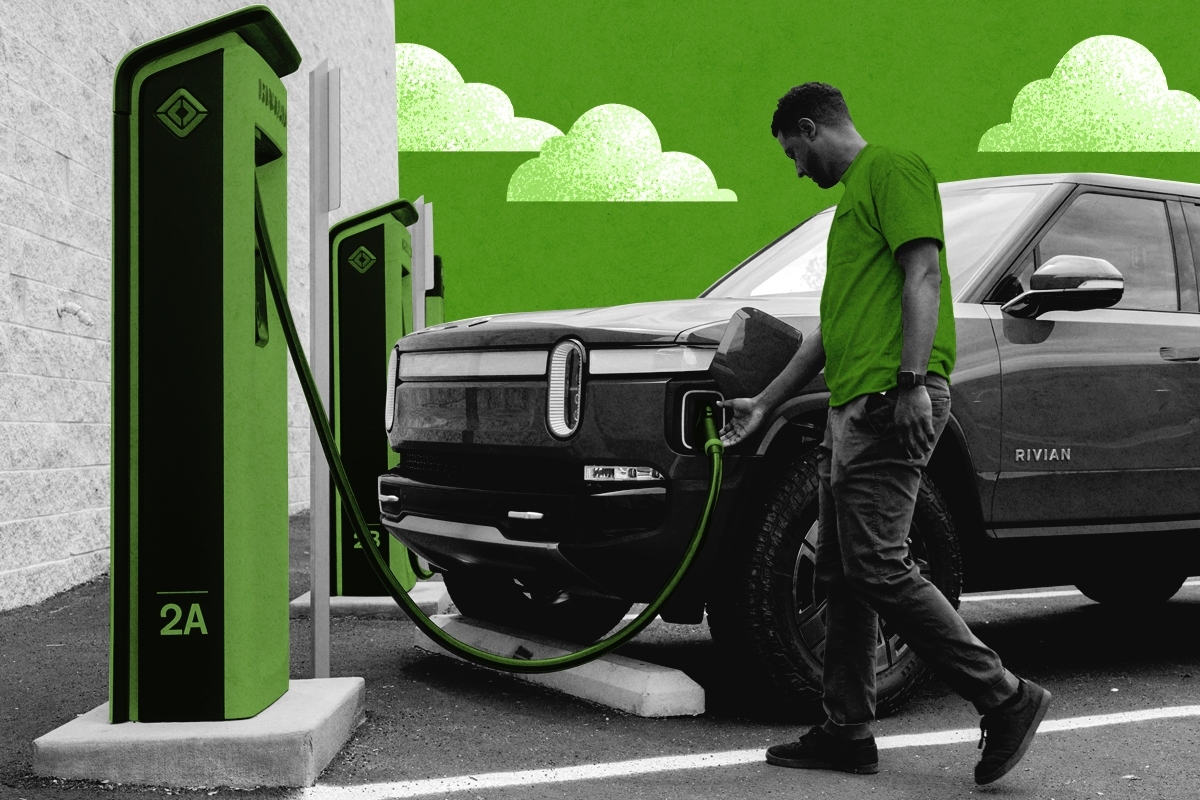
- “We need to use our role in the energy system to enable customers to get more value out of the grid. So everything we do is about grid transformation to enable electric vehicles to have an even stronger and stronger value proposition. When we bring down electricity costs, that brings down the total cost of ownership for our vehicle owners.” — Andrew Peterman, director of advanced energy solutions at Rivian
- “Think about what it means in a technological race. Power is the thing that powers the next economy, right?” Mumgaard said. “All the geostrategic strife we have right now is about power in the form of natural resources. Who has them? What are they? What boats are they on through what body of water? Fusion takes all of that off the table.” — Commonwealth Fusion Systems CEO Bob Mumgaard
- “We’ll adapt to crazy amounts of death and destruction, and not ever kind of — resolve. I always wanted to be some moment where the Ted Cruzes of the world were like, ‘You were right. I’m sorry. And it’s just never going to happen ever, ever, ever, ever.” —Chris Hayes, host of All In with Chris Hayes on MS NOW
- “Everybody is, by the minute, checking if something is happening on the permitting bill, and I certainly hope that we will see some version of that bill get done and over the finish line between now and the end of the year. But as necessary as that is, it’s not at all sufficient to really solve these problems, which have been years, if not decades, in the making, and are going to take in even more ambitious policy responses.” — Brian Deese, the institute innovation fellow at MIT’s Center for Energy and Environmental Policy Research and former director of the White House National Economic Council




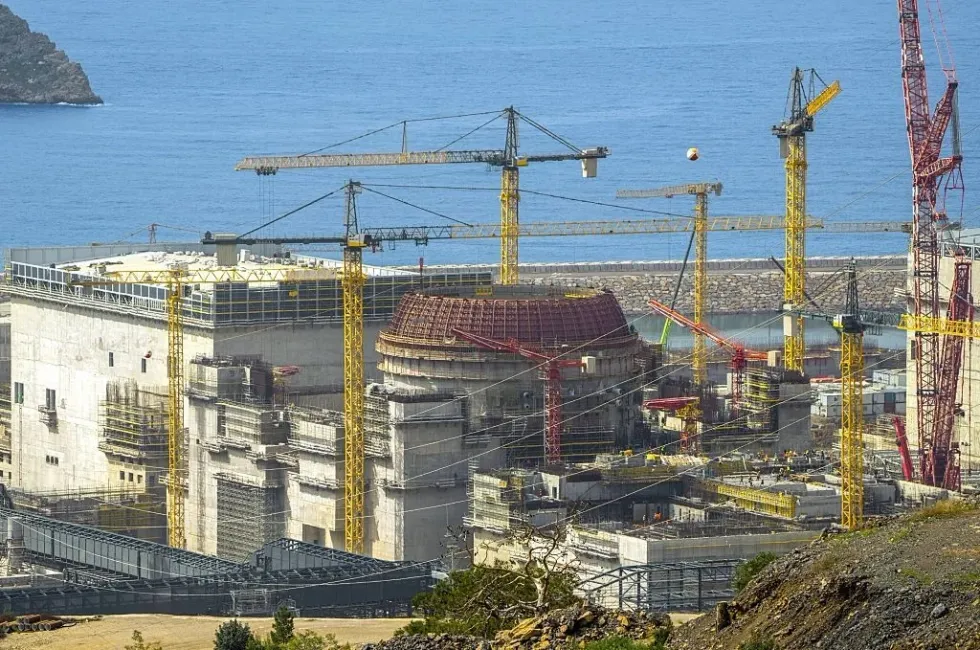 The first nuclear plant being built in Turkey — by Russia. Photo: Akkuyu Nucleer PP/Anadolu via Getty Images