You’re out of free articles.
Log in
To continue reading, log in to your account.
Create a Free Account
To unlock more free articles, please create a free account.
Sign In or Create an Account.
By continuing, you agree to the Terms of Service and acknowledge our Privacy Policy
Welcome to Heatmap
Thank you for registering with Heatmap. Climate change is one of the greatest challenges of our lives, a force reshaping our economy, our politics, and our culture. We hope to be your trusted, friendly, and insightful guide to that transformation. Please enjoy your free articles. You can check your profile here .
subscribe to get Unlimited access
Offer for a Heatmap News Unlimited Access subscription; please note that your subscription will renew automatically unless you cancel prior to renewal. Cancellation takes effect at the end of your current billing period. We will let you know in advance of any price changes. Taxes may apply. Offer terms are subject to change.
Subscribe to get unlimited Access
Hey, you are out of free articles but you are only a few clicks away from full access. Subscribe below and take advantage of our introductory offer.
subscribe to get Unlimited access
Offer for a Heatmap News Unlimited Access subscription; please note that your subscription will renew automatically unless you cancel prior to renewal. Cancellation takes effect at the end of your current billing period. We will let you know in advance of any price changes. Taxes may apply. Offer terms are subject to change.
Create Your Account
Please Enter Your Password
Forgot your password?
Please enter the email address you use for your account so we can send you a link to reset your password:
The Series E round will fund the enhanced geothermal company’s flagship Cape Station project.
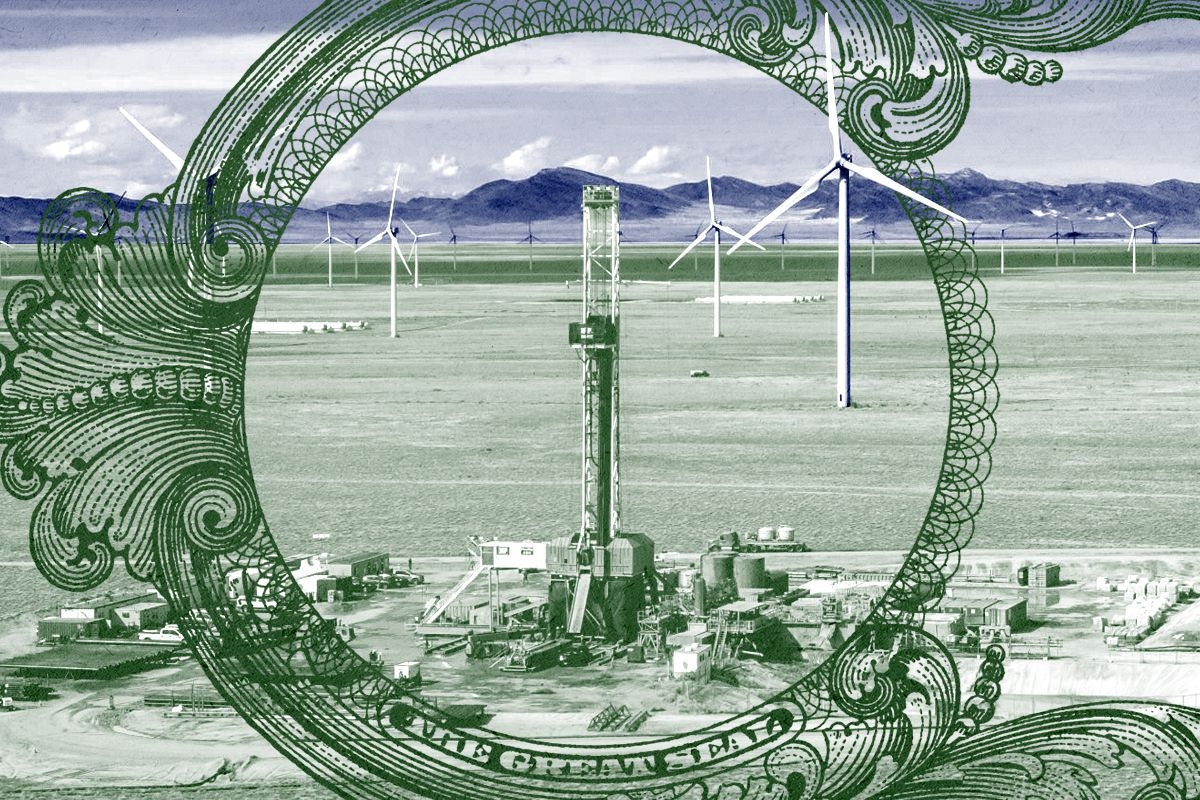
The enhanced geothermal company Fervo is raising another $462 million, bringing on new investors in its Series E equity round.
The lead investor is a new one to the company’s books: venture capital firm B Capital, started by Facebook co-founder Eduardo Saverin. Fervo did not disclose a valuation, but Axios reported in March that it had been discussing an IPO in the next year or two at a $2 billion to $4 billion valuation.
Much of the capital will be devoted to further investments in its Cape Station facility in Utah, which is due to start generating 100 megawatts of grid power by the end of 2026. A smaller project in Nevada came online in 2023.
Fervo’s last equity round was early last year, when it raised $255 million led by oil and gas company Devon. It also raised another $206 million this past summer in debt and equity to finance the Cape Station project, specifically, and reported faster, deeper drilling numbers.
“I think putting pedal to the metal is a good way to put it. We are continuing to make progress at Cape station, which is our flagship project in Southwest Utah, and some of the funding will also be used for early stage development at other projects and locations to expand Fervo’s reach across the Western U.S.,” Sarah Jewett, Fervo’s senior vice president of strategy, told me
“Enhanced geothermal” refers to injecting fluid into hot, underground rocks using techniques borrowed from hydraulic fracturing for oil and gas. Along with the geothermal industry as a whole, Fervo has found itself in the sweet spot of energy politics. It can provide power for technology companies with sustainability mandates and states with decarbonization goals because it produces carbon-free electricity. And it can host Republican politicians at its facilities because the power is 24/7 and employs labor and equipment familiar to the oil and gas industry. While the Trump administration has been on a warpath against solar and (especially) wind, geothermal got a shoutout in the White House’s AI Action Report as an electricity source that should be nurtured.
“Being clean and operating around the clock is just a really strong value proposition to the market,” Jewett said. “Utilizing an oil and gas workforce is obviously a big part of that story; developing in rural America to serve grids across the West; producing clean, emissions-free energy. It's just a really nice, well-rounded value proposition that has managed to maintain really strong support across the aisle in Washington despite the administration shift.”
But bipartisan support on its own can’t lead to gigawatts of new, enhanced geothermal powering the American west. For that Fervo, like any venture-backed or startup energy developer, needs project finance, money raised for an individual energy project (like a solar farm or a power plant) that must be matched by predictable, steady cashflows. “That is, obviously the ultimate goal, is to bring the cost of capital down for these projects to what we call the ‘solar standard,’’’ Jewett said, referring to a minimum return to investors of below 10%, which solar projects can finance themselves at.
While solar power at this point is a mature technology using mass-manufactured, standardized parts having very good foreknowledge of where it will be most effective for generating electricity (it’s where the sun shines), enhanced geothermal is riskier, both in finding places to drill and in terms of drilling costs. Project finance investors tend to like what they can easily predict.
“We are well on our way to do it,” Jewett said of bringing down the perceived risk of enhanced geothermal. “This corporate equity helps us build the track record that we need to attract” project finance investors.
Whether enhanced geothermal is price competitive isn’t quite clear: Its levelized cost of energy is estimated to be around twice utility scale solar's, although that metric doesn’t give it credit for geothermal’s greater reliability and lack of dependence on the weather.
While Cape Station itself is currently covered in snow, Jewett said, construction is heating up. The facility has three power plants installed, a substation and transmission and distribution lines starting to be put up, putting the facility in line to start generating power next year, Jewett said.By the time it starts generating power for customers, Fervo hopes to have reduced costs even more.
“Cost reductions happen through learning by doing — doing it over and over and over again. We have now drilled over 30 wells at the Cape Station field and we’re learning over time what works best,” Jewett said.
Log in
To continue reading, log in to your account.
Create a Free Account
To unlock more free articles, please create a free account.
Overview Energy has raised $20 million already and is targeting a Series A early next year.
When renowned sci-fi author Isaac Asimov first wrote about space-based solar power in the 1940s, it helped inspire engineers and the federal government alike to take the idea seriously. By the 1970s, a design had been patented and feasibility studies were underway. But those initial efforts didn’t get far — challenges with launch costs, constructing the necessary structures in space, and energy conversion efficiency proved too much for scientists to overcome.
Now the idea is edging ever closer to reality.
The space solar company Overview Energy emerged from stealth today, announcing its intention to make satellites that will transmit energy via lasers directly onto the Earth’s grid, targeting preexisting utility-scale solar installations. The startup has already raised $20 million in a seed round led by Lowercarbon Capital, Prime Movers Lab, and Engine Ventures, and is now working on raising a Series A.
The core thesis behind Overview is to allow solar farms to generate power when the sun isn’t shining, turning solar into a firm, 24/7 renewable resource. What’s more, the satellites could direct their energy anywhere in the world, depending on demand. California solar farms, for example, could receive energy in the early morning hours. Then, as the sun rises over the West Coast and sets in Europe, “we switch the beam over to Western Europe, Morocco, things in that area, power them through the evening peak,” Marc Berte, the founder and CEO of Overview Energy, explained. “It hits 10 p.m., 11 p.m., most people are starting to go to bed if it’s a weekday. Demand is going down. But it’s now 3 p.m. in California, so you switch the beam back.”
That so-called “geographic untethering” will be a key factor in making all of this economically feasible one day, Berte told me. The startup is targeting between $60 and $100 per megawatt-hour by 2035, when it aims to be putting gigawatts of commercial space solar on the grid. “It’s 5 o’clock somewhere,” Berte told me. “You’re profitable at $100 bucks a megawatt-hour somewhere, instantaneously, all the time.”
Making the math pencil out has also meant developing super-efficient lasers and eliminating all power electronics on its custom spacecraft. The type of light Overview beams to earth — called “near-infrared” and invisible to the naked eye — is also very efficiently converted into electricity on a solar cell. While pure sunlight is only converted at 20% efficient, near-infrared light is converted at 50% efficiency. Thus, Overview enables solar panels to operate even more efficiently during the night than during the day.
Today, the startup also announced the successful demonstration of its ability to transmit energy from a moving aircraft to a ground receiver three miles below — the first time anyone has beamed high power from a moving source. Although Overview’s satellites will eventually need to transmit light from much farther away — around 22,000 miles from Earth — the test proved that the fundamental technical components work together as planned.
“There’s no functional difference from what we just did from an airplane to what we’re going to do in 10 years at gigawatts from space,” Berte told me. “The same beacon, the same tracking, the same mirror, the same lasers, all the same stuff, just an airplane instead of space.”
Overview’s ultimate goal is ambitious to say the least: It’s aiming to design a system that can deliver the equivalent of 10% to 20% of all global electricity use by 2050. To get there, it’s aiming to put megawatts of power on the grid by 2030 and gigawatts by the mid-2030s. Its target customers include independent power producers, utilities, and data centers, and the company currently has a SpaceX launch booked for early 2028. At this point, Berte says Overview will likely be starting up its own prototype production line, which it will scale in the years to follow.
That certainly won’t be a simple undertaking. To produce a gigawatt of power, Overview will need to deploy 1,000 huge satellites, each measuring around 500 to 600 feet across and weighing about 8 to 10 tons. The largest satellites currently in space are about 100 to 150 feet across, and roughly 5 to 10 tons. “No one really mass-manufactures satellites in the kind of quantities required,” Berte explained, and nobody is producing the design and form factor that Overview requires. “So we are going to have to in-source a lot of the integration for that.”
But while the startup’s satellites will span the length of about two football fields, they fold up neatly into a package about the size of a shipping container, making it possible for them to fit on a SpaceX rocket, for example. When the satellites beam their power down to Earth, they’ll target a beacon — also shipping container-sized — that will be placed in the middle of the solar farm.
Initially, Berte told me, Overview will target deployment in places where logistical challenges make energy particularly expensive — think Alaska or island states and territories such as Guam, Hawaii, and Puerto Rico. But first, the company must demonstrate that its tech works from thousands of miles away. That’s what the funding from its forthcoming Series A, which Berte expects to close in spring of next year, is intended for.
“That is to take us to the next step, which is now do it in space. And after that, it’s now do it in space, but big,” he told me. “So it’s crawl, walk, run, but most importantly, the technology and how you do it doesn’t change.”
Rob catches up with the Center for Strategic and International Studies’ Ilaria Mazzocco.
China’s electric vehicle industry, it’s now well understood, is churning out cars that rival or exceed the best products coming out of the West. Chinese EVs are cheaper, cooler, more innovative, and have better range. And now they’re surging into car markets around the world — markets where consumers are hungry for clean, affordable transportation.
On this week’s episode of Shift Key, Rob talks to Ilaria Mazzocco about her new report on how six countries around the world are dealing with the rise of Chinese EVs. Why do countries welcome Chinese-made EVs, and why do countries resist them? How do domestic carmakers act when Chinese EVs come to town? And are climate concerns still driving uptake?
Mazzocco is the deputy director and senior fellow with the Trustee Chair in Chinese Business and Economics at the Center for Strategic and International Studies. Shift Key is hosted by Robinson Meyer, the founding executive editor of Heatmap, and Jesse Jenkins, a professor of energy systems engineering at Princeton University. Jesse is off this week.
Subscribe to “Shift Key” and find this episode on Apple Podcasts, Spotify, Amazon, or wherever you get your podcasts.
You can also add the show’s RSS feed to your podcast app to follow us directly.
Here is an excerpt from our conversation:
Ilaria Mazzocco: Chinese batterymakers have persisted in focusing on LFP batteries with some spectacular results, I would say. And partly I think that’s been thanks to just being able to deploy them at really large scale and just testing and getting them out there.
But I think BYD is really a great example of that. They invest so much in R&D that it’s really hard to compete with them on some of these things. That’s really the big challenge, where, if you want to make a cheap car, you need LFP. That’s why Ford sought out that licensing deal with CATL, was to acquire LFP battery technology. And LFP batteries are really something that Chinese batterymakers have really excelled at.
Now, there could be breakthroughs in other chemistries. There could be a catchup game with non-Chinese batterymakers that actually become good at making LFP. That’s entirely possible. But right now, if you’re an Indian carmaker and you want to make a cheap car, your best bet is probably to get it from BYD or CATL, or maybe Gotion or something like that. That’s really what you’re looking at.
Robinson Meyer: It also, though, really changes how we talk about a lot of the development of auto industries abroad. Because I mean, I realize this is how cars were made for a long time, but I think … basically like if you were to say, Oh yeah, we make our own internal combustion cars here, we simply import the engines from Detroit, and then we place them in our otherwise finished vehicles that we’ve made domestically, and then we put it under a domestic label. We’re very proud of that. That’s essentially what is happening when countries import batteries. The batteries are so central to the operation of the EVs and what the EVs are capable of that when you import your batteries, you’re really relying on your trade partner for a lot of the core physical capacity of that vehicle, and a lot of the core, underlying chemical engineering capability that that vehicle affords you.
It suggests to me that in terms of when you think about the global EV industry, there are companies that are dependent on some kind of Chinese battery export. There are companies that are dependent on some kind of Korean battery export. There’s a few American entrants — mostly Tesla. There’s a few European entrants. And that’s kind of it. Everyone else is piggybacking on the back of one of those core technologies.
Mentioned:
Ilaria’s new report: The Global EV Shift: The Role of China and Industrial Policy in Emerging Economies
Previously on Shift Key: How China’s EV Industry Got So Big
This episode of Shift Key is sponsored by …
Heatmap Pro brings all of our research, reporting, and insights down to the local level. The software platform tracks all local opposition to clean energy and data centers, forecasts community sentiment, and guides data-driven engagement campaigns. Book a demo today to see the premier intelligence platform for project permitting and community engagement.
Music for Shift Key is by Adam Kromelow.
A trio of powerful climate hawks are throwing their weight against the SPEED Act.
Key Senate Democrats are opposing a GOP-led permitting deal to overhaul federal environmental reviews without assurances that clean energy projects will be able to reap the benefits. Winning these lawmakers’ support will require major concessions to build new transmission infrastructure and greater permitting assistance for renewable energy projects.
In an exclusive joint statement provided Tuesday to Heatmap News, Senate Energy and Natural Resources ranking member Martin Heinrich, Environment and Public Works ranking member Sheldon Whitehouse, and Hawaii senator Brian Schatz came out against passing the SPEED Act, a bill that would change the National Environmental Policy Act, citing concerns about how it would apply to renewable energy and transmission development priorities.
“We are committed to streamlining the permitting process — but only if it ensures we can build out transmission and cheap, clean energy. While the SPEED Act does not meet that standard, we will continue working to pass comprehensive permitting reform that takes real steps to bring down electricity costs,” the statement read.
As I wrote weeks ago, there’s very little chance the SPEED Act could become law without addressing Senate climate hawks’ longstanding policy preferences. Although the SPEED Act was voted out of committee in the House two weeks ago with support from a handful of Democratic lawmakers, it has yet to win support from even moderate energy wonks in that legislative body, including Representative Scott Peters, one of the Democratic House negotiators in bipartisan permitting talks. Peters told me he would need to see more assurances dealing with the renewables permitting freeze, for example, in order for him to support the bill.
Observers had initially expected a full House vote on the SPEED Act as soon as this week, but an additional hurdle arose in recent days in the form of opposition from House conservative Republicans, led by Representative Chip Roy. The congressman from Texas had requested additional federal actions targeting renewables projects in exchange for passage of the One Big Beautiful Bill Act, which effectively repealed the Inflation Reduction Act. What followed was a set of directives from the Interior Department that all but halted federal solar and wind permitting. Roy’s frustration with the SPEED Act concerns a relatively milquetoast nod to renewables permitting problems that would block presidents from rescinding already issued permits. This upset appears to have delayed a vote on the bill in the House.
There’s an eerie familiarity to this moment: Almost exactly one year ago, the last major attempt at a permitting deal, authored by Senators Joe Manchin and John Barrasso, died when then-Majority Leader Chuck Schumer declined to bring it up for a vote in the face of opposition from the House. Unlike the SPEED Act, that bill offered changes to transmission siting policy that even conservative estimates said would’ve hastened the pace of national decarbonization.
Having Schatz, Heinrich, and Whitehouse — the three most powerful climate hawks in Congress — throw their weight against the SPEED Act casts serious doubt on the prospects for that legislation becoming the permitting deal this Congress. It also exposes an intra-energy world conflict, as it appears to position these lawmakers in opposition to American Clean Power, an energy trade group that represents a swath of diversified energy companies and utilities, as well as solar, wind, and battery storage developers.
Last week, ACP joined with the American Petroleum Institute and gas pipeline advocacy organizations to urge Congress to pass the SPEED Act. In a letter to House Speaker Mike Johnson and Minority Leader Hakeem Jeffries, ACP and the fossil fuel industry trade groups said that the legislation “directly addresses” the challenges facing their interests and “represents meaningful bipartisan progress toward a more stable and dependable permitting framework.” The only reference to potential additions came in a single, vague line: “While the SPEED Act makes important progress, there are additional ways Congress can facilitate the development of reliable and affordable energy infrastructure as part of a broader permitting package.”
This letter was taken by some backers of the renewable energy industry to be an endorsement without concessions. It was also a surprise because just days earlier, American Clean Power responded to the bill’s passage with a vaguely supportive statement that declared “additional efforts” were needed for “transmission infrastructure,” without which “energy prices will spike and system reliability will be threatened.” (It’s worth noting that the committee behind the SPEED Act, House Natural Resources, has no authority over transmission siting. No other proposal has yet emerged from Republicans in that chamber for Republicans to address the issue, either.)
One of the renewables backers taken aback was Schatz, who took to X to sound off against the organization. “Congratulations to ‘American Clean Power’ for cutting a deal with the American Petroleum Institute, but to enact a law both the house and the Senate have to agree, and Senators are finding out about this for the first time,” Schatz wrote in a post, which Whitehouse retweeted from one of his official X accounts.
In a subsequent post, Schatz said: “I am not finding out about the bill’s existence for the first time, I am tracking it all very closely. I am finding out that ACP endorsed it as is without anything on transmission, for the first time.”
By contrast, the statement from the three senators aligns them with the Solar Energy Industries Association, which sent a letter from more than 140 solar companies to top congressional leaders requesting direct action to fix a bureaucratic freeze on permit-related activity that has already helped kill large projects, including Esmeralda 7, which was the largest solar mega-farm in the United States.
In its message to Congress, the trade association made plain that while the SPEED Act was a welcome form of permitting changes, it was nowhere close to dealing with Trumpian chicanery on the group’s priority list.
We’ll have more on this unfolding drama in the days to come.