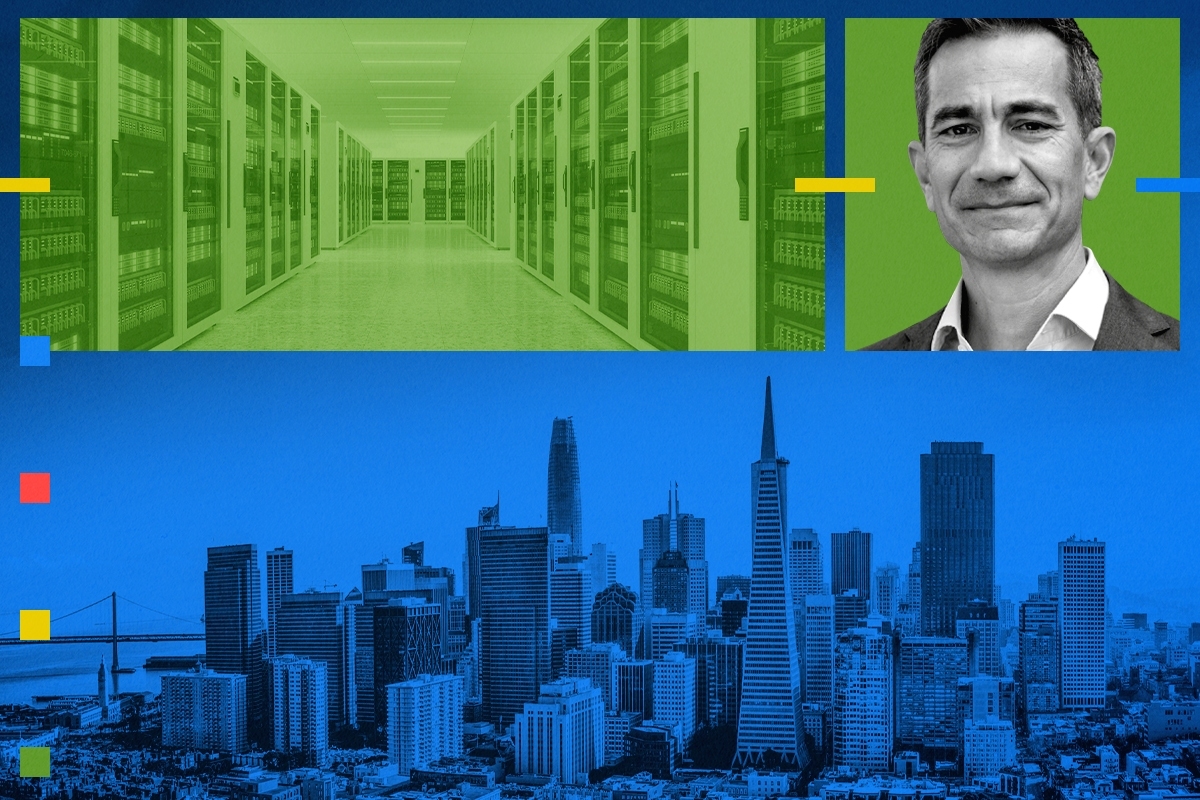
Rich’s first fight on behalf of the Trump team? Battling solar projects in upstate New York. Over the weekend, Agriculture Secretary Brooke Rollins, EPA Administrator Lee Zeldin, and the freshly-annointed Rich wrote New York Governor Kathy Hochul grilling her on the state’s definition of “prime farmland” and claiming “the absence of a clear plan” for disposing of solar panels after projects are decommissioned. The letter resulted from Rich’s conversations with a prominent anti-solar Substack author in upstate New York, Alexandra Fasulo, and it references a specific Repsol project under development in Glen, New York, that she is fighting in state court.
“Only 8 weeks ago, I decided to start posting my written content from Facebook and Substack to X. It didn’t take long before John Rich and I connected,” Fasulo wrote in a blog on Monday. “John and I spoke on the phone a few times. We texted and I began to share my research with him. Many meetings later… and the US Department of Agriculture, the Environmental Protection Agency (EPA), and John Rich put their heads together.” In her post Fasulo signaled more is coming. “If you read the letter slowly, you’ll get the gist of what the feds are trying to do here. For legal purposes, I am not going to explain that in writing. Read between the lines,” she said. “This lays the foundation for battling destruction at the hands of solar and wind complexes, battery storage, and so much more. Have a little faith and patience. There is A LOT to come.”
Trump is pivoting to farmland fights because there are few battlegrounds left for the federal government to fire upon. He has totally undermined large-scale renewable energy development in the ocean – I mean, look at offshore wind. He’s wrecked progress in the desert, where large solar farms on federal lands remain trapped in bureaucratic permitting delays. Some facilities are now getting through, like Primergy Power’s Purple Sage Energy Center south of Pahrump, Nevada, which got its permits last month. Yet other large projects are petering out; permitting on at least three large solar proposals – Smith Blythe’s Desert Energy Charger Project and Intersect Power’s Perkins Renewable Energy Project in California and Balanced Rock Power’s Samantha Solar effort in Nevada – has been paused or canceled outright since the start of the year.
The president’s turn to fighting projects on farmland also makes sense from a political standpoint. He’s facing an enormous backlash to a buildout of hyperscale data centers he supported, many of which are sited on acreage suitable for agriculture. Republicans running statewide in must-watch midterms battlegrounds – Texas and Iowa, for example – will have to navigate this rocky terrain where something their president supported is deeply unpopular. By bringing Rich aboard and letting him wail on renewable energy in the public square, it’ll be a signal that the Big Man is still listening to rural MAGA voters wary of industrial development.
In media interviews, Rich has claimed Trump created this new, unpaid special envoy position after the country star turned down an offer to sit on the TVA. “I said [to Trump], ‘if I serve with the TVA I cannot disparage the TVA, and I fully intend on keeping my right to disparage them intact.’” He said, ‘You know what, I respect that. So what do you want to do?’ And I said, ‘Man, give me a position where I’ve got some authority and I can work with the highest agencies in the land to protect landowners. Can you create something like that for me?’”
That’s at least the public story for how the president created the “special envoy” role, which Rich has described in ways that are equal parts citizen-government liaison and culture warrior. It’s now clear from his many posts on X that he’ll be heavily involved in messaging against the construction of new renewable energy facilities, carbon pipelines and, potentially, hyperscale data centers.
“[I’ll] go out, find these egregious situations where landowners are being infringed upon and I can go in, work with USDA, EPA, Secretary of the Interior, HUD, the Energy Department, and then all the way of course [to] the Oval Office – to throw up a defense against American landowners,” Rich told Atkisson. He added that data centers will also be a focus of his in government, and there are “two or three” projects out there where he wanted to intervene.
“The president wants to see the data centers built, but he also wants the farm and ranchland to be preserved. We have to have food security for America. We have to.”
Rich and Fasulo then joined Rollins and other administration officials at a press conference Thursday in Washington, D.C. Fasulo spoke at length against New York solar and wind development. Pressed on how data centers square with farmland protection, Rollins spoke about the anxiety in rural America around hyperscalers.
“That debate is raging right now,” she said. “I think that the importance of private property rights, the importance of preserving American farmland, the importance of ensuring we’re going to have another 250 years of freedom is paramount. Does that mean it is completely incompatible with data centers? I don’t think so and I know President Trump doesn’t think so. But what it does mean is that we have to be extremely intentional. There should be plenty of land in this country where data centers can be built that will not be on prime, important farmland. That’s my take on that.”
When Rich joined the federal government is unclear. The Agriculture Department formally announced Rich joined the administration on June 10, but Rich first disclosed Trump “made an offer for a position” in a subscriber-only post made to X on July 24, 2025. He then provided updates in similarly paywalled statements, revealing the Trump appointment to his subscribers in April. Then in May, he told subscribers that he’d completed federal onboarding. “I’m really looking forward to pushing bad guys off of good guys’ land:) You’ll be seeing the official announcement soon, but I wanted you to know 1st!”
What’s clear, however, is that Rich has other targets too. As Rich was brought into federal service, he began routinely sharing a URL – “usda.gov/lawfare” – and directed aggrieved landowners to report potential misdeeds around land seizure. A review of his back-and-forth communications on social media indicate several potential fights he may wade into. Wind energy projects in Kansas. Solar development in rural Virginia. An aluminum smelter in Oklahoma. Carbon capture proposals in Louisiana.
Prior to formally joining the administration, Rich got involved in a conflict over eminent domain and transmission for data centers in Coweta County, Georgia, which had gone viral on right-wing social media. On May 12, Rich said he “just had a great phone call” with Rep. Brian Jack, the GOP congressman who represents the transmission battleground in question. “I will be speaking more on the matter soon,” he tweeted, declaring the power lines threatened “not only homes, but cattle farms and row crops.” Rich also says he facilitated federal engagement between the USDA and Casey Murph, a rancher in Navajo County, Arizona, who claims the state prematurely ended a land lease he held so Orsted can build a solar project.
It’s also apparent Rich will be the first major Trump administration official to publicly root for more counties to indefinitely ban solar and wind development. “The best way for farm and ranch land to be protected from wind/solar projects is for the county to pass a moratorium on those energy sources, disallowing them to ever be built in the county,” Rich told an X follower on May 16.
No one can predict how harmful it’ll be to have one of country music’s most famous artists turning into a spokesperson against renewable energy. But I doubt even paying Katie Miller to say nice things about solar will be able to overcome newly-empowered activism from a Nashville legend.