2. Taiwan takes a stake in Alaska LNG
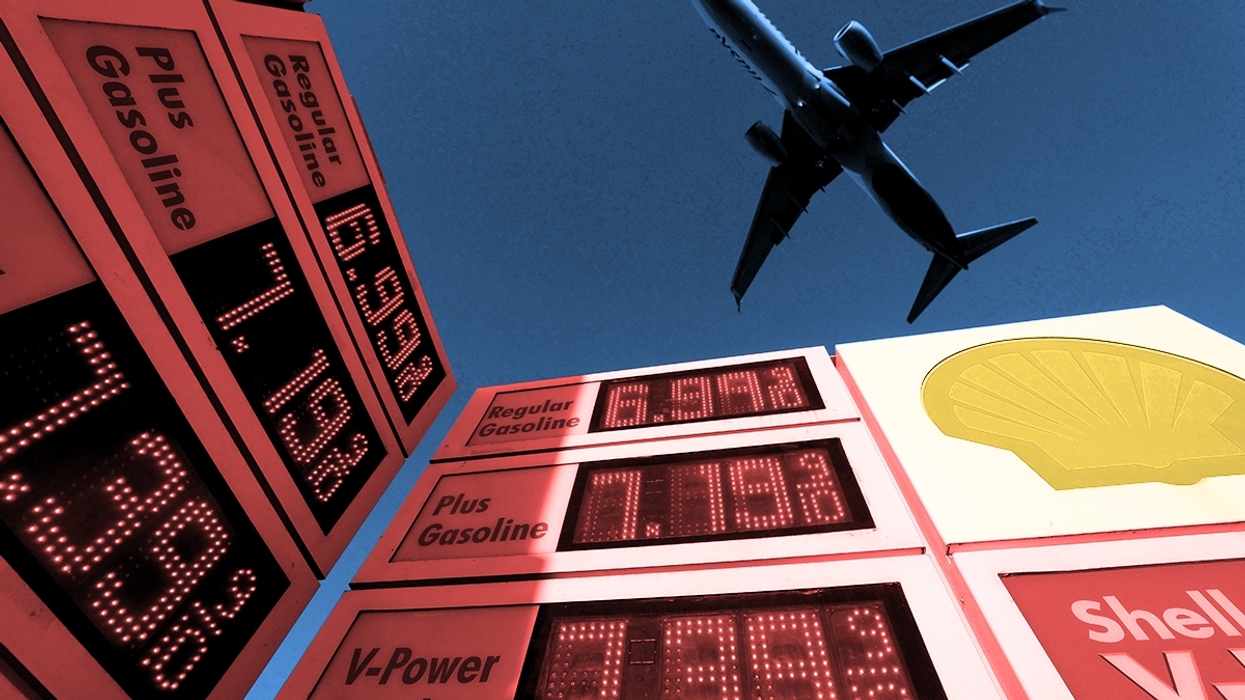
Since shutting down its nuclear plants, Taiwan has become dependent on natural gas for at least half its electricity generation. But the self-governing island democracy doesn’t drill any of the fuel. It’s dependent on imports at a moment when, thanks to the war in Iran, anyone who isn’t producing their own is looking for a cheap, steady supply of liquified natural gas. Taipei has found a supplier. In a Wednesday post on his Truth Social platform, President Donald Trump said Taiwan agreed to buy 30% of the LNG shipped from the proposed $55 billion megaproject to build a gas pipeline from Alaska’s Arctic coast to an export terminal south of Anchorage. As part of the 20-year deal, Trump said the Taiwanese government would pay $4.4 billion for an equity stake in the project. Taiwan’s Ministry of Economic Affairs confirmed the deal and said it would work out the details later.
The pledged investment for the long-delayed project comes days after the Environmental Defense Fund released a new analysis showing that utilities and developers are cooling on clean power and once again pumping money into fossil fuel infrastructure at a rate that could see gas and even coal regain “a market share not seen since the early 2010s.” Amid all this investment, the national average retail price of electricity fell year over year from 20 cents per kilowatt-hour in September 2025 to 19.6 cents per kilowatt-hour last month, according to the freshest data on Heatmap and MIT’s Electricity Price Hub. “Great news, right?” my colleague Matthew Zeitlin wrote yesterday. “Not really.” He explains further: “While this is the first year-over-year decline in average prices since September 2023, it’s mostly due to California moving around its Climate Credit to the late summer months of August and September, historically among the highest-demand periods on the grid. The state previously delivered the credits in April and October. But while this is a nice thing for California ratepayers, it does less to tell us about nationwide electricity price trends.”
3. China’s biggest solar manufacturers cut 40,000 jobs
 Turning over a new leaf on overcapacity? Xu Changliang/VCG via Getty Images
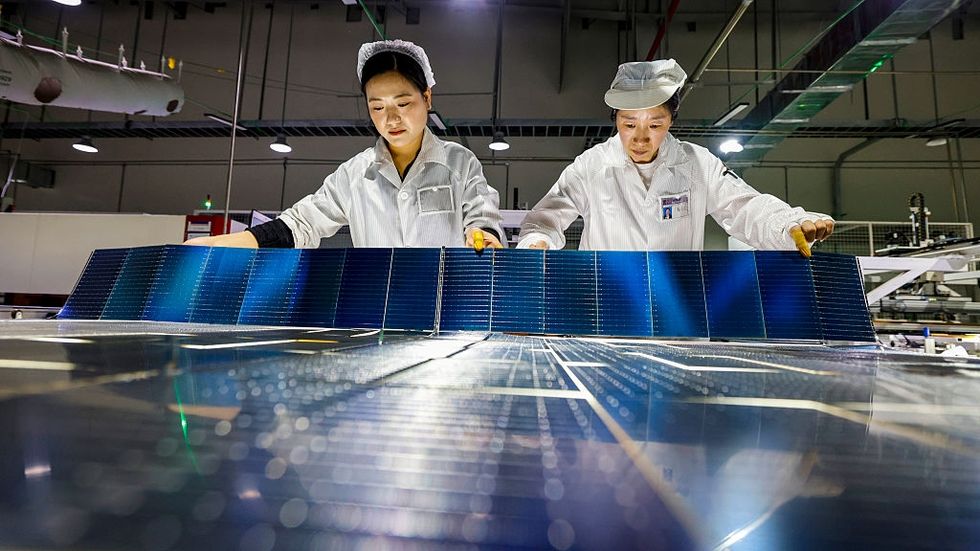
China’s top five solar manufacturers cut nearly 41,000 jobs last year as Beijing cracks down on the overcapacity that made exports so cheap Europeans started building fences out of panels. A new Reuters analysis of company filing shows that Longi Green Energy, Trina Solar, Jinko Solar, JA Solar, and Tongwei employed 40,589 fewer people than a year earlier. That 21% drop followed a 31% decline last year. The job cuts represent what the newswire called a “paradox,” in that the solar sales are booming as the world seeks alternatives to Middle Eastern hydrocarbons, yet the biggest manufacturers built too many factories and now no one can make any money.
The shift in China comes as the U.S. scrambles to rebuild its solar manufacturing capacity. Tariffs that Trump implemented, former President Joe Biden maintained, and Trump doubled down on have already set the stage for what my colleague Emily Pontecorvo reported may or may not be a manufacturing resurgence in the U.S. In August, we reported the Department of Commerce’s new trade restrictions were the administration’s lifeline to solar manufacturers that lost a key incentive when federal tax credits went away, taking with them the bonus for buying domestically-produced panels.
Sign up to receive Heatmap AM in your inbox every morning:
4. Energy Department invests in a novel kind of experimental reactor
The world has seen experimental reactors that use molten salt as a coolant for a fission reaction fueled by uranium or plutonium. Several startups, including Bill Gates’ TerraPower, are now seeking to commercialize a version of that technology. Recently, the startup partnered with the utility giant Southern Company to examine a whole new possibility: A molten chloride fast reactor that uses liquid salts as both a coolant and a fuel. If that could work, it would be the first in the world. The advantages of the technology, in theory, would be limited enrichment needs, no fuel assemblies of uranium pellets, and a more flexible reactor that can ramp up and down to meet the grid’s needs. On Wednesday, the Department of Energy backed the effort to validate the science behind so-called MCFR reactors. The research will take place at the Idaho National Laboratory and has support from Southern and Core Power, a startup looking to harness fission to power cargo ships.
5. New York City brings some New Dealism to quantum computing
Is quantum computing a climate technology? Despite overlapping investors, it’s a difficult case to make, my colleague Katie Brigham wrote earlier this year. But the ways in which the technology develops certainly could be a model for other energy breakthroughs. On Wednesday, New York City Mayor Zohran Mamdani unveiled a deal with New York University whereby City Hall will support the construction of a quantum computing lab in exchange for 15% of any proceeds from selling intellectual property developed at the facility. “In the first deal of its kind in NYC history, the public is investing $30 million in a quantum lab — in exchange for three board seats and 15% of the revenue generated from technology it creates,” Lina Khan, the chair of the board of the New York City Economic Development Corporation, wrote in a post on X. “And if any firm coming out of the lab merges, gets acquired, or IPOs, the city gets a payout.”
THE KICKER
When the solution to Indonesia’s very modern smog problems was invented, the archipelago nation remained under Dutch colonial rule and the planet was about 1 degree Celsius, or 1.8 degrees Fahrenheit, cooler than it is today. To ease the thick haze in Jakarta and other cities from forest fires the country the country is repurposing a weather-modification technique first invented in the 1940s. Per Bloomberg: “Aircraft will disperse pellets of dry ice above South Sumatra province in an experimental approach that authorities hope will reduce the hazardous smoke that’s blanketed the region for weeks, disrupting economic activity and damaging public health.” The first trial run starts today.






 Turning over a new leaf on overcapacity? Xu Changliang/VCG via Getty Images