This transcript has been automatically generated.
Subscribe to “Shift Key” and find this episode on Apple Podcasts, Spotify, Amazon, or wherever you get your podcasts.
You can also add the show’s RSS feed to your podcast app to follow us directly.
Robinson Meyer:
[00:47] Hello, it’s Friday, May 15. President Trump and President Xi Jinping are meeting in China today. And while we don’t know what they are talking about, at least we don’t know as I record this, there’s a lot of scuttlebutt that they could discuss electric vehicles and Chinese battery manufacturing.
Robinson Meyer:
[1:01] The United States is at this point kind of the last holdout in North America where you could not buy a Chinese EV. They’ve been available in Mexico for a long time. There was a recent great Wall Street Journal story about how they’ve started to leak across the border in El Paso. And Canada, as you’ll recall, recently allowed Chinese EVs into its domestic market as well, provided that its automakers also build domestic factories. China is itself in a very interesting position here. It both clearly has what even the CEO of Ford now acknowledges are some of the world’s best cars, never mind just electric cars, just best parked cars, period. But it’s also dealing with pretty moribund economic demand at home, meaning it’s desperate to find global export markets for its goods.
Robinson Meyer:
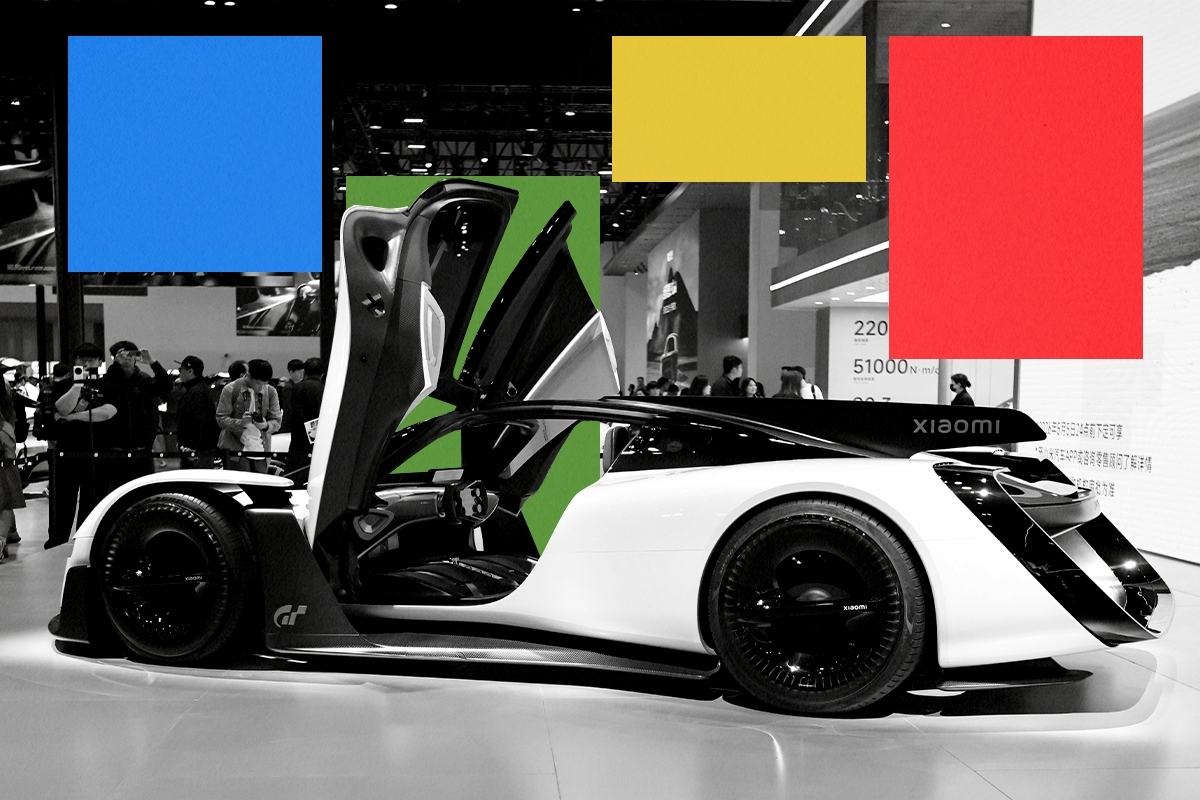
[1:44] EVs increasingly support Chinese exports as well. In April, China actually exported more EVs than gas-burning cars for the first time. So on today’s show, with all that in mind, I thought it would be fun to talk to two people who recently saw those EVs in China at the number one place to see them. Today, we’re talking to Kate Logan. She’s the director of the China Climate Hub and Climate Diplomacy at the Asia Society Policy Institute in Washington, D.C. We’re also joined by a friend of the show, Jeremy Wallace. He’s a professor of China studies at the Johns Hopkins School of Advanced International Studies. Kate and Jeremy recently went to the Beijing Auto Show, which is both the world’s most important car show for electric cars, but also just its biggest auto show at this point, period. As one attendee observed, there were actually more EV models in one room of the Beijing Auto Show than there were available for sale in the entire U.S. car market. So Kate and Jeremy are going to share their impressions from that, whether they came away thinking that China may be solving some of the last remaining engineering problems for EVs, what impressed them, what they thought was maybe missing from the expo, and how the U.S. Should handle what is clearly at this point the superiority of Chinese electric vehicle technology. I’m Robinson Meyer, the founding executive editor of Heatmap News, and it’s all coming up on Shift Key. Kate and Jeremy, welcome to Shift Key.
Kate Logan:
[3:07] Thanks. It’s great to be here.
Jeremy Wallace:
[3:08] Great to be here.
Robinson Meyer:
[03:10] So you’ve both just returned from China, I think potentially both in the past 48 hours, which, we salute you so much for immediately doing the thing that one wants to do when one is severely jet lagged and coming on a podcast right in the middle of the day. And I think I wanted to start just like at the risk of asking two Americans to kind of sum up the atmosphere or vibe of a country of more than a billion people, which you just only were in for a few days. Like, can you give us a vibe check? Where did you go? How did it feel on the street? How did it compare to previous trips? And like, how were you treated, I don’t know, as Americans? And was it like any different from the past? Then we can get into like what you did there. But I just wanted to start with this. What was the vibe? How was it?
Jeremy Wallace:
[3:53] It was, it was fascinating. So I arrived, speaking of jet lag, up six in the morning, walking around the central business district of Beijing. It was glorious weather and clean air in Beijing, which is not always the case. And so that’s a difference from previous visits. It was the May Day holiday. And so it was very, very quiet in the center of the city. People tend to travel and go out on excursions. So the traffic that is quite often a problem and kind of One of the more larger hassles of living in Beijing was not as bad as usual. And I immediately went to the Beijing Auto Show, which felt like the future. And so the vibes were very much about a transition that is happening.
Robinson Meyer:
[4:40] Kate, how long were you there? What did you see? What was the vibe?
Kate Logan:
[4:43] Yeah, so a bit different to Jeremy. I put the Beijing auto show at the end of my trip. So I actually have lived previously in Beijing for almost five years from 2014 to 2018. And since the pandemic, I’ve been back about once per year. And I think what was interesting this time is to come back and really feel like the city has returned. And not only returned, but, you know, it feels like a city that’s built for a burgeoning upper middle class. In a way that there are a lot of, you know, businesses that I used to frequent that I really miss that are no longer there for a variety of factors, but also a lot more resources. But I think in terms of the vibe on the ground, Beijing itself as a city is beautiful in the spring. But, you know, for me, the other fun part is just seeing how the electric vehicles on the roads have increased over the years. And what’s really neat in China is that there’s basically two license plates. There’s blue ones and there’s green ones. And when I left Beijing in 2018, you know, the green ones were rising, especially because a lot of the taxis are required to be EVs or there are a lot of incentives for that. But this time I’d say about, you know, almost half or around half the vehicles on the roads are like having those green plates and it makes it quieter. And it’s fun just to get in a DiDi, which is the Chinese ride-hailing app, and see what kind of luck of the draw you’re going to get in terms of the car.
Robinson Meyer:
[6:02] So you both went to the auto show. Kate, I don’t know. I’m continuing to ask for vibe checks here, but I think, you know, travel between the U.S. and China is reduced enough that it’s been picking up lately that I feel like it’s just important to kind of start by painting a picture. What was the auto show like, Kate? And who did it seem to be for? In the U.S., when you go, like the audience, the New York auto show is actually quite different from the audience at, say, the Washington, D.C. Auto show, although to some degree, they’re both for car buyers. Like, was the Beijing auto show, I don’t know closer to a kind of auto show for domestic consumers who are looking to buy vehicles or was it maybe closer to say CES the big tech industry and electronics conference that happens every year in Las Vegas which is kind of as much for like global press and investors and consumers as it is for people in Las Vegas who are going to go think about what laptop they want to buy next.
Kate Logan:
[6:53] So I’ll start by caveating this in that this was my first time ever to an actual auto show. I’ve been to other industry trade shows. So take my interpretations with a grain of salt in that I don’t have a benchmark. But the first thing I’ll say is apparently this is now not only the biggest auto show in China or the past few years, but largest auto show in the world this year. So I read something like 1,400-plus vehicles, over 200-something new launches, et cetera, et cetera. But the word that I would describe is overwhelming, but I think even that’s an understatement. They had put together not just one, but two giant exhibition halls. And off the central axis, you have all of these huge, you know, like, halls in themselves. So they’re about eight in one building, nine in the other.
Kate Logan:
[7:40] And you know in terms of your question about who was there they had it set up such that the early days were meant for media for industry. The days that Jeremy and I went were more for public consumption, so it’s a little bit for everyone at this point. And on the days we were there because it was more aimed toward the general public you know first of all this thing is massive but the halls are still filled to the brim so you have families with young children showing their kids the latest electric vehicles, lots of humanoid robots, that kind of stuff. And then you have influencers everywhere with their phones on giant sticks, streaming content. And, you know, when we were there, there was a lot of Chinese influencers, but I’ve heard from friends in media who were there on the earlier days that there were a lot of international influencers from all sorts of countries as well. And we saw, I think, a few international visitors from other regions, including, you know, say the Middle East, other areas in Europe, probably some Russians as well, even on the public days. So there’s a little bit for everyone at this point. But yeah, Jeremy, curious what you think as well.
Jeremy Wallace:
[8:42] It was overwhelming is a good word. It was impressive, a cornucopia of a cars, not all in one size, but in every possible size, from the tiniest little cars that make smart cars look big to kind of giant semi-trucks without any windshields that are meant to be operated autonomously and everything in between. And so it was really large, really impressive, and meant, I think, to get to the original question, both for domestic car purchasers, but also as a signal to the world and to the industry that these brands are here and real, which I think for most of the case is the truth. But for maybe some, it’s a show of strength, even if the financials are not always there.
Robinson Meyer:
[9:35] So often when we hear about Chinese automakers, I think we hear about BYD. This is the juggernaut. It’s coming. I think we have especially in the West heard about the especially cheap BYD cars. And they have this model called the Seagull, although they actually seem to have many models called the Seagull. And it kind of depends on what country you are, what they call the Seagull. But at least in China, they were selling a car that’s translated as the Seagull. That was roughly $10,000 all in, which is obviously extremely, extremely cheap. It’s hard to get a car in the U.S., a new car below 25k at this point. If you get a little bit further into Chinese EVs, I think then you start to hear about Xiaomi, the, you know, cellular phone company that now also makes these Ferrari-like cars. But you’re there. This is, you’re in Beijing. You’re looking at Chinese consumers, kind of choosing vehicles. What were the standout automakers at the level of the show? Who was most impressive? Who had the biggest crowds? And what were you most impressed by? Jeremy.
Jeremy Wallace:
[10:33] I think the first thing to say is that the move that so much of the Western media takes to equate China with BYD simplifies the reality, the day that Kate and I were walking around the show, we visited God knows how many booths and displays, and only at the end of the day did we realize we had not yet seen BYD, and then went into an entire hall that was BYD. And so you can walk for seven hours walking around looking at the future of the car industry and not even see BYD until the end. And so that being said, its displays were quite impressive. It is both the second largest battery maker on the planet, as well as the largest EV player in the world. And its wares were quite impressive, both on the technical side of various battery charging capacities, as well as the models. Sitting in a $6,000 car is a different experience than sitting in a $60,000 car, but it is a car and it does seem like it will move. It does seem like it will charge your phone, and have a screen inside, and get you from place to place at a quarter of the price of the average cheapest possible U.S. vehicle on the market. I still think for all of the luxury and everything else that was on display and kind of the center of attention, the cheap EV and its reality is very compelling from an American perspective.
Kate Logan:
[11:59] Maybe I’ll highlight the opposite end of what surprised me, which is that I went in thinking about affordable Chinese EVs and certainly agree with everything Jeremy just said. But at the same time, there were so many luxury SUVs on display. And that really surprised me because a couple of reasons. One is that, you know, they’re not just... High quality in the sense of being luxurious to sit in, full massage chairs, strong horsepower, mostly electric and if not electric, battery electric hybrid, but also more affordable. And I think about this idea of American car companies leading in luxury SUVs. That’s what the American consumer likes, whatnot. And I think about where the Chinese companies are trying to sell these vehicles. And I think part of them are for the domestic market in China, sort of upscaling a bit. But some of the companies we talk to as well are very much looking at international luxury markets like the Middle East. I think the first booth that we went to at the start of the day was Zeker, which had this really beautiful new luxury SUV that I think Jeremy sat in for a few minutes. And you’re just thinking about what that means for the future of international markets and exports, not just from China, but for other countries like the U.S. Was certainly something that came to mind. And then the second thing was just in terms of where crowds were clustering
Kate Logan:
[13:22] Was also very much around the leading battery tech. So BYD, we think of it as an auto company, but it’s also very much a battery company. And then, of course, CATL, the leading battery company, and both BYD and CATL, their pavilions at the center had a big chamber with a vehicle in negative temperatures. So for BYD, I think it was negative 30 degrees Celsius. And then for CATL, negative 50 degrees Celsius, basically showcasing that not only can their batteries charge to 70% in five minutes for BYD, for instance, but also do so and hold a charge at extremely cold temperatures. And they had a little hole where you could stick your hand in just to verify that that chamber was as cold as it looked with the little icicles dangling from the vehicle. But to see that up front and see that be a focus was really interesting as well.
Robinson Meyer:
[14:13] This idea of flash charging, I feel like, is one of the big memes that’s emerged from the auto show. So historically, you know, one of the big challenges with electric vehicles has been the charging, the idea that you can’t charge an EV as fast as you can refill the gas tank of a car. And a lot of the innovation and the operation and the kind of thought that goes into EVs in the West, or at least in the United States, has been around, therefore, taking the experience of charging and making it as convenient and pleasant as possible, either by operating these huge charging networks and building them, as Tesla does, or by like sticking superchargers at Wawa and Buc-ee’s and, you know, various places you might like to spend your time. But it sounds like the Chinese companies, at least BYD and CATL, have actually found two different engineering fixes for the charging problem that just have charging now happen essentially as fast or on time scales very comparable to those that are filling up your car. And so one of them is flash charging, which I wanna hear about. And then the other one is battery swapping. This has been theorized for a while, but taking out a spent battery out of a vehicle and fully installing a new fully charged battery into it.
Robinson Meyer:
[15:25] Reportedly, both of these technologies were demonstrated at the auto show and are potentially now also, demonstrated every day across cities in China. What did you see? I guess what I’m winding up to here is like, did they work? Did they seem to work? Were people transfixed by them? Did you see them just at the auto show? Or do you kind of see them also around Beijing?
Kate Logan:
[15:46] Maybe I could start with this. Since I mentioned I was in Beijing for about a week before I went to the auto show, and I was at a track two dialogue in the north of Beijing by the Olympic Stadium and very close to our hotel was a battery swap station. And I think it’s NIO that’s been one of the leading Chinese car companies that’s invested in battery swapping. So just seeing that on the streets was one of the first things I saw when I arrived to Beijing after hearing about it from my perch in D.C. One thing that was interesting is I also went on the sidelines of the auto show to an event that CATL held talking about some of the future of their innovation and R&D. And one of the things they mentioned was for battery swapping, there’s the potential in the future to swap out a battery with a longer range for, say, a road trip. So if batteries improve in terms of their duration and battery density and all those factors, you might have a vehicle that starts with one battery. But if you want to go on a longer road trip, you can go just swap the battery and come back and go back to your regular battery after that. So I thought that was quite interesting as well. But yeah, Jeremy, maybe I’ll throw to you.
Jeremy Wallace:
[16:53] So battery swapping is very common in Beijing in the sense of for scooters, for two-wheelers, China has electrified two-wheelers for a long period of time. And the way that that works is that the two-wheelers are driven around. When your battery is low, you will find a kind of a station. It looks like, I don’t know, like a supersized vending machine, and you will put in a number and you will kind of swap, take the battery from your vehicle out and put it in and swap it out for a fully charged one. So the idea of swapping batteries, even though it’s a very expensive piece of the vehicle, is very common.
Jeremy Wallace:
[17:30] But to do that for a car feels like something else, but NIO does seem to be doing this and doing it at scale. I still think the physics of moving electrons is easier than moving around batteries, and so I think that the charging and charging infrastructure is still going to be quite significant, but it does help answer questions about in dense urban areas where you don’t necessarily have a charger, how is it going to work? and the idea that you could swap out a battery. Often for holidays, as I said, you get lots of videos of kind of long lines at charging stations or long lines, especially at a battery swapping station. And if that’s your only way to really solve the problem, I think that it’s still going to be kind of a pinch point. I think the flash charging, especially the super fast charging, probably is going to be a phenomena of the few kind of like highly specialized ones, either that your brand puts out there in the world or the kind of CATL or BYD themselves for their batteries. But in the end, the scale of charging as an EV driver in the United States, especially one in upstate New York at the time, would drive. And in the cold, the range would shrink. And the real stress was not the amount of time
Jeremy Wallace:
[18:48] to charge, but whether or not the infrastructure was there to charge at all. And I think China has solved that by just ubiquitous charging of relative high speeds. And so I think that’s the real solution. And the Chinese are way ahead on that space.
Robinson Meyer:
[19:04] When we talk about flash charging, every automaker advertises its charging technology as like very fast. So like what were the actual speeds that you saw achieved? Let’s just say at the auto show, like how fast was CATL or BYD charging their car?
Kate Logan:
[19:15] I think BYD’s tagline was ready in five, full in nine, and only add three minutes at negative 30 degrees Celsius, if I remember correctly.
Robinson Meyer:
[19:26] What was the range?
Jeremy Wallace:
[19:28] I don’t know the range for that particular tagline, but we saw ranges up to hundreds of kilometers, right? So into the five, six, seven hundred, even a thousand kilometers was offered. I think some of those were getting onto E-REVs, right? So kind of cars that have mostly electric, but with a gas tank in order to charge the battery. So it’s a pure electric drive vehicle, but has kind of, you can use gasoline to power the battery. But the range and speed of charging does seem like it’s just, it wasn’t the focus a lot of displays because it seems like a solved problem is the way that I would put it.
Robinson Meyer:
[20:08] One meme that I feel like has perpetuated in the U.S. or kind of one thing we hear in the United States is that China is really ahead on EVs, but where the U.S. Is more ahead is on autonomous vehicles and that there’s not anything quite like Waymo in China. Waymo now operates across several large cities across the entire geography of the Bay Area. And there’s not anything quite like that in China. Is that true? I mean, maybe you saw AVs kind of whizzing around Beijing. In which case do share, but what was the footprint of autonomous vehicles like at the auto show?
Kate Logan:
[20:43] Yeah. So I think one of the things that’s interesting is that there are Chinese autonomous vehicles, but they’re not yet really on the streets in the way that they are all across San Francisco or testing all across D.C. currently. So Pony AI, I believe, is the leader. And they have sort of pilot zones in four cities, I believe. And when I was in Beijing, I was asking contacts and colleagues if I could go try one. And they basically said it was off in this district that was pretty far out and pretty contained. So they certainly exist and they’re running in certain areas. But at the show itself, it wasn’t, I would say, you know, the huge focus that one might expect, given the dialogue around autonomous vehicles in the U.S. However, one area where I did notice a lot of focus on automation is for logistics. And this is really interesting, obviously, because China has massive port infrastructure and a massive need for this kind of logistics automation. And there were all sorts of vehicles basically intended to move things rather than people around in an increasingly automated way, all the way from something around the size of a small parcel carrying vehicle to much larger trucks for moving things around ports. And even some electric semi trucks meant for long haul at this point as well. So I found that quite interesting.
Jeremy Wallace:
[22:06] I was just going to add, I think a lot of the car makers emphasized their equivalence of Tesla’s FSD, right? So the idea that the car, it’s not fully autonomous, you still have to pay attention to the road and be ready to grab the wheel if necessary, but the car will mostly drive itself. And so that felt like something that a lot of the firms selling consumer cars were trying to push. But the actual fully autonomous, no driver around was not Waymo, and does seem like Waymo is ahead. I separately visited Baidu, the Chinese search engine, is a leader in this space, in the Chinese space at least, or claimed to be, and sat in a vehicle and kind of had it drive around, but in a kind of like structured course. And so it was not the most impressive, given what we’ve seen other firms do. So I do think that that perception that you have is probably real.
Robinson Meyer:
[23:03] I mean, in some ways, quite representative, because I think we would say that Chinese automakers are five or 10 years ahead of American automakers in terms of battery chemistry, in terms of electric vehicle kind of overall architecture, in terms of maybe phone infotainment system integration. And it sounds like Chinese autonomous vehicles are maybe 10 years behind Americans. I mean, that’s exactly where Google Waymo was about 10 years ago as a tech journalist. You could go get in.
Robinson Meyer:
[23:30] They had those little kind of VW Bug cars at the time. And I never did this, but I had colleagues who did back when I was a tech journalist. You go sit in the car and it would drive you around the closed course in Mountain View. And you were like, oh, well, it’s driving. But it wasn’t, you know, driving around San Francisco in the same way now. I mean, I mean, at this point.
Jeremy Wallace:
[23:47] I mean, to be clear, the videos that they showed us of the car navigating by itself around kind of like crazy, complicated structures in Wuhan in the dark, in the rain, like suggested that this was not the most impressive version of their technology, but it was not, they didn’t lead with the strongest foot.
Robinson Meyer:
[24:08] Well, this gets actually at a question I was going to ask, which is what was the presence of American and European automakers at the show? And what was the presence of, say, Kia Hyundai, which is an East Asian automaker, but also sells many of its vehicles here in the United States and produces them here in the United States?
Kate Logan:
[24:26] A lot of these foreign automakers who are at the show who have long had some degree of production in China, many of them, you know, in the case joint ventures with Chinese companies, because that was the requirement at the time that they entered the market, were very much leaning into their history as the original producers of internal combustion engine vehicles. So the number of historical vehicles that we saw at the show across booths like Volkswagen, Audi, Mercedes-Benz was really interesting and surprising. Mercedes-Benz, you know, having a model of the first internal combustion engine vehicle on site. So, you know, really leaning into the history and tradition, but you can see how that’s now at odds with the idea of vehicles as these tech products and starting to flail a bit as a strategy. And then the other thing that I noticed is that a lot of the international brands also really leaned into their partnerships with race car drivers and all of these, you know, racing circuits internationally as another flashy means of attracting consumers. So I’m not a big race car Formula One person, so I can’t speak to that too deeply. But that was certainly another trend that we picked up on.
Robinson Meyer:
[25:39] So we’re recording this on Tuesday. We’re releasing it on Friday. At the end of this week, President Trump is meeting with President Xi. And we don’t really know what they’re going to talk about at this summit. It was delayed because of the Iran war. Allegedly, Treasury Secretary Besant is flying to South Korea to meet with his Chinese counterpart to talk about what they are going to talk about in only a few days. which is so funny because normally this is the most choreographed diplomatic event in the world. And instead, it’s kind of they’re preparing for the summit much as I prepare for this podcast. But reading between the lines, I think some conservatives in the U.S. Have become concerned that Trump is going to allow CATL or Trump is going to invite CATL and kind of the Chinese government as well to begin to build factories in the U.S. Or to begin some kind of manufacturing effort in the U.S., framed as part of an American first reindustrialization initiative.
Robinson Meyer:
[26:32] Now, you both have been to the Beijing Auto Show. You’ve seen the heights of CATL’s technology. Like, is that a good idea? Should we try to welcome CATL and its kind of superior understanding of battery chemistry to the U.S. And invite it into, say, the same kind of jointly owned enterprises that Chinese automakers once welcomed American automakers in? Or is this like a bad idea? It’s going to, I don’t know, allow these are going to be dens of espionage and we’re not going to learn anything in the process.
Jeremy Wallace:
[27:03] I think the opportunity for the United States and for Chinese firms of investment is real and should be taken very seriously. And so the various concerns that maybe could be put out there about national security concerns or data concerns or economic concerns about these need to be parsed and tried the more clear that we can be about what we’re aiming for and what we are worried about, the better. So if the concern is that Chinese car companies will somehow use these vehicles and their cameras to spy on Americans and in a moment of crisis run, like, Rob off of a bridge, I just don’t think that to me it doesn’t feel like a major national security concern. Almost all of the connected car rules around the world are kind of like dealt with by data localization. So Tesla, when it sells cars in China, the data that is kind of generated by the car stays in China. And I think something like that feels very manageable.
Jeremy Wallace:
[28:12] The economic concerns are usually on the line of, well, the big three are way behind, and so if the Chinese could come in, then all of a sudden the big three would be out of business, and that would be bad for union labor, it would be bad for these American companies. I think the reality is much more complicated and that the idea of remaining as an ice island where internal combustion engines are the only kind of old expensive vehicles that all of us have to pay a tax for does not seem particularly compelling to me. And moving in this direction, whether it is through joint ventures, through tech licensing, whatever it may end up being, is, I think, a real opportunity. And I think from the Chinese perspective, access to the American market is something that they are desiring as well. The idea of involution, the idea that these firms are struggling to make profits. The American market is still a market where auto firms can make profits. And so I think there is space for mutually beneficial deals to kind of incorporate Chinese automakers or their technologies in the U.S. In ways that give American consumers better access to these products and help develop the American production capacity in this direction.
Robinson Meyer:
[29:30] To the retort one sometimes hears … Let’s talk about data localization, is like, yes, of course China is capable of getting Tesla to localize its data and to make sure that kind of no data from its cameras leaves the country or something but do you really trust the U.S. government and the Trump administration to actually enforce this when their kind of counterparty in these negotiations won’t just be CATL but it will be you know the Chinese ministries that kind of oversee the economy and exports. Do you attach any credence to this or do you think these are ultimately kind of surmountable problems?
Jeremy Wallace:
[30:05] I think it’s very surmountable. So Baidu’s kind of autonomous vehicles operate in the UAE, and the UAE has data localization rules that they require and that Baidu and the Chinese companies absolutely accede to. And I think all the European countries do the same thing, and I don’t think that’s going to be a big deal. The other point I would make is that our phones, I think, have much more information on us in a much more detailed way than our cars do, And we still have phones that are developed and built in China and have apps that are from Chinese firms sending data to China or that can be localized in the United States if required. And so I think the idea of the vehicle as like it will know if I run through stop signs, perhaps, or if I don’t stop all the way. But the extent to which my phone is what I really worry about when I worry about privacy.
Kate Logan:
[30:59] If I could jump in to add a few things, I want to call out a great report today from Harry Krejsa, who’s an expert on cybersecurity, and his team at Carnegie Mellon, that basically looks at reasonable ways to manage the risks around cybersecurity without cutting out the ways that access to some degree of Chinese clean tech could benefit the U.S. economy, U.S. workers and all of those other interests that we tend to deprioritize as compared to these security boogeymen or risks. And, you know, a lot of these risks are real, but as Jeremy mentioned, they can be managed. And I think they do a great job of articulating that.
Kate Logan:
[31:34] Going back to your original question, Rob, about CATL, I thought it was interesting because this is a question that’s been articulated in a lot of different ways. And I found it notable that you use CATL as the company that you called out as compared to BYD or another company, because CATL is actually a company that has an existing licensing agreement with Ford. And it’s an example of a way that an American company has actively sought out a partnership with a Chinese cleantech provider in a way that works for U.S. commercial interests. And there was a great piece in Bloomberg today that looked at that partnership and the wholly Ford-owned facility that’s being built in Marshall, Michigan, to produce CATL batteries and some of the tradeoffs around the benefits to the local economy, how some of those tradeoffs have been managed in other ways. But from my perspective, in the context of some of these broader questions, it was interesting to be in Beijing when a number of forceful signals came out from members of Congress and not just conservatives, actually much more from the Democratic side, basically pushing against any sort of access to Chinese electric vehicles and or potentially batteries in the U.S. So it’s not just conservatives, it’s both sides of the aisle that are pushing back in some ways.
Kate Logan:
[32:47] And, you know, I think the Ford CATL partnership is interesting because I’d be really curious if anyone might have the political courage to articulate what, you know, these types of partnerships would look like in a way that could work for Americans and, you know, the labor interests that Jeremy outlined and all these other factors that might be traded off if we block access entirely.
Robinson Meyer:
[33:06] Well, and specifically the Congress members who most oppose it is Senator Slotkin from Michigan, Democrat of Michigan. Right. And so it is a kind of bipartisan thing. I think what’s interesting is that that very Ford CATL deal, which like full disclosure, I wrote about as generally a good thing. I said it was good that U.S. firms were learning from China a few years ago. Was opposed at the time by then-Senator Marco Rubio, who’s now the Secretary of State and presumably going to have some kind of say via CFIUS, the American Trade Control Board for lack of a better term, about any kind of U.S.-Chinese joint venture that opens in the U.S. And kind of has a nexus with EVs. In some ways, I mean, it’s funny, the phrase I was reaching for as you were describing this, Jeremy, was like literally about China. I was going to be like, only Trump can invite in Chinese EV makers and perhaps would-be decarbonizers should be very excited that, I mean, there’s lots of reasons why would-be decarbonizers should be particularly excited that this president is welcoming them in because to some degree there
Robinson Meyer:
[34:08] will be no other president in as secure a position to do so politically. Kate, you went to this track two dialogue between, what was it, American clean energy companies and Chinese clean energy companies and I realized that it was partially under Chatham House rules. You can’t discuss all of it. You don’t need to tell us who was saying what, but like what was discussed. And evidently, if there’s some kind of dialogue there, the Chinese clean energy companies found it had some reason for talking to their American peers at that moment. What were they interested in talking about with us at that meeting?
Kate Logan:
[34:38] Yeah. So like you mentioned, under Chatham House, but I can share a few things. This was a track to dialogue focused on carbon capture and sequestration and carbon management. And the background of this is this is actually a topic where the U.S. And China have engaged for a long time, well over a decade under Obama with the Climate Change Working Group and then the Clean Energy Research Center, the CERC, and then actually which went all the way through Trump’s first term before it terminated. And then under Biden, the Sunnylands Agreement between the U.S. And China included a clause for the U.S. And China each should develop five large-scale CCUS projects that essentially the idea was to pair up projects on each side so that they would test out CCUS in different sectors where it will be needed, like cement or steel or perhaps even coal-fired power plants, etc. So this dialogue was between actors on the U.S. Side and China, all non-state actors, which is the definition of a track two, basically looking at advancing and continuing those exchanges that have been going on for a long time with the idea that this is a technology that’s still relatively nascent, where both the U.S. And China are investing in R&D in different ways. On the U.S. side, obviously, there’s strong commercial interests, given the 45Q tax credit, as well as some of the oil and gas companies that have been using CCS for purposes like enhanced oil recovery. On the China side, what I thought was interesting is that there’s also a lot of R&D, but very few policy incentives. Yeah.
Kate Logan:
[36:16] Very little market incentive for actually commercializing it and bringing it to scale. And I think at this point, we’re all familiar with the story that the U.S. can lead an R&D, but at the end of the day, it’s usually China that then takes that technology and scales it up. And I think it’ll be really interesting to see what happens with CCUS because it was a really substantive technical exchange. And I think this is often the case where you get technical experts talking to each other on both sides and they have a lot in common, a lot to learn from one another. But then, you know, it’s not a technology that has a strong market incentive at the moment. So when will that happen and come into play and start to scale up is a big question. But I think it’s good to see that there is that level of interest from both sides in continuing to gauge around it.
Robinson Meyer:
[37:00] One kind of line of thinking that has run through a lot of the China discussions we’ve had on the show is that China has done a lot on clean energy. They’ve done a lot on electric vehicles. They’ve done a lot on developing and commercializing and scaling the actual technologies that we need as a planet to decarbonize. Despite not having as much of a focus on decarbonization explicitly at the high-level policy setting process. A lot of Chinese policy on energy, on environment, has been focused on conventional air pollution, has been focused on energy security, and has been focused on kind of remaining at the cutting edge or the frontier of a number of breakthrough technologies, including batteries and EVs. And those policies alone was able to get China to where it is today. That being said, there’s always kind of this
Robinson Meyer:
[37:47] possibility that China could at some point tip over and just begin actively decarbonizing and focusing on climate policy as a goal in itself, both because it’s, of course, a worthy goal in itself and the Chinese government has stressed it as a goal for a long time, and also because it’s a soft power tool, right? Because you can go, you know, into COP a few years ago, and what was so striking to me then was that climate policy is the one thing you can say you’re doing as a country that every other country in the world will think is a good thing and kind of see it as vaguely benefiting itself. Have there been signs recently? Did you see signs when you were there, maybe even in how policymakers were talking and how EV companies were framing their technologies, that that tip over or transition is happening and that China is beginning to actively target carbon emissions, not just as a byproduct of conventional air pollution, but as a policy goal themselves?
Jeremy Wallace:
[38:44] I think there are signals in both directions. So let me start with the bad news first. So the coal to chemicals sector, which is a sector that takes coal and transforms coal into kind of basically more of a petrochemical in order to produce the various plastics and other things, is something that China has been developing and expanding for a number of years and continues to do so. With the Iran war, we see kind of a rising price in oil as well as in coal. But in China, this is pushing ever further into the coal to chemical sector. And so there’s no, as far as I can tell, it’s only expansion in that world and not contraction, which is something that would need to happen because it’s a terrible emitter as well as kind of like local pollution as well. It’s a huge carbon source and growing. Basically, the growing source of emissions in China, the one source is coal to chemicals and it continues to expand. The good news is in contrast with the recent five-year plan that I think you’ve talked about in previous episodes and was relatively weak as a signal for decarbonization, we’ve seen some policy announcements about local level leaders being pushed to that this will be part of their evaluations, that decarbonization and energy efficiency
Jeremy Wallace:
[40:05] emissions themselves will become core pieces of the way that they are evaluated. And we have long thought internally, inside of China as well as outsiders, all think that these systems are extremely significant and affect the behavior of politicians and firms inside of China. And so I think that’s a really good signal that we might be moving in a real direction where the shift from peaking to eventually decarbonizing to actually beginning to move in that direction is happening.
Kate Logan:
[40:37] Yeah, I was just going to follow up on what Jeremy mentioned of this new evaluation mechanism for local officials and say, I think it’s a good example of, you know, how China is serious. But something China often does is take what is already the prevailing economic and or policy trend and then codify that into something that sends a strong signal. So you see this with this recent guiding opinion coupled with the evaluation mechanism where local officials will now be assessed on how well they abide by China’s carbon intensity target,
Kate Logan:
[41:09] China’s consumption of coal and oil. And, you know, we’ve been talking about electric vehicles. China is set to peak oil consumption this year. And that’s been said by government officials largely as a result of the over 50% of electric vehicle new sales penetration on the street. So that’s worth saying out loud. But again, you know, to see China take a step to lead on something that’s not necessarily already the prevailing direction is quite rare. The other piece that’s notable recently is both Xi Jinping and Li Qiang, who’s China’s premier, second-in-command, have made really high-profile statements and trips emphasizing new energy as energy security. And I think that’s notable because they could make the choice, for instance, to go to Shaanxi, big coal-producing region, and say that coal is the ballast of energy security. But instead, they’re choosing to go visit hydropower plants and solar demonstration projects and emphasize how new energy is energy security, while still noting that fossil fuels and coal have a role to play as the balancer of the power system. So I think that in itself does reflect the overall future direction, despite, you know, everything Jeremy mentioned on coal, the chemicals also very much being the case.
Robinson Meyer:
[42:27] Did you get any glimpse into like, how the Chinese economy was doing and how it compared to how it was doing in the past. I think we get kind of mixed signals here in the United States. And so just like as to people who have been there a bunch or lived there, what’s happening in China’s economy right now?
Jeremy Wallace:
[42:46] The China macro situation is a complicated one, right? So for years, China, the overall situation has been characterized by deflation as opposed to inflation. And for as bad as inflation is, and Americans will tell you it’s very, very bad. Deflation is a worse situation because it leads everyone to push off making purchases, which just leads to real collapse of economics. China with the war is seeing kind of a return to inflation, but it’s a cost push inflation and not something kind of from increased demand. And so it’s a messy situation. That being said, all of this investment in EVs in clean tech is increasingly desirable around the world and something that the rest of the world is buying. And so exports are surging. And so the overall macro situation is maybe better this year than it was a year ago.
Jeremy Wallace:
[43:38] And I think there’s a real push in the export sector that is going to continue to grow because they’re making desirable products. But it continues to be the case that the Chinese real estate market has not resolved. It’s tensions that people are holding onto properties that are not worth as much as they used to be, and the bottom is not yet totally clear. I think once it bottoms out, people will have a sense about how much wealth they have lost, but also how much wealth they still have. When the prices are still declining, it’s hard to feel settled at all. And so I think we’re probably within a year or two of that fully bottoming out, and that that will be clarifying about the situation.
Robinson Meyer:
[44:22] Last question. You walked around the Beijing Auto Show for seven hours. You saw lots of vehicles. Surely there was one vehicle there that you saw and you thought, boy, if I had that in the U.S., I want to drive that. I want to own it or I want to drive it or my life would be so much better if I had this. What is the one car that you saw at the Beijing Auto Show that you wish you had? Kate, you start.
Kate Logan:
[44:42] Tough question. I will be the millennial self that I am who has a nearly 20-year-old RAV4 that is currently falling apart and say that I would just love to have a BYD seal or equivalent, basically the very reliable yet high-tech, affordable, accessible EV. And not just because of all those factors, but also because they come in a lot of fun, bright colors as well. And they do have that sort of, you know, allure from a design perspective, too. Plus the flash charging.
Robinson Meyer:
[45:14] Jeremy.
Jeremy Walalce:
[45:15] Let me be cute if you don’t mind, and then I’ll give my actual answer as this is a car show. The Beijing Auto Show officially recommended everyone to arrive by mass transit. And so the best way to get there, I went on two different days. One day I went on mass transit and one day I went on cars. And it actually was more difficult to access the venues by cars. And so let me suggest that mass transit remains very desirable for urban environments. That being said, I visited Xiaomi’s automated factory in Beijing, as well as sat in those cars, and the various Xiaomi products are extremely impressive at desirable price points. And so the, I don’t know, SU7, YU7, Ultra Max Plus, all of them, whichever one you’ll let me buy, or whichever one Senator Slotkin will let me buy, I would purchase. Yeah.
Robinson Meyer:
[46:06] You’re in good company there, Jeremy, because Jim Farley, the CEO of Ford, famously imported through some loophole in SU7 and says it’s the best car that he’s ever driven, or at least it’s the best car he could get for the money. And so, you know, you might be talking about mass transit. And of course, mass transit is crucial to the overall decarbonization story. However, CEO of Ford agrees with you that the SU7 is it. Well, there’s obviously so much more to talk about, and I look forward to continuing this conversation, but we’re going to have to leave it there. Kate, thank you so much for joining us. And Jeremy, thank you so much for joining us here on Shift Key.
Kate Logan:
[46:40] Thank you. This is great.
Jeremy Wallace:
[46:41] Thank you.
Robinson Meyer:
And that will do it for us today. We’ll be back next week with a new episode of Shift Key. I realize it’s been a very busy week for us, three episodes. Until then, Shift Key is a production of Heatmap News. Our editors are Jillian Goodman and Nico Laurichella. Multimedia editing and audio engineering is by Jacob Lambert and by Nick Woodbury. Our music is by Adam Kromelow. Thanks so much for listening. Have a great weekend. We’ll see you next week.