Robinson Meyer:
Good morning. It’s Thursday, June 11, and there are important state-level races coming up later this year in Georgia. I’m not talking about the governor’s race, nor am I talking about the Senate election, although both could shape the 2028 presidential field significantly. I’m talking, of course, about the Georgia Public Service Commission, which regulates the state’s utilities. Last year, you might recall if you’re a nerd, Democrats pulled off their biggest state-level win in 20 years in Georgia when voters elected Peter Hubbard and Alicia Johnson to Georgia’s Public Service Commission. It was the first time Democrats had won a state-level office in Georgia since 2006, and they did so by a massive margin with 63% of the vote, though it was an off-year race. That gave the Georgia Public Service Commission a 3-2 Republican split, but that could change this year. The commission’s crucial fifth seat is up for grabs in another election, and Peter Hubbard last year only won a one-year term. He has to win re-election this year. If he does. And if Democrats take that fifth seat, though, they could lead the Georgia Public Service Commission for the first time in decades. So on today’s show, I’m excited to welcome who else? Peter Hubbard. He is, as you know, a current member of the Georgia PSC. He’s a one-time renewables developer, and he’s the founder of the nonprofit Georgia Center for Energy Solutions. Now, I should say, I realize most shift key listeners don’t live in Georgia, although hello to those of you who do. But I think this is an interesting conversation just for anyone in the United States or for anyone who cares about the American energy system.
Robinson Meyer:
You know, every state has a public service commission. And although only 10 are directly elected by the voters, like in Georgia, these are crucial roles shaping how the energy system works in the United States. And with Peter, we had a really interesting conversation. We talked about what public service commissioners actually do, what their lives are like, and how they’re grappling with the challenges of load growth, the clean electricity build out, and the data center boom. So today, it’s Peter Hubbard, current utility regulator and utility regulator candidate in the great state of Georgia. I’m Robinson Meyer, the founding executive editor of Heatmap News, and it’s all coming up on Shift Key. Peter Hubbard, welcome to Shift Key.
Peter Hubbard:
Happy to be here, Rob.
Robinson Meyer:
So you have played a number of different roles in the energy system. I think you’ve been an advocate. You were an intervener in public service commission proceedings. You were a developer. You led an advocacy organization. And then, of course, crucially, you won this big statewide election last year as one of the first Democrats to win a statewide election in Georgia in quite some time. Can you just start by maybe giving us the story of how you got here? What did you do along the way to becoming a Georgia Public Service Commissioner?
Peter Hubbard:
Well, you could trace it all the way back to graduate school. I went to Johns Hopkins, took a class on oil and gas markets, and something clicked in me that said, this is what I would like to do. I’d really like to study energy. If I want to understand how to transition to clean energy, I … then I need to understand the system we have. So I jumped into a consulting firm, Siemens Energy Business Advisory, and worked there for close to a decade. Perfect experience in terms of just really getting into the weeds. I did a lot of capacity expansion production cost modeling. I ran a natural gas model and really got to understand electricity and gas markets from the ground up. And then with the three years of developing, what I did was try to capitalize on the IRA and follow Jigar Shah’s message of deploy, deploy, deploy, and get out and really understand how to make a project successful or understand why it fails in terms of solar and battery storage development, going through interconnection, going through, frankly, negotiating with landowners and trying to tell them about the benefits of solar and battery storage.
Robinson Meyer:
And where were most of your projects during that period? Were they in Georgia or were they all around and maybe more open markets?
Peter Hubbard:
I really focused on three markets, It’s the Mid-Continent ISO, the Southwestern Power Pool, and then ERCOT, so right in the center part of the country. You know, that experience was just hands-on and really taught me all of the nuances of, you know, the commercial side, the technical side, the political side of bringing projects successfully there. And then I tied it all together by having moved to Georgia a decade ago and looking at how we did integrated resource planning in the state. It just made me want to jump into the ring and try and provide comments through the expert witness path. So I really believe in building up that evidentiary record with good, solid analysis. And there’s just overwhelming amounts of analysis that suggest going in the direction of clean energy is the right direction. Not the least of which is that 90% plus of what’s going to be built this year in the United States and worldwide is solar, wind, and batteries. So it just makes sense from a lot of different perspectives, and I’m interested in trying to unlock how to move forward with more clean energy.
Robinson Meyer:
And now that you’re a public service commissioner, what is your day-to-day like? Because, of course, like we all think about public service commissioners all the time. It’s a very important part of how utilities are regulated. But what is the actual day of a commissioner like?
Peter Hubbard:
Well, my circumstance is unique. I only earned a one-year term, so I’m wearing two hats this year. I’m both a commissioner and a candidate. And each one of those is a full-time job, as well as being a full-time dad as well to two children. But the day-to-day, frankly, if you wanted to do the least amount of work possible. You could just show up every other Thursday to committee meetings and vote up or down and show up every other Tuesday to admin meetings and vote up or down. You really don’t have to engage all that much. But if you’re like me and really read everything that comes across your desk and want to get to the bottom of things, then it’s truly a full-time job. So a lot of it is meeting with stakeholders. A lot of it is understanding the dockets and really reading through the testimony that comes in, interacting with staff. There’s a lot that can be done and really just trying to understand you know what has come before me at the commission what’s coming up for example the 2028 integrated resource plan in Georgia and the rate case that follows and preparing for things like that so, you know i really try and keep myself busy wearing both of those hats this year.
Robinson Meyer:
What surprised you most about being commissioner so far
Peter Hubbard:
Well, probably what surprises me most is how dependent commissioners tend to be on staff to do the hard analysis and then present solutions. I’m the kind of person that can arrive at my own conclusions and come up with my own suggestions of where I think we should go. But really, commissioners tend to not be experts in their field. I’m a rare bird in that I’ve done this work, specifically working on integrated resource planning with other utilities. But we’re really dependent on staff. So that’s been surprising, as well as I would say just how entrenched interests are. This is a state that’s been under one party control for a long time. And while that’s changing, there’s just a certain way of doing business. And I hear frequently, this is the way we’ve always done things. And to me, that’s surprising as well, and not really an acceptable answer.
Robinson Meyer:
What’s an example?
Peter Hubbard:
Well, one is that the power company expects to collect full revenue requirements on really everything that they do, even on an individual basis. For example, storm cost recovery. So we had a docket a few weeks ago that concluded, about the $912 million request to cover storm damage costs. And I put forward a motion to try and reduce that request and not have full revenue requirements, including profit on top of storm cost recovery. But that motion failed because the suggestion was, well, we’ve always had full revenue requirements on money that we spend, including on storm cost recovery. But those costs are increasing with more frequent and powerful storms, and that was something I questioned, and I think deserves more scrutiny going forward.
Robinson Meyer:
In other words, basically, because there’s now going to be more storms, it’s kind of more opportunities to do storm cost recovery and therefore more opportunities for utility profit. Is that the link?
Peter Hubbard:
Yes, that’s right. That’s a vicious cycle going on, in my opinion.
Robinson Meyer:
So I want to talk about a few things here. Georgia is facing a number of different challenges, some unique to Georgia’s situation, some that I think a lot of different states are facing, some of which you campaigned on last year and are campaigning on now. So let’s talk about data centers. Last year, at the very end of the year, the Georgia Public Service Commission approved Georgia Power to buy almost 10 gigawatts of new capacity, basically about 3.6 gigawatts, of which is from entirely new natural gas generation, entirely to serve new data center demand. And so there’s a huge amount of new data center demand coming online in Georgia. How should the state handle this huge amount of data center demand coming online? And maybe like, what did you think was going to happen when you joined? What did you campaign on versus what has getting in the weeds actually kind of taught you about this bolus of demand coming online?
Peter Hubbard:
Yes, data centers are just the issue of the day, and they’re not going away anytime soon. And people are very concerned about it, really from all stripes of life. So you ask, what should the state be doing about it? And I advocate for a whole-of-government approach, because while the Public Service Commission really only has oversight over the power side of things, where that power comes from and how much data centers are paying on their tariff, there’s much larger issues in terms of water use, in terms of the tax incentives. The estimate is $3.5 billion in tax abatements this year in Georgia, uncollected revenue that data centers otherwise would be willing to pay.
Peter Hubbard:
And land use issues, and so on and so forth. So in my opinion, we really need a whole-of-government approach. And I would say, though, that data centers are also an opportunity in a sense. I’m someone who is pragmatic, and I also see that these are deep-pocketed in folks who can bring investment to the grid. And if we target those investments to generational improvements, things like transmission and building the right power sources, then I see that having a really beneficial effect short-term, long-term in Georgia. And so I’ve been interested very much in things like data center load flexibility and how can we bring some of these folks online and bring their revenues into the state more quickly and do it in a way to where we’re not necessarily building brand new gold-plated infrastructure but using more of the grid that we’ve already invested in and that’s that’s a critical piece that I would like to advance on and have, made strides in that way but you know we really need to bring the utility on board as well as the rest of the government.
Robinson Meyer:
When you talk about making data centers kind of pay their fair share or be fair participants in the power system, what does that mean to you?
Peter Hubbard:
Yeah, super complicated question, and I don’t have the full answer yet, but ...
Robinson Meyer:
It’s funny because it’s objectively, I think, what everyone wants, but it’s actually so complicated because to some degree, the grid is this machine that we all share and all use together, and that disentangling what it could mean is actually quite a technical and difficult thing.
Peter Hubbard:
It’s incredibly technical. You know, there’s a notice of proposed rulemaking that FERC, the Federal Energy Regulatory Commission, is, I believe, going to be issuing some guidance on what they see is that question of what should a data center pay on their tariff to make sure it’s their fair share. I’ll be monitoring that. I look, I’m a member of the National Association of Regulatory Commissioners, and all 50 states have commissions that are grappling with this question. So I’m looking at other states’ tariffs and what they’re doing well and not. But specifically, some things came out in the wash in Georgia in the fuel cost recovery docket that concluded last month in May of 2026. Specifically, things like data centers are really 100% on a real-time pricing tariff, and that real-time pricing tariff does not include firm transportation costs for pipelines. So, if we’re building 3.6 gigawatts of new gas-fired generation, those pipeline costs are not yet accounted for by data centers. And the company rebutted that saying, well, they’re paying on the other side of the equation in terms of demand, not energy, and we’ll show you those numbers in 2028 in the rate case that we never had last year because for political reasons it was paused.
Peter Hubbard:
Pipelines, the hedging program, energy from solar power purchase agreements, and income-qualified fuel discounts. These are all things that are not accounted for yet and being paid for by data centers, including the fact that we’re now demanding more natural gas for generation. And you can literally do the modeling of the counterfactual of what if we pulled out that demand and prices would be 5% to 11% lower.
Robinson Meyer:
So in other words, Georgians are paying either for higher bulk power prices from existing natural gas fleets, or if they take natural gas at their home via pipelines for their furnace or heater or whatever, then they’re also paying higher natural gas prices, basically because data centers are now competing with them in the system for gas.
Peter Hubbard:
I would at least go so far as to say that they’re competing in terms of a lot of our electricity comes from gas fire generation. And so they’re going to pay a higher price for that electricity.
Robinson Meyer:
You mentioned this pipeline issue that isn’t fully accounted in the rate case. Can you give a little more explanation of how that works exactly? Yeah.
Peter Hubbard:
Right. So for a combined cycle unit that’s going to be operating at, say, 60 or 70% capacity factor, you need to have firm transportation, so reserved pipeline capacity. And that’s expensive to put steel in the ground.
Robinson Meyer:
This is basically a guarantee that there’ll always be gas available at that turbine to run. Guaranteeing that there’ll always be gas available at the turbine to run means building new pipelines, basically.
Peter Hubbard:
Yes, although you can have operational flow orders and other reasons why that gas can’t be delivered. So then you have to build backup diesel for that or some kind of backup fuel. But those pipeline costs are actually being incurred even before those gas-fired generators can take that. So we’re going to be paying for capacity beginning in 2027 and just hope that we can find someone to market that capacity to for a few years until those gas-fired generators come online. It’s it’s worth hundreds of millions of dollars and it’s a cost that is not included in real-time pricing which is a tariff that data centers have access to, and basically provides a lower kind of cost because they’re using a large amount of energy so it’s just you know and we’ll get into the details in the next rate case in 2028, but we did not have a rate case in 2025. The last time we had one was in 2022. And there are certain studies that come out of those rate cases, like a cost allocation study and a cost of service study. And we didn’t get those last year. So who’s to say that they’re paying their fair share? We have to take the word from the utility right now.
Robinson Meyer:
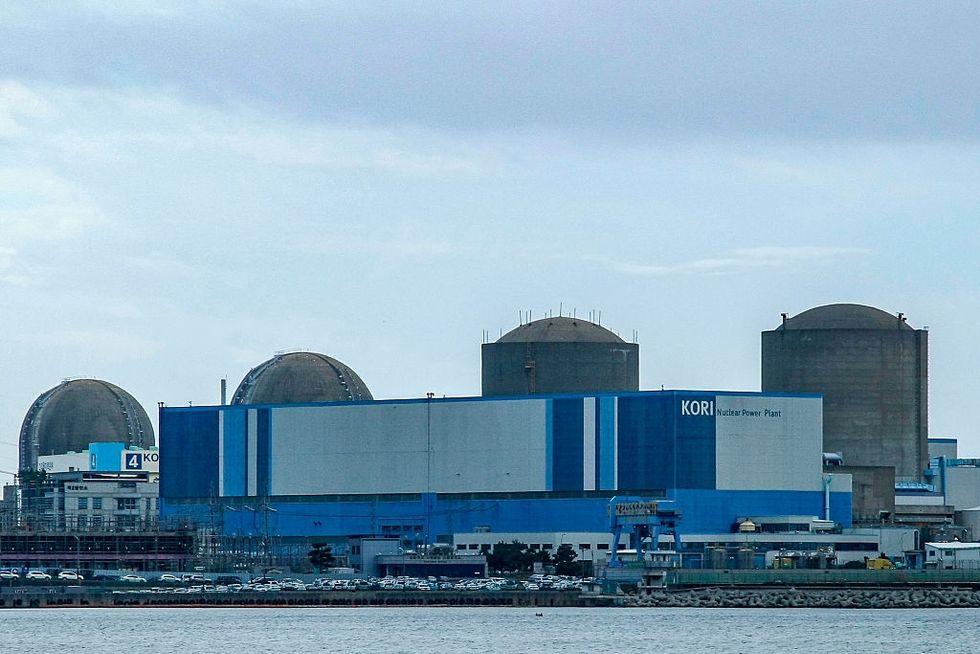
So I want to talk about the big nuclear plant that was built in Georgia over the past few years. And I actually want to start with the national perspective because Vogtle Units 3 and 4 were recently completed in Georgia. They were enormously expensive to complete. And I will say, outside of Georgia, the way that these projects are discussed is...
Robinson Meyer:
As you know, thank goodness Georgia finished those two nuclear plants. Like, thank goodness they did it. Because the whole country learned a lot from watching Georgia have the experience to develop these two, what became enormously expensive nuclear plants, to the extent that the Trump administration is now trying to build 10 new nuclear plants across the country and believes it can do so in a cheaper way. It’s doing so entirely on the back of lessons learned from the Georgia process. Lessons that I should say seem entirely reasonable to me, including a lot of the delays in Georgia, came from the fact that equipment wasn’t ready or it was ready too early. And so it kind of sat around and therefore it incurred costs as it sat around or workers had to sit around while they waited for equipment to be delivered.
Robinson Meyer:
Anyway, all of this is to say here in the other 49 states, we go. So thank goodness Georgia finished these projects because it was a real gift to just our understanding of how to complete a large-scale nuclear project in the 2020s and 20-teens. And if we continue to build big new reactors, we’re going to learn a lot from that experience. I wonder, though, what your takeaway is about them or how you interpret them as a Georgia Public Service Commissioner because those projects got rate-based. And so Georgia utility customers are paying for them right now. And so I would imagine the response to them has been quite different in Georgia. And I almost wonder if you want to kind of give us what, now that you’re fully in-house at the PSC, just what your perspective is on that project.
Peter Hubbard:
Well, if you look at the context of how Vogtle Units 3 and 4 came about, they were proposed around 2008, 2009, around that time frame, or actually I believe they began construction around that time. But it was also around the time when the Georgia Consumer Utility Council, that independent body that intervenes in dockets to say, hey, this is what we, you know, we think this is in the interest of rate payers or no, this is going to be a very expensive power project. We didn’t have that independent voice. And so the commission approved moving forward with Vogtle Units 3 and 4, and it took, I believe, something like 15 years or so. And instead of $14 billion, $37 billion. And that was a tremendous risk, a known risk, especially to put on the backs of one state’s rate payers. And so that’s really where I’m coming from, especially in a sunny state like Georgia. Even if we had done nothing but solar, we would have gotten far more bang for our buck than the most expensive power plant in the country, where we also didn’t have the chance to examine those costs at the end of this construction period when they were put into rate base. There was kind of a perfunctory hearing, but no real examination of who should bear the cost of that. So I’m deeply skeptical of our ability to really get costs under control.
Peter Hubbard:
You have to get to around the fifth of a kind before you’re on that asymptote and where costs have come down enough to where they’re manageable. So maybe halfway through that build out of 10 new AP1000s, we’ll get there. But those costs can’t be borne by rate payers. It has to be federally backstopped if it’s going to happen. Yeah. And, you know, I do also want to just say that carbon-free energy is important to me when we’re in the midst of a climate crisis, in my opinion. And so I do appreciate the fact that when Vogtle Units 3 and 4 came online, it displaced a lot of coal and gas-fired generation. And that’s a good thing. I just wish the cost wasn’t so high and there are better alternatives that are cheaper to also provide carbon-free energy like solar.
Robinson Meyer:
One question I had, I think some of your Republican predecessors on the commission, one line I’ve heard from them is that there should be federal cost overrun insurance for these nuclear plants if a state undertakes a project of building them. Do you think that that’s an important policy as well?
Peter Hubbard:
It’s critical because we know that there’s going to be cost overruns. It’s guaranteed. And so if as a nation, federal government, we decide we want to pay 5x for our power, then we can do that. That’s a choice we can make. But, you know, we just can’t have rate payers bearing the risk of what happened in Georgia or even in South Carolina, where we’ve dug a $9 billion hole that’s still sitting there.
Robinson Meyer:
Yeah, the funny thing is, right, that Vogtle at least was finished. And then in South Carolina, you have this giant AP1000 project, which was not finished. And whether that counts as first of a kind or zeroth of a kind. I don’t know.
Robinson Meyer:
Now that you have this giant, all these giant costs that have to be rate-based in Georgia, I’ve heard the argument that Georgia should be going out and looking for giant customers because if you’re a giant customer, you pay regulated and you pay a regulated rate. You can absorb more of that, whether you’re a data center or maybe a new factory or just a big bulk customer, you can absorb more of those costs and in some ways kind of shield regular residential customers from that big bolus of costs. Does that seem like a good strategy to you or should we be managing those high costs that now have to be paid for in a different way?
Peter Hubbard:
Well, what we’re doing is locking ourselves into a future where we’re building resources that need to be paid off over decades. And the question in my mind is, if we lock ourselves into that future, and then these new large load customers don’t show up in the numbers advertised, or if we build these resources, they show up, but then they don’t stick around for the decades needed to pay off these investments, who’s left holding the bag? That’s a real concern of mine. That’s why I’m interested in solutions like data center load flexibility and the ability to use virtual power plants and other resources that capitalize on investments we’ve already made, yeah it’s great to have large load customers and they, are making investments in this state but there’s a risk to them as well I think your audience would be aware that there’s you know a lot of talk about over investment in the AI sector and perhaps a bubble some deflationary effects from that. So I need to be mindful of that. And I really don’t want to lock ourselves into poor decision making. There’s a path dependency to some of the decisions that have happened just before I joined this commission.
Robinson Meyer:
Georgia, I think famously, is a state where you still have regulated electricity monopolies. You have big vertically integrated electricity providers. They’re companies that manage the generation of electricity. They manage the transmission. They manage getting it to individuals’ doors. That’s very different from other parts of the country right now, and it makes your task as a public service commissioner quite different. Can you give us a sense of how does the fact that you have Georgia power, you have these big monopoly utilities within Georgia, make your role different than how it would be, say, in a Pennsylvania or a Texas or California, where you have something closer to an electricity market?
Peter Hubbard:
Great question. What I’ve noticed is that I do think that the model that we have here in the Southeast, where there are vertically integrated utilities and then regulators who are meant to make sure that costs are prudently spent, it can work when you have that watchdog regulatory commission doing its job and providing real oversight. But it tends to be asymmetric. I mentioned how dependent we are on staff. Commissioners tend to not be able to kind of go toe-to-toe with all of the analytical and legal might of these utilities. They’re very powerful. They really shower their largesse throughout the state and so that they can continue the pattern that they have of really dominating in the state. So from that perspective, it can work well, but you have to have regulators who are doing their job. I’ve also noticed that these utilities can move mountains when they want to. If they really want to move on something, they can make it happen almost by snapping their fingers. But in other circumstances, if it doesn’t align with their financial incentives, then they’re going to drag their feet. Countless pilot projects, more working group sessions, that sort of thing.
Peter Hubbard:
So it can be a tug and a pull. It’s kind of carrots and sticks. And that’s what I’m discovering is it’s a complicated mix. We also in the state are one of 10 states where we elect our commissioners instead of appoint them. Regardless, it’s going to have a political element, but it’s even more pronounced in Georgia. And it’s wild to people to see how regulation and electricity tariffs and things of that nature are now so prominent and political just in the zeitgeist.
Robinson Meyer:
Can I push back a little bit on something you said, which is that it can be done, that successful regulation of these monopoly utilities can be done? Because I want to believe that’s the case. I think what’s always striking to me when I talk to commissioners is the degree to which utilities control the information environment, right? They control the analysis you get. You can set deadlines, but they can miss them and maybe they’re punished for them. Maybe they’re not. They, of course, have enormous influence in politics. And meanwhile, you’re a team of public servants elected or appointed as the case may be, depending on the state. But you still are a bit at the mercy of the operators of this system and the operators of this system are the utility. I mean, is it actually possible to regulate these utilities in the way that the system envisions? Because I will say as a reporter on this, I’ve come over time to see the wisdom of like an ERCOT style approach, where at least, you know, a more open electricity market, or maybe a MISO approach or SPP approach, these deregulated electricity markets across the US that seem to achieve some of these cost reductions, at least in theory, by having independent power producers. Compete against each other. So you’ve been an independent power producer in those grids. I wonder, like,
Robinson Meyer:
Is there work that seemed to happen automatically via market mechanisms when you were a developer that now has to happen through oversight as a Georgia public service commissioner? Or actually sitting in the chair, do you feel more optimistic? Because at least now there’s one entity that controls the whole grid. And so if you want to build more solar, you just have to convince that one entity to build a lot more solar and it will happen.
Peter Hubbard:
Great question. And, you know, we’re in this, I guess we’re almost into the third decade of this experiment of regional transmission organizations, ERCOT being a great example of how you can connect and manage and really just kind of go gangbusters on things if the market economics align, versus PJM where they’re still trying to sort out their capacity auctions and that sort of thing. So those are your two extremes, I guess. And to your question, I think that the model we have in Georgia can work. It’s hard for it to work. There’s that asymmetric framework of information I was mentioning. I mean, it’s really difficult to go up against the analytical power of Georgia Power. And they do have, you know, they know their system well. And so they know what’s practical and they know where they can push back.
Peter Hubbard:
By contrast, as well, TVA is a place where you’ve got top-down control, and yet they’re still going into gas-fired generation. So who’s to say what the right model is? But I think that my experience in operating in those different markets and seeing what works well, I mentioned Texas, ERCOT, Connect and Manage, that’s great, but you also get just really large load customers that can provide, or that can destabilize a grid if not managed well. And you also kind of get this, I remember just reaching out to various county judges in Texas to say, what kind of permits do we need? And the judge would write back and say, nothing, go to town. There’s, you know, you can build whatever you want.
Peter Hubbard:
And I don’t know that that wide open methodology is a great way to do business either. There’s a happy medium. There’s always pros and cons to everything. What works in Georgia is that when we have a commission that’s aligned in the right direction, that’s understanding the benefits that clean energy and other resources can bring to a grid, we can compel the power company to adopt some of these measures. It needs to be done in a formalized rulemaking process. And I think that that’s where we’ll have a lot of success beginning next year is putting in place these rulemaking procedures so that we can bring the evidence. We can have interveners and advocates build that evidentiary record for why we should go in a certain direction. And I think that having top-down direction, but that’s thoughtful and deliberative and based on evidence, that can be powerful. So that’s the goal for Georgia, so long as I’m here on the commission.
Robinson Meyer:
How will Georgians have noticed your governance or your presence on the commission so far, or does it take longer than five months for folks to notice? Yeah. Kind of anything happening in the utility system?
Peter Hubbard:
It’s a commission of five commissioners. So the rule of three still governs. It’s a split commission in terms of political party. But the rule of two is still important on a commission. And what it allows us to do is put forward motions to improve deals that are there on the table and have them seconded and then have everyone vote on that to establish positions. Even if that motion fails, as it happened in these fuel cost and storm damage recovery dockets that I mentioned earlier. Even though those motions that I tried to put on the table to improve the deal failed, it’s a signal to voters, here is what we can have if we have a different commission. And it’s a way to hold folks accountable. I mentioned earlier, I tried to put forward a motion to reduce the recovery so that it wasn’t at the full revenue requirements, including profit, and that failed. And that’s something that I’ll campaign on and show the voters we could have a different commission if we just had different commissioners.
Robinson Meyer:
What kind of help do you need from the federal government? So you talked about an all-of-state effort to manage data centers, but of course, I think it’s very tricky for states to be the regulator of last resort for a lot of these utilities, because it is true that if you hack away at the utility too much, so to speak, they immediately feel it on Wall Street. And that ultimately then comes back and hits ratepayers and it’s the whole business climate of the state. And so what kind of help do you need from the federal government either to manage the kind of large loads that we’re seeing now with data centers or just generally as a state regulator of electricity companies and other public services, like what could the government be doing to make this an easier task?
Peter Hubbard:
Well, certainly the notice of proposed rulemaking on large load tariffs that FERC is working on. I think that’s crucial to have some kind of clarity from the overarching regulator, to help provide some guidance on directions. And I don’t know that they’re going to have the right answers or all of the answers when they issue their proposed rulemaking later this month. But it’s helpful to have at least someone who’s trying to provide thought leadership there. And there are other commissioners in other states who are trying to do that as well. I also just think that it can be really difficult to find the upfront capital for certain investments that we need. Anyone who does project finance knows that’s usually the hardest part, is … and one of the hardest parts, frankly, about clean energy is it’s an upfront capital investment where the benefit is realized over time with no fuel costs, no pipeline costs. So to the extent that the federal government can help to subsidize that, which they were doing with the investment and production tax credits, that can be very helpful. And we need more of that. We need to subsidize the good, disincentivize what isn’t so good. And that’s where the federal government steps in.
Robinson Meyer:
You’ve talked a few times now about getting data centers to be flexible to manage their reliance on the grid or maybe rolling out virtual power plants more. Have you seen the numbers that substantiate that the gigawatts are actually there? Because if Georgia added 9 gigawatts of capacity to deal with data centers, that’s a lot of electricity. Is there really 9 gigawatts of transmission space or of underutilized capacity in the grid that’s just sitting around and is waiting for these programs to use? Or is this going to be something that’s small, maybe helps on the margin, but ultimately we will need to find additional electrons somewhere?
Peter Hubbard:
Yeah, it’s not the silver bullet that will solve all our problems. And I think even the Nicholas Institute over at Duke University a couple years ago, or not that long ago, did a study on CERC Southeast, where Georgia Power is. And you might be able to squeeze an additional 6 gigawatts out of this balancing area in terms of that data center load flexibility. But we’re going to need to build new generation as well to meet load growth, as well as to retire some older assets that are uneconomic to dispatch. So we are still going to have to build. We need to be building smart resources, resources that aren’t going to paint us into a corner. But no, it’s not the whole enchilada data center load flexibility, but it’s a critical piece because it’s a very low-cost way and a very rapid way to bring revenues to the state from these data centers without necessarily, again, building brand new resources.
Robinson Meyer:
What does the future of the southeast energy landscape and electricity landscape look like to you? What direction should Georgia be moving and what direction should Georgia’s neighbors be moving to make sure you’re building in a direction that supports growth and hopefully decarbonization?
Peter Hubbard:
Man, there’s so many things there. I mean, the future is bright. We’re a very sunny state. There’s a lot of untapped solar resources. I’m a big fan of how batteries, battery energy storage systems are like the Swiss army knife of the electric grid, and they can do a lot for us to make more of the investments we’ve already made. I really think we need to continue to look at options to move towards an RTO in the Southeast. I know South Carolina, their legislature studied this. There’s lots of money left on the table by everyone building to their own peak plus reserve margin. So to the extent that we can really start to share resources geographically, let’s take the lessons learned from these last two or three decades of RTOs and take the best of what works and move forward with that. Yeah, there’s more work to be done than just at the public service commissions in the Southeast. We also need governors and legislatures to get on board with some changes as well. But there’s a lot of capacity to tap into and investments that could be made. I’ll just say as well, in Georgia, we have the largest solar manufacturing facility in the Western Hemisphere. We’re also manufacturing EVs and batteries, and we’ve got great workforce developments. So we should put the people and the manufacturers to work and the state building the clean energy future. So I’m pretty bullish on Georgia and the Southeast,
Peter Hubbard:
but we got to kind of get out of our own way and some of the institutional inertia that we have.
Robinson Meyer:
Any more detail you want to give us on what’s standing in the way of an RTO or the institutional inertia?
Peter Hubbard:
Well, the vested interests of monopoly electric utilities, I would say.
Robinson Meyer:
Okay, well, we will have to leave it there. Peter Hubbard, thank you so much for joining us.
Peter Hubbard:
Yeah, it’s great to be with you, Rob.
Robinson Meyer:
And that will do it for us today. Thanks so much for listening. We’ll be back next week with a new episode of Shift Key. I should say, by the way, before you go, I don’t know if you subscribe to Heatmap Daily, which is Heatmap’s newsletter that goes out every afternoon or evening Eastern time here in the U.S. But lately, we’ve been having some fun with it. And I want to encourage you to subscribe to it. I have been writing that newsletter every day. I share an observation, a piece of analysis or a piece of reporting I’ve been thinking about. It’s like an email from me to you every day about the news, about something that’s happened, about just what’s been on my mind, which is either going to sound fun or not fun. But if you made it this far into the podcast, I think you should sign up. It’s kind of like the peer to our morning newsletter, Heatmap AM, written by Alexander Kaufman. It’s a great time to sign up for any of Heatmap’s newsletters. We’re having a lot of fun with them. We’re experimenting. We’re figuring out how they can fit into your day. And if you’ve been receiving Heatmap Daily or any of Heatmap’s newsletters and you have thoughts, you can always let us know what you think about them at editors at heatmap.news. That’s editors at heatmap.news. And you can sign up for Heatmap’s newsletters. In fact, I encourage you to sign up for Heatmap’s newsletters. You should sign up for Heatmap’s newsletters at heatmap.news. That’s heatmap.news. Shift Key is a production, in fact, of Heatmap News. Our editors are Jillian Goodman and Nico Lauricella. Multimedia editing and audio engineering is by Jacob Lambert and by Nick Woodbury. Our music is by Adam Kromelow. Thanks so much for listening. We’ll see you next week.






 A South Korean nuclear plant in Busan. Seung-il Ryu/NurPhoto via Getty Images