The energy transition isn’t static, and the companies pivoting to match the shifting needs of the moment tend to point the way to where demand is going.
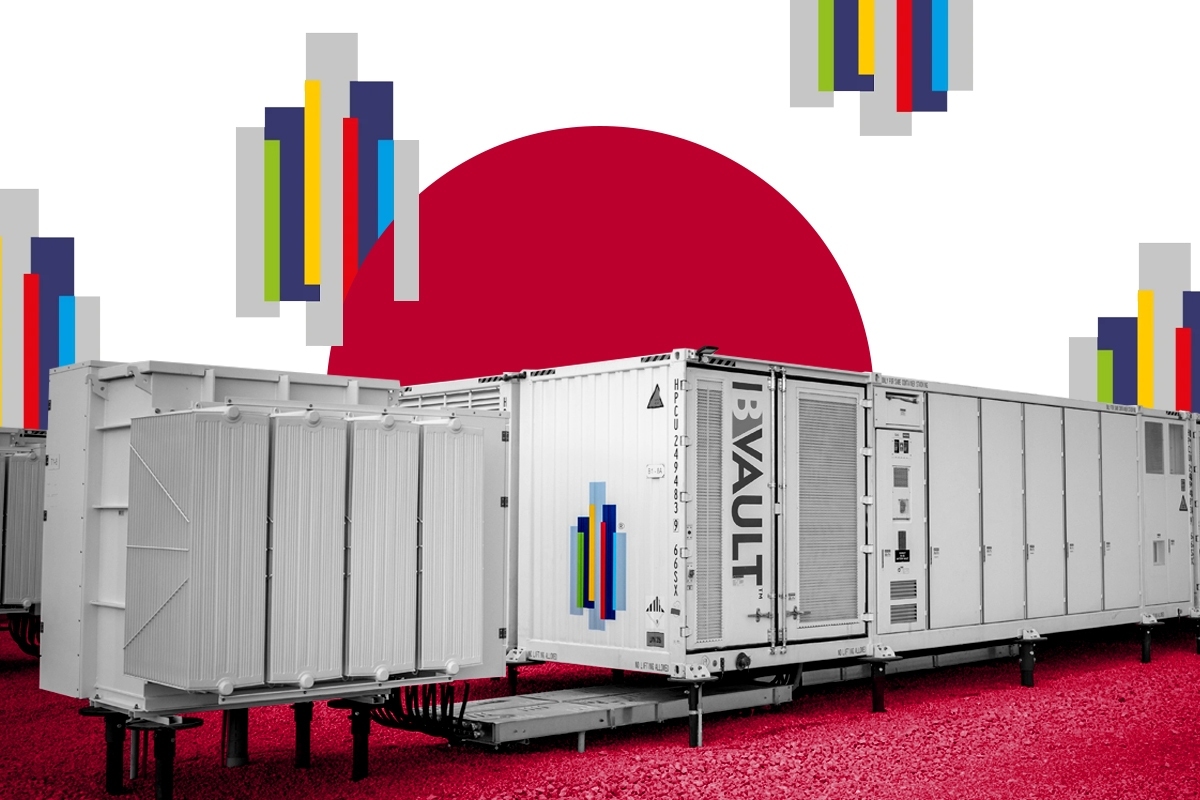
Take Energy Vault. Founded by a group of Swiss engineers in 2017, the company sought to meet the swelling need for long-duration energy storage that can last beyond the four hours or so you get from a grid-scale lithium-ion battery by devising a new gravity-based systems for keeping energy stored for the long term. The problem was, there was no obvious market.
After going public in 2021 via a reverse merger with a blank-check company, Energy Vault swerved. The startup widened its focus beyond a long-duration energy storage technology critics called “obviously flawed” to energy storage in general, beefing up its portfolio of projects with traditional lithium-ion batteries and green hydrogen facilities.
Now Energy Vault is attempting to follow the well-trodden path for a Western company with a compelling technological alternative to fossil fuels: Make it big in Japan.
On Thursday, the company plans to announce its formal entry into the Japanese market through a binding agreement to buy a pipeline of battery projects from a domestic developer, I can exclusively report for Heatmap.
The move comes as East Asia braces for the worst of the energy shock emanating from the Strait of Hormuz. Despite the two-week ceasefire deal President Donald Trump announced Tuesday with Iran to reopen the waterway to tanker traffic, the market has yet to fully digest the weeks of near-total closure, as the last ships to leave the Persian Gulf are still arriving in ports to unload fuel deliveries. Countries such as Taiwan, South Korea, and Japan are particularly vulnerable to price swings due to their heavy reliance on imports of oil and liquified natural gas. Japan became especially dependent on LNG as a primary source of fuel after halting power production at most of its nuclear reactors following the 2011 Fukushima disaster.
Energy Vault declined to disclose the name of the developer from which it’s buying the projects, only describing the counterparty as a “leading” Japanese storage provider.
The deal includes 350 megawatts of “advanced-stage” battery projects that are expected to start construction by the second half of next year and begin operations in the second half of 2028. It also includes another 500 megawatts of early-stage projects, providing what the company called “a robust, multi-year growth pipeline that positions Energy Vault for long-term leadership in the Japanese energy storage market,” which it described as “one of the fastest growing and structurally advantaged” in any developed country.
The Japanese energy market allows storage companies to engage in what’s called “revenue stacking,” pulling in income from wholesale arbitrage, capacity markets, and grid-balancing services. Energy Vault said it maintains a “technology-agnostic approach,” which should allow it to take advantage of that flexibility, and touted a recent strategic partnership with the sodium-ion battery developer Peak Energy as an example of next-generation hardware it hopes to commercialize.
“Entering the Japanese market is a key component of our high-growth markets expansion strategy and represents one of the most compelling energy storage growth opportunities globally,” Robert Piconi, the chairman and chief executive of Energy Vault, told me in a statement. “Despite being a highly developed economy, Japan’s energy storage market remains significantly underpenetrated and is now entering a period of accelerated growth driven by renewable expansion and structural grid constraints.”