Had the law passed, Washington — somewhat bizarrely — would have gone further than any other state in the country in pushing landlords to provide air conditioning or a similar cooling system to their renters. While such laws might be expected in places like California, Nevada, or Arizona (which comes closest by requiring landlords to maintain ACs that are already installed), in Washington, the largest city, Seattle, was in fact the least air-conditioned metro area in the country until 2021, and remains second only to San Francisco.
“A lot of people think of the Pacific Northwest as mossy, mountainous, green, and damp,” John Seng, the policy manager at Spark Northwest, a Seattle-based clean energy nonprofit, told me. “But that misses out that on the east side of both Oregon and Washington, things have been getting really hot for a long time.”
Indoor air temperature maximums are not a new idea — Dallas has had one since 2017 — but the few laws on the books are almost exclusively in hot-climate cities and counties. Yet extreme heat is spreading: Between 1970 and 2022, 95% of the nearly 250 U.S. locations analyzed by Climate Central saw an increase in the number of days per year with dangerously high temperatures, with an average increase of 21 days. At the same time, one in three Americans is a renter — a population far less likely to have central AC than homeowners. Though the Pacific Northwest would seem to be an unlikely leader in protecting people from extreme heat, it has nevertheless become a bellwether for the ability of local officials to protect their residents from increasingly deadly temperatures.
“We are changing our climate so much that now, in most places in the country, cooling is just as necessary as heating,” Brian Henning, the director and founder of the Gonzaga Institute for Climate, Water, and the Environment, told me.
Washington isn’t alone in responding to the changing conditions in its corner of the country. A similar story is playing out in Oregon, which failed to pass its own early-stage right-to-cooling bill, SB 54, during last year’s legislative session. (That bill would have required landlords of multi-family buildings to provide cooling when outdoor temperatures exceed 80 degrees.) Now, Portland’s Permitting and Development Bureau is exploring a maximum-temperature code for rentals, which activists hope will serve as a model for a legislative sponsor to take up in a future statewide session.
“It feels like the Pacific Northwest is beginning to grapple with questions that desert cities addressed decades ago, which is, namely: What constitutes a safe indoor temperature during extreme heat?” Vivek Shandas, the founder of the Sustaining Urban Places Research Lab at Portland State University, told me of the proliferation of such bills, ordinances, and laws in the area.
That ponderance is coming not a moment too soon. Of the 75 counties in Washington and Oregon, residents in all but seven have disproportionately low concern given their respective extreme-heat risks, according to research by Yale’s Program on Climate Change Communication published in Nature Communications this month. Of those 75 counties, just three scored below the national median on the CDC’s Heat & Health Index, a risk measurement that considers indicators such as historical heat exposure, prevalence of health conditions such as cardiovascular disease or diabetes, and socioeconomic factors like age and income. Nearly a third scored well within the upper range of risk nationally. Combined with the fact that architecture in the Northwest was designed for decades to retain heat, and that the region has some of the fastest-warming urban areas in the country, the upper left-hand corner of the country is uniquely susceptible — and unprepared — for extreme heat, the deadliest climate change and weather-related disaster in North America.
That fact was made tragically clear during the 2021 heat dome, the record-breaking, model-breaking event that killed more than 250 people across the states and served as the catalyst for housing activists, climate organizers, and policymakers. Though researchers like Shandas, who studies urban heat, had been aware that the Northwest was a public-health disaster waiting to happen, there were a few particularly startling takeaways: Though “most people think of heat risk as something that happens outside,” Shandas said, the vast majority of the people who died during the heat dome died inside, and most were likely renters living in multifamily homes. Some were even found with fans turned on full blast, pointed directly at their bodies.
“A lot of people don’t know that if your space is higher than about 90 degrees indoors, a fan actually increases your risk of heat‑related illness or death, not decreases it,” Henning said. That’s because a fan cools you by moving air over your skin to wick away sweat, a process that accelerates dehydration and can actually radiate heat into your body if the air temperature is warmer than your skin. Even worse, rather than lowering the indoor temperature, fans give an “illusion of safety,” Dante Jester, the climate resilience program manager at the Gonzaga Institute for Climate, Water, and the Environment, told me, so people delay moving to a genuinely cool place or calling for help.
“People’s cooling strategies that they’ve used for decades in Spokane” — where more than 300 people were hospitalized during the 2021 heat dome — “aren’t working anymore,” Jester went on. “Historically, people would open their windows at night. They would go for a drive and run the AC with their kids in the car seats. They would run fans. But all of these things are becoming less and less efficient and more and more dangerous.” What’s more, as smoke becomes an increasing public health hazard due to the duration and intensity of the fire season, officials are more reluctant to tell people to keep their windows open for a cross-breeze.
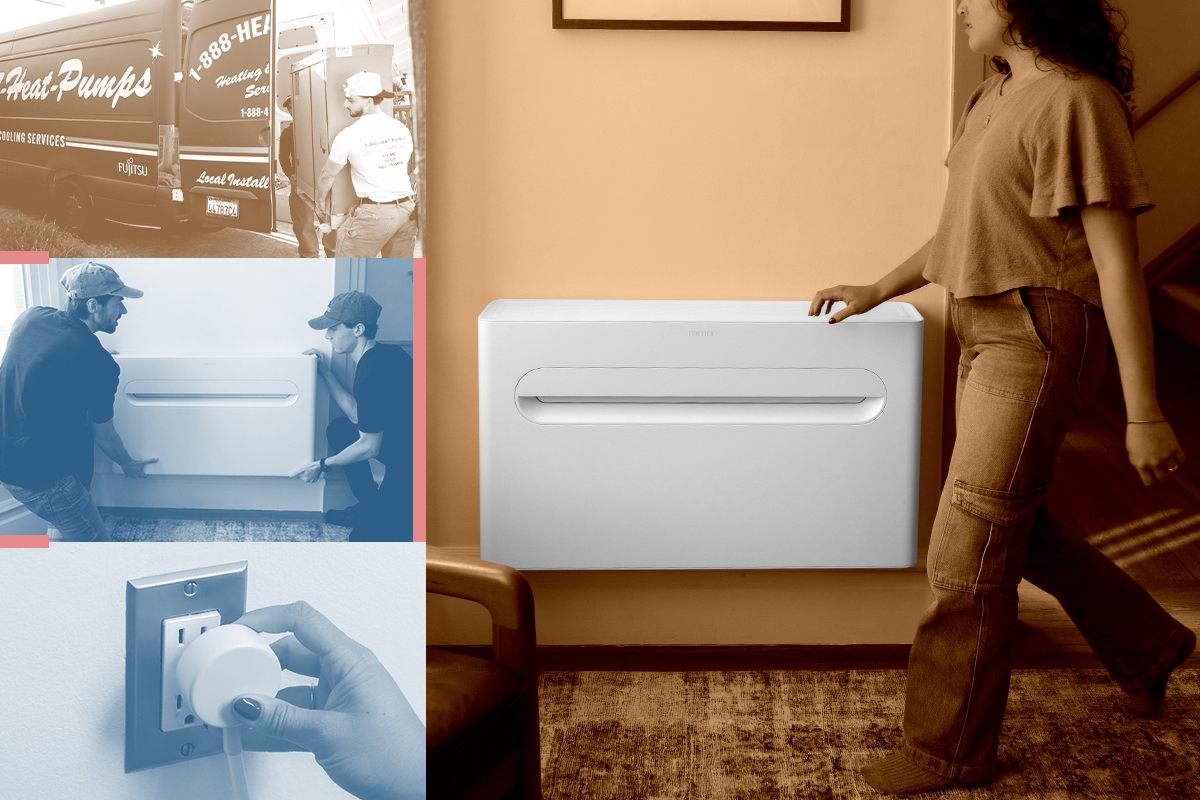
How, then, to keep renters — who make up between 30% and 40% of the households in Washington and Oregon — safe? The answer: Incrementally. Though HB 2265 died in committee this spring, Democratic lawmakers managed to pass its sister bill, SB 6200, even during a short session dominated by efforts to balance the budget and debate over the Millionaires Tax. The Senate bill makes it illegal for a landlord in Washington state to prevent a renter from installing their own AC unit — that is, it is an access law rather than a habitability one.
“The statewide policy that passed [SB 6200] was actually based on the renter’s right-to-install ordinance that we helped pass in Spokane in 2024,” Jester said. “We thought of it at the time as a first step, or an on-ramp, to this greater goal of requiring residencies to be cooled.”
If the Spokane right-to-install AC ordinance was the on-ramp to statewide adoption, then the failure of HB 2265 could potentially be shrugged off as jumping the gun. That’s because activists in Spokane are now testing whether true right-to-cooling legislation can find a pathway forward via a local ordinance, which would make it a legal requirement for landlords to provide a way to keep their units under 80 degrees Fahrenheit, the same way temperature minimums ensure they provide heat in the winter.
Shandas, the Sustaining Urban Places Research Lab researcher, told me he conceptualizes the path forward for right-to-cooling laws in the Northwest as a three-step approach. The first stage is permission — laws like the 2024 ordinance in Spokane and SB 6200.
The second stage is recognition of extreme heat as an imminent public health threat. Though the now-dead HB 2265 would have been a big push toward requiring landlord-provided ACs in rental units, it didn’t do so explicitly; rather, it tweaked the state’s rental code to include cooling alongside heating as a basic habitability requirement. A bill like HB 2183, which also died during the 2026 session, would have further required Washington counties to develop and implement heat response plans, which gets at the bills’ larger purpose: to grapple with the fact that the housing stock, legal system, policies, electrical systems, and even emergency services in the Northwest are all designed for a cooler climate.
Though it feels like an in-between stage, recognition is especially crucial, James Moschella, the climate and health program manager at Washington Physicians for Social Responsibility, a health professional-fronted environmental advocacy group, told me. When paramedics respond to a case of heat stroke, for example, the first thing they often do is place the patient in the bathtub in their own home, along with everything in their freezer, to try to lower their body temperature as quickly as possible. “Ambulance response times during the heat dome were significantly down because of the way they have to treat people at their homes,” Moschella said. “As a result, by the time paramedics often got to a home, in many cases the person was already dead.” One small part of a comprehensive heat plan would be anticipating that problem, perhaps by staging more ambulances on a hot day.
The third stage is performance standards — that is, defining enforceable indoor temperature limits, like what Spokane is moving toward. “I think this evolution mirrors how heating standards developed historically in other parts of the world,” Shandas said. “Unfortunately, I think we need to be accelerating this much faster, going from stage one to three in a fraction of the time that it took lower latitude regions to go through.”
Because there are few examples of existing temperature maximum laws, though, policymakers and researchers in the Northwest are feeling their way forward mostly on their own. Even something as basic as what the maximum temperature should be requires ponderance, debate, and compromise. In Spokane, policymakers settled on 80 degrees. “It’s similar to how it was done for heating, that every habitable space needs to be able to get up to 65 [degrees],” Shandas said. “Some would say, Wow, 65 is really high for a cold day, can’t you get by with 60? And it’s like, sure, you can, but you’re trying to make policy for a very large, diverse demographic.”
Eighty degrees Fahrenheit, while generally safe for most populations, is the point at which the body may begin to feel the stress or undergo physiological responses that affect certain medications, such as antipsychotics. Still, Henning told me he’d advocated for an even lower limit given existing research on safe sleeping temperatures, which puts the range closer to 74 to 76 degrees, especially for seniors and the very young.
Implementation is also a topic of discussion. Housing advocates in Spokane wanted to go beyond a “right to install AC” ordinance, not just because they believe cooling deserves to be recognized as a legal habitability requirement like heating, but also because of the potential financial burden of acquiring, installing, and especially running an air conditioner. What’s unique about the Spokane ordinance, though, is that it sets an expected indoor temperature rather than mandating how that temperature is achieved. “The goal isn’t to force people to buy air conditioning,” Henning said, “but to provide spaces that are safe.” Maybe the 80-degree threshold could be maintained, for example, by shading building windows with trees.
Powerful landlord advocacy groups have generally opposed right-to-cooling movements on the grounds that they’re very expensive. (Multifamily NW, a landlord trade association and one of the major opponents of Oregon’s SB 54, and Rental Housing Association of Washington, which opposed HB 2265, did not respond to my requests for comment.) Retrofitting costs, electrical capacity, and grid stress are legitimate concerns, Shandas told me. “Even heat pumps,” he said, “are pretty energy-hungry appliances, and older multifamily residential homes might not have good insulation or windows,” meaning you could end up with the efficiency conundrum the Rocky Mountain Institute’s Amory Lovins has memorably likened to running an AC in a tent.
Other researchers were less sympathetic to this case. “Infrastructure costs money, and that’s what landlords are agreeing to when they choose to buy units and then have them paid for by other people,” Jester told me. “That’s how it goes: If you’re renting to people, it should be a requirement that it has to be livable, in my opinion.”
Who pays, though, is one of the major questions of climate adaptation. No one is arguing that extreme heat isn’t dangerous. But is it on tenants, landlords, utilities, or governments to front the costs of making their homes and communities livable?
The problem sounds daunting, put that way. And the pressure is on: By Shandas’ estimation, what happens in Spokane and Portland, and eventually at the state level in Washington and Oregon, “is really going to be the test case for what the legal right to cooling looks like” in the United States. Organizers and researchers in Massachusetts, New York, and Minnesota have already reached out to him about their own efforts to codify maximum temperatures into law. “These are all higher-latitude regions that are looking to the Pacific Northwest and saying, Holy crap, yeah, we have to get ready for this, because if it could happen in Portland and Seattle, it can happen anywhere. We were the bellwether,” Shandas said.
But next year will be another tight budget year in Washington, and while Democrats control the legislature, HB 2265 will need tweaks to get a broader coalition on board. “I think nobody was quite ready to move without a little bit more of a plan on exactly how we would define healthy temperatures and measure them,” Seng, of Spark Northwest, told me of its initial failure.
“Another piece is cost,” Seng added. “I think housing developers get pretty squeamish about new requirements like that.” Sure enough, landlords have successfully watered down temperature regulations elsewhere, including L.A. County, which last year approved a maximum indoor temperature of 82 degrees for rentals located outside city limits — albeit with plenty of exemptions and delays available for property owners. Landlord groups have also so far successfully staved off a California-wide temperature maximum law by pouring millions into lobbying efforts.
But even more than the usual happy warrior attitude typical of activists, the researchers in Washington and Oregon described the right-to-cooling laws as inevitable, given the climate. The question is whether a multi-stage approach or the fast-track pursuit of local ordinances, rather than the sluggish statewide process, will yield results soon enough. The heat dome baking Europe this week serves as an ominous reminder that extreme heat may return to the region at any time, and the Northwest has had only five short years since its wake-up call in 2021 to prepare.
But prepare it has. “The legal invention of cooling rights — that’s part of what I’m really excited to be alive right now to see,” Shandas said.









 The world's first floating nuclear plant and SMR: the Akademik Lomonosov. Rosatom