Current conditions: Temperatures as low as 30 degrees Fahrenheit below average are expected to persist for at least another week throughout the Northeast, including in New York City • Midsummer heat is driving temperatures up near 100 degrees in Paraguay • Antarctica is facing intense katabatic winds that pull cold air from high altitudes to lower ones.
THE TOP FIVE
1. America just officially left the Paris Agreement again
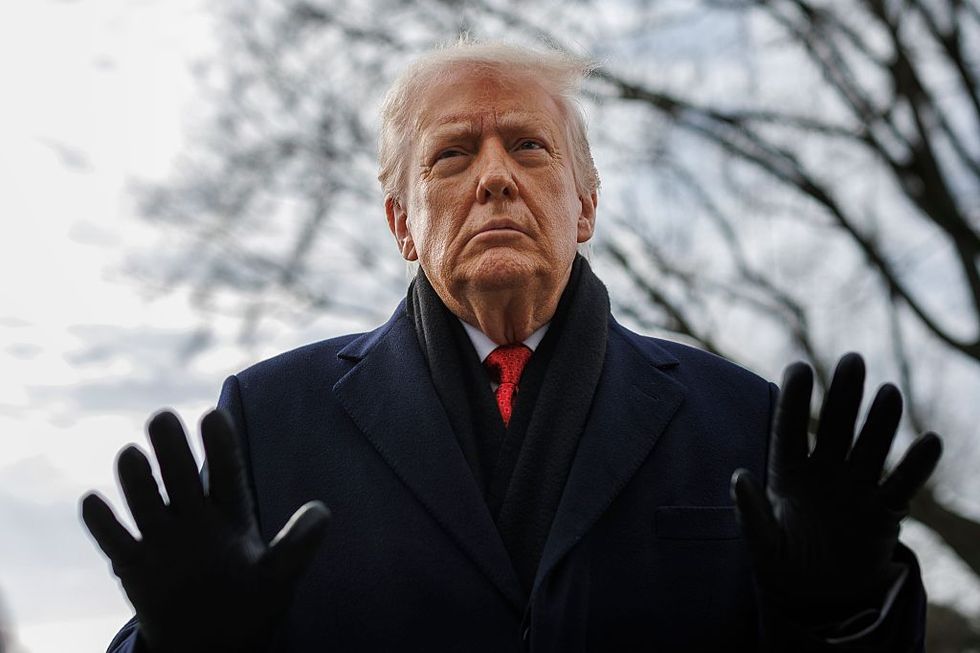
 President Donald Trump, no fan of the Paris Agreement.Tom Brenner/Getty Images
The United States has, once again, exited the Paris Agreement, the first global carbon-cutting pact to include the world’s two top emitters. President Donald Trump initiated the withdrawal on his first day back in office last year — unlike the last time Trump quit the Paris accords, after a prolonged will-he-won’t-he game in 2017. That process took three years to complete, allowing newly installed President Joe Biden to rejoin in 2021 after just a brief lapse. This time, the process took only a year to wrap up, meaning the U.S. will remain outside the pact for years at least. “Trump is making unilateral decisions to remove the United States from any meaningful global climate action,” Katie Harris, the vice president of federal affairs at the union-affiliated BlueGreen Alliance, said in a statement. “His personal vendetta against clean energy and climate action will hurt workers and our environment.” Now, as Heatmap’s Katie Brigham wrote last year, at “all Paris-related meetings (which comprise much of the conference), the U.S. would have to attend as an ‘observer’ with no decision-making power, the same category as lobbyists.”
America has not yet completed its withdrawal from the United Nations Framework Convention on Climate Change, the overarching group through which the Paris Agreement was negotiated, which Trump initiated this month. That won’t be final until next year. That Trump is even planning to quit the body shows how much more aggressive the administration’s approach to climate policy is this time around. Trump remained within the UNFCCC during his first term, preferring to stay engaged in negotiations even after quitting the Paris Agreement.
2. Trump loses another offshore wind case
Just weeks after a federal judge struck down the Trump administration’s stop work order on the Revolution Wind project off Rhode Island’s shores, another federal judge has overturned the order halting construction on the Vineyard Wind project off Massachusetts. That, as Heatmap’s Emily Pontecorvo wrote last night, “makes four offshore wind farms that have now won preliminary injunctions against Trump’s freeze on the industry.” Besides Revolution Wind, Dominion Energy’s Coastal Virginia offshore wind project and Equinor’s Empire Wind plant off Long Island have each prevailed in their challenges to the administration’s blanket order to abandon construction on dubious national security grounds.
Meanwhile, the White House is potentially starving another major infrastructure project of funding. The Gateway rail project to build a new tunnel under the Hudson River between New Jersey and New York City could run out of money and halt construction by the end of next week, the project manager warned Tuesday. Washington had promised billions to get the project done, but the money stopped flowing in October during the government shutdown. Officials at the Department of Transportation said the funding would remain suspended until, as The New York Times reported, the project’s contracts could be reviewed for compliance with new rules about businesses owned by women and minorities.
Sign up to receive Heatmap AM in your inbox every morning:
3. Power cuts during the winter storm highlight gap in Northeast deals with Quebec
A new transmission line connecting New England’s power-starved and gas-addicted grid to Quebec’s carbon-free hydroelectric system just came online this month. But electricity abruptly stopped flowing onto the New England Clean Energy Connect as the Canadian province’s state-owned utility, Hydro-Quebec, withheld power to meet skyrocketing demand at home amid the Arctic chill. Power plant owners in New England and New York, where Hydro-Quebec is building another line down the Hudson River to connect to New York City, complained that deals with the utility focused on maintaining supplies during the summer, when air conditioning traditionally surges power to peak demand. Hydro-Quebec restored power to the line on Monday.
The storm represented a force majeure event. If it hadn’t, the utility would have needed to pay penalties. But the incident is sure to fuel more criticism from power plant owners, most of which are fossil fueled, who oppose increased competition from the Quebecois. “I hate to say it, but a lot of the issues and concerns that we have been talking about for years have played out this weekend,” Dan Dolan — who leads the New England Power Generators Association, a trade group representing power plant owners — told E&E News. “This is a very expensive contract for a product that predominantly comes in non-stressed periods in the winter,” he said.
4. Europe’s ‘mother of all deals’ with India keeps carbon tariff intact
Europe has signed what the European Commission president Urusula von der Leyen called “the mother of all deals” with India, “a free trade zone of 2 billion people.” As part of the deal, the world’s second-largest market and the most populous nation plan to ramp up exports of steel, plastics, chemicals, and pharmaceuticals. But don’t expect Brussels to give New Delhi a break on its growing share of the global emissions. The EU’s carbon border adjustment mechanism — the first major tariff in the world based on the carbon intensity of imports — just took effect this month, and will remain intact for Indian goods, Reuters reported.
5. National Parks removing signs about climate change and Native Americans
The Department of the Interior has ordered staff at the National Park Service to remove or edit signs and other informational materials in at least 17 parks out West to scrub mentions of climate change or hardship inflicted by settlers on Native Americans. The effort comes as part of what The Washington Post called a renewed push to implement Trump’s executive order on “restoring truth and sanity to American history.” Park staff have interpreted those orders, the newspaper reported, to mean eliminating any reference to historic racism, sexism, LGBTQ rights, and climate change. Just last week, officials removed an exhibit at Independence National Historical Park on George Washington’s ownership of slaves.
THE KICKER
Tesla is going trucking. The electric automaker inked a deal Tuesday with Pilot Travel Centers, the nation’s largest operator of highway pit stops, to install Tesla’s Semi Chargers for heavy-duty electric vehicle charging. The stations are set to be built at select Pilot locations along Interstate 5, Interstate 10, and several other major corridors where heavy-duty charging is highest. The first sites are scheduled to open this summer.



 President Donald Trump, no fan of the Paris Agreement.Tom Brenner/Getty Images
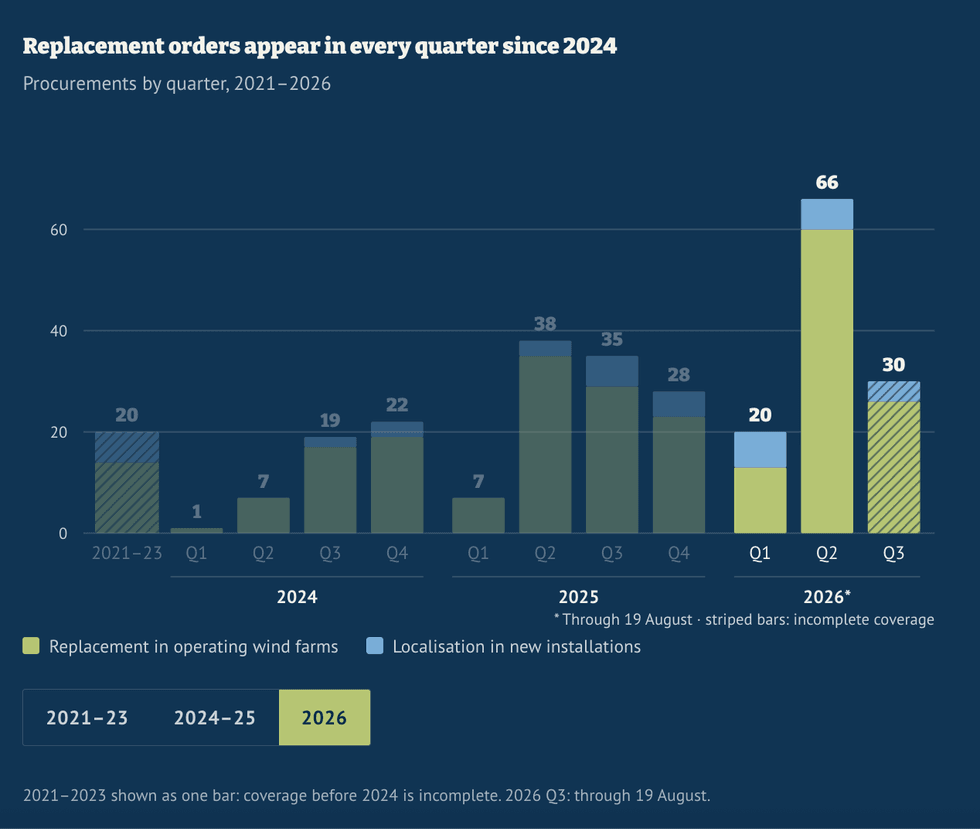 The great localization push of 2026. OSW
 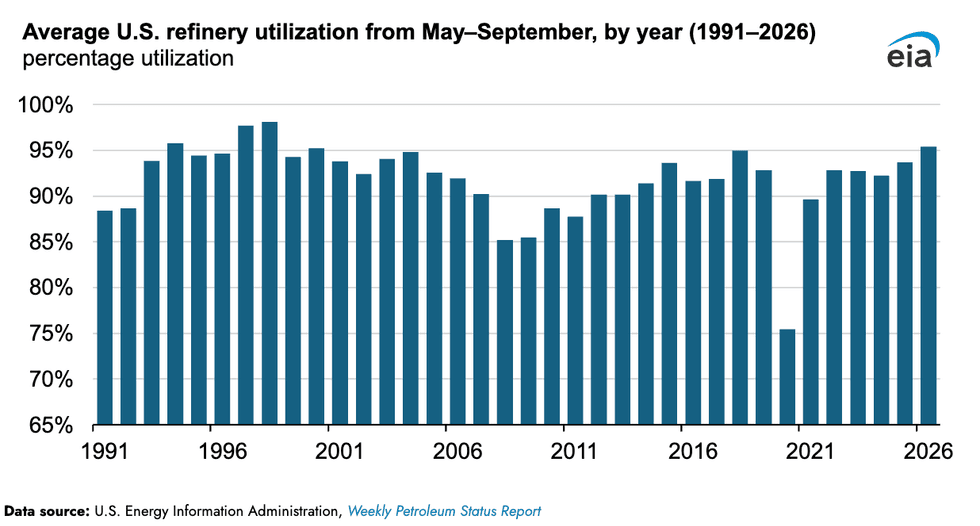 The 1990s are back. EIA