Any day now, Trump’s Environmental Protection Agency is expected to officially rescind what climate advocates refer to as “the endangerment finding,” its 2009 determination that greenhouse gas emissions threaten Americans’ public health and welfare and therefore require regulation.
Whether the decision holds up to the inevitable legal challenges and what it all means for climate policy, however, will hinge on the justification the EPA provides for reversing course.
The EPA deployed a battery of arguments when it initially proposed revoking the finding last July. It reinterpreted Supreme Court readings of the Clean Air Act and claimed it did not have the authority to regulate carbon pollution. It questioned climate science and posited that curbing U.S. climate pollution would do little to affect global warming.
The 2009 endangerment finding is not unique — all U.S. pollution regulations under the Clean Air Act start with an endangerment finding. The EPA must review the scientific literature, hold hearings, and take public comments on whether emissions of a given pollutant threaten public health and welfare before it can regulate that substance.
The endangerment finding on greenhouse gases paved the way for the EPA to regulate vehicle emissions, specifically, but it was later used to support rules for power plants and oil and gas drilling. By reversing it, the agency will not only clear the way to repealing these standards, it will deny future administrations the legal authority to replace them. That’s a significant escalation from what Trump managed during his first term, when he rolled back greenhouse gas regulations established by the Obama administration, replacing them with weaker provisions.
Here’s what I’ll be looking out for when the decision comes out.
1. Will the EPA try to overturn Supreme Court precedent?
The agency’s primary argument for revoking the endangerment finding was based on its reinterpretation of the Clean Air Act. The agency asserted that the law applies to pollutants that directly threaten public health and welfare through local or regional exposure, and that indirect harms from global climate change do not fit this bill.
Moreover, it argued, the statute required that it make an endangerment finding for each individual greenhouse gas from each specific class of new vehicle to justify regulations, rather than assess the dangers of greenhouse gases from cars generally. The latter approach artificially inflated the case for regulation, the agency implied.
There are many legal experts, such as this trio of lawyers at Harvard’s Environmental and Energy Law Program, who say that the Supreme Court decisively rejected these exact arguments in the 2007 case Massachusetts v. EPA. The main outcome of that case was confirmation that greenhouse gases do, in fact, qualify as pollutants covered by the Clean Air Act, requiring the EPA to regulate them if it determines that they present a threat to public health and welfare. Following that ruling, the agency conducted an extensive review of climate science, held multiple public hearings, and sifted through thousands of public comments, before ultimately publishing the endangerment finding.
Now, however, the agency claims that its previous read of Massachusetts v. EPA was wrong, especially in light of subsequent Supreme Court decisions, such as West Virginia v. EPA and Loper Bright v. Raimondo. The former limited the EPA's toolbox for regulating power plants, and the latter ended a requirement that courts defer to agency expertise in cases where the law is vague.
If the EPA clings to this argument, it may seek to get the Court to revisit that case. As the Harvard lawyers point out, none of the five justices who were in the majority on that case remain on the Supreme Court, which ups the odds of the administration getting a more favorable ruling.
2. Will the agency try to protect fossil fuel companies from litigation?
If the EPA does repeal the endangerment finding on the grounds that climate risks from greenhouse gases are not covered by the Clean Air Act, that could empower state and local governments to issue their own emissions regulations, since greenhouse gas regulation would no longer be the purview of the federal government. California, for example, could argue that it no longer needs a waiver from the EPA to enact its own emissions standards for vehicles, an issue that became a political football last spring.
Revoking the endangerment finding this way may also make fossil fuel companies more vulnerable to lawsuits brought by cities and states — and undercut the Trump administration’s own efforts to sue the cities and states that are trying to sue fossil fuel companies. Some 20 to 30 state and local governments have attempted to sue oil and gas companies for damages related to climate change. The industry has responded by arguing that these cases are roundabout attempts to regulate greenhouse gas emissions, which is the job of the federal government, per the Clean Air Act. But if the federal government abdicates that responsibility, this reasoning falls apart.
In the EPA’s proposal to rescind the endangerment finding — which also included a proposal to revoke vehicle emissions standards — the agency tried to get ahead of these issues. It argued that even though it wasn’t required to issue greenhouse gas emission standards for new vehicles, states would still be preempted from doing so because the Clean Air Act still delegates that authority to the EPA.
It’s difficult to see how the agency can have it both ways. As Amanda Lineberry, a senior associate at Georgetown University’s Climate Center put it, the EPA is attempting to deem the Clean Air Act “insufficient to enable federal regulation of GHG emissions to address climate change but sufficient enough to prevent state efforts to address those emissions.”
Nonetheless, in comments responding to the proposal, industry groups such as the American Petroleum Institute and American Gas Association explicitly support this reading, and some asked EPA to strengthen it. “EPA’s rationale would be strengthened by recognizing the long history establishing federal law as the exclusive source of authority over interstate pollution,” the AGA wrote.
3. Will the EPA cling to its science argument?
Even if, hypothetically, the Clean Air Act does apply to greenhouse gas emissions, the agency would still propose revoking the endangerment finding on scientific grounds, its proposal last summer said. According to a new review of climate science, it said, the EPA could no longer conclude that greenhouse gases from vehicles endanger Americans’ public health and welfare.
The proposal cited a Department of Energy report, published on the very same day as the EPA’s proposal, which provided “a critical assessment of the conventional narrative on climate change.” The report was written by a working group consisting of five scientists who have a track record of pushing back on mainstream climate science. They concluded that the warming caused by greenhouse gases is not as dangerous or bad for the economy as previously thought, and that regulating such emissions will have “undetectably small direct impacts on the global climate.”
The Environmental Defense Fund and the Union of Concerned Scientists have since sued the administration for assembling this group in secret, a violation of the Federal Advisory Committee Act. Records released as a result of that lawsuit suggest that the group was explicitly formed to support the administration’s goal of repealing the endangerment finding. (A judge sided with the environmental groups on Friday, declaring that the working group was subject to FACA.)
Separately, a group of 85 scientists, some of whose research the working group cited, conducted an independent review and deemed the report biased and riddled with errors, including misinterpretations of the reviewers’ own findings. The National Academies, an independent institution that provides expert advice to the U.S. government on scientific and technical issues, also followed up with its own report concluding that “the evidence for current and future harm to human health and welfare created by human-caused greenhouse gases is beyond scientific dispute.”
Given this response, I’ll be looking to see if EPA maintains its position on climate science in the final decision, and if it does, how it responds to the mountain of criticism it has received. It’s possible the courts would defer to the agency’s assessment, but they could also side with the substantially larger volume of evidence disagreeing with it, bruising the agency’s credibility.
Editor’s note: This story has been updated to reflect Friday’s ruling on the working group. It has also been updated to reflect the correct effect of the decision in the Loper Bright case.








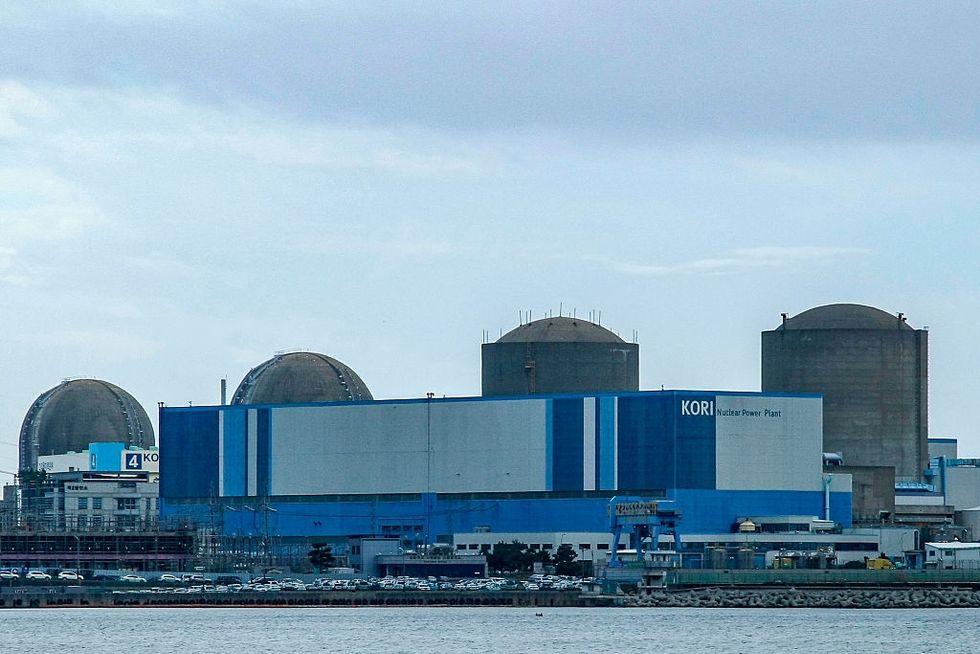 A South Korean nuclear plant in Busan. Seung-il Ryu/NurPhoto via Getty Images