Perhaps you can tell: I am not among those who believe that the treaty has been a failure, although it would be difficult — in this politically arid moment — to call it a complete success. Yet the ensuing decade has seen real progress in limiting global temperature rise. When negotiators gathered to finalize the agreement, it seemed likely that global average temperatures could rise by 4 degrees Celsius by 2100, as compared to their pre-industrial level. Today, a rise from 2.5 to 3 degrees Celsius seems more likely.
And for a document that is often described as non-binding, or even as hortatory, Paris has had a surprisingly material influence on global politics in the ensuing years. During the negotiations, the small-island states — the three dozen or so countries most affected by near-term sea-level rise — successfully got the final text to recognize a “stretch goal” of limiting warming to just 1.5 degrees above pre-industrial levels. They also tasked the United Nations’ advisory scientific body to prepare a special report on the virtues of avoiding 1.5 degrees of warming. When that report was released in 2018, it catalyzed a new wave of global climate action, spawning the European Green Deal — and eventually the U.S. Inflation Reduction Act.
Yet there is at least one way that Paris did not go as imagined.
Cast your mind back to Paris 10 years ago, right as diplomats filed in and began to applaud the final text’s completion. “This is a tremendous victory for all of our citizens — not for any one country or any one bloc, but for everybody here who has worked so hard to bring us across the finish line,” John Kerry, then the U.S. secretary of state, declared to his fellow diplomats.
It was a strange kind of victory. After decades in which western liberals had attempted to secure a globally binding climate treaty — an agreement that would limit each country’s greenhouse gas emissions — the world finally won a non-binding alternative. Under the Paris Agreement, each country would pledge to cut its emissions by as much as it could manage. Countries would then meet regularly to review these pledges, encourage each other to get more ambitious, and gradually ratchet the world into a lower-carbon future.
Kerry was reasonably direct about how such a mechanism would work: capital markets. “We are sending literally a critical message to the global marketplace,” he said. “Many of us here know that it won’t be governments that actually make the decision or find the product, the new technology, the saving grace of this challenge. It will be the genius of the American spirit.”
He was right, in a way: The Paris Agreement did send a signal to the global marketplace— and it did so in part because governments did shape policy and investment outcomes, not because they resisted doing so. But it did not reveal the genius of the American spirit, per se.
In the years running up to and following the Paris Agreement, China rolled out a series of important policies to boost its new energy sectors — a roadmap encouraging “new energy vehicle” sales in 2012, billions of consumer subsidies beginning in 2014, and a domestic content mandate for electric-vehicle batteries in 2015. These programs — along with canny decisions made by Chinese entrepreneurs and engineers, and no small amount of demand pull from companies and policies in the West — have transformed the world’s approach to decarbonization. They have begun to change even what decarbonization means — in the United States, in the western democracies, and around the world.
Ten years ago, Kerry could assume that any eventual solution to climate change would be geopolitically neutral, if not advantageous to the United States. But in 2025, to a degree that commentators still hesitate to describe, the climate story has become the China story. Across a range of sectors, how a country approaches its near-term decarbonization goals depends on how it understands and relates to the Chinese government and Chinese companies.
Consider the power sector, which generates just under a third of all greenhouse gas emissions globally. For many countries, the best way to cut carbon pollution — and to add more power generation to the grid — will be to build new utility-scale solar and battery projects. That will all but require working with Chinese firms, which dominate 80% of the solar supply chain. (They command up to 98% market share for some pieces of equipment, according to the International Energy Agency.)
It is much the same story in the grid-scale battery industry. China produces more than three-quarters of the world’s batteries, and it refines most of the minerals that go into those batteries. Its batteries are at least 20% cheaper than those made in Europe or North America. Most of the world’s top battery firms are Chinese — in part because they have more experience than anyone else; the country’s firms have manufactured 70% of all lithium-ion batteries ever produced. Nearly two dozen countries have bought at least $500 million in Chinese-made batteries this year, according to the think tank Ember.
What if a country wants to build wind turbines, not batteries? Even then, it will have to work to buy non-Chinese products. Although European and American firms have long led among turbine makers, six of the top 10 wind turbine manufacturers are now in mainland China, according to BloombergNEF. And for the first time since analysts’ rankings began in 2013, none of the world’s top three turbine makers are North American or European.
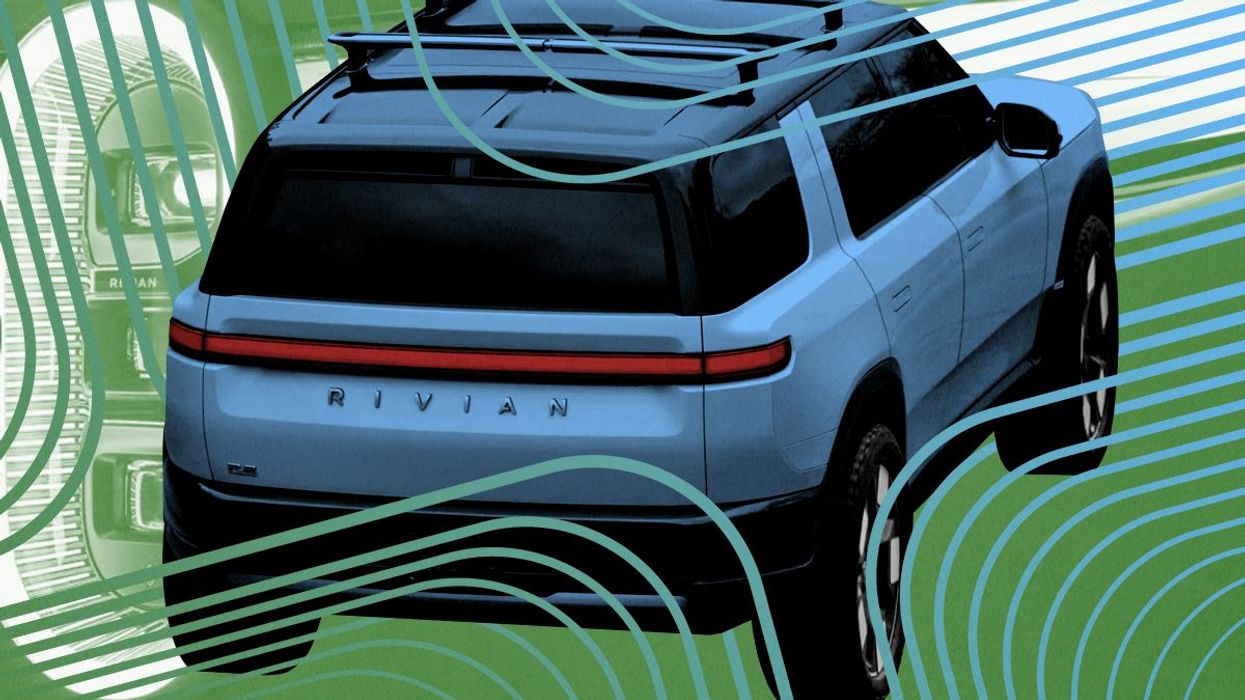
Transportation generates another 13% of global climate emissions. If a country wants to tackle that sector, then it will find itself (again) working with China — which made more than 70% of the world’s EVs in 2024. Thanks to the country’s sprawling battery and electronics-making ecosystem, its home-grown automakers — BYD, Geely, Xiaomi, and others — can produce more affordable, innovative, and desirable EVs at greater scale and at lower cost than automakers anywhere else. “The competitive reality is that the Chinese are the 700-pound gorilla in the EV industry,” Jim Farley, the CEO of Ford, said recently. As the scholar Ilaria Mazzocco put it in a recent report: “Chinese companies are ubiquitous in the value chain for EVs and battery components, meaning that for most countries, climate policy is now at least in part linked to policy toward China, and more specifically trade with China.”
That insight — that climate policy is now linked to policy toward China — will apply more and more, even when countries wish to tackle the remaining third of emissions that come from energy-related sources. Earlier this year, China approved a plan to build roughly 100 low-carbon industrial parks by 2030, where its firms will develop new ways to capture carbon, make steel, and refine chemicals without carbon pollution. (The Trump administration revoked funding for similar low-carbon projects in the U.S. earlier this year.) At the same time, China is building more conventional nuclear reactors than the rest of the world combined, and it may be pulling ahead of the United States in the race to develop commercial fusion.
This wasn’t inevitable. It happened because Chinese politicians, executives, and engineers decided to make it happen — choices owing as much to the government’s focus on energy security as to its concern for the global environmental commons. But it was also the result of American business leaders and politicians squandering this country’s leadership in climate technologies — and especially the result of choices made by Trump administration officials, who at nearly every opportunity have regarded batteries and electric vehicles as a technological sideshow to the more profitable oil and gas sector.
It was the Trump administration, after all, that licensed and then eventually gave U.S.-funded research on flow batteries to a Chinese company in 2017. It was the Trump administration that gutted fuel economy and clean car rules in 2018 and 2019, setting the American car industry back compared to its Chinese and European competitors. And it was the Trump administration and congressional Republicans that killed electric vehicle tax credits earlier this year, further choking off investment.
For progressives, this all might suggest a pleasant parable: China embraced the energy transition, and America didn’t, and now America is paying for it. Nowadays, commentators often invoke China’s clean energy dominance to inspire awe at its accomplishments. And how can you not, in truth, be impressed? China’s industrial miracle — its move to the frontier of global technological development — is the most important story of the past quarter century. The scale of the Chinese consumer market and the success of Chinese industrial policy (or, at least, its success so far) has wrenched world history in new directions. And Chinese companies have done humanity a great service by bringing down the cost of solar panels, batteries, and EVs on the supply side, even if they did so at first with demand-side assistance from policies in California or Europe.
But climate advocates in North America and Europe cannot be completely sanguine about what this development means globally. For environmentalists and other western liberals who have worked in decarbonization for decades, it will in particular require some rhetorical and political adjustment. We cannot pretend that we are playing by the 1990s’ rules, nor that environmental activism is but one part of a post-1970s progressive coalition, which is free to make demands and ignore inconvenient trade-offs. Basic questions of decarbonization policy now have patent geopolitical significance, which environmental groups attempt to side-step at their own peril.
Yet it isn’t only Americans or Europeans who must answer these questions. China’s dominance of decarbonization technology means that for the time being, every country on Earth must address this dynamic. When the scholar Mazzocco looked at how six countries around the world are approaching Chinese EVs, she found an uneven landscape, she told me on a recent podcast. Costa Rica, which has long embraced climate policy, has welcomed Chinese-made EVs; Brazil opened its doors to them but has now begun to close it.
Most major countries have some form of domestic automaking industry; no country will be able to sit back and passively allow Chinese exports to drive their local automakers out of business. At the same time, China’s manufacturing primacy is already making conventional export-driven growth less attractive for countries. And that will only be the beginning of the dilemmas to come. As long as going green requires buying and integrating Chinese technologies into critical infrastructure, environmental policymakers will be wagering decarbonization’s success on some of the world’s highest stakes geopolitical bets.
Environmentalists have long insisted climate change is a national security issue, but are we ready to think and act like it is? Do Western anxieties about a large and globalized war — either a Chinese invasion of Taiwan, a Russian invasion of the EU, or both — reflect a reasonable response to a real and growing menace, or an elite panic driven by our declining economic primacy? If China were to invade Taiwan, what would that mean for climate and energy policy — not only in the West, but around the world? Would American or European environmentalists even get a vote on that question — and if they do, how would they balance emissions reduction against other goals? If the unthinkable happens, we will all be called to account.
A decade ago, I remember watching the live stream of the world’s diplomats applauding their own success in Paris and realizing that I would be seeing that video in documentaries and news reels for the rest of my life. How will I see it then? I wondered. Would it strike me as the naivete of a simpler time, an era when liberal internationalism still seemed possible? Or would it really reflect a turning point, the moment when the world took the climate challenge seriously, pragmatically, and began to decarbonize in earnest? A decade later, I still don’t know. Perhaps the answer is both.


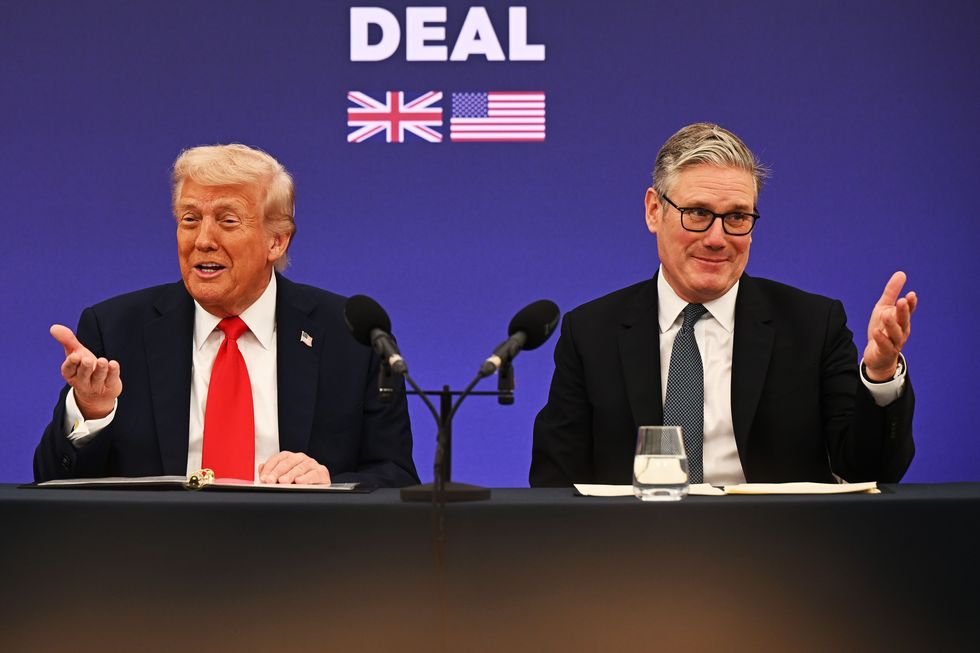 President Trump and Prime Minister Keir Starmer. Leon Neal/Getty Images

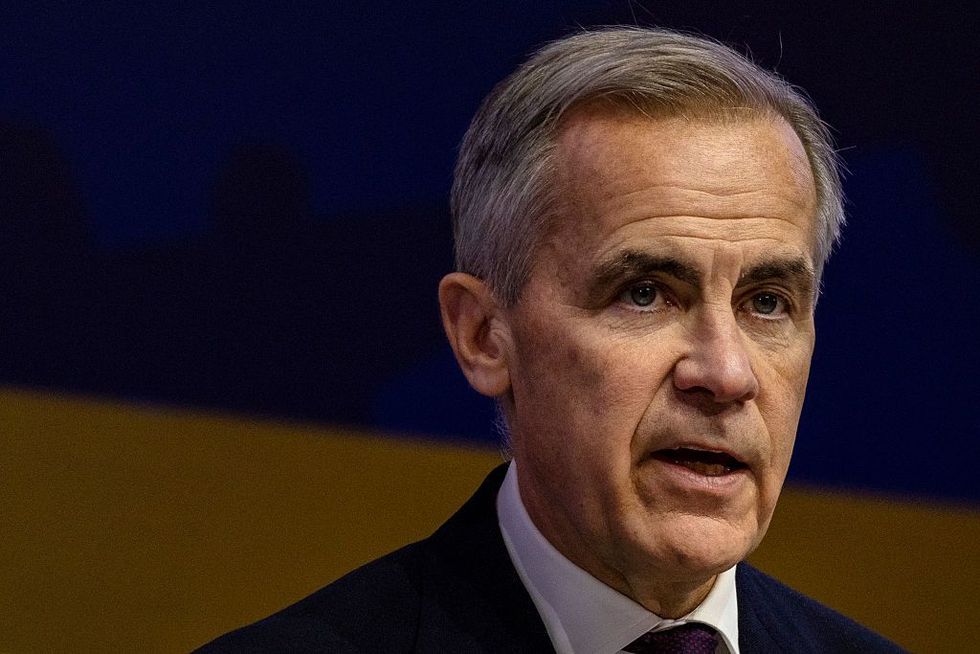 Canadian Prime Minister Mark Carney. Ezra Acayan/Getty Images