Trump’s Department of Energy is planning to terminate awards for the two major Direct Air Capture Hubs funded by the Bipartisan Infrastructure Law in Louisiana and Texas, Heatmap has learned.
An internal agency project list shared with Heatmap names nearly $24 billion worth of grants with their status designated as “terminated,” including the Occidental Petroleum’s South Texas DAC Hub as well as Project Cypress, a joint venture between DAC startups Heirloom and Climeworks.
Christoph Gebald, the CEO of Climeworks, acknowledged “market rumors” in an email, but said that the company is “prepared for all scenarios.”
“Demand for removals is increasing significantly, with momentum set to build as governments set their long-term targets,” he said. “The need for DAC is growing as the world falls short of its climate goals and we’re working to achieve the gigaton capacity that will be needed.”
Heirloom’s head of global policy, Vikrum Aiyer, said that the company was not aware of any decision from the DOE and continued “to productively engage with the administration in a project review.” He added that Heirloom remains “incredibly proud to stand shoulder to shoulder with Louisiana energy majors, workforce groups, non-profits, state leaders, the governor and economic development organizations who have strongly advocated for this project.”
Much of the rest of the list overlaps with the project terminations the agency announced last week as part of a spate of retributive actions against Democrats during the government shutdown. “Nearly $8 billion in Green New Scam funding to fuel the Left’s climate agenda is being canceled,” White House Budget Director Russ Vought wrote on social media ahead of the announcement.
DOE spokesperson Ben Dietderich told me by email that the department was “unable to verify” the new list of canceled grants, and that “no further determinations have been made at this time other than those previously announced.”
“As [Secretary of Energy Chris Wright] made clear last week, the Department continues to conduct an individualized and thorough review of financial awards made by the previous administration,” Dietderich said.
Direct air capture is a nascent technology that sucks carbon, as the name suggests, directly from the air, and is one of several carbon removal solutions with potential to slow global warming in the near term, and even reverse it in the long run. The $3.5 billion DAC Hubs program, created by Congress in the 2021 Bipartisan Infrastructure Law, promised to “establish a new sector of the American economy and remake another one, while providing the world with an important tool to fight climate change,” as my colleague Robinson Meyer put it.
After a competitive application process, the Biden administration selected two projects that would receive up to $600 million each to build DAC projects capable of removing more than 1 million tons of carbon from the atmosphere per year and storing it permanently underground. Occidental, which first partnered with and later acquired a Canadian DAC startup called Carbon Engineering, would build its hub in South Texas, near Corpus Christi. Two other leading DAC startups, the California-based Heirloom Carbon and Swiss company Climeworks, would work together to build a hub in Louisiana. After the selections were announced, both projects received an initial $50 million award for their next phase of development, which was set to be matched by private investment.
"These hubs were selected through a rigorous and competitive process designed to identify projects capable of advancing U.S. leadership in carbon removal and industrial decarbonization,” Jennifer Wilcox, the former principal deputy assistant secretary for the DOE’s Office of Fossil Energy and Carbon Management, told me in an email. “The burden should be on DOE to clearly demonstrate why that process is being overturned.”
All three companies already have demonstration plants that are either operating or under construction. Climeworks began operating the world’s first commercial DAC plant in Iceland in 2021, designed to capture about 4,000 tons per year, and has since scaled up to a larger plant more than eight times that size. Heirloom opened the first DAC plant in the U.S. in November 2023, in Tracy, California, capable of capturing 1,000 tons per year. Occidental’s first DAC project, Stratos, in West Texas, will be the largest of the bunch, designed to capture 500,000 tons per year. It is set to be completed in the next few months.
Removing carbon from the air with one of these facilities is currently extremely expensive and energy-intensive. Today, companies pre-sell carbon credits to airlines and tech companies to raise money for the projects, but will likely require government support to continue to innovate and bring the cost down. While both Climeworks and Heirloom announced the sale of credits that would support their DAC hub projects, it’s not clear whether those credits were meant to be fulfilled by the projects themselves.
The DOE grants would have helped prove the viability of the technology at a scale that will make a measurable difference for the climate, while also demonstrating a potential off-ramp for oil companies and the economies they support. Both projects said they expected to create more than 2,000 local jobs in construction, operations, and maintenance.
“The United States, up to this point, was the direct air capture leader and the place where top innovators in the field were choosing to build facilities as well as manufacture the actual components of the units themselves,” Jack Andreasen Cavanaugh, a global fellow at the Columbia University’s Carbon Management Research Initiative, told me. “The cancellation of these grants to high-quality projects ensures that these American jobs will be shipped overseas and cede our broader economic advantage.”
That’s already happening. On the same day last week that the DOE announced it was terminating an award for CarbonCapture Inc., another California-based DAC company, the startup said it would move its first commercial pilot from Arizona to Alberta, Canada. Gebald, of Climeworks, said the company has “a pipeline of other DAC projects around the world,” including opportunities in Canada, the U.K., and Saudi Arabia.
Cavanaugh also pointed out there was a disconnect between the terminations, Congress’ recent actions, and even actions under the first Trump administration. Trump’s DOE revised the 45Q tax credit for carbon capture in 2018 to allow direct air capture projects to qualify. In July, the reconciliation bill preserved that credit and strengthened it. “These were bipartisan-supported projects, and it goes expressly against congressional intent.”
As the DAC hubs program was congressionally mandated and the awards were under contract, the companies may have legal recourse to fight the terminations. The press release from the DOE announcing last week’s terminations said that award recipients had 30 days to appeal the decision. “That process must be meaningful and transparent,” Wilcox said. “If DOE is invoking financial-viability criteria, companies and communities deserve to see the underlying metrics, thresholds, and justification — and to understand whether those criteria are being applied consistently across projects.”
While this isn’t a death knell for DAC in general, it will be a “massive setback for American climate and industrial policy”, Erin Burns, executive director of the carbon removal advocacy group Carbon 180, told me. “The need for carbon removal hasn’t changed. The science hasn’t changed. What’s changed is our political will, and we’ll feel the consequences for years to come.”
Editor’s note: This piece has been updated to add comment from the Department of Energy and to correct the total value of canceled grants.





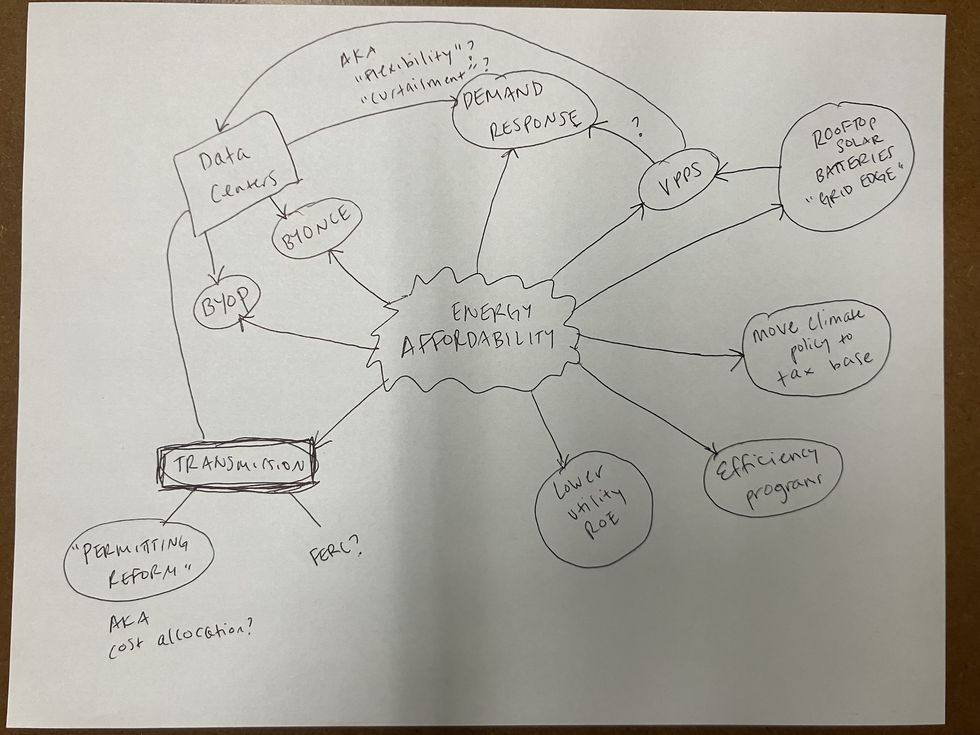 Please forgive the shadow — this wasn’t taken for posterity.Emily Pontecorvo

 Courtesy of Subaru
 Courtesy of Subaru
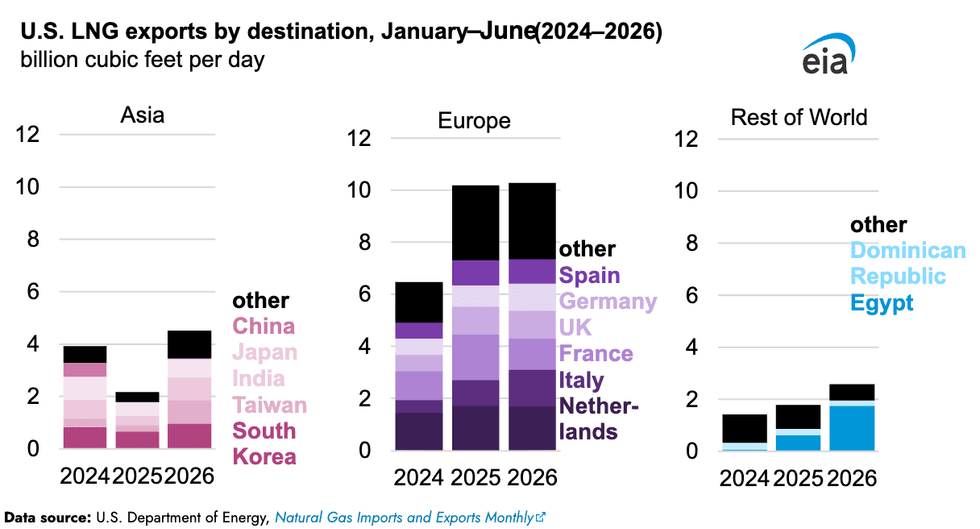 Where the exports are going. EIA