Sign In or Create an Account.

By continuing, you agree to the Terms of Service and acknowledge our Privacy Policy

Sparks

New York’s Empire Wind Project May Resume Construction, Judge Says

The decision marks the Trump administration’s second offshore wind defeat this week.

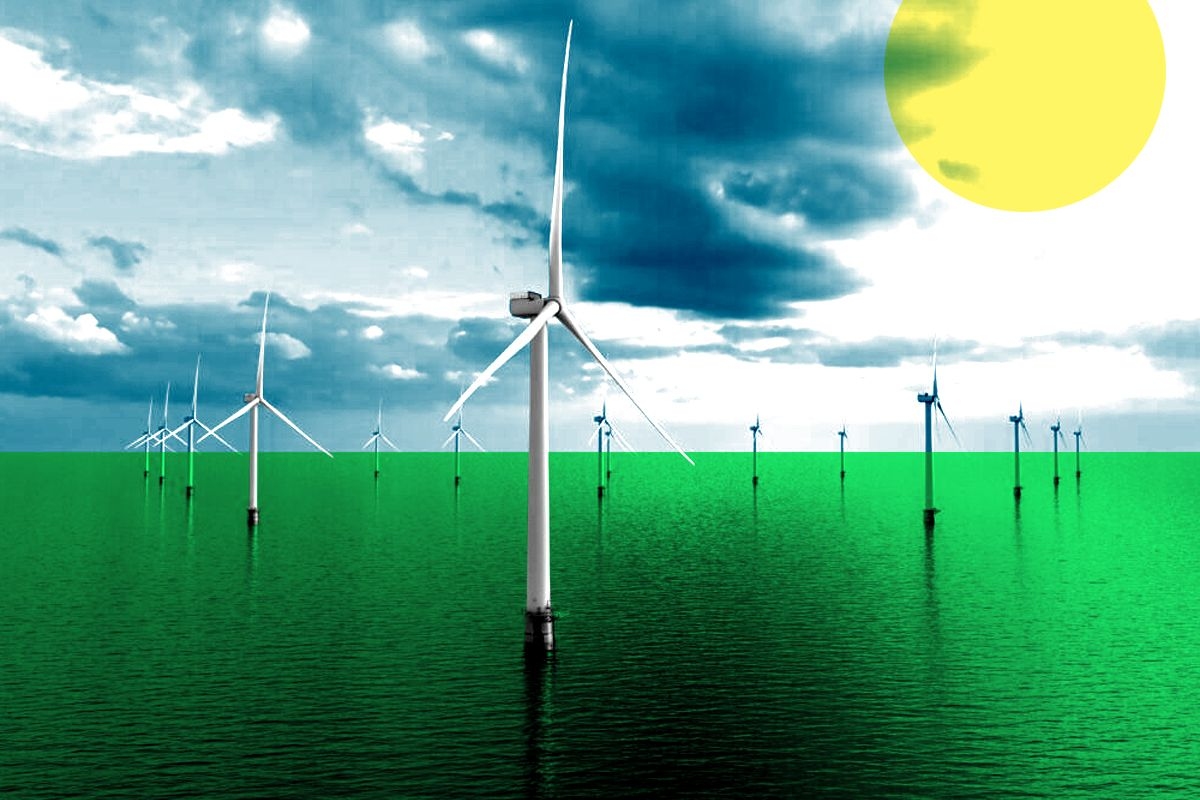
Offshore wind.
Heatmap Illustration/Equinor

A federal court has lifted Trump’s stop work order on the Empire Wind offshore wind project, the second defeat in court this week for the president as he struggles to stall turbines off the East Coast.

In a brief order read in court Thursday morning, District Judge Carl Nichols — a Trump appointee — sided with Equinor, the Norwegian energy developer building Empire Wind off the coast of New York, granting its request to lift a stop work order issued by the Interior Department just before Christmas.

Interior had cited classified national security concerns to justify a work stoppage. Now, for the second time this week, a court has ruled the risks alleged by the Trump administration are insufficient to halt an already-permitted project midway through construction.

Anti-offshore wind activists are imploring the Trump administration to appeal this week’s injunctions on the stop work orders. “We are urging Secretary Burgum and the Department of Interior to immediately appeal this week’s adverse federal district court rulings and seek an order halting all work pending appellate review,” Robin Shaffer, president of Protect Our Coast New Jersey, said in a statement texted to me after the ruling came down.

Any additional delays may be fatal for some of the offshore wind projects affected by Trump’s stop work orders, irrespective of the rulings in an appeal. Both Equinor and Orsted, developer of the Revolution Wind project, argued for their preliminary injunctions because even days of delay would potentially jeopardize access to vessels necessary for construction. Equinor even told the court that if the stop work order wasn’t lifted by Friday — that is, January 16 — it would cancel Empire Wind. Though Equinor won today, it is nowhere near out of the woods.

More court action is coming: Dominion will present arguments on Friday in federal court against the stop work order halting construction of its Coastal Virginia offshore wind project.

Green

You’re out of free articles.

Subscribe to access Heatmap’s expert analysis of climate change, clean energy, and sustainability. Save $57 on an annual subscription, just $156 $99/year.
To continue reading
Create a free account or sign in to unlock more free articles.
or
Please enter an email address
By continuing, you agree to the Terms of Service and acknowledge our Privacy Policy
Sparks

Koloma Strikes New Hydrogen Exploration Deal in the Philippines

The deal, shared exclusively with Heatmap, is the startup’s third in the oil-importing country.

A Koloma worker.
Heatmap Illustration/Koloma, Getty Images

Hydrogen fuel comes in myriad forms. There’s green hydrogen, which is extracted from water molecules using zero-carbon electricity. There’s blue hydrogen, derived from methane and scrubbed clean by carbon capture. And then there’s white hydrogen. Otherwise known as natural or geologic hydrogen, this type of hydrogen comes directly from naturally occurring deposits in the earth, can accumulate in considerable quantities and concentrations, and is highly energy-efficient to extract compared to manufacturing pathways such as electrolyzers and steam methane reforming.

It’s a seductive promise, but finding deposits with enough hydrogen to make the economics of exploration work is difficult. That’s where Koloma comes in. The startup uses a bespoke subsurface data set, which its founders developed over 20-plus years, to flag the areas most likely to hold sufficient hydrogen, after which they can extract it for power and derivative fuels.

Keep reading...Show less
Yellow
Sparks

Data Centers Will Use Enough Electricity to Power Every U.S. Household by 2035

The latest forecast from BloombergNEF raises its estimate for AI electricity demand by 83%.

A data center and power lines.
Heatmap Illustration/Getty Images

Energy analysts at BloombergNEF predicted last year that U.S. data center electricity demand would reach 106 gigawatts within the next decade. In its latest outlook, released Tuesday, the group increased its forecast by 83%, to 194 gigawatts — enough to light up 150 million homes, or roughly every single household in the country today.

Even that may be a conservative estimate. If data center developers were to max out the total number of the high-powered chips used to train and operate AI models forecast to be delivered by 2035, electricity demand would reach 229 gigawatts.

Keep reading...Show less
Green
Sparks

Microsoft Sustainability Chief Hounded by Protestors at Seattle Climate Week

“Microsoft, you can’t hide, we can see your dirty side!”

Melanie Nakagawa.
Heatmap Illustration/Getty Images, Katie Brigham

Protestors interrupted one of the final sessions of PNW Climate Week — a conference that brings together climate leaders across Washington, Oregon, and British Columbia — objecting to Microsoft’s rising carbon emissions from data centers and partnerships with oil and gas companies. The company’s Chief Sustainability Officer Melanie Nakagawa was having a one on one conversation with GeekWire climate reporter Lisa Stiffler at Seattle’s City Hall when protestors carrying signs reading “Microsoft’s AI pollutes” and other slogans began shouting from the audience.

I was there, having just moderated the prior panel on how to finance Washington’s clean energy ambitions. Early on there were some rumblings in the crowd from up front. “Climate leaders don’t build gas pipelines in Moses Lake,” was the first objection I heard clearly. It came shortly after Nakagawa kicked off the conversation by highlighting Microsoft’s partnership with sustainable aviation fuel startup Twelve, which recently opened its first commercial-scale SAF plant in Moses Lake, Washington. The tech giant has supported the project through a strategic investment from its Climate Innovation Fund, as well as an offtake agreement for the fuel that will help offset its emissions from employee travel.

Keep reading...Show less