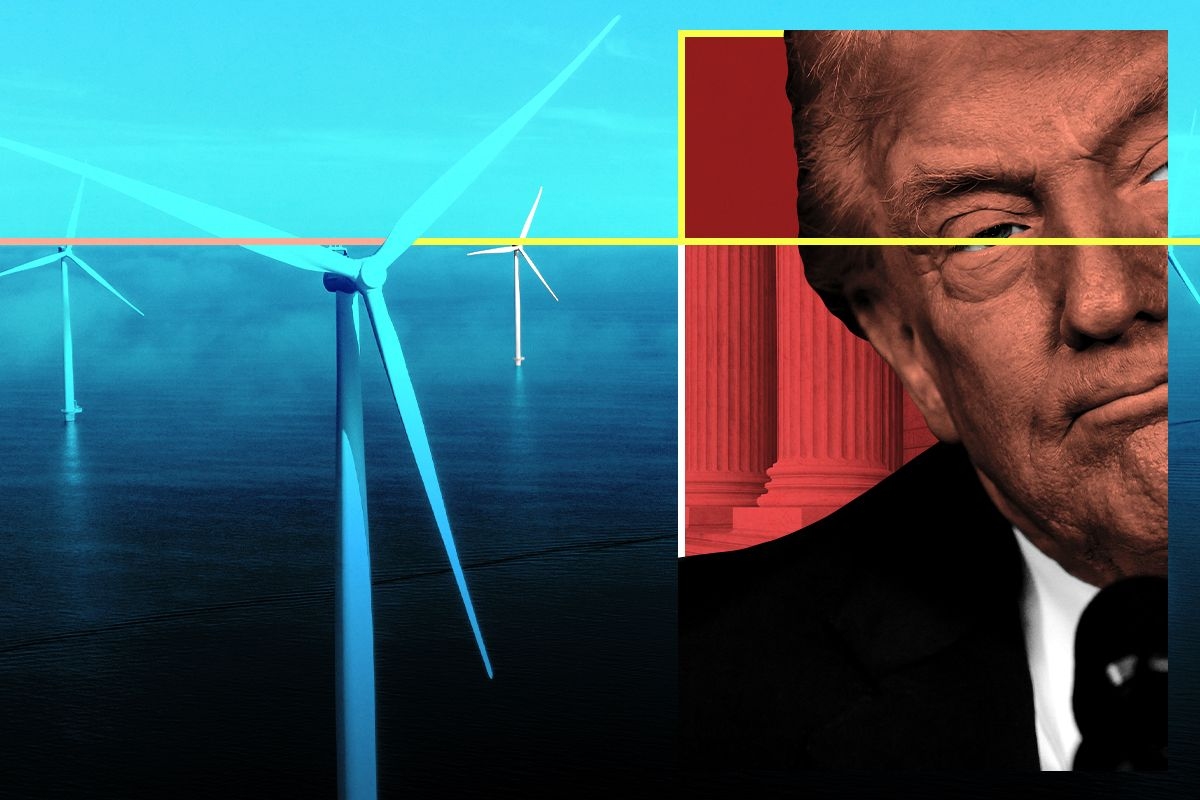
A federal court struck down the Trump administration’s three-month stop work order on Orsted’s Revolution offshore wind farm, once again allowing construction to resume (for the second time).
Explaining his ruling from the bench Monday, U.S. District Judge Royce Lamberth said that project developer Orsted — and the states of Rhode Island and Connecticut, which filed their own suit in support of the company — were “likely” to win on the merits of their lawsuit that the stop work order violated the Administrative Procedures Act. Lamberth said that the Trump administration’s stop work order, issued just before Christmas, amounted to a change in administration position without adequate justification. The justice said he was not sure the emergency being described by the government exists, and that the “stated national security reason may have been pretextual.”
This case was life or death for Revolution Wind. If the stop work order had not been enjoined, Orsted told the court it may not have been able to secure proper vessels for at-sea construction for long enough to complete the project on schedule. This would have a domino effect, threatening Orsted’s ability to meet deadlines in signed power agreements with Rhode Island and Connecticut and therefore threatening wholesale cancellation of the project.
Undergirding this ruling was a quandary Orsted pointed out to the justice: The government issued the stop work order claiming it was intended to mitigate national security concerns but refused to share specifics of the basis for the stop work order with the developer. At the Monday hearing on the injunction in Washington, D.C., Revolution Wind’s legal team pointed to a key quote in a filing submitted by the Justice Department from Interior Deputy Assistant Secretary Jacob Tyner, saying that the Bureau of Ocean Energy Management, the federal offshore energy regulator, was “not aware” of whether the national security risks could ever be mitigated, “and, if they can, whether the developers would find the proposed mitigation measures acceptable.”
This was the first positive outcome in what are multiple legal battles against the Christmas stop work orders against offshore wind projects. As I reported last week, two other developers filed individual suits alongside Orsted against their respective pauses: Dominion Energy in support of the Coastal Virginia offshore project, and Equinor over Empire Wind.
I expect what happened in the Revolution Wind case to be the beginning of a trend, as a cursory examination of the filings in those cases indicate similar contradictions to those that led to Revolution winning out. We’ll find out soon: The hearing on Empire’s stop work order is scheduled for Wednesday and Coastal Virginia on Friday.