Current conditions: Hurricane Genevieve formed into the first major storm of the season, strengthening to Category 4 off Mexico’s Pacific Coast on Sunday but steering clear of any land for now • Hurricane Fausto, meanwhile, is weakening as it heads toward Hawaii • China evacuated hundreds of thousands of people as Typhoon Noul made landfall.
THE TOP FIVE
1. Hundreds of thousands flee ‘unprecedented’ fires in France and Spain
 French firefighters near Bordeaux on Sunday. ALAIN JOCARD / AFP via Getty Images
Wildfires in France and Spain forced roughly 300,000 people to evacuate their homes in what the French Interior Minister Laurent Nuñez called an “unprecedented” blaze. In Spain, the central western province of Avila suffered what the broadcaster France24 described as its “worst blaze in recent history” as Prime Minister Pedro Sanchez directly linked the disaster to climate change. By Sunday evening, in France, flames had come within nine miles of the southwestern city of Bordeaux in the heart of the nation's storied winelands as President Emmanuel Macron vowed to “rebuild.” Others saw the disaster as a sign of overdue lifestyle and infrastructure changes in the face of a warming planet. In Le Monde, the newspaper of record, the philosopher Cynthia Fleury and the Socialist mayor of the town of Saint-Médard-en-Jalles, Stéphane Delpeyrat-Vincen, argued: “What is burning is not just forests, but a way of inhabiting the land that is no longer possible.” The fires come weeks after a series of historic heat waves in Europe, including the hottest June on record, which made tinderboxes of parched woodlands.
2. U.S. nuclear deal with Saudi Arabia could benefit Trump’s friends and family
President Donald Trump last week announced a landmark deal with Saudi Arabia to help build the kingdom’s first nuclear power station, besting the Russians and the Chinese in a race to tap into one of the world’s most coveted new export markets for atomic power technology. While the White House has yet to release all the details on the geopolitically meteoric agreement with Riyadh, sources with knowledge of the deal have confirmed to me what’s been reported elsewhere — that the deal will almost certainly include new large-scale Westinghouse AP1000s. Over the weekend, The New York Times identified another element to the partnership: Trump’s family and personal friends may benefit. The newspaper pointed to ties between a firm owned by Secretary of Commerce Howard Lutnick’s sons and Westinghouse; links between Eric Trump and Donald Trump Jr.’s investments into quantum computing and former Texas Governor Rick Perry’s Fermi America project to build AP1000s in Texas; and suggested that TAE Technologies, the fusion company merging with the corporate parent of Trump’s Truth Social platform, could see potential benefits from the Saudi deal. “There is no evidence at this point that Mr. Trump’s friends or family helped orchestrate the Saudi nuclear deal,” reporters Eric Lipton and Kate Kelly wrote. “Yet a number of the president’s allies and relatives, including members of his cabinet, stand to benefit if his big bet on nuclear power pays off. Certain investors with ties to these deals are positioned to profit, even if the delivery of large new loads of nuclear-powered electricity remains years away.”
The Trump administration is, in fact, making a real attempt at building new AP1000s at home. As my colleague Robinson Meyer wrote last month, a major Department of Energy deal would help utilities buy the parts needed to build more Westinghouse reactors.
3. Nvidia may put up $250 billion to backstop OpenAI’s data center project
Chip giant Nvidia is considering providing a $250 billion backstop to fund OpenAI’s data center project in southern Ohio, The Wall Street Journal reported on Sunday. The deal would guarantee up to half of the capital needed to lease SoftBank’s 10-gigawatt data center to supply computing power to the ChatGPT maker.
GE Vernova’s backlog of orders for gas turbines, meanwhile, now stretches to 2031 and accounts for a cumulative 116 gigawatts of power-producing capacity. In its latest earnings call, covered in Utility Dive at the end of last week, the company posted double-digit revenue and order growth in the division that supplies equipment for gas, hydro, nuclear, and grid facilities.
Sign up to receive Heatmap AM in your inbox every morning:
4. Japan’s deep-sea mud mining turns out a lot of heavy rare earths
Back in February, I told you that Japan was stepping up its efforts to extract rare earths from seabed minerals. On Friday, Tokyo confirmed it had discovered that medium and heavy rare earth elements accounted for about 54% of the rare earths mined from mud recovered from a remote Pacific island, Mining.com reported. The finds come after the government-backed vessel Chikyu sucked nearly 50 metric tons of mud from Minamitori Island, an uninhabited atoll located closer to Wake Island than Tokyo. Heavy rare earths, such as dysprosium, terbium, and yttrium — and medium rare earths such as samarium, europium, and gadolinium — are trickier to process. China controls the market for both categories by a wider margin than for light rare earths. That makes Japan’s discovery so exciting. Separating metals out of the mud could be an easier process than from other ores, potentially supplying the democratic world with a new source of non-Chinese minerals.
5. South Korea launches a pilot program for nuclear-powered hydrogen
When the Biden administration tried putting rules in place for producing clean hydrogen, as my colleague Emily Pontecorvo explained nicely at the time, the regulations posed a problem for efforts to make fuel through nuclear-powered electrolysis. That’s because the incentives to ensure developers built new solar and wind rather than cannibalizing existing grid resources for hydrogen production made it impossible for nuclear reactors to qualify. Companies such as Constellation Energy, which had the nation’s leading experiment in nuclear-powered hydrogen production, protested. It all turned out to be for nought, since Trump ultimately wiped out the tax credits. As with so much nuclear technology that faces political tumult in America, South Korea is moving in to try its hand at hydrogen fuel production. Korea Hydro & Nuclear Power, the country’s state-owned nuclear giant, said it will launch a pilot program to produce hydrogen using heat and electricity from reactors, Hydrogen Insight reported last week.
India, meanwhile, is beefing up its plans for small modular reactors. Earlier this month, I reminded you about New Delhi’s plans to open its nuclear sector to foreign investments after years of icing out all but Russia’s state nuclear vendor. That isn’t to say India isn’t looking to continue building its own indigenously-designed units. On Friday, NucNet reported that the country plans to develop and operate at least five of its own SMR designs by 2033.
THE KICKER
Last week, Heatmap editorial fellow Ameya Hadap broke news that Koloma, a startup seeking to spur natural production of hydrogen, had inked a deal to look for gas deposits across 817 square miles of the Philippines’ largest island, Luzon. It’s not the only subsurface search for clean energy. Last week, the country’s Economy and Development Council approved the Philippines’ first financing package to de-risk geothermal investments, Think Geo Energy reported.



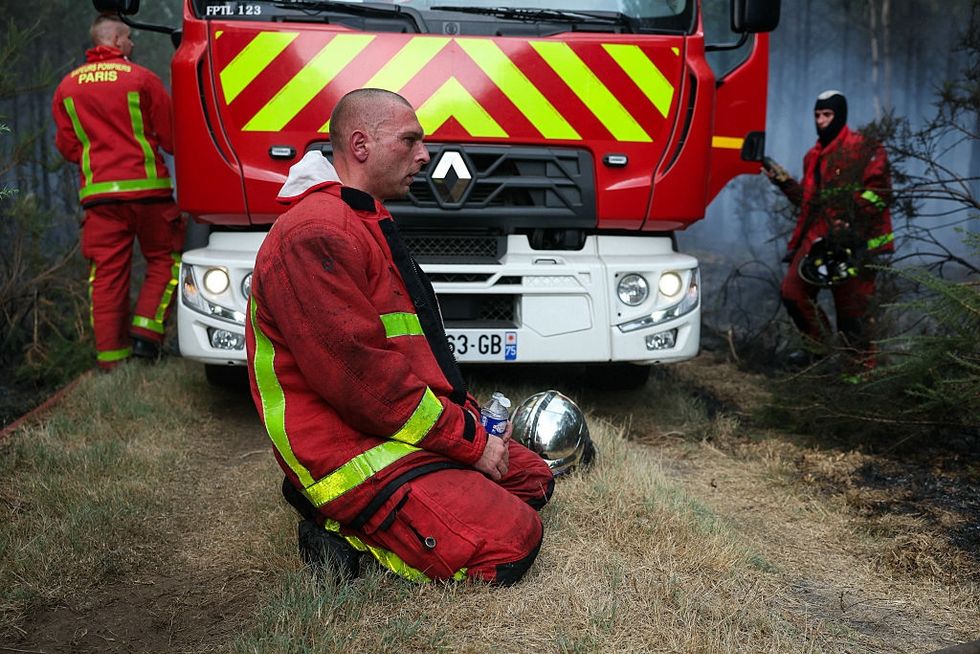 French firefighters near Bordeaux on Sunday. ALAIN JOCARD / AFP via Getty Images



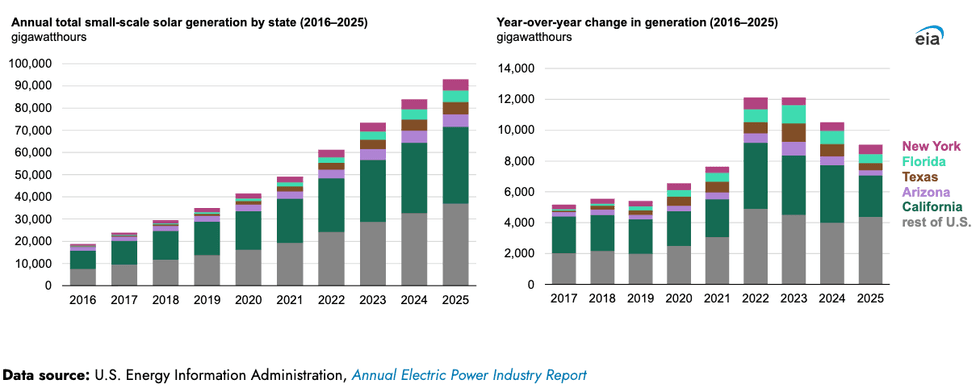 Solar capacity keeps growing. GoodPower